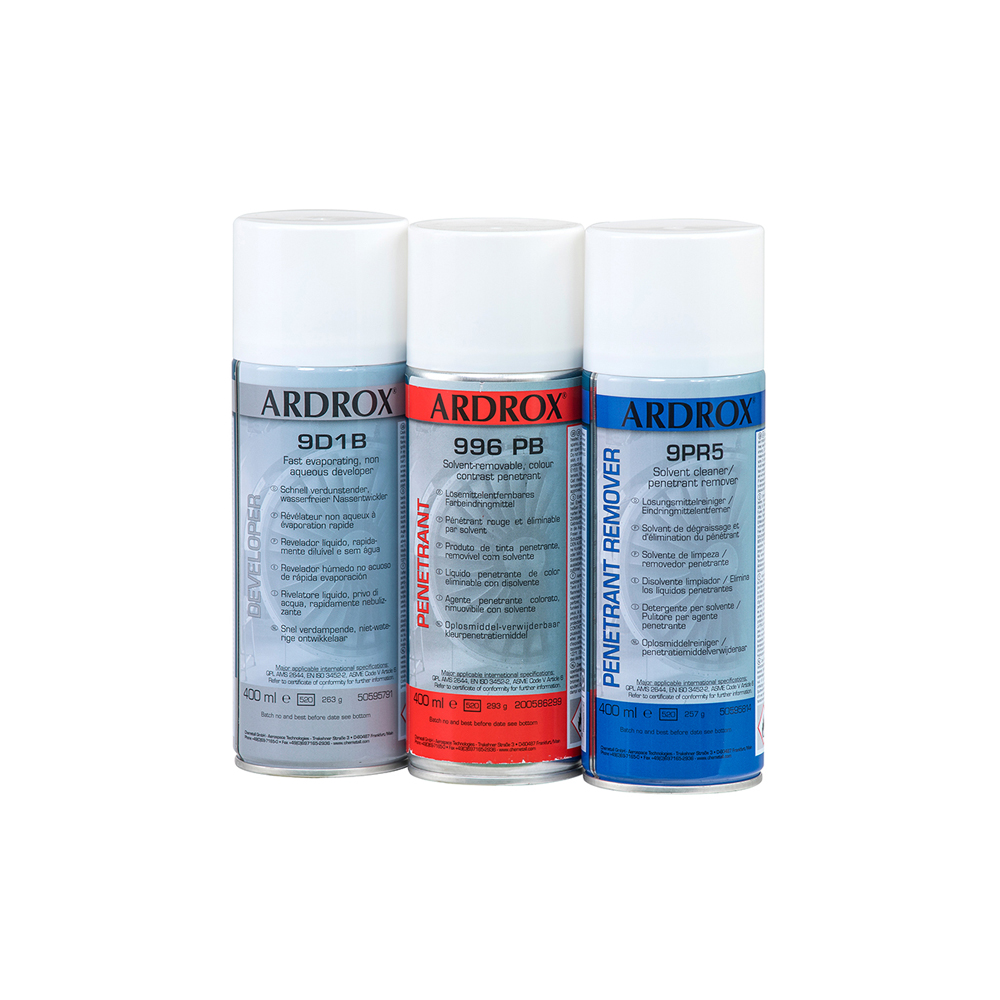
Penetrating liquid inspection is a universal method used to detect and view open defects in the surface of non-porous materials. The basic principle of the method is very simple.
First, clean all grease and dirt from the surface to be inspected. Afterwards, apply a coloured product known as a penetrant. If there are any cracks or defects, the penetrant will enter them due to capillarity, regardless of the size of the crack.
Remove excess penetrating liquid from the part so the surface is completely clean except for the penetrating liquid in the cracks. Then apply a coat of highly absorbent product, known as a developer, that acts like desiccant paper forcing the penetrant to come out of the crack, so its location and approximate dimensions are visible.
The main advantages of using penetrating liquids for inspection over other crack detection methods are that it can be used on both ferrous and non-ferrous materials. The size and shape of the specimen to be inspected are not important.
The procedure is simple and application is not difficult.