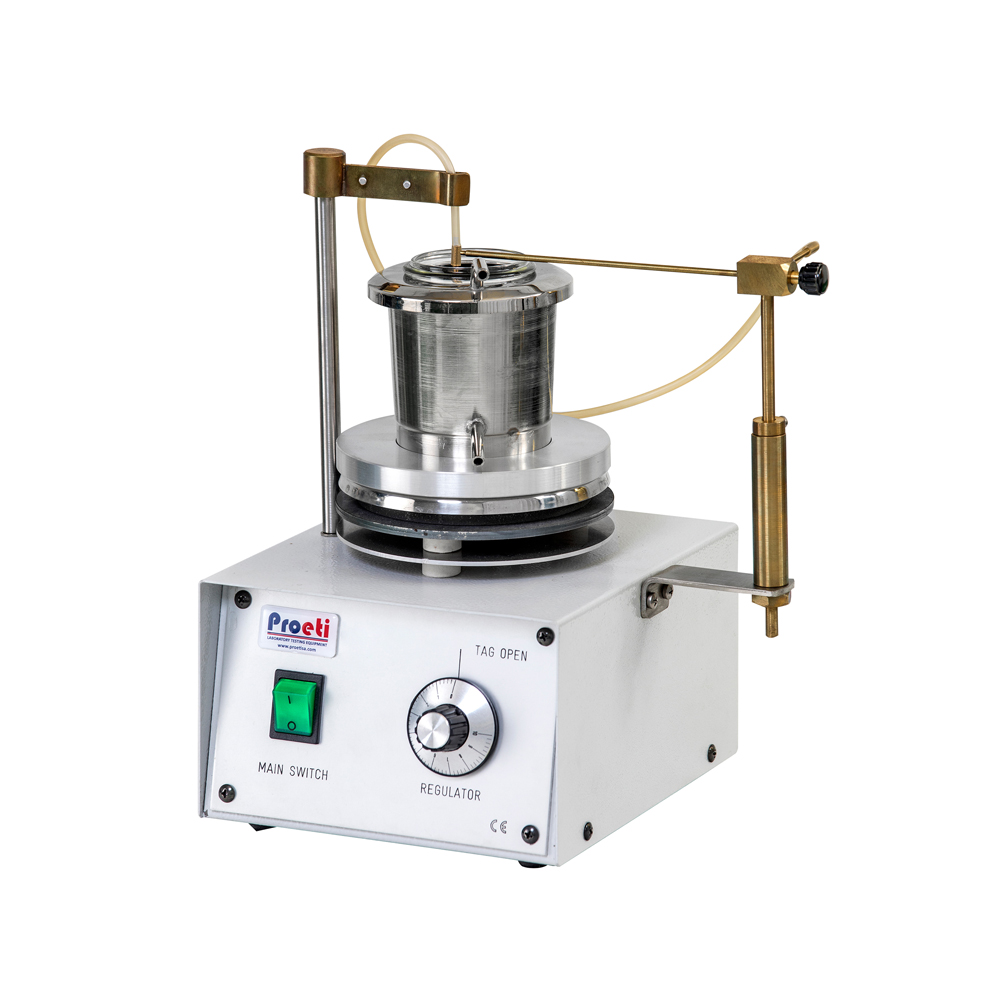
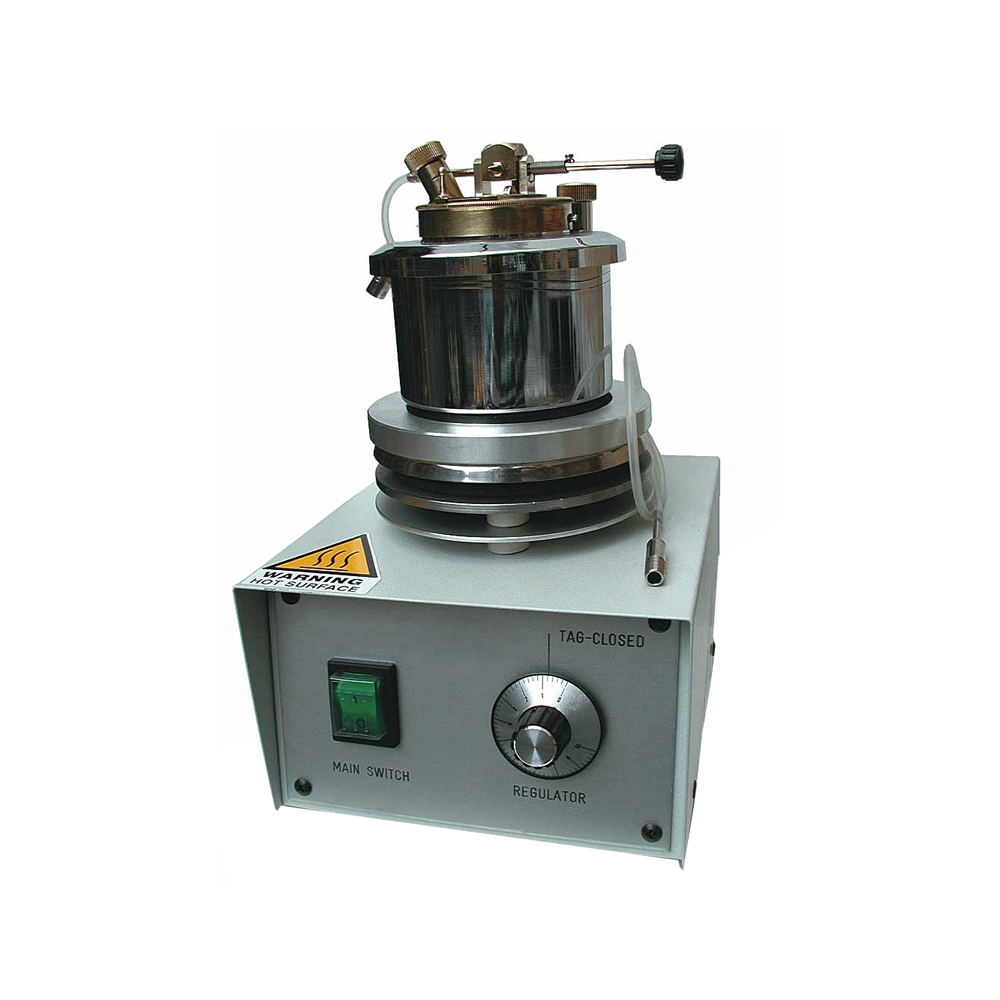
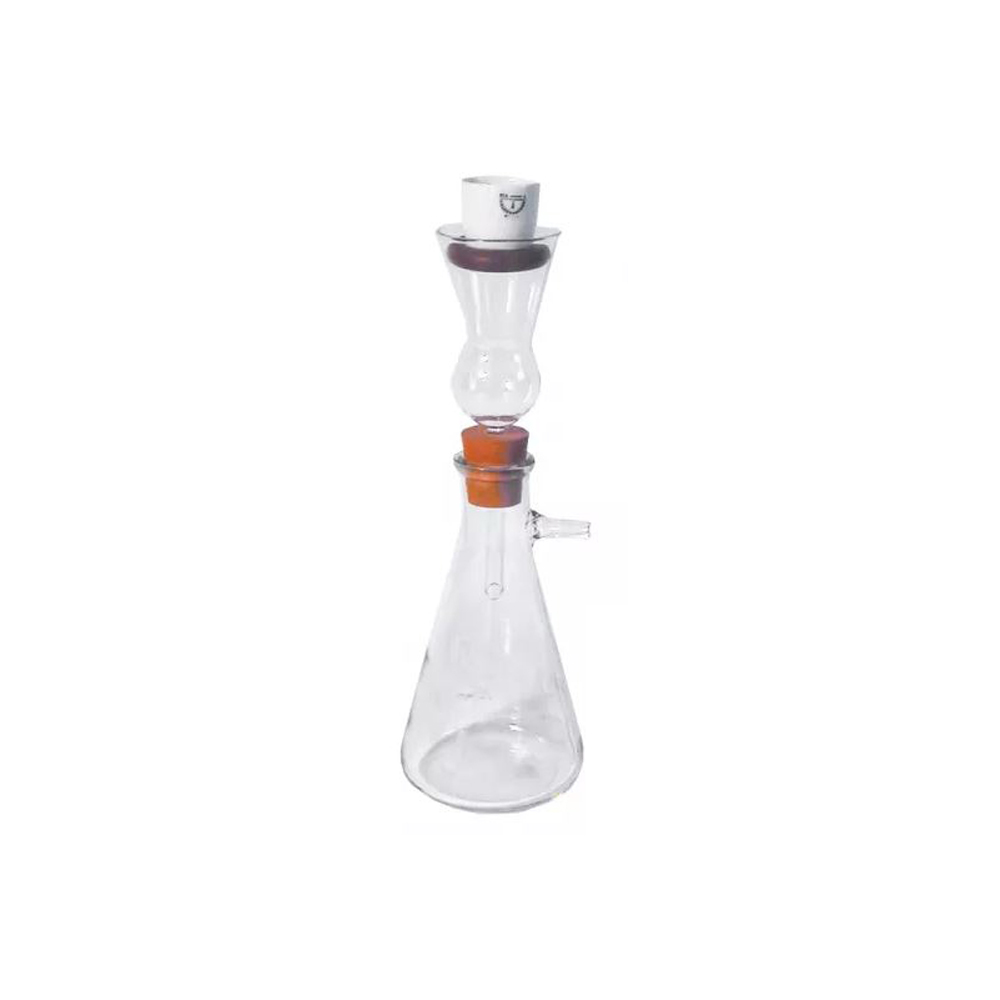
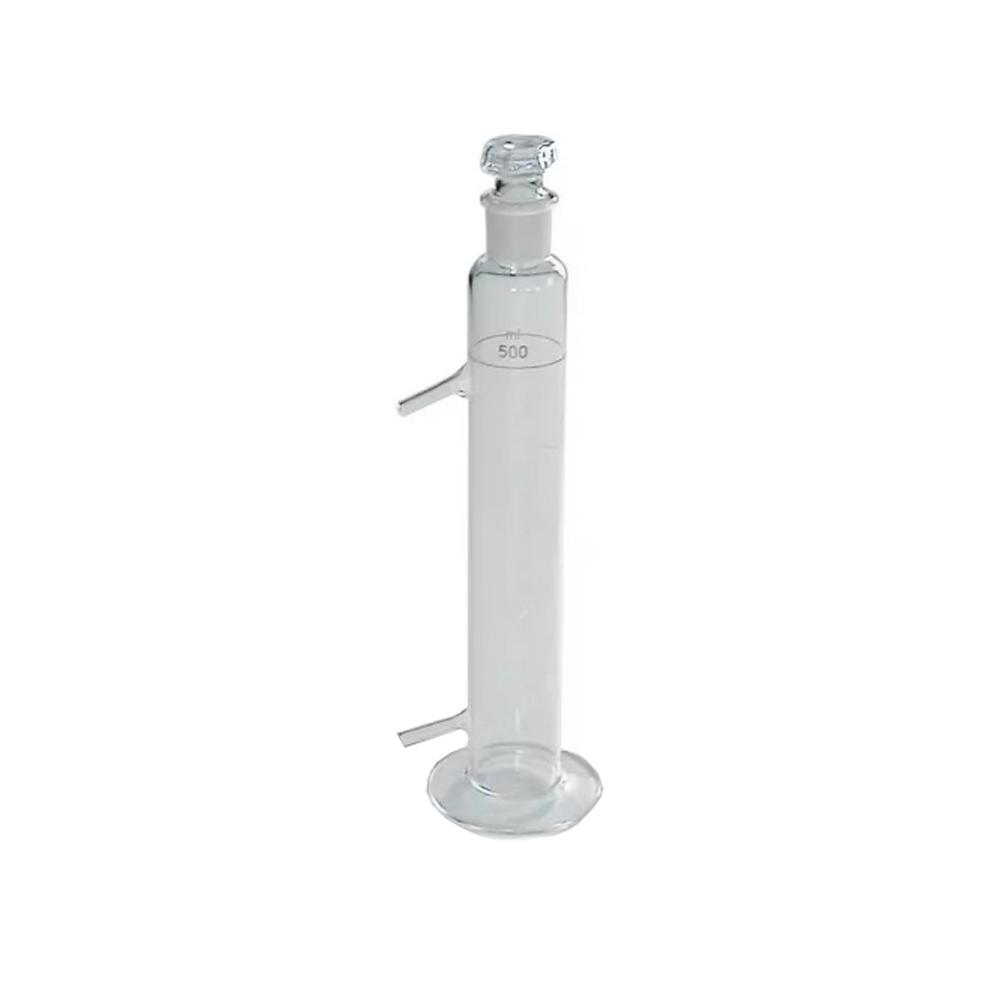
Penetration grade, softening point, flash point: this section brings together the bitumen testing equipment used to classify a binder (asphalt cement, in the Americas) and to check an emulsion. Penetrometers, ring and ball apparatus, Fraass breaking point, Cleveland and TAG cups for the flash point, solubility, settlement and water content, to EN, ASTM and AASHTO. Send us the specification of your binder and we will tell you which equipment it calls for.
| Test | Equipment | Standard |
|---|---|---|
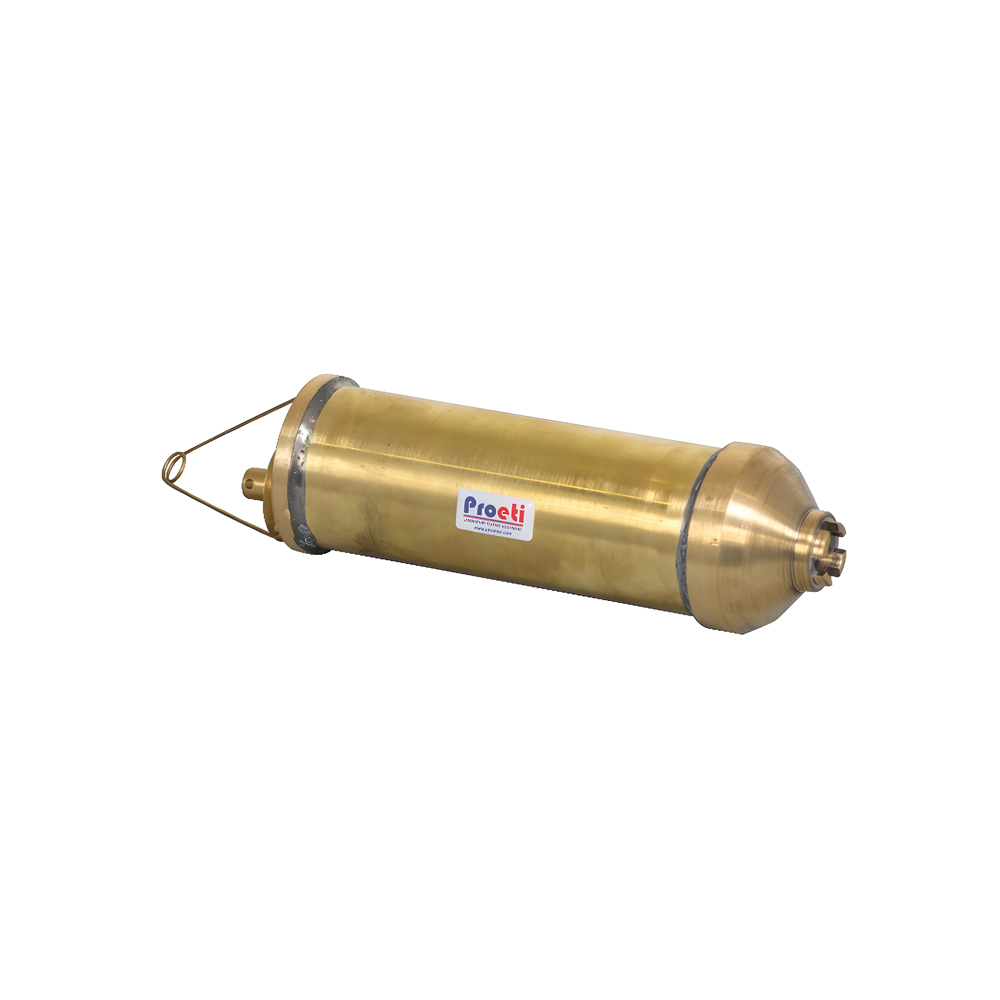
| Sampling | Bacon sampler, brass | EN 58, ASTM D140 |
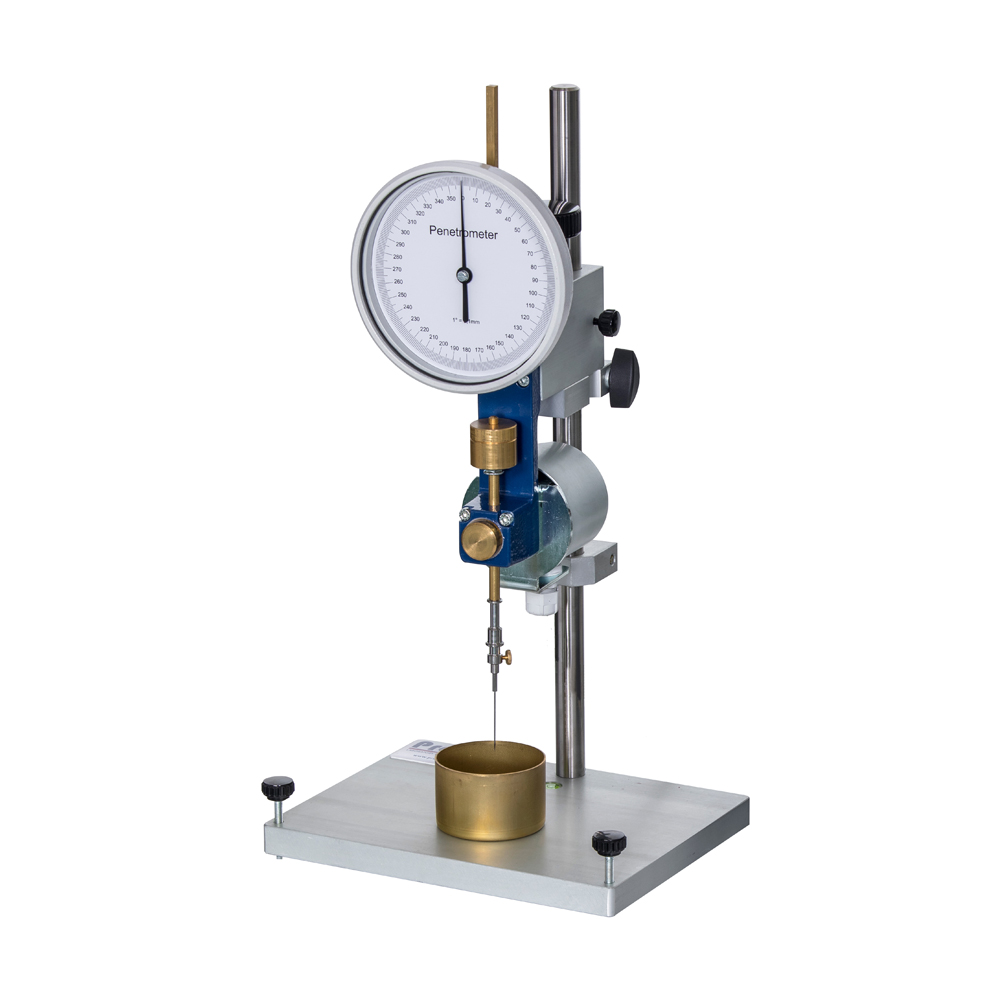
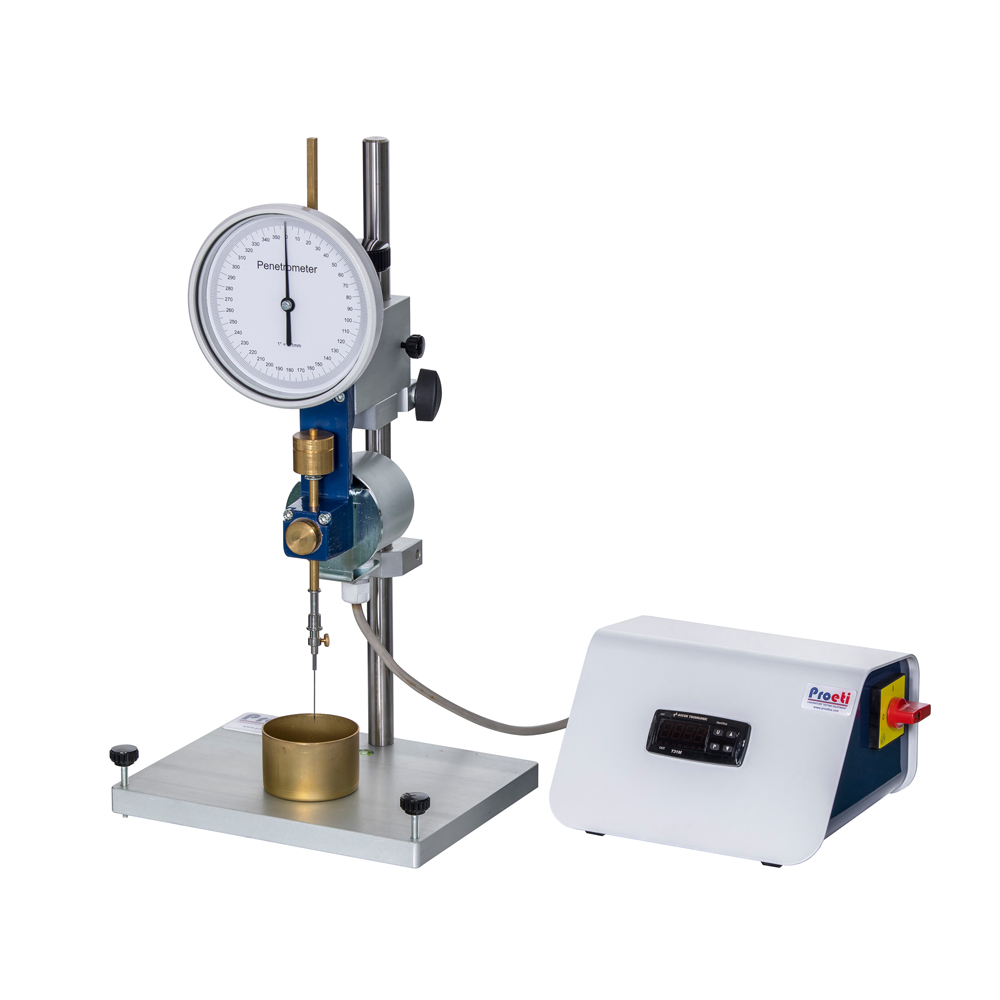
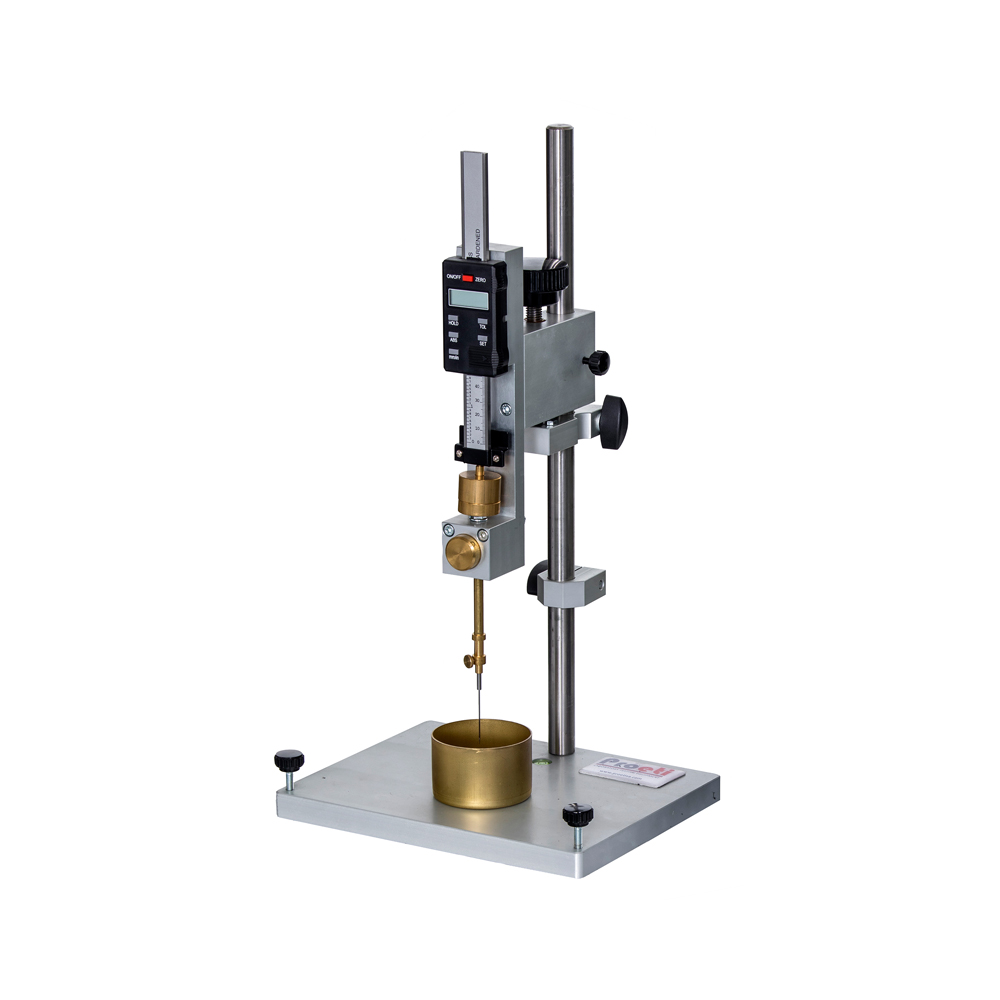
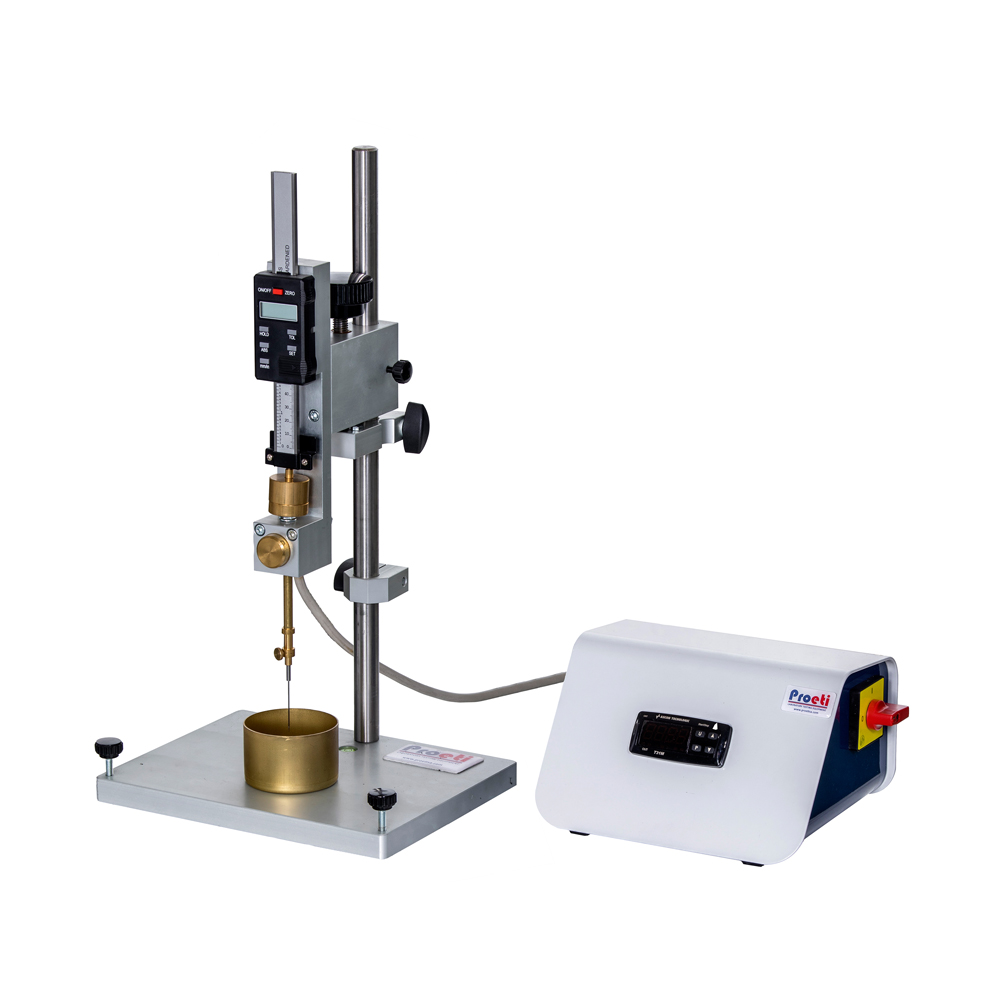
| Penetration | Penetrometers, analogue or digital, manual or semi-automatic | EN 1426, ASTM D5 |
| Softening point | Ring and ball apparatus | EN 1427, ASTM D36 |
| Breaking point | Fraass apparatus | EN 12593 |
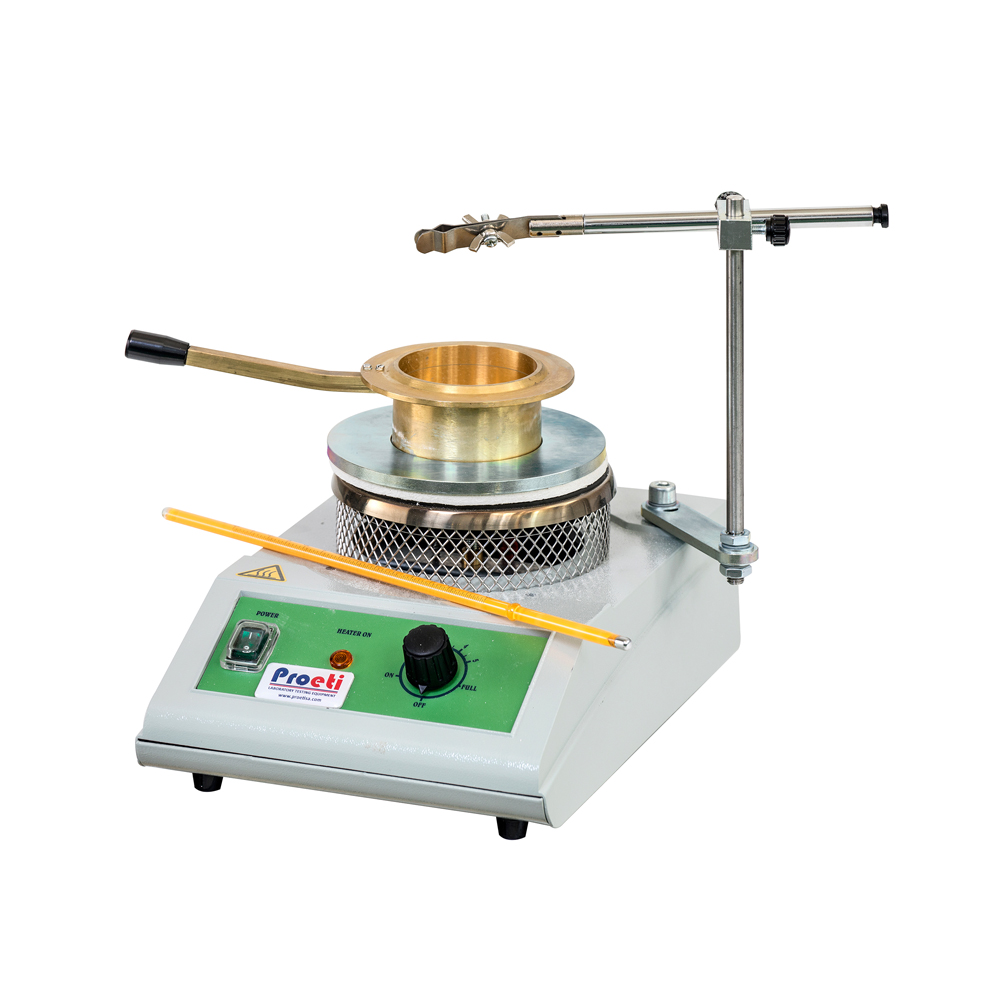
| Flash point | Cleveland open cup and TAG open and closed cups | EN ISO 2592, ASTM D92, D1310, D56 |
| Solubility | Gooch crucible with flask and filters | EN 12592, ASTM D2042 |
| Test | Equipment | Standard |
|---|---|---|
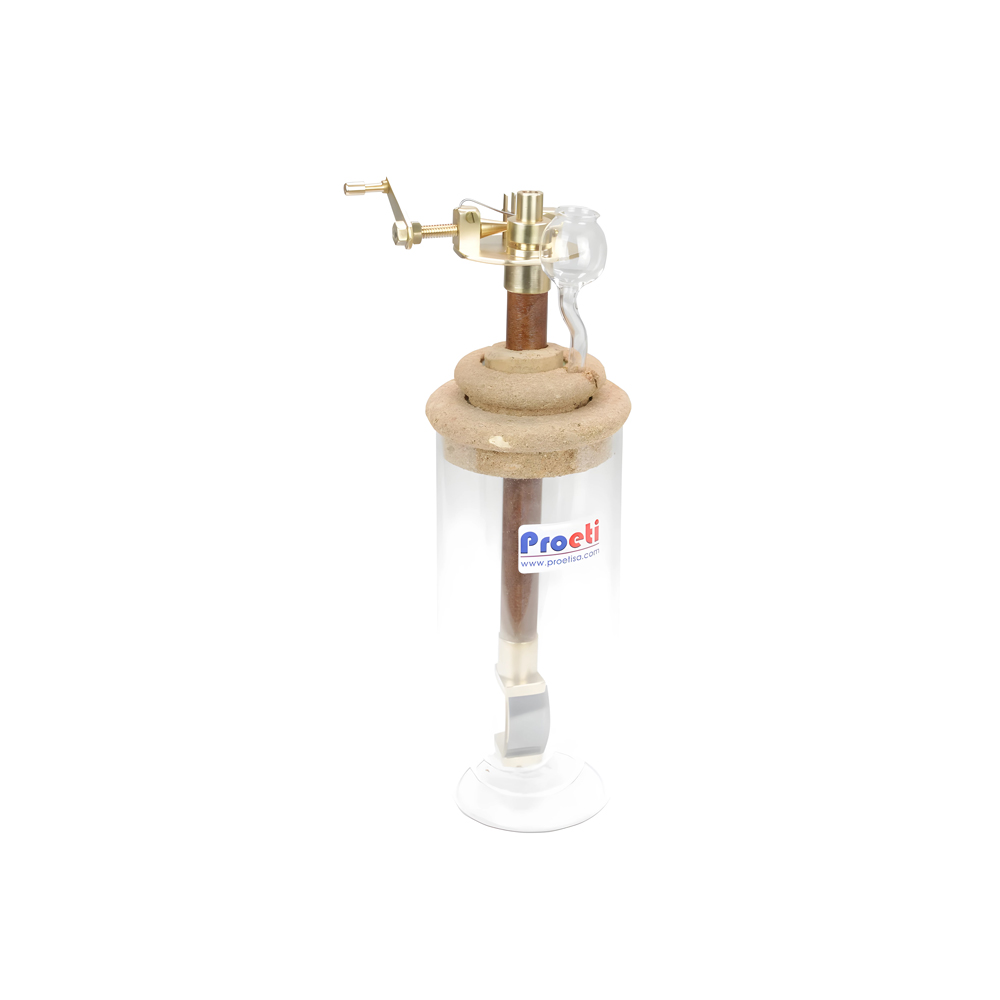
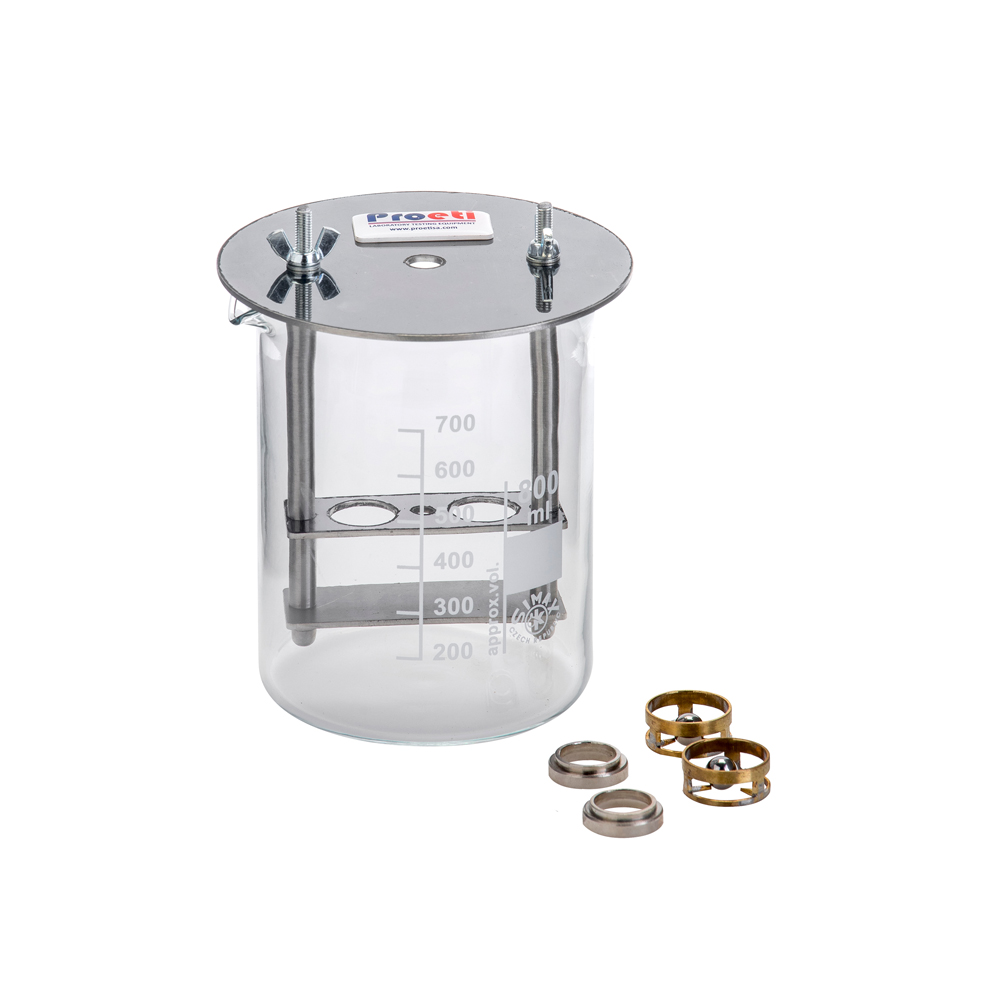
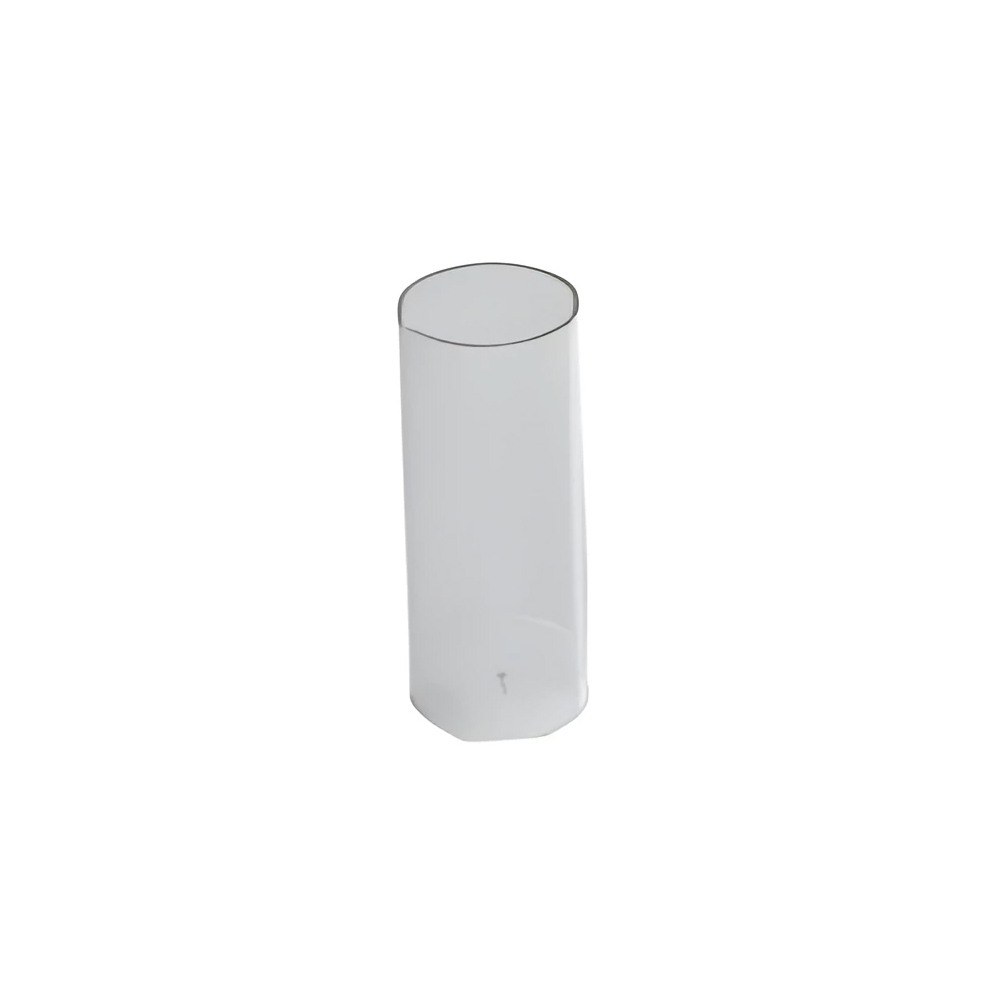
| Settling tendency | Settlement cylinder, 600 ml | EN 12847 |
| Penetration power | Cylinder with glass filter | EN 12849 |
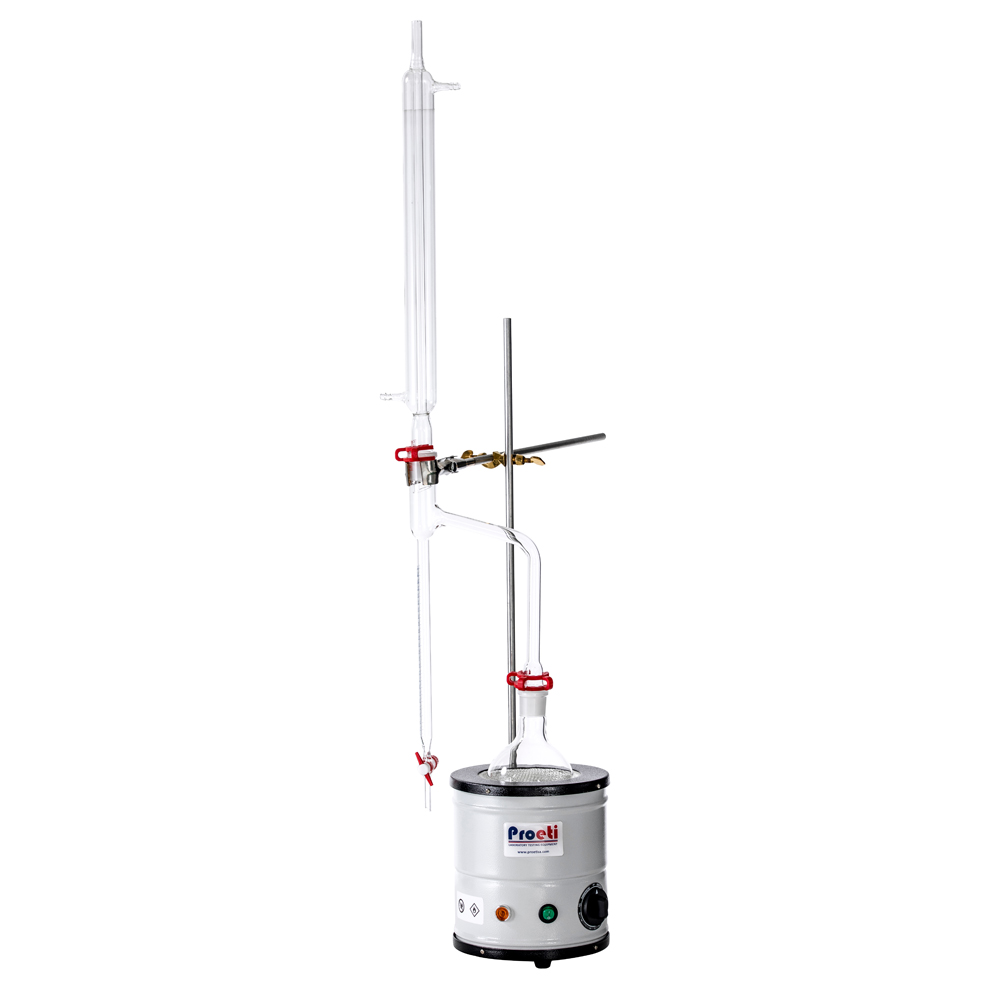
| Water content | Distillation apparatus with solvent | — |
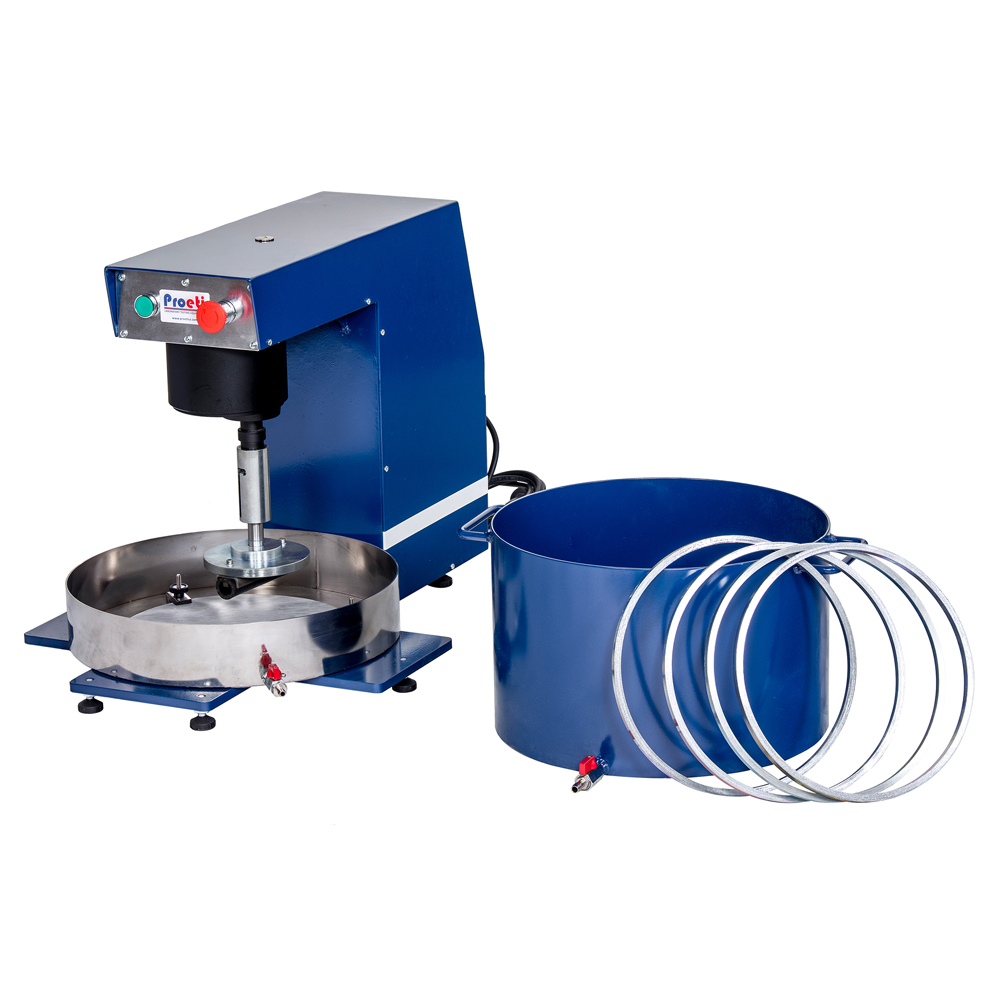
| Slurry abrasion | Slurry abrasion machine | EN 12274-5, ASTM D3910 |
For bitumen viscosity, ductility and ageing, you will find Saybolt, Engler and STV viscometers, the ductilometer and the RTFOT and TFOT ovens on the bitumen and asphalt page.
To get a price, click Budget on each product page and send one request with everything you need. If you would rather talk to us, write to us or call +34 916 28 29 40.
Bitumen is the black, sticky binder left after distilling crude oil. In the Americas it is called asphalt or asphalt cement, while in Spain "asphalt" usually means the mixture of bitumen and aggregates used for paving. For testing, the name makes no difference: the methods are the same.
They are its penetration range in tenths of a millimetre: a 50/70 bitumen lets the needle in between 5 and 7 mm at 25 °C. The lower the number, the harder the bitumen. EN 12591 also sets its softening point and other values for each grade.
An emulsion is bitumen dispersed in very fine droplets in water, with an emulsifier. It can be applied cold, without heating the bitumen, which is why it is used for tack coats, surface dressings, slurry surfacings and cold recycling. When the water separates, the bitumen remains.
They mark the limits of the bitumen: the softening point (ring and ball) is the temperature at which it starts to flow, and the Fraass breaking point, the one at which it cracks when bent. Between the two lies the range in which the bitumen performs well in the pavement.
For safety: it is the temperature at which the bitumen vapours ignite when a flame is brought near. It shows how far the bitumen can be heated at the plant or in the tanker without risk, and whether it contains solvent residues.
The mixtures made with this bitumen are analysed with the mixture analysis equipment.