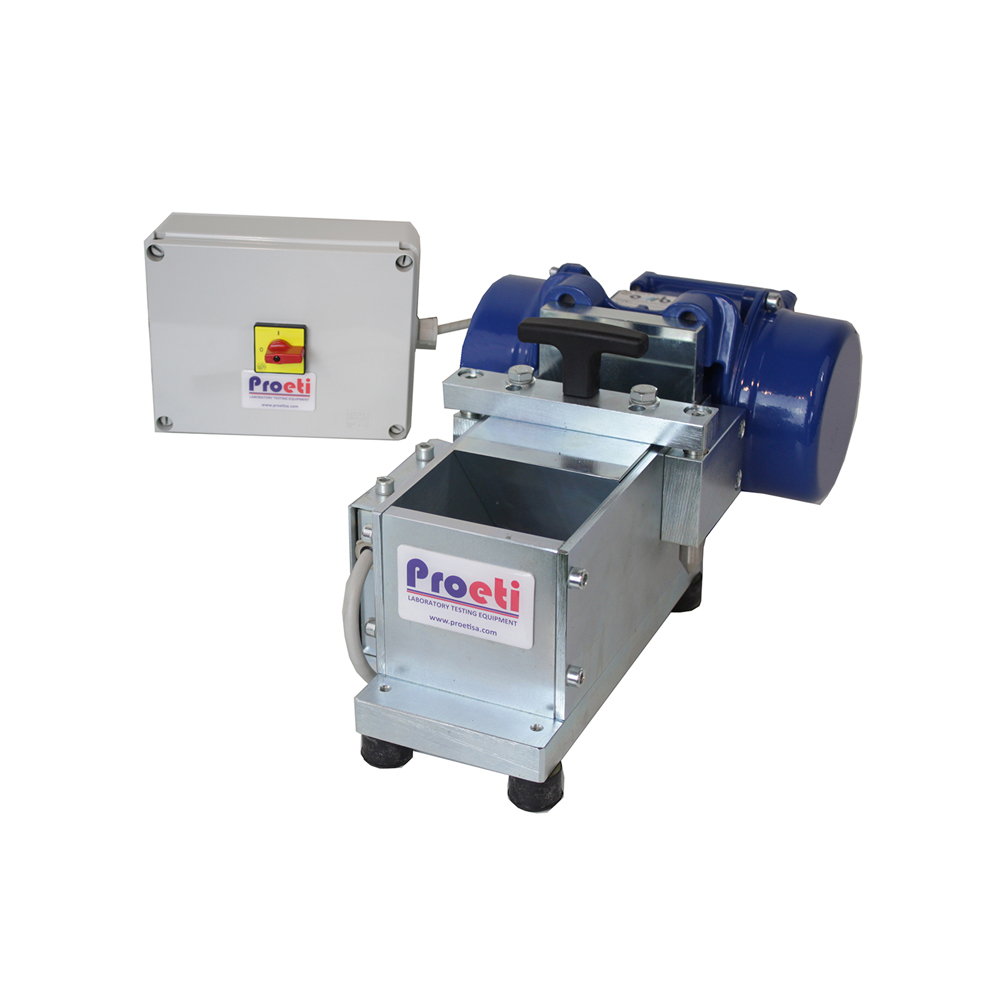
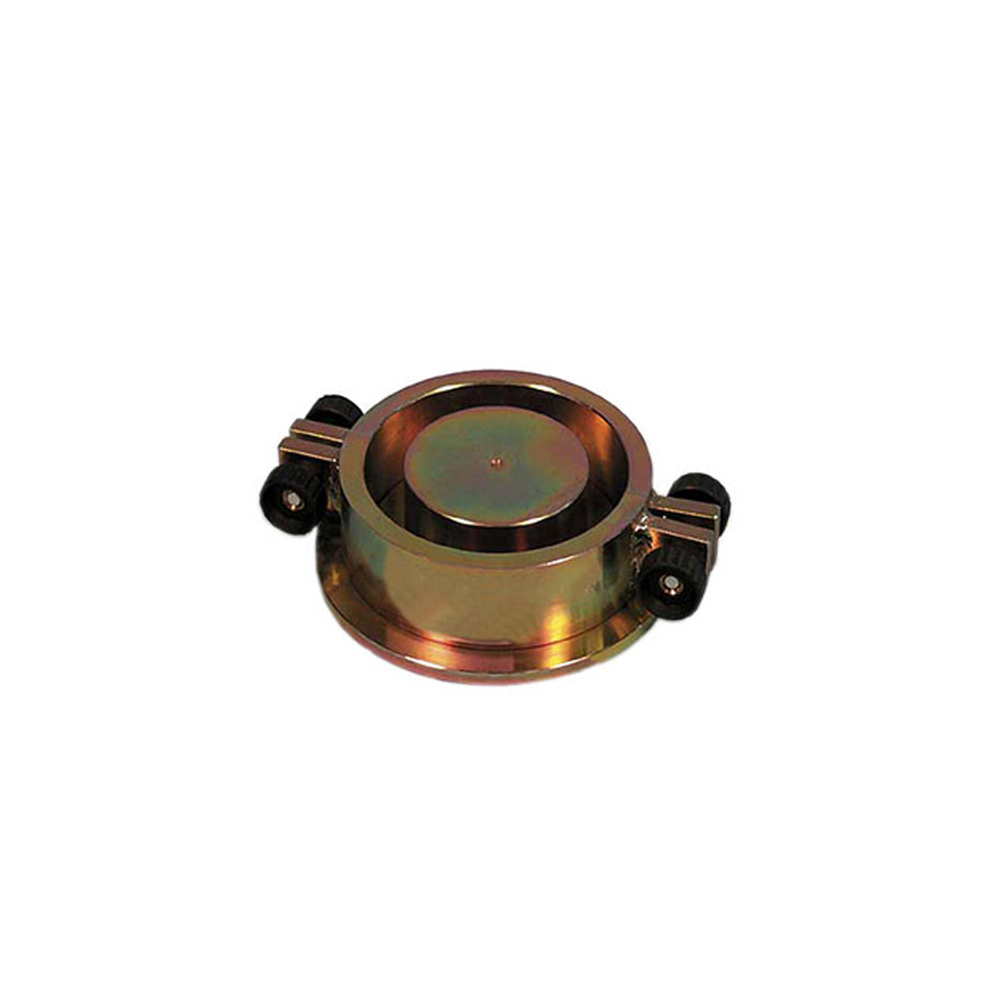
When does the paste start to harden, and what consistence does the mortar have? The Vicat apparatus answers the first question, giving the cement setting time, and the flow table the second. The section is completed by the Gillmore apparatus, the air content meter, the plunger penetration and dropping ball apparatus and the workability meter, to EN 196-3, the EN 1015 series and ASTM. Write to us if you are unsure between two methods.
| Test | Equipment | Standard |
|---|---|---|
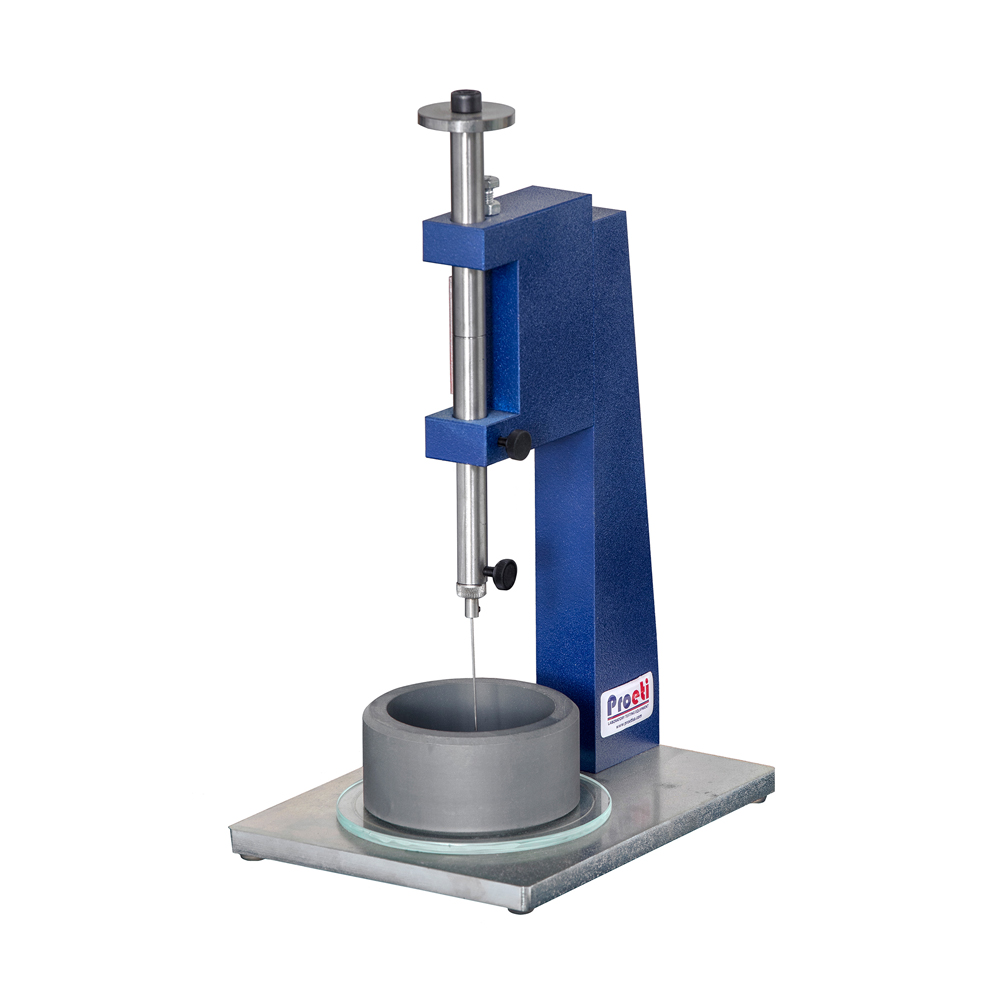
| Standard consistence and setting time | Vicat apparatus, 300 g probe and 10 mm plunger | EN 196-3, ASTM C191 |
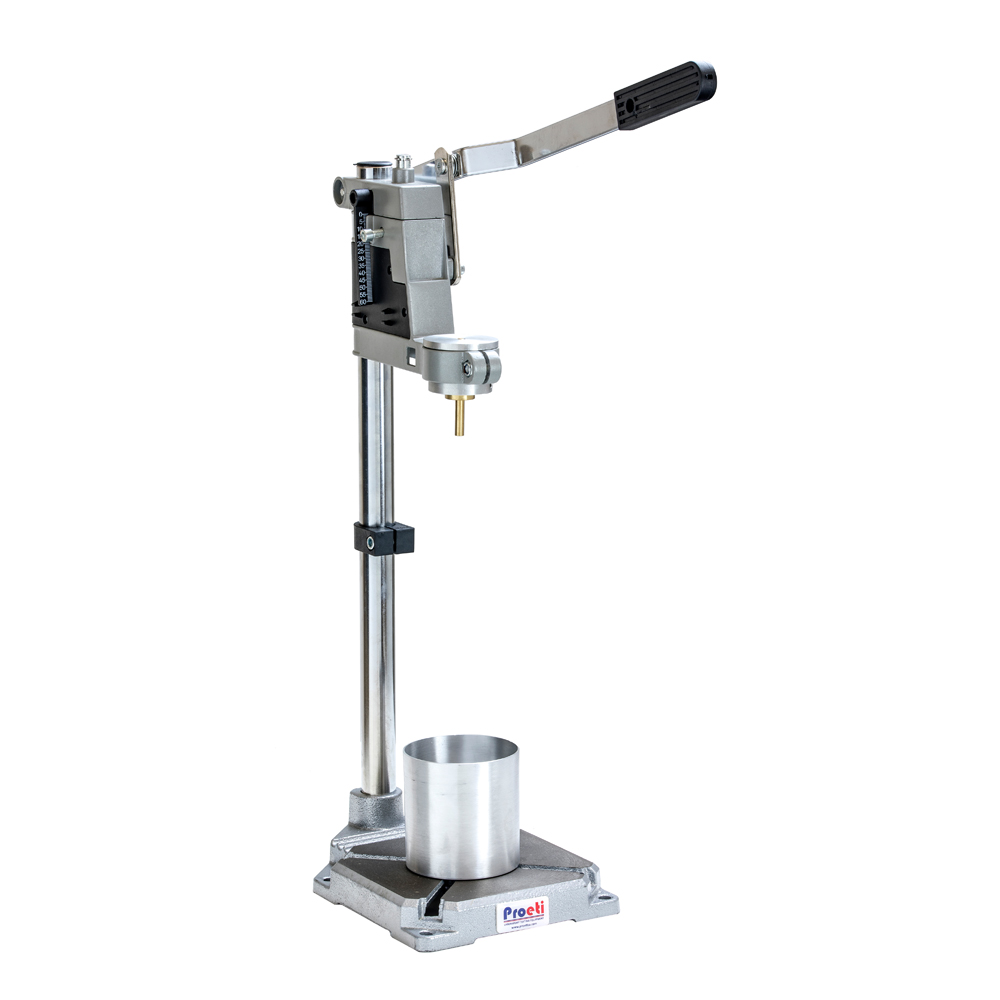
| Setting time (American method) | Gillmore apparatus, 113 and 453.6 g needles | ASTM C266 |
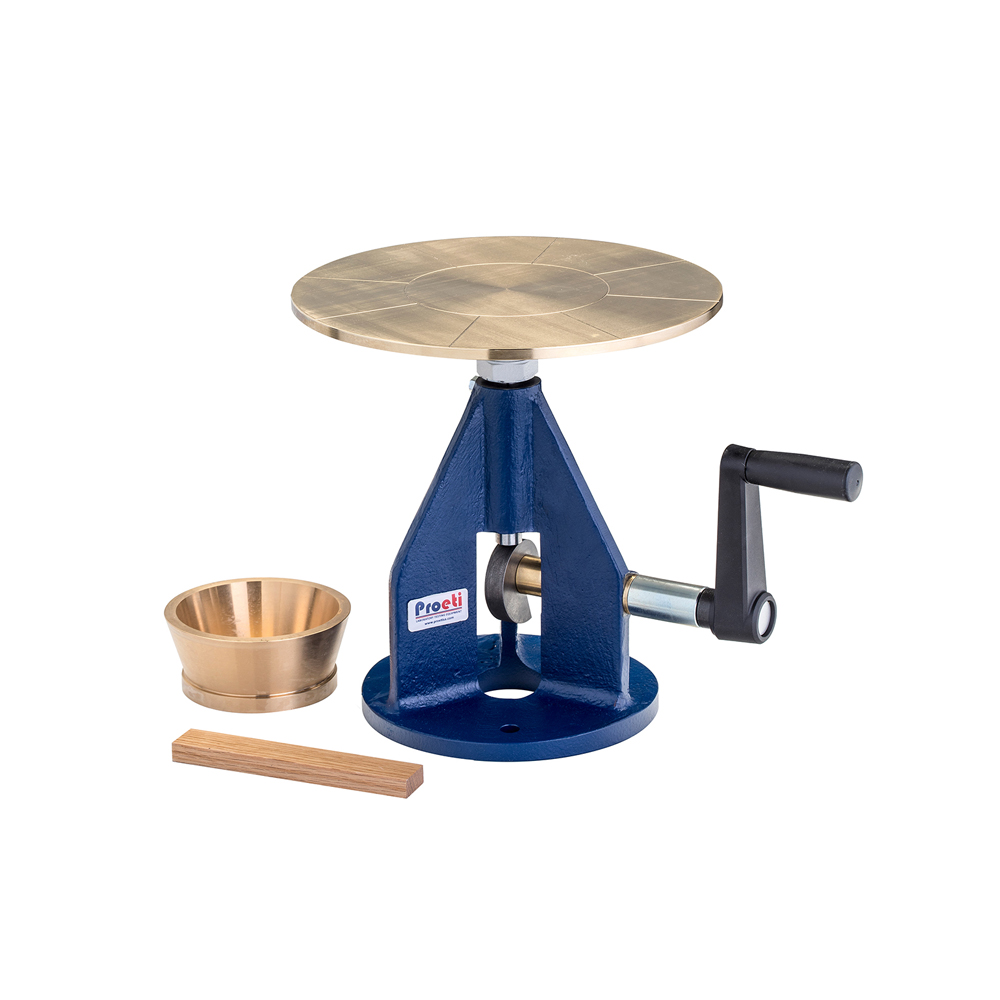
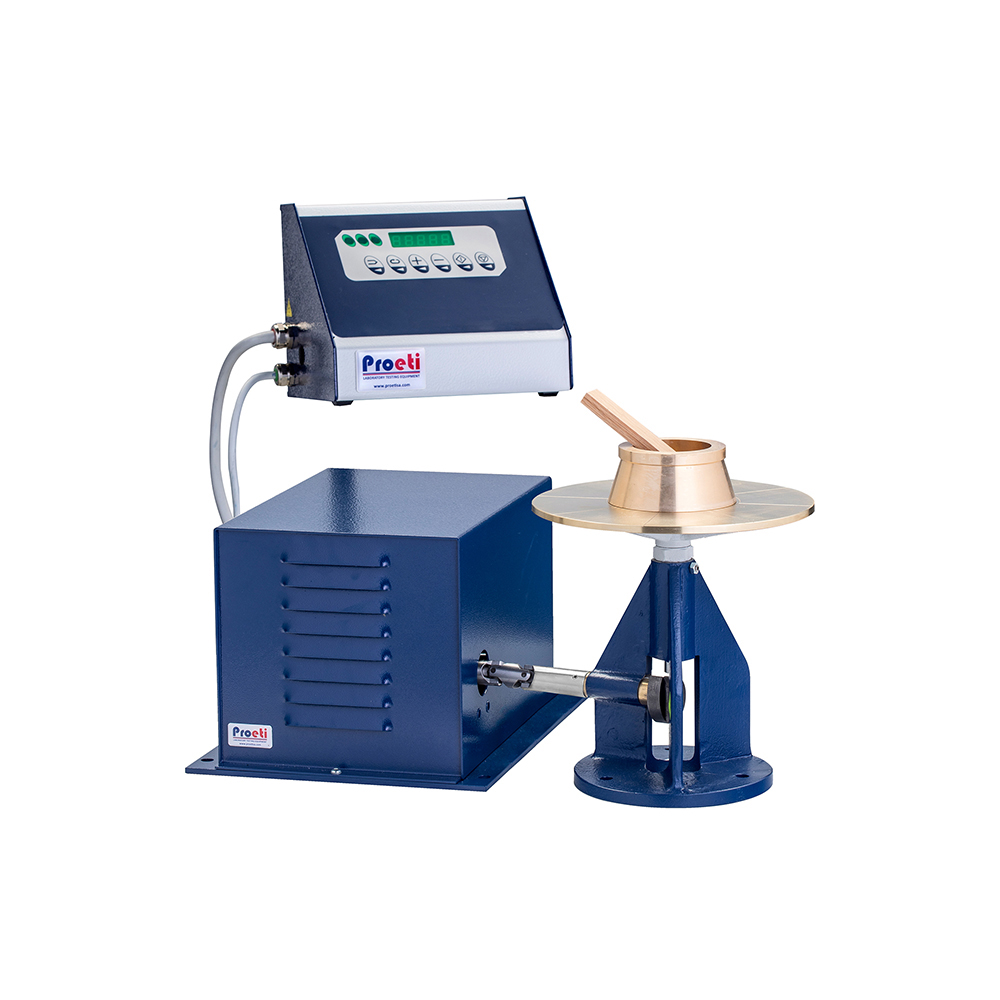
| Mortar consistence | Hand-operated flow table or motorised, 300 mm (EN) and 254 mm (ASTM) tables | EN 1015-3, EN 459-2 |
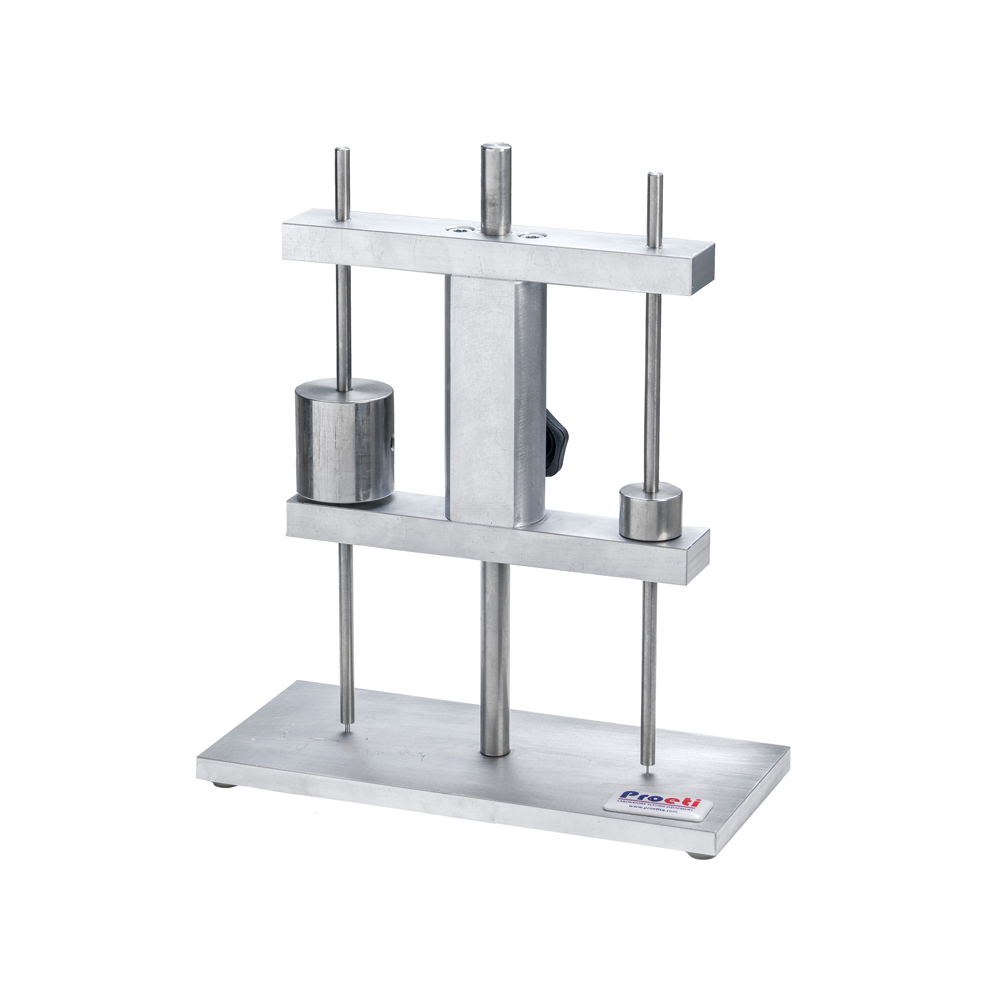
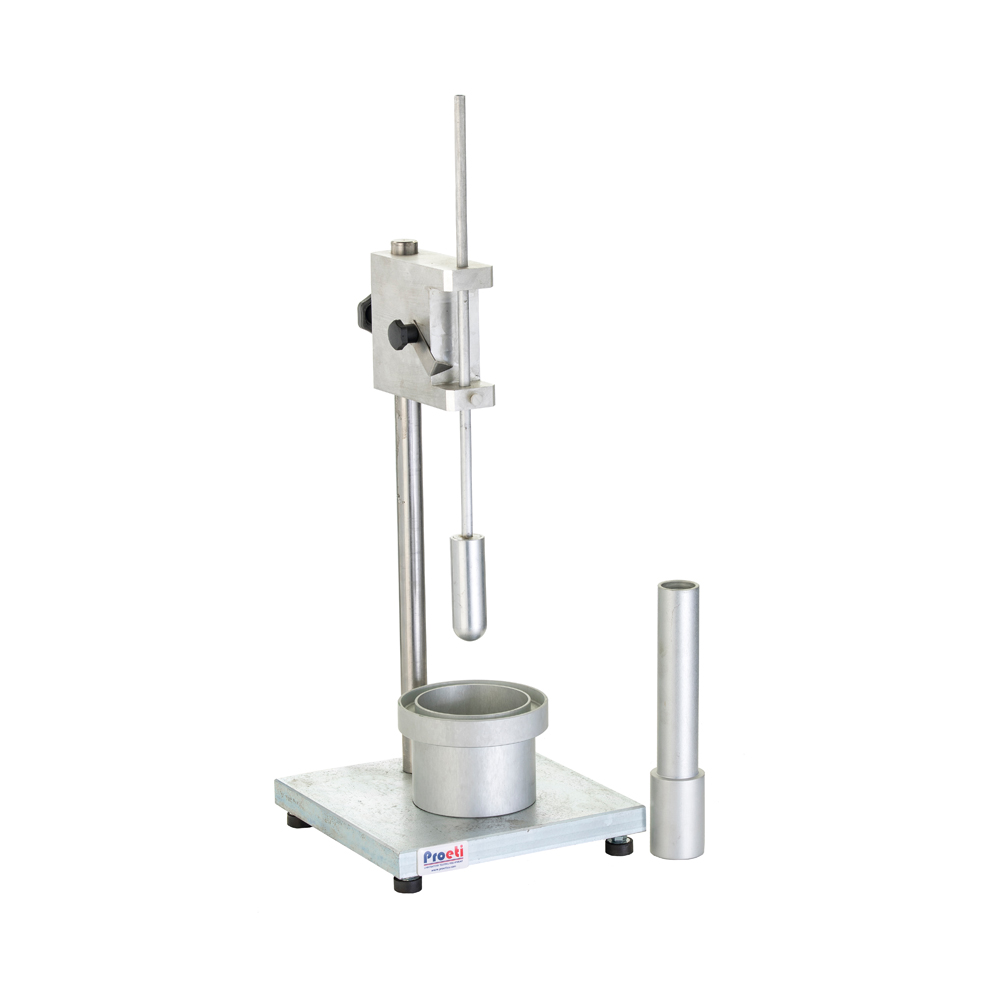
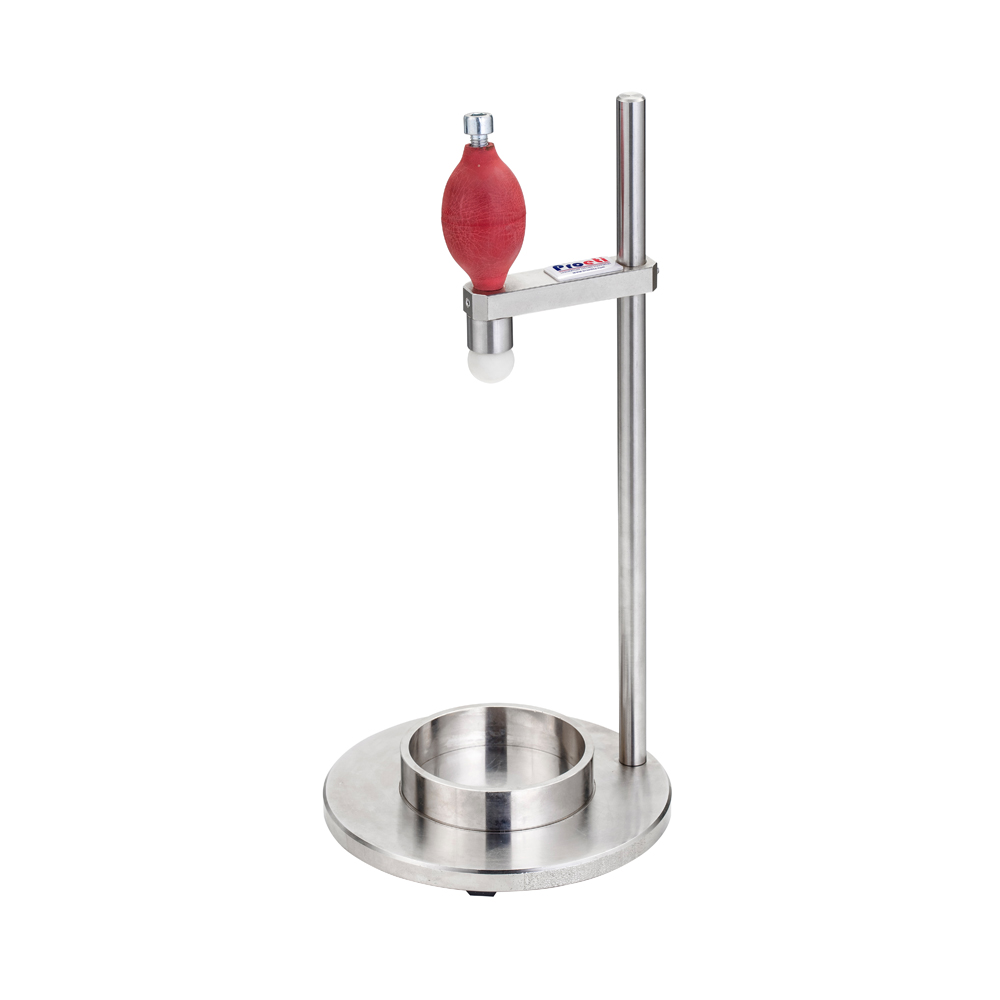
| Consistence by penetration | Plunger penetration apparatus and dropping ball apparatus | EN 413-2, BS 4551-1 |
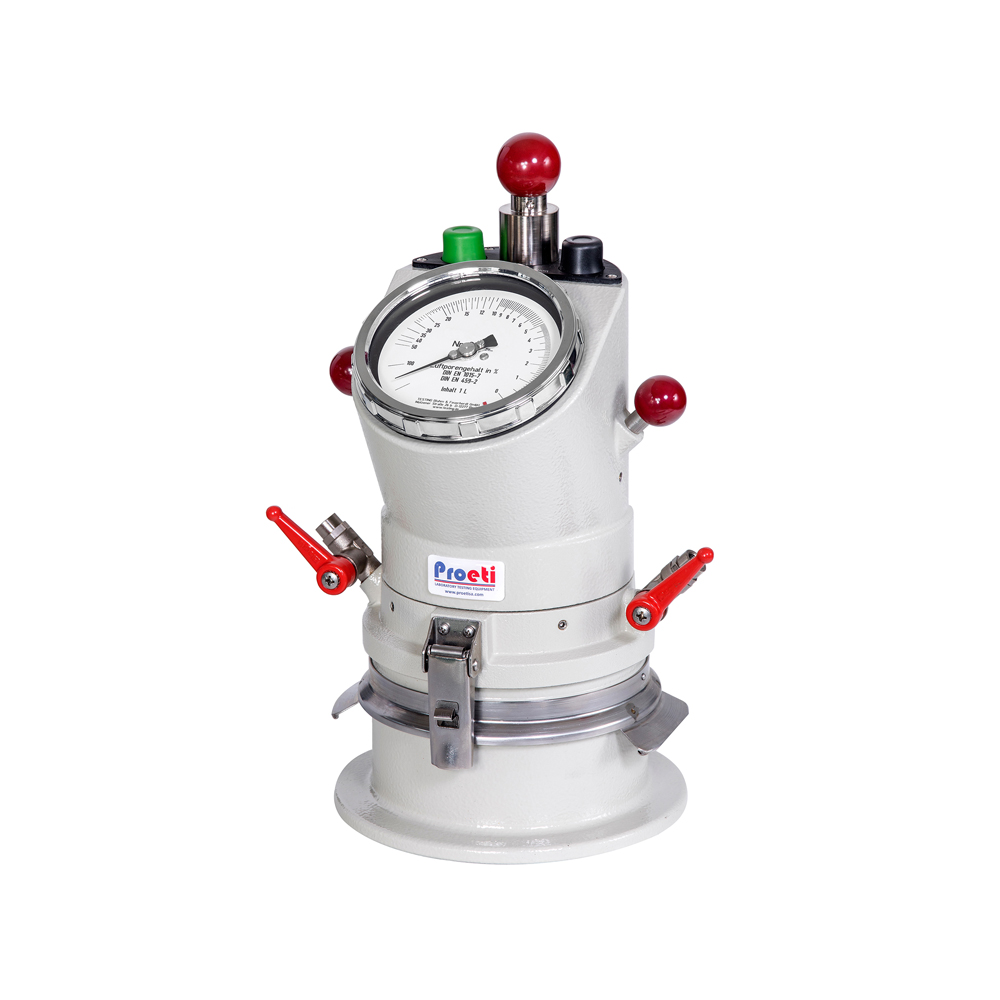
| Air content | 1 l meter, 0 to 50 % scale | EN 1015-7, EN 413-2 |
| Workability | Workability meter with vibrator | EN 413-2, NF P18-452 |
| Workable life of fresh mortar | Penetration apparatus with container | EN 1015-9, EN 13294 |
Both carry out the same test: the mortar is moulded in a cone on the table top, which is raised and dropped 10 mm fifteen times, and the diameter it spreads to is measured. The hand-operated table is driven by a crank; the motorised one keeps the rate by itself and counts the drops with a digital counter, so the result depends less on the operator.
To get a price, click Budget on each product page and send one request with everything you need. If you would rather talk to us, write to us or call +34 916 28 29 40.
The change of cement paste from a plastic to a solid state, through its chemical reaction with water. It is marked by two moments: the initial set, when the paste starts to lose plasticity, and the final set, when it no longer accepts deformation. For a common cement, EN 197-1 requires an initial setting time of no less than 45 to 75 minutes, depending on its class.
Setting happens in the first few hours and is the loss of plasticity. Hardening comes afterwards and lasts for weeks: it is the gain in strength, measured at 2, 7 and 28 days. A cement can set quickly and gain strength slowly.
The amount of water at which the paste has a reference plasticity: the 10 mm plunger of the Vicat apparatus stops 6 ± 2 mm from the base. That paste is then used for the setting time and soundness tests, so that the results are comparable.
A premature stiffening of the paste a few minutes after mixing, without giving off heat, which disappears if it is remixed without adding water. It is usually caused by gypsum dehydrating when the hot clinker is ground. It should not be confused with flash set, which is irreversible.
Because air bubbles improve workability and frost resistance, but reduce strength. Masonry mortars and air-entraining admixtures are controlled by their air content, which is measured with a pressure-type meter.
Once setting has been checked, strength is tested with the mechanical tests equipment.