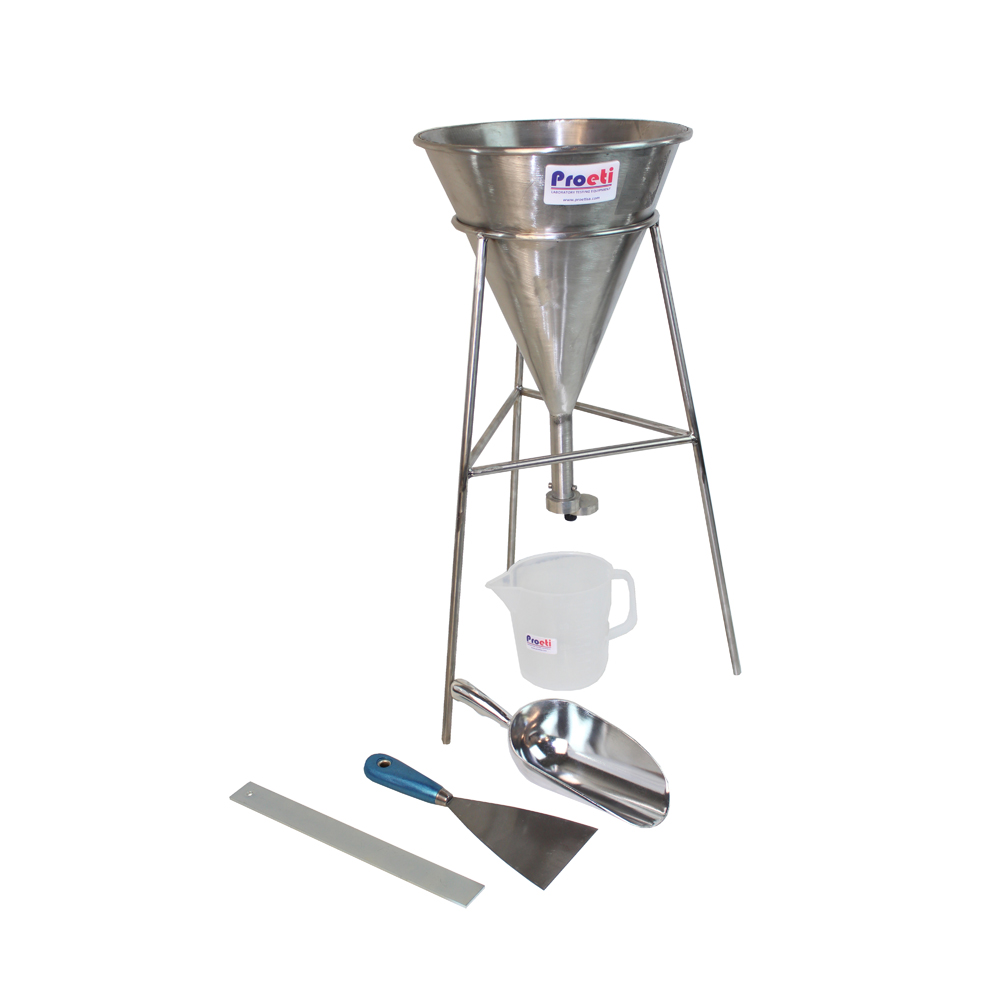
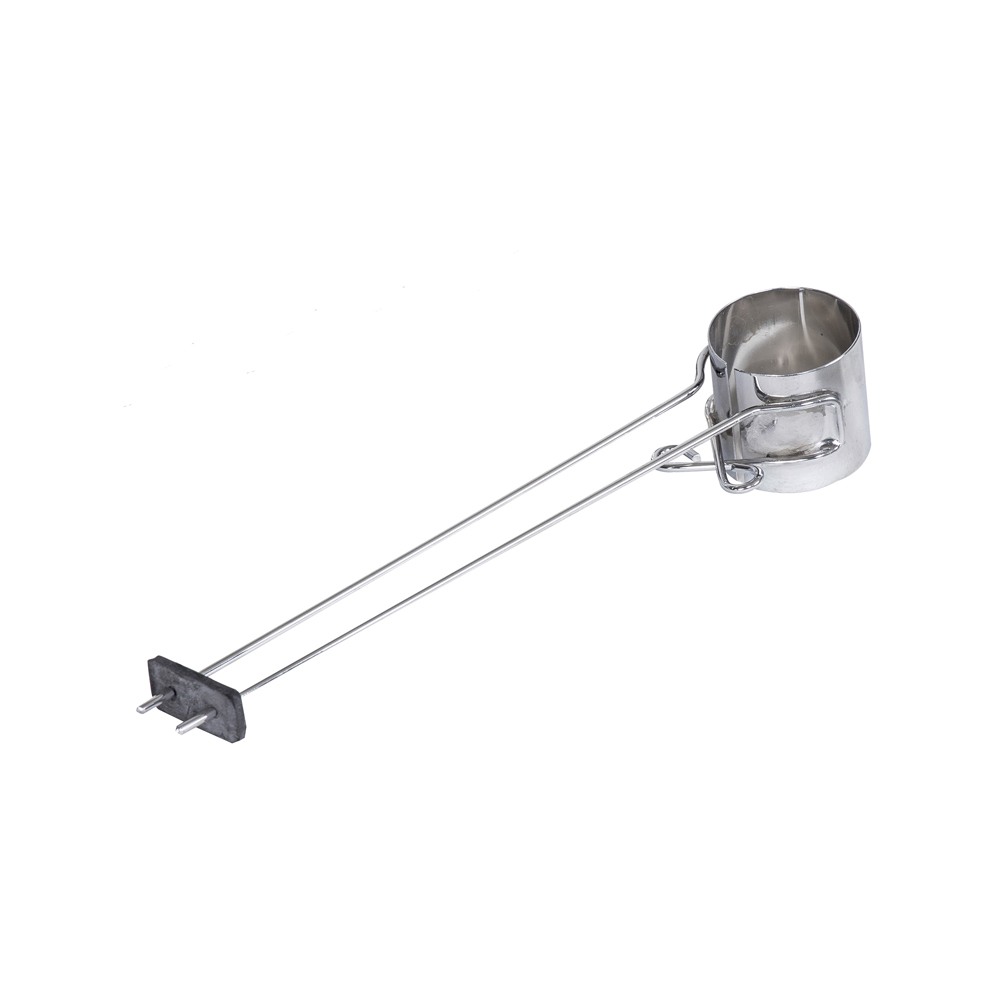
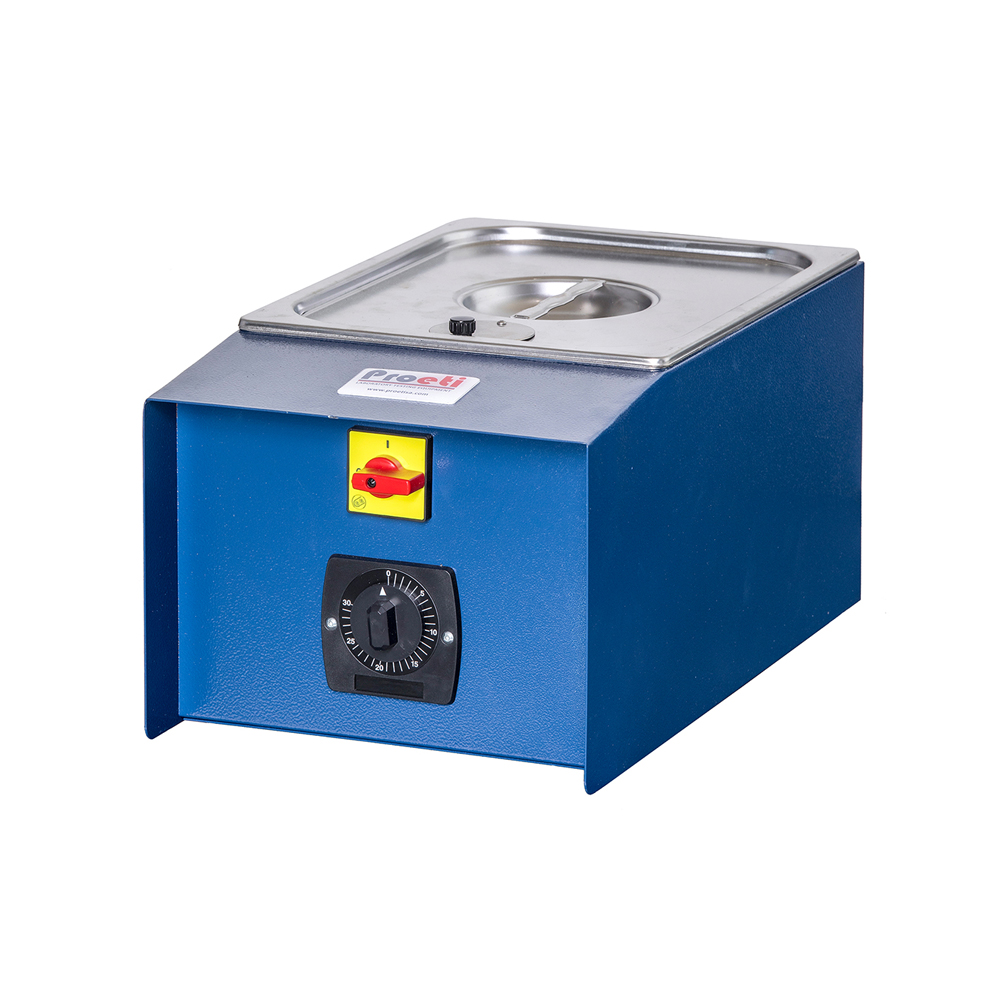
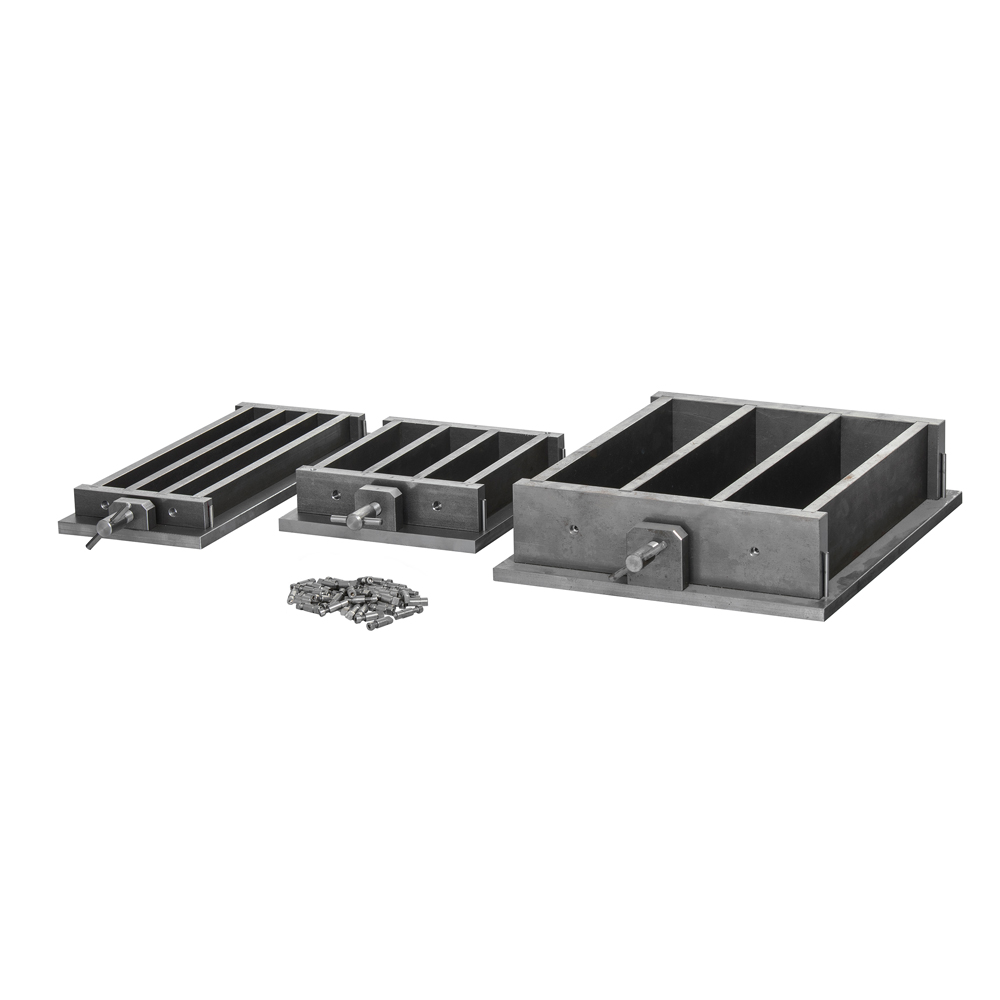
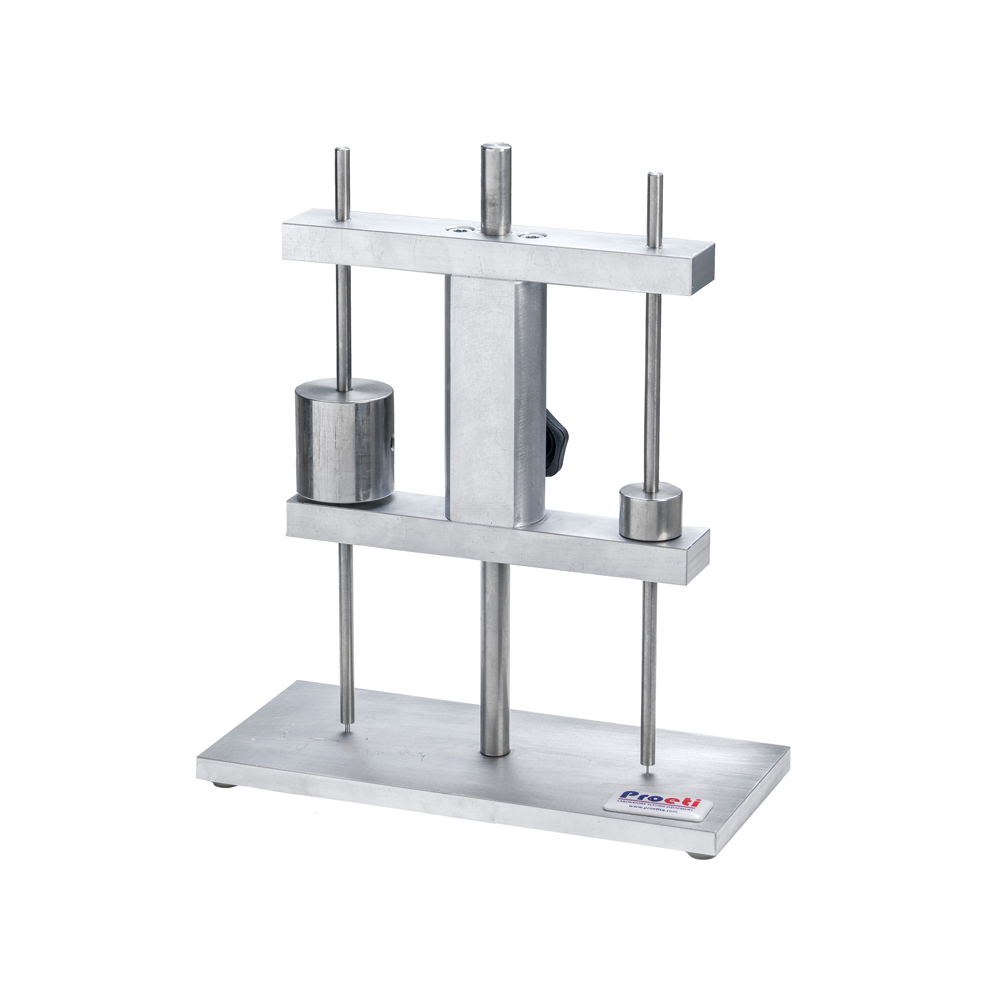
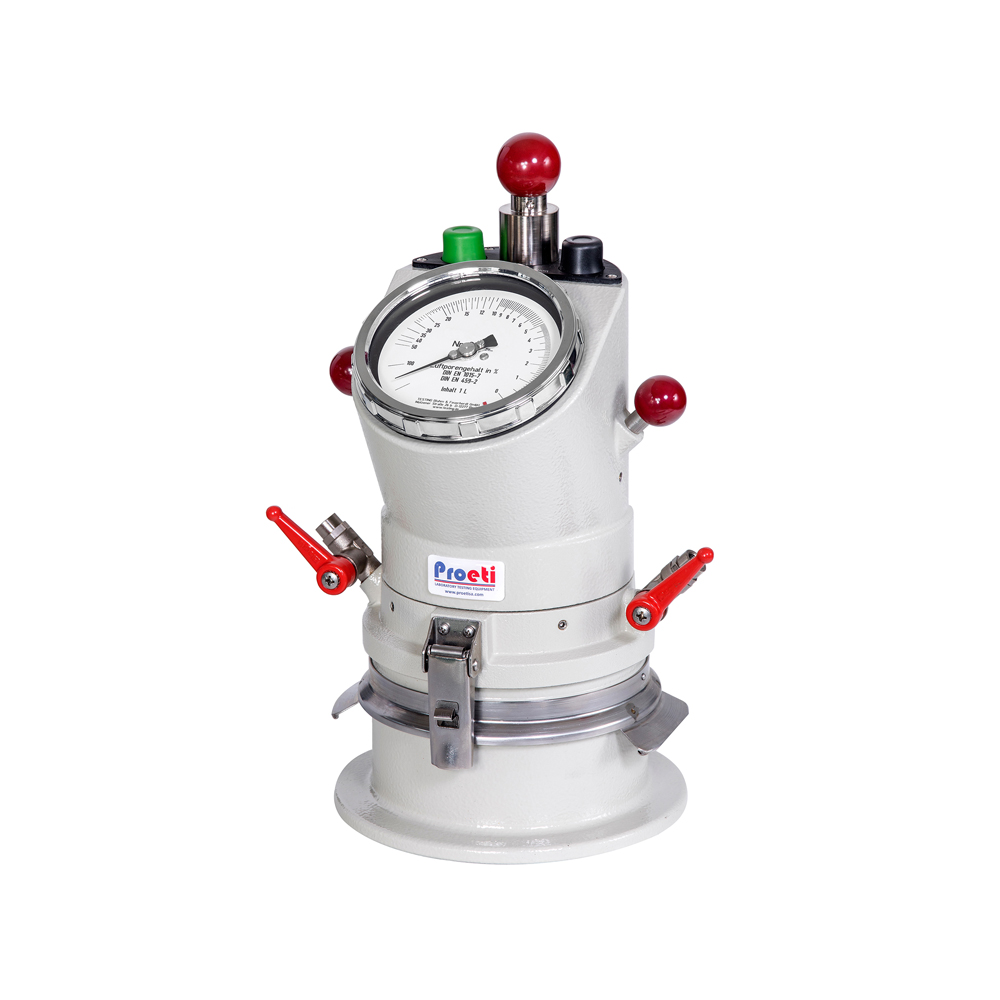
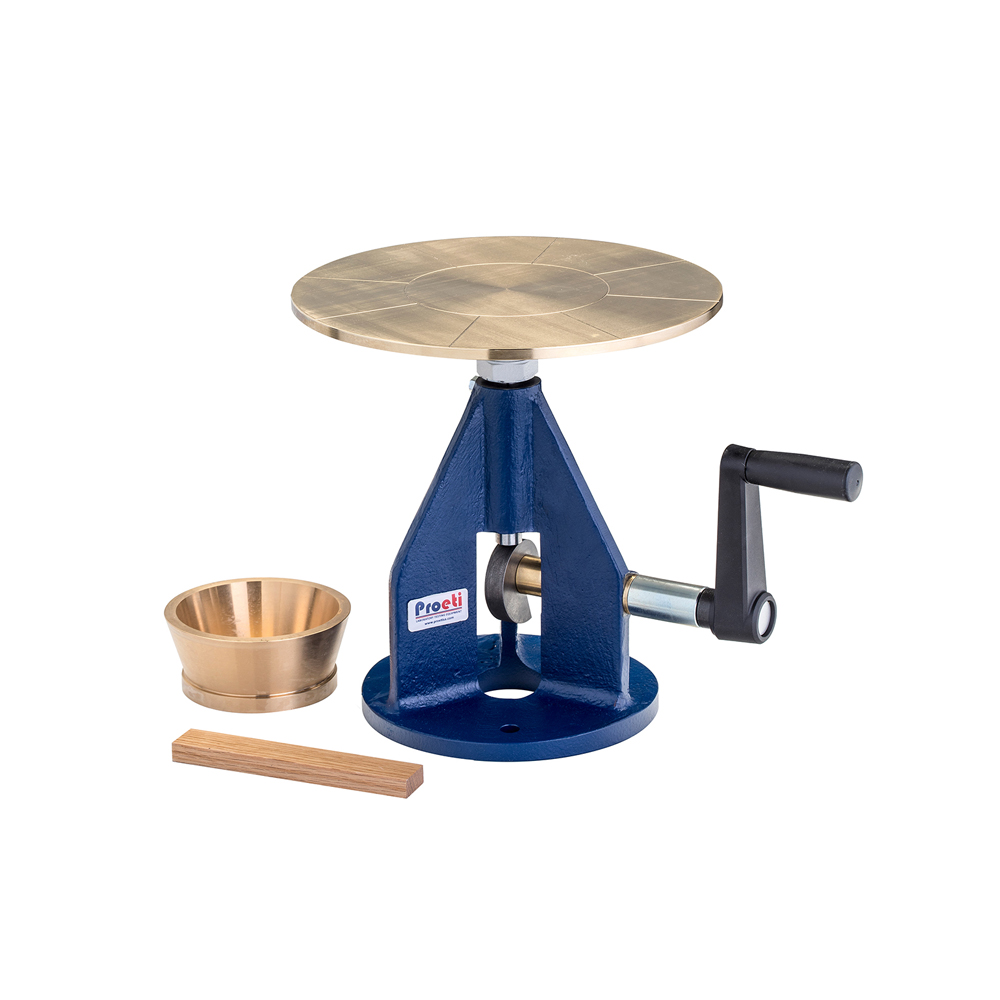
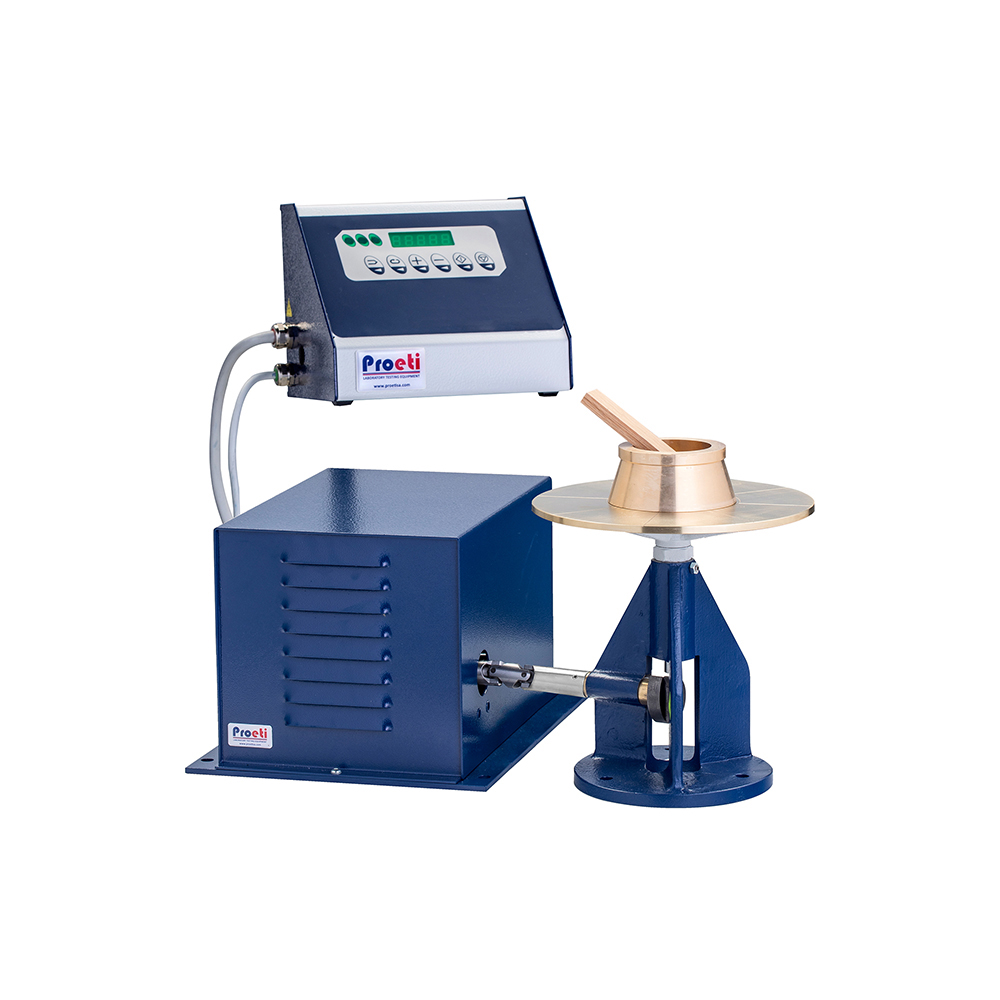
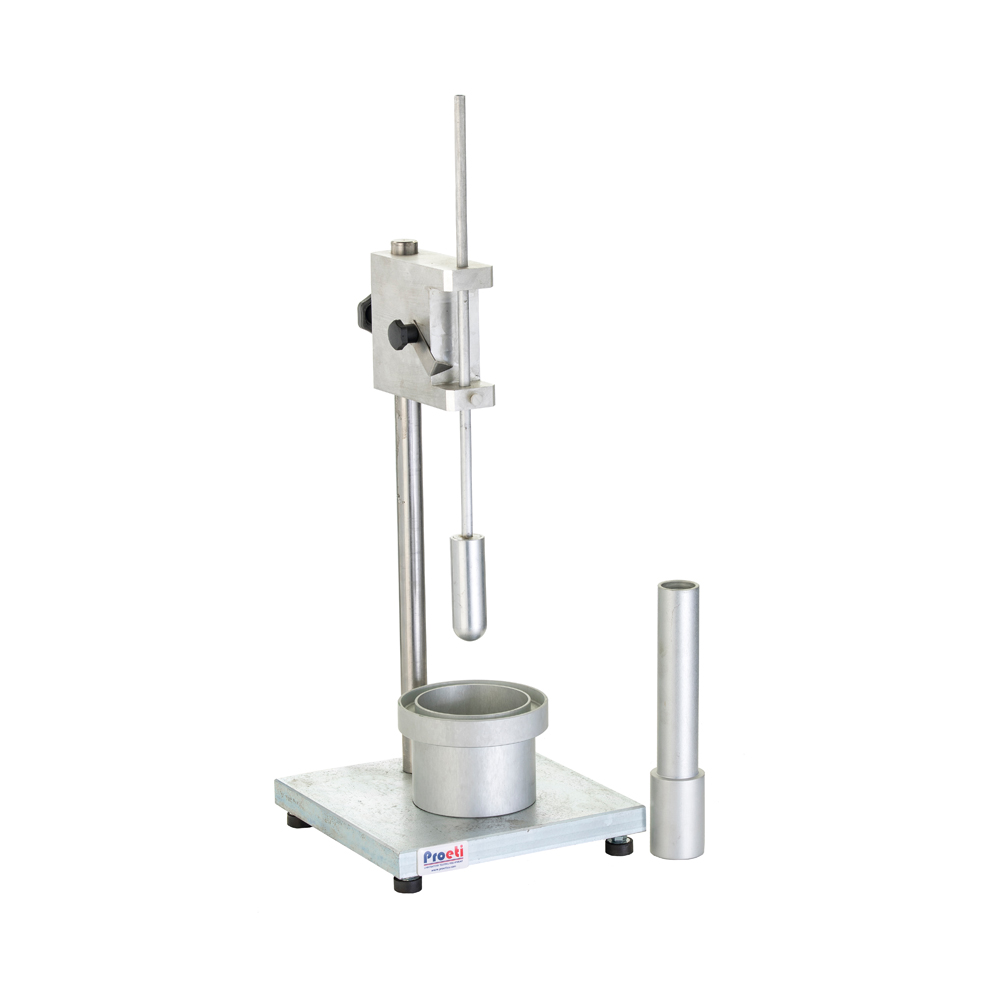
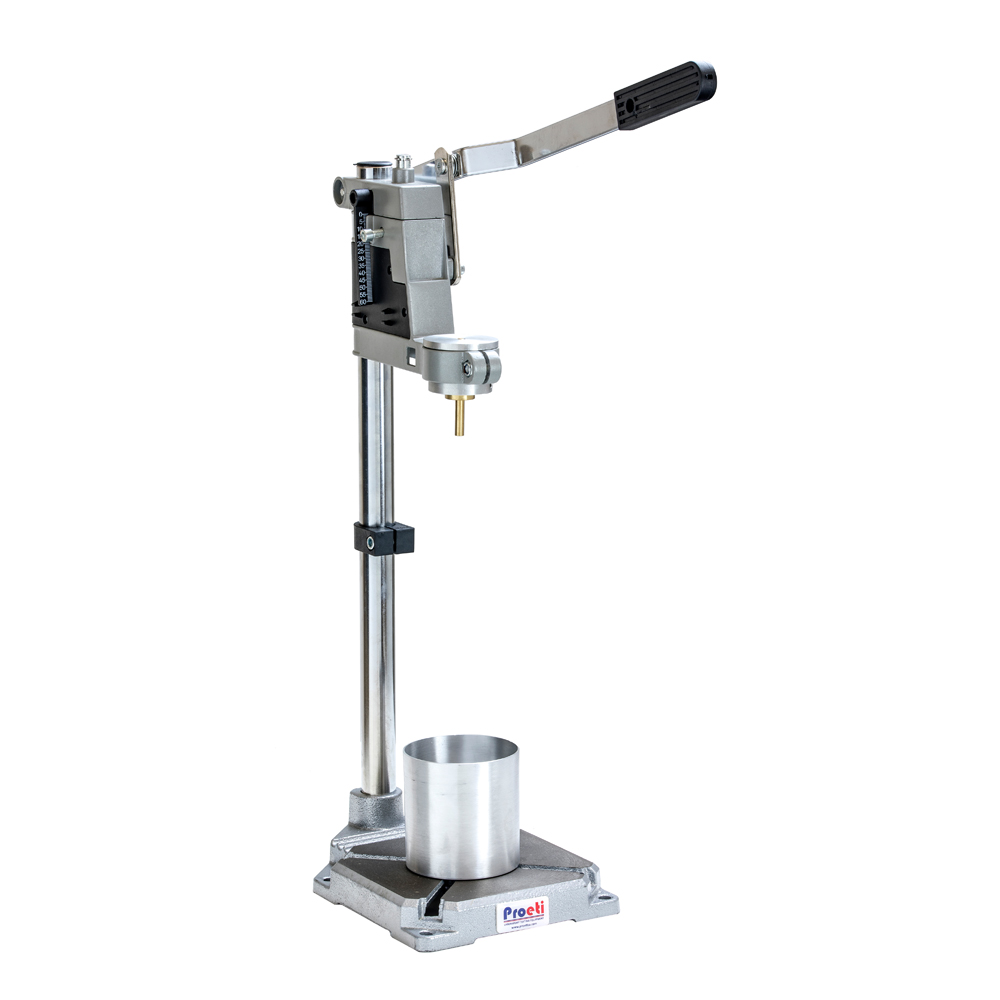
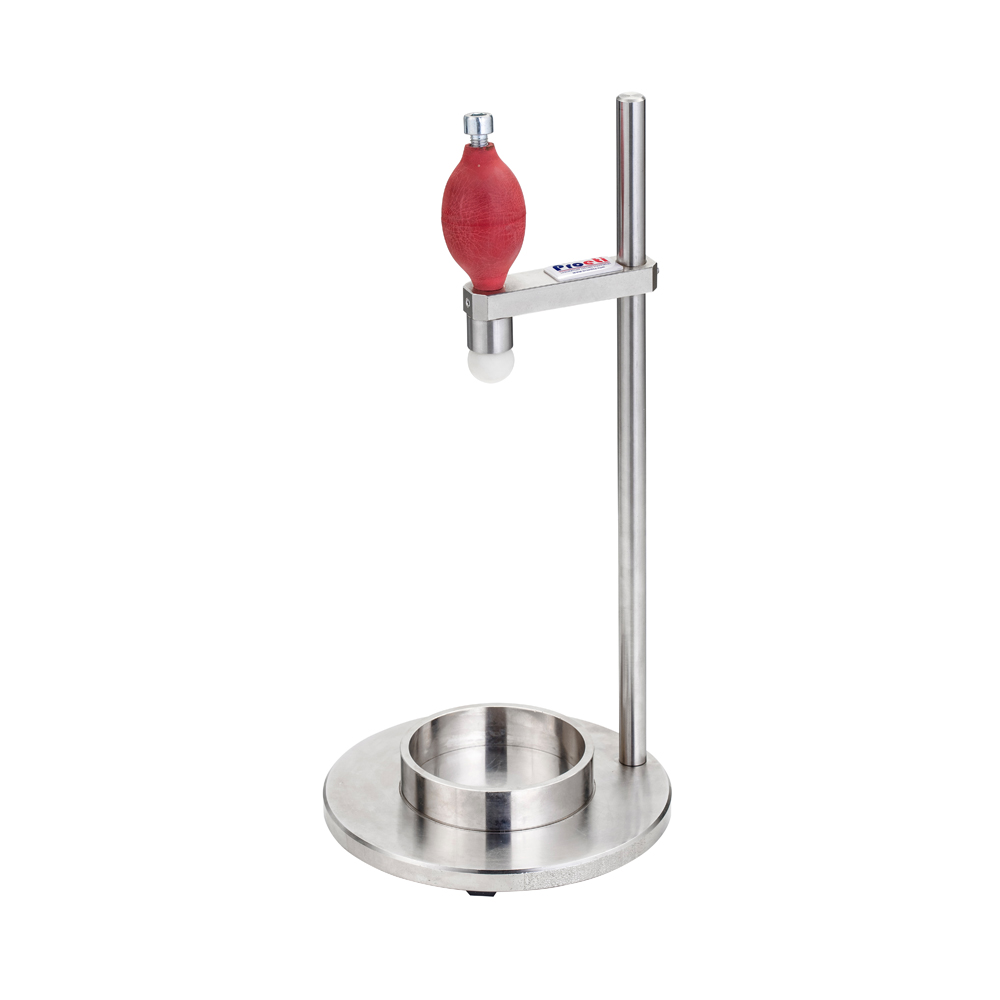
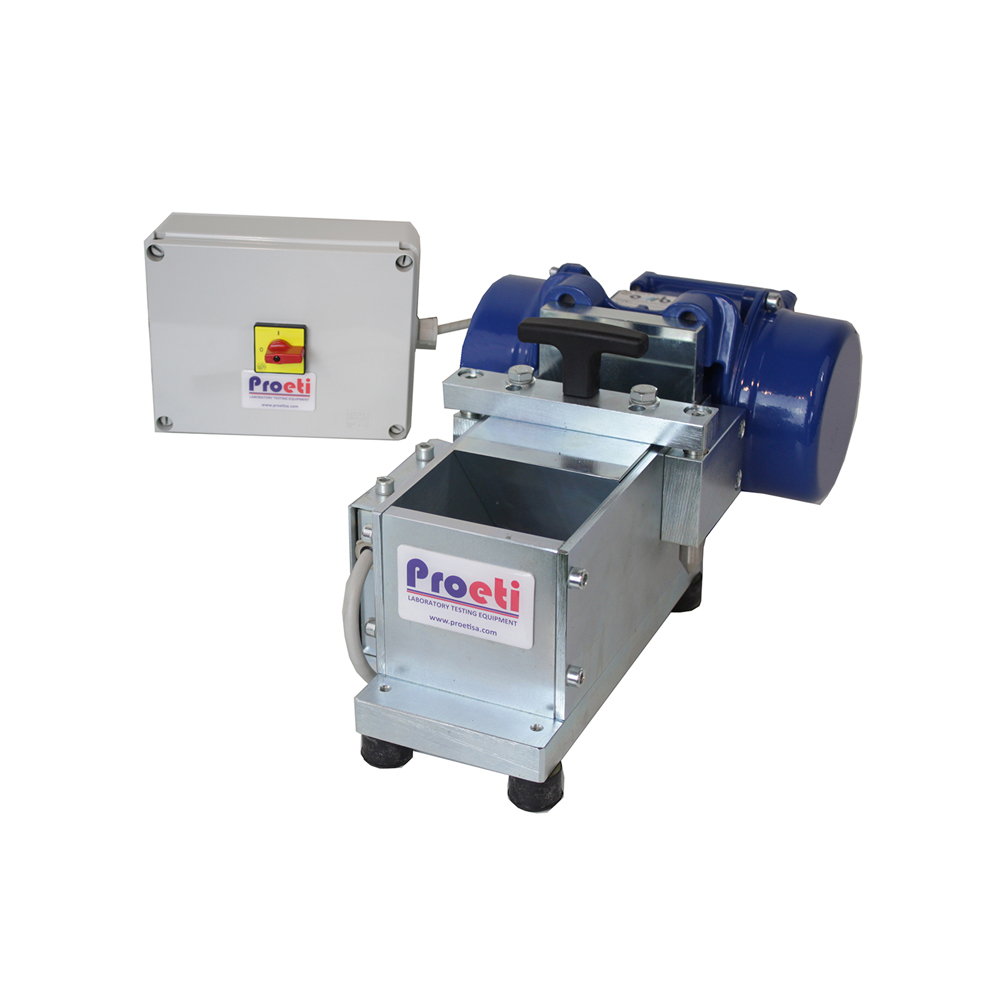
A cement is checked on three fronts: how strong it is, when it sets and whether its volume stays stable. Here you will find the cement testing equipment that measures all three, for cement, lime and mortar, to the EN 196 series, EN 459 for lime and ASTM: Vicat apparatus, Le Chatelier, flow tables, jolting apparatus and flexural and compression machines. Tell us which standards you work to and we will put your equipment together.
Common cements are specified in EN 197-1 and tested with the methods of the EN 196 series. In Spain, the Instruction for the Reception of Cements (RC-16) sets which tests are carried out on delivery. The usual ones:
| What is measured | Equipment and standard |
|---|---|
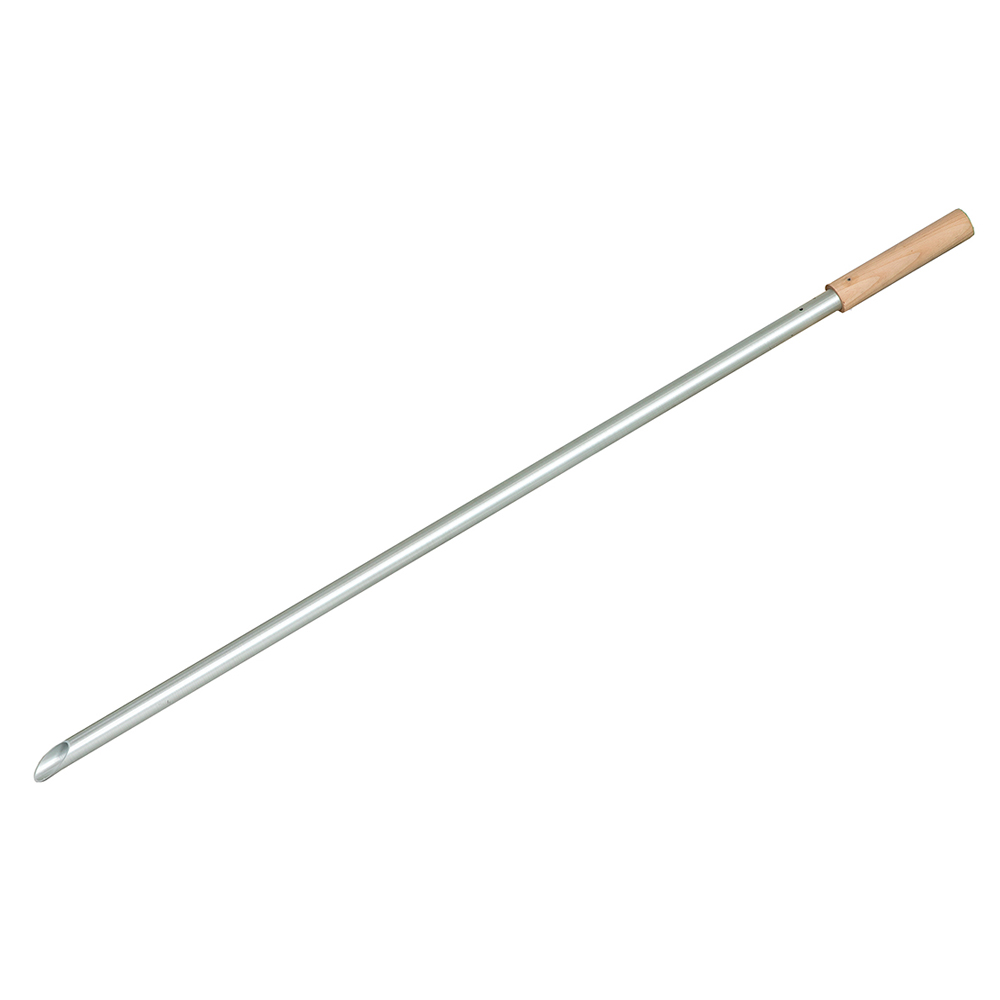
| Sampling | Samplers for bags and bulk cement (EN 196-7) |
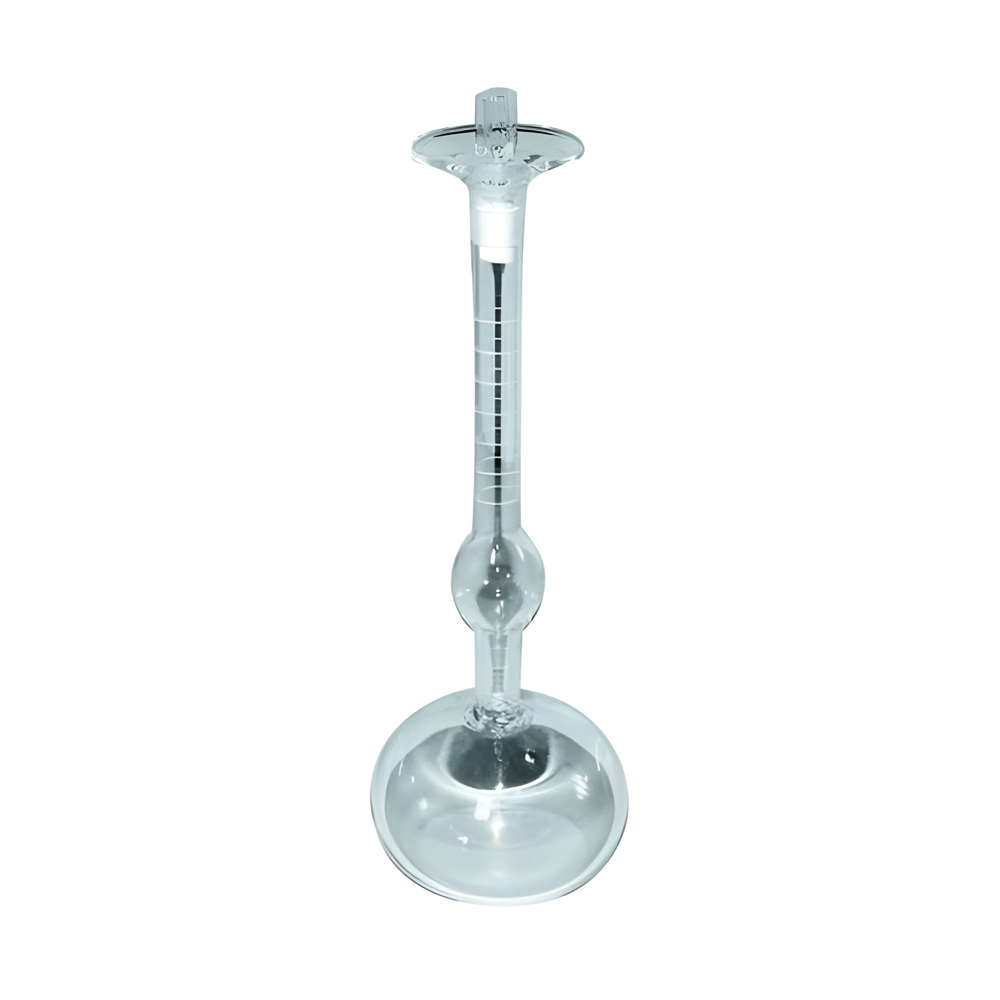
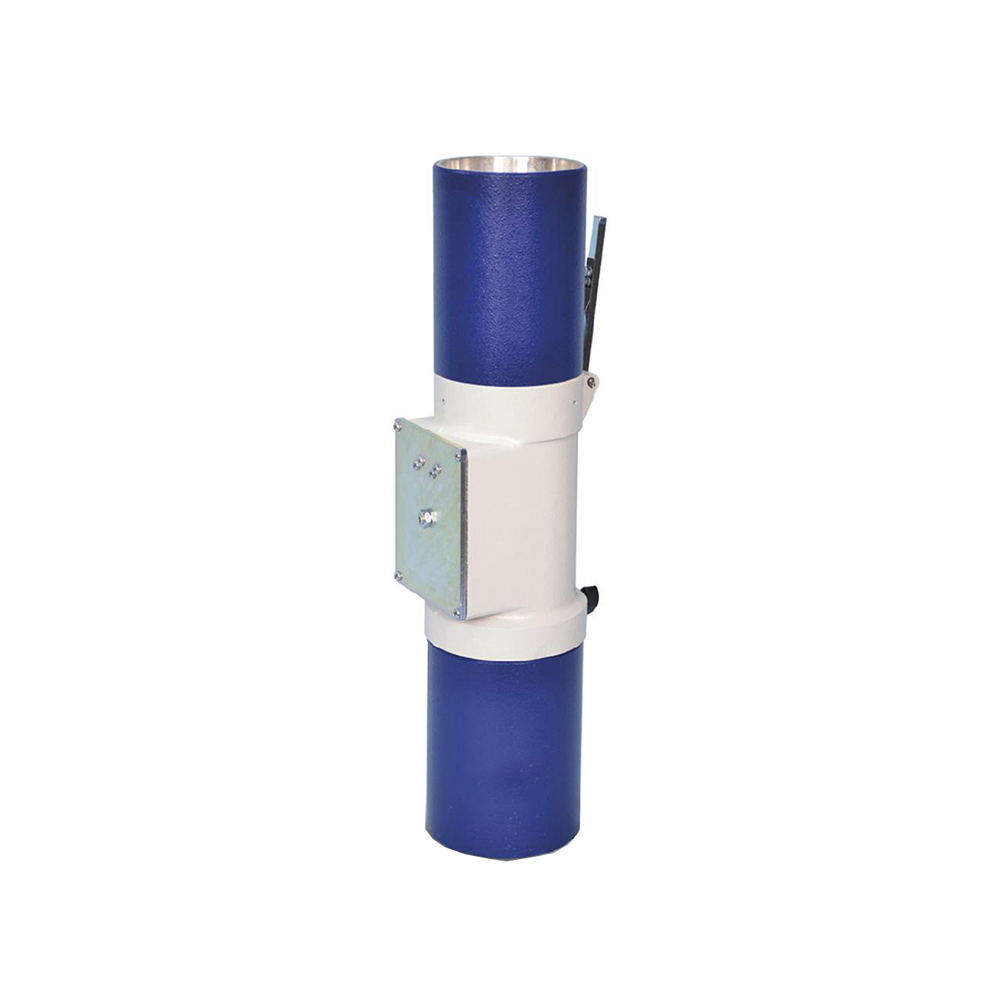
| Density | Le Chatelier flask (EN 196-6, ASTM C188) |
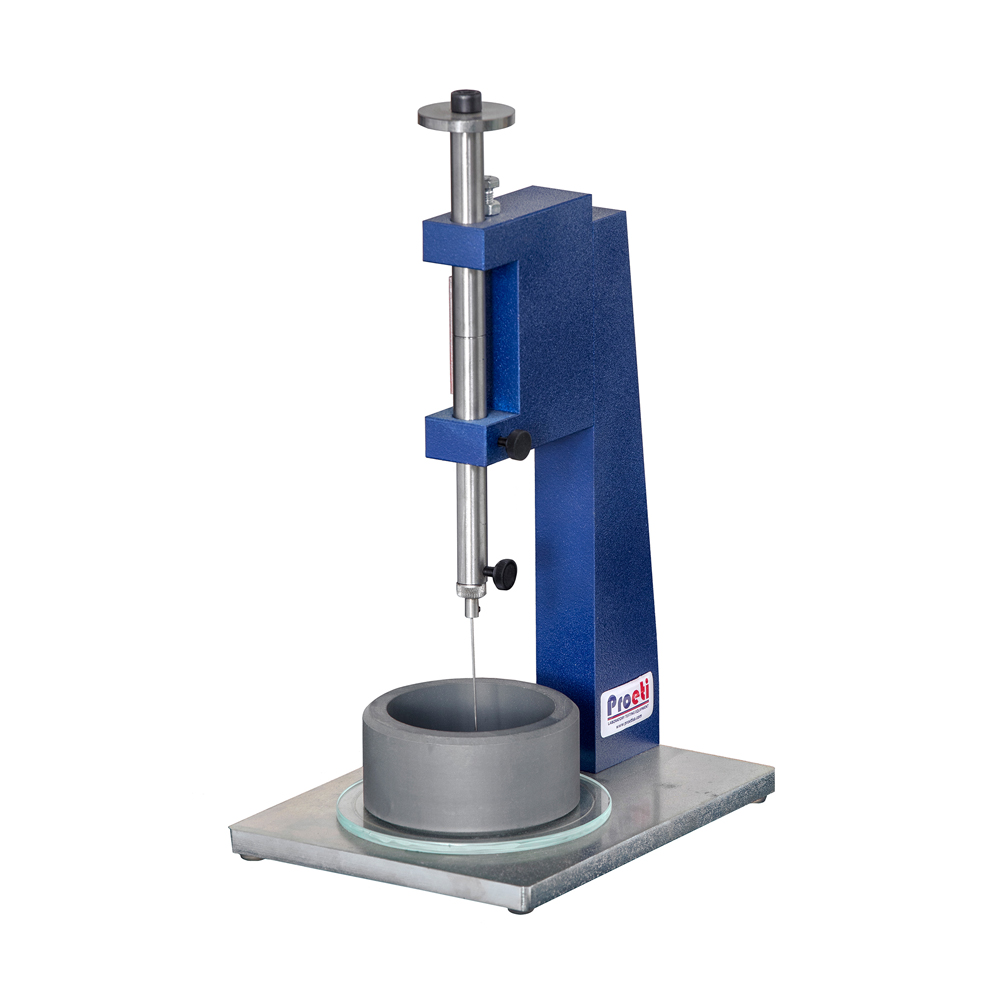
| Standard consistence and setting time | Vicat apparatus (EN 196-3) or Gillmore apparatus (ASTM C266) |
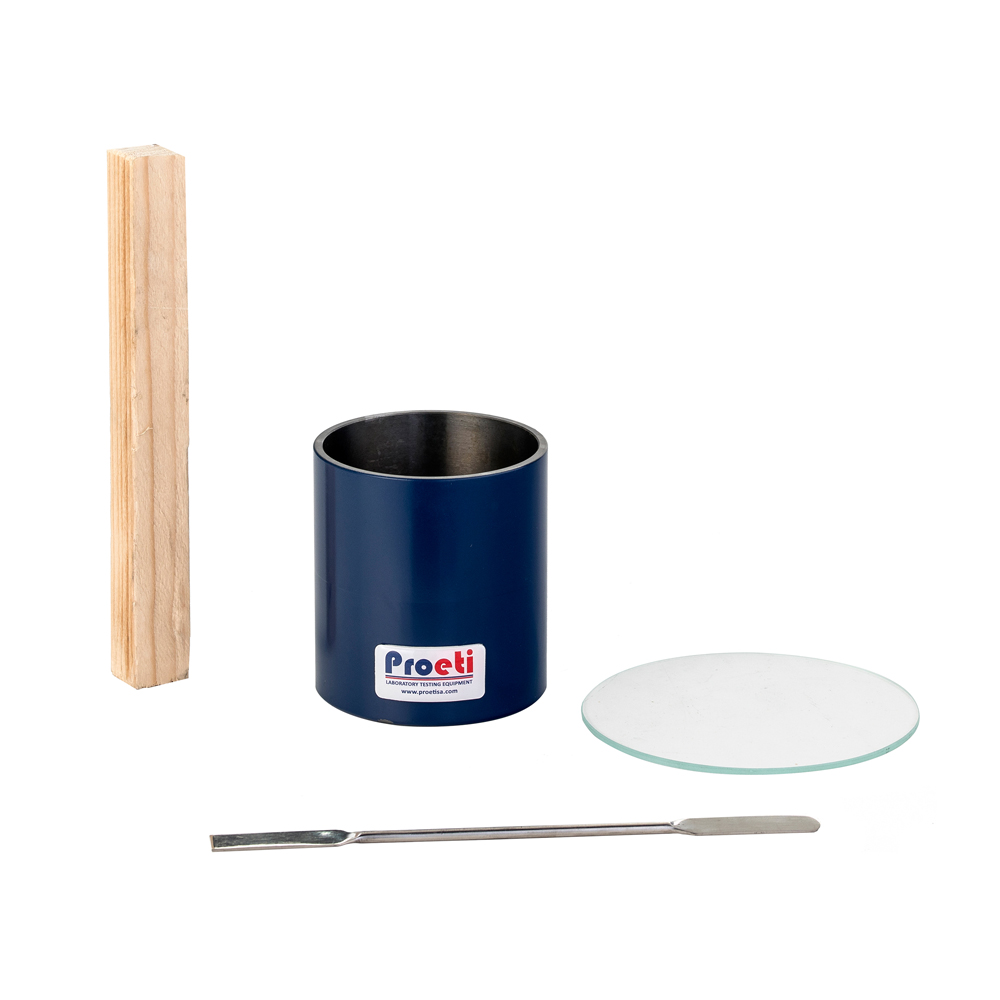
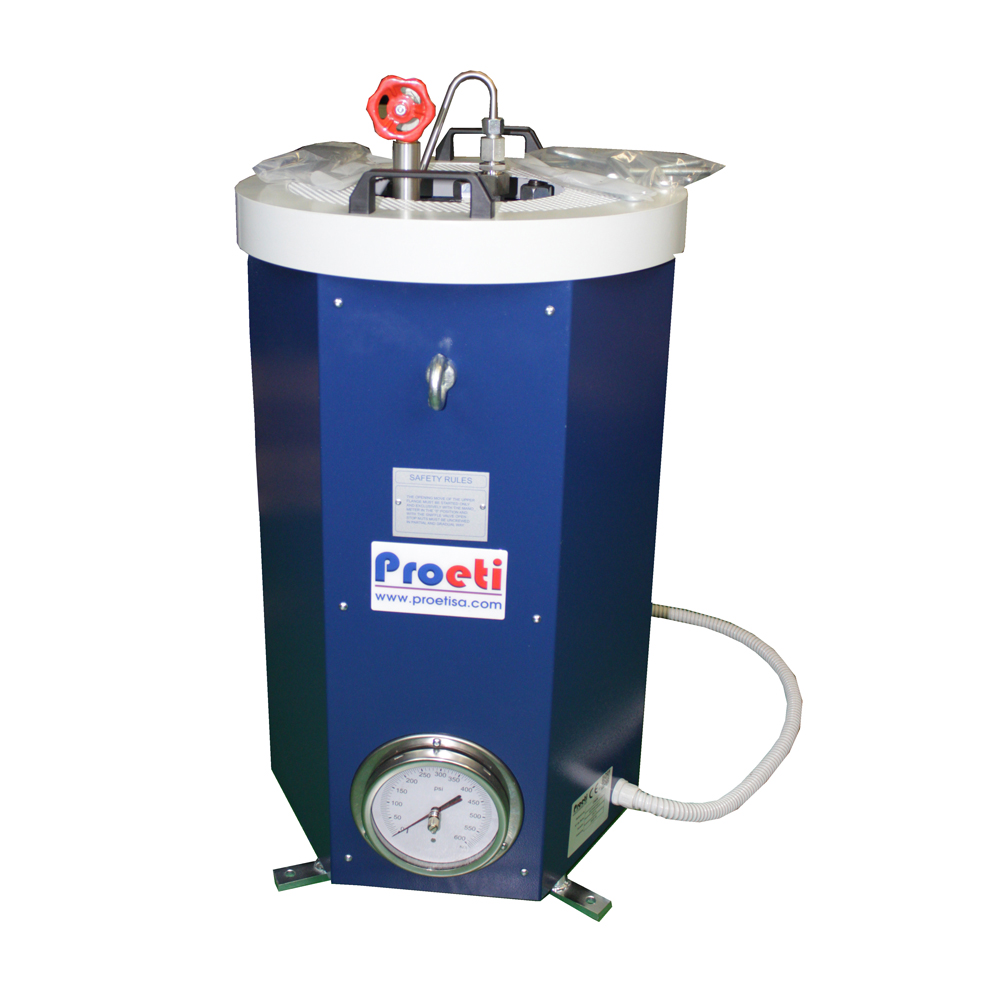
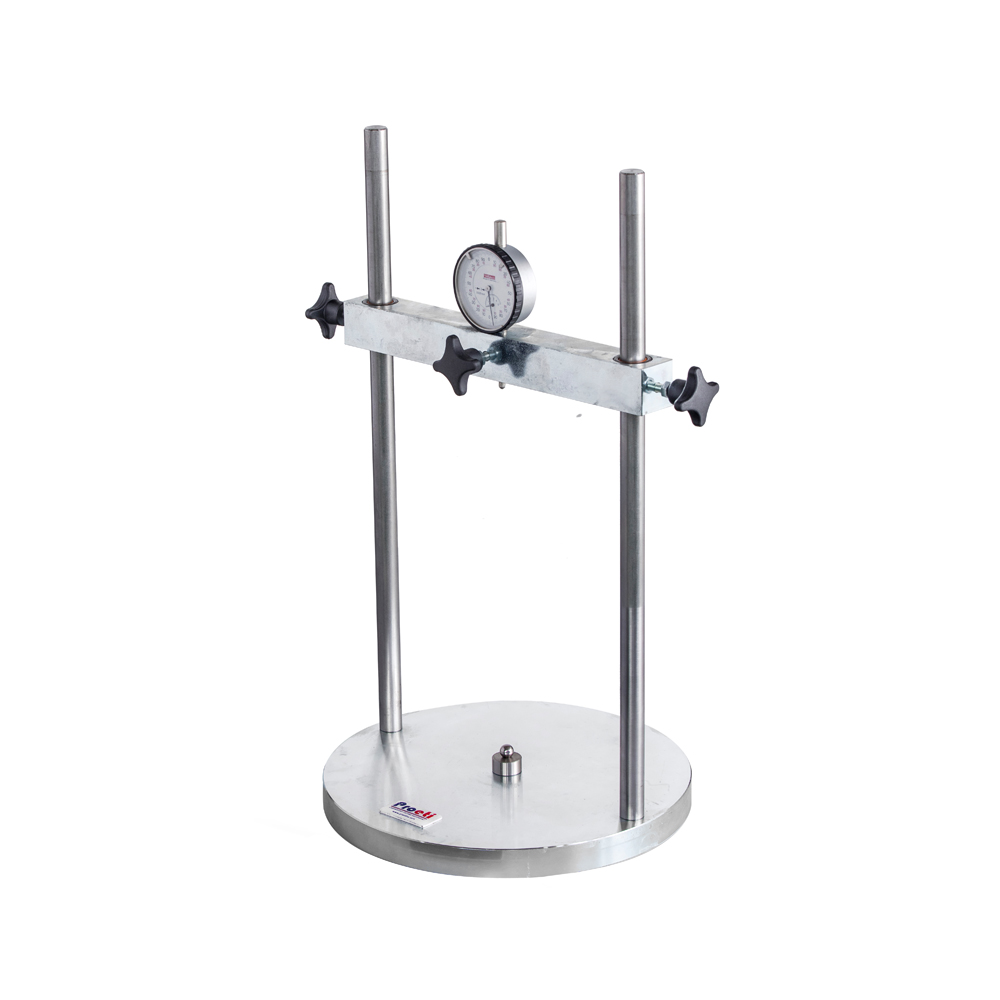
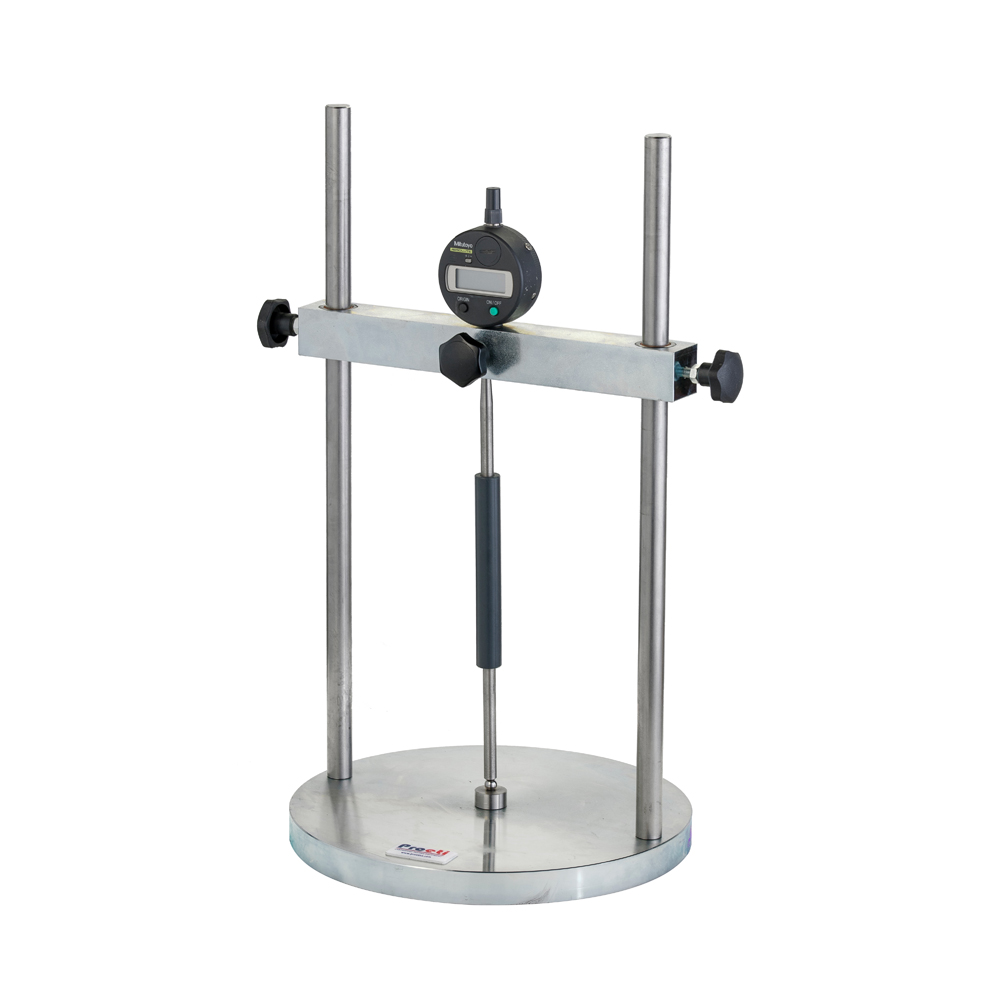
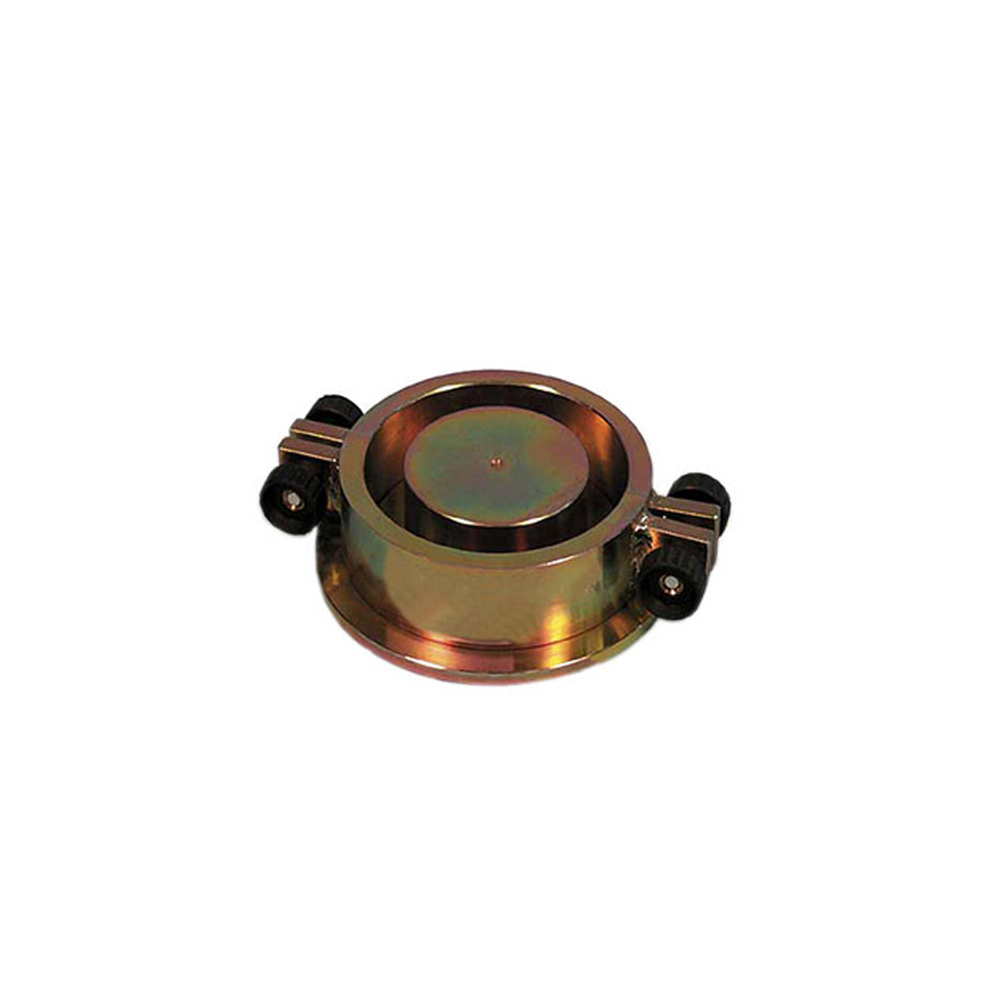
| Soundness | Le Chatelier mould and bath (EN 196-3) or autoclave (ASTM C151) |
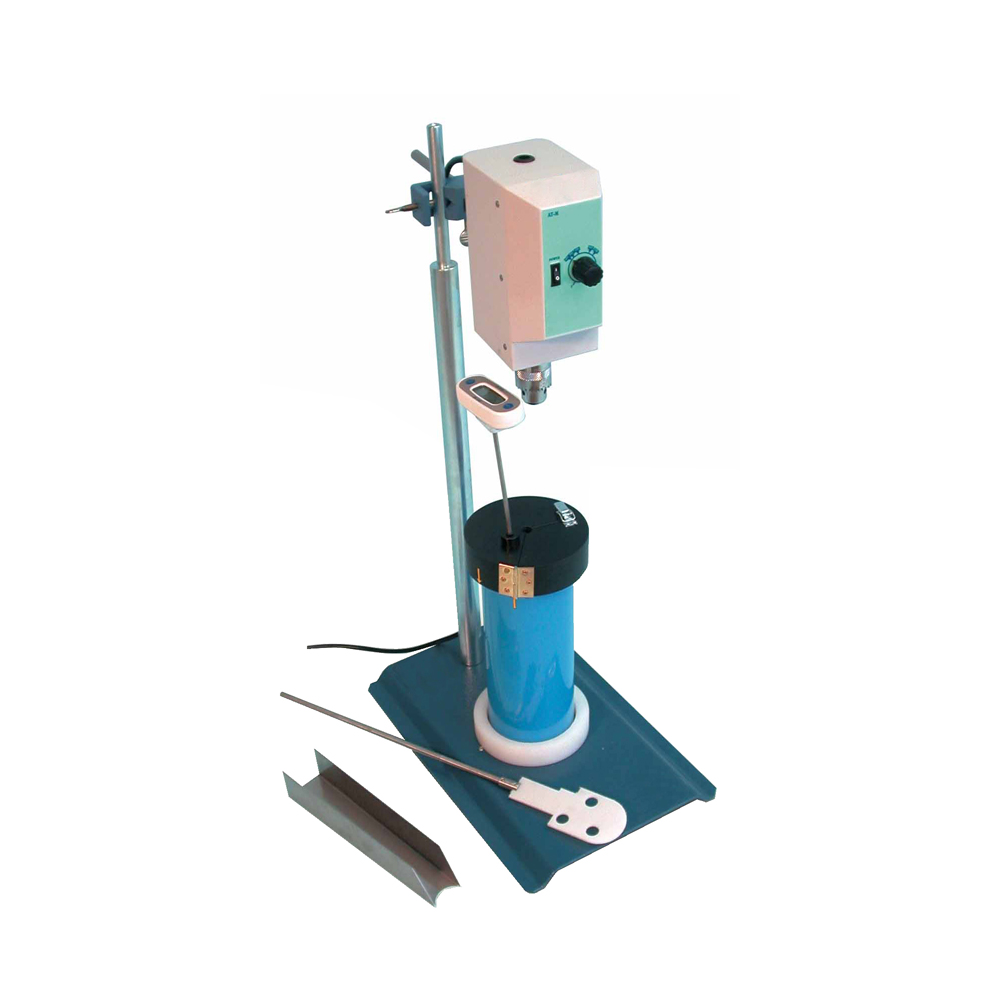
| Flexural and compressive strength | Three-gang mould, jolting apparatus, curing cabinet and compression-flexural testing machine (EN 196-1) |
| Mortar consistence and air content | Flow table (EN 1015-3) and air content meter (EN 1015-7) |
| Building lime | Reactivity, bulk density, yield and soundness (EN 459-2) |
| Bond strength of mortars and repairs | Pull-off tester (EN 1542, EN 1015-12) |
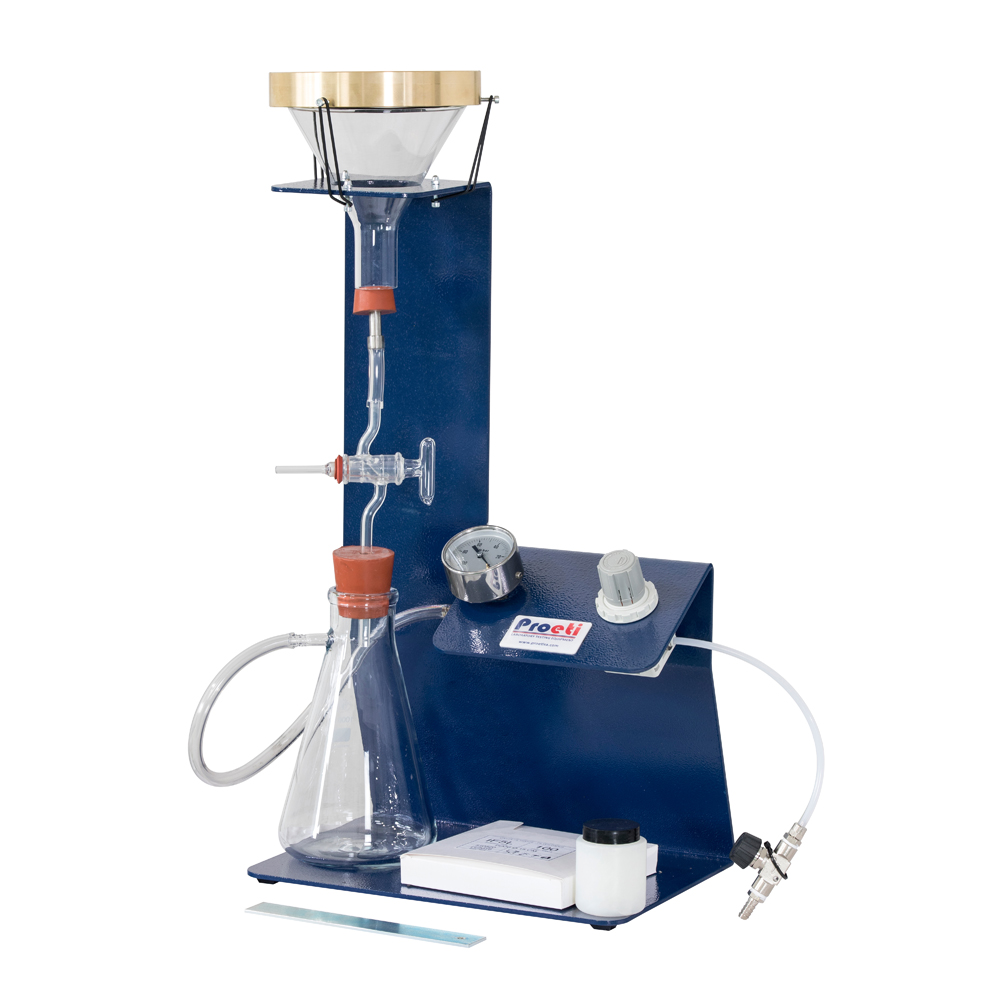
Each group has its own section: physical and chemical properties, setting and consistency, lime, grouts and sludge and mechanical tests.
To get a price, click Budget on each product page and send one request with everything you need. If you would rather talk to us, write to us or call +34 916 28 29 40.
Those set by its product standard: compressive strength at 2 or 7 and 28 days, initial setting time, soundness and a series of chemical analyses, such as sulfate and chloride content, loss on ignition and insoluble residue. Depending on the type, fineness, density or heat of hydration are added.
They are its strength class: the minimum compressive strength, in MPa, that a standard mortar made with it must reach at 28 days. The letter after it indicates the early strength: N, normal; R, high; L, low. A CEM I 42.5 R is a Portland cement of 42.5 MPa with high early strength.
EN 197-1 defines common cements and their requirements, and the EN 196 series describes how to test them. Special cements have their own standards, such as masonry cement (EN 413) or lime (EN 459). In Spain, the RC-16 instruction regulates their acceptance on site and at concrete plants.
Cement is the binder: a powder that hardens when mixed with water. Mortar is cement, sand and water, used for bedding, rendering or repairing. Concrete also contains coarse aggregate, and is the material of structures. All three are tested with different equipment.
Add each item to your request with the Budget button on its product page and send it. If you are setting up a control laboratory, tell us which standards you must comply with and we will prepare the complete list, with the accessories each test requires.
To test the concrete made with these cements, see concrete.