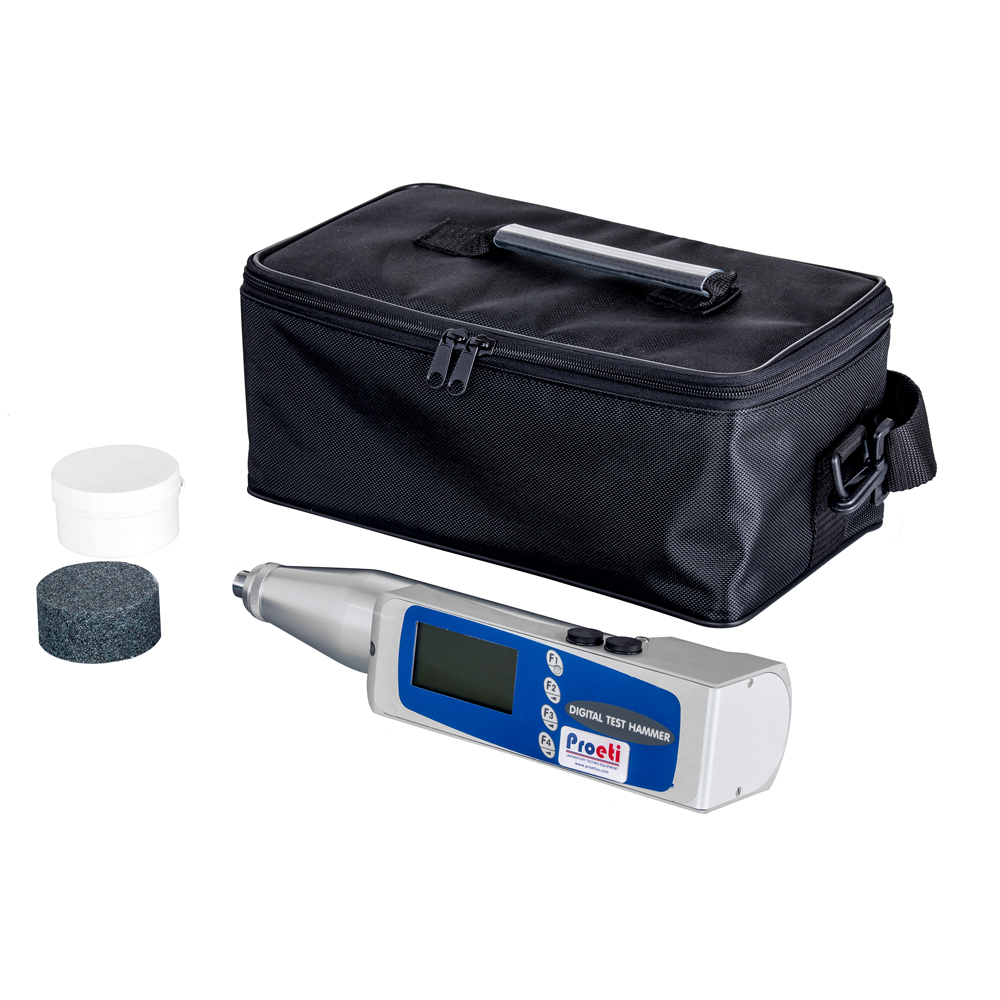
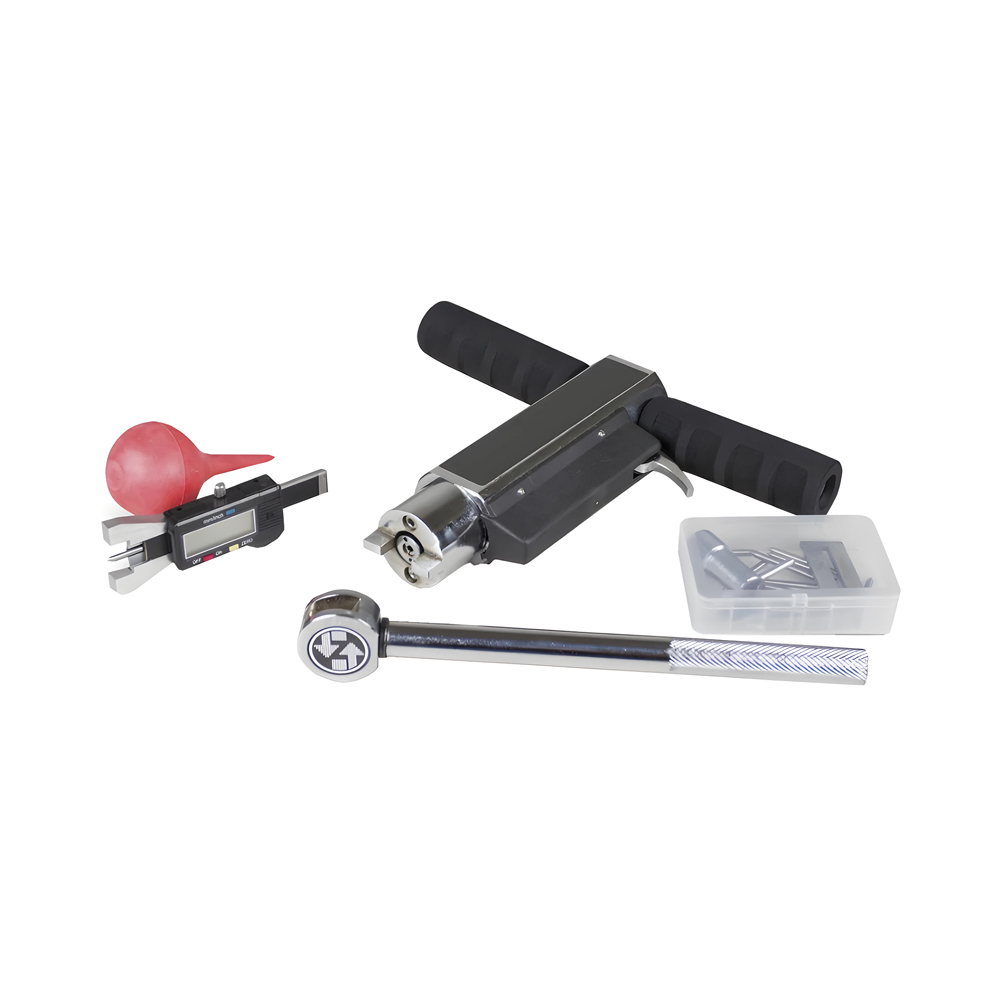
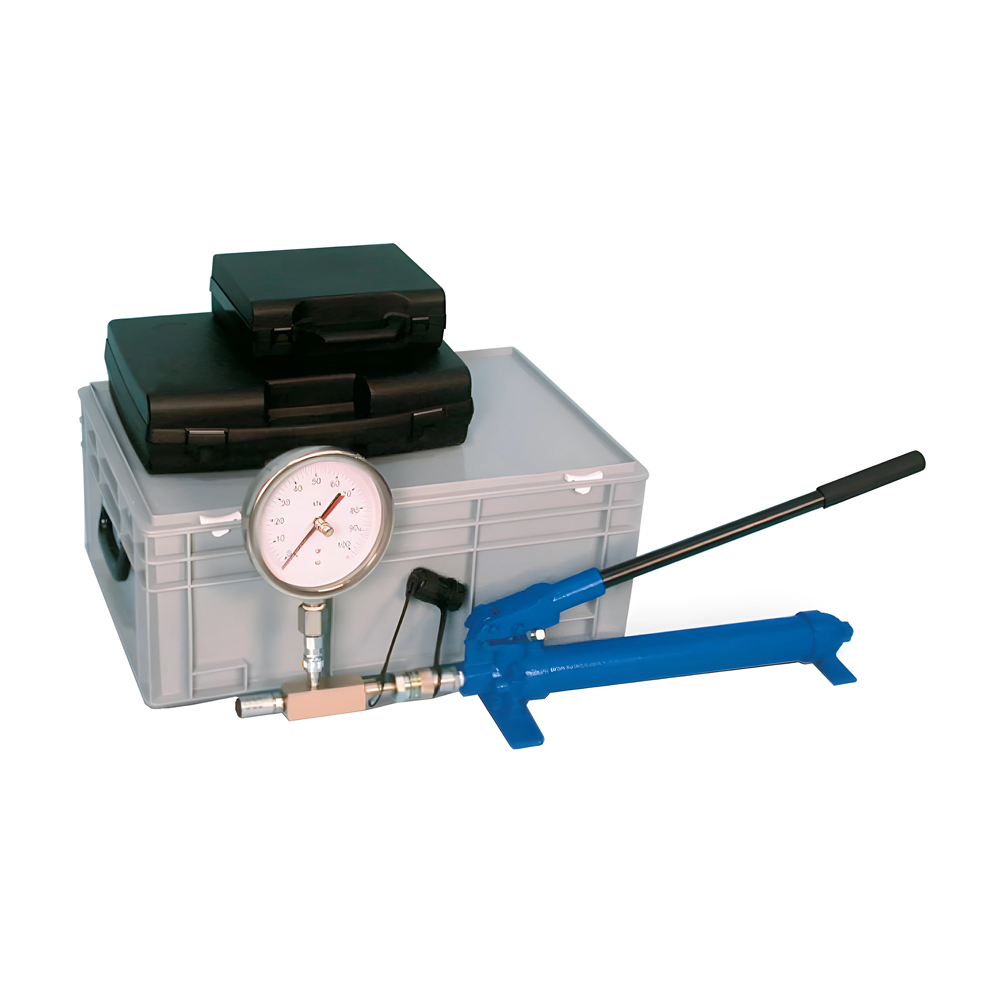
Once the structure is built, its strength is estimated without specimens: with a rebound hammer on the surface, with a pull-out test or by drilling cores. This section groups the equipment for hardened concrete testing, plus the mould and length comparator for measuring shrinkage, to EN 12504 and ASTM. Tell us which structure you are going to test.
| Test | Equipment | Standard |
|---|---|---|
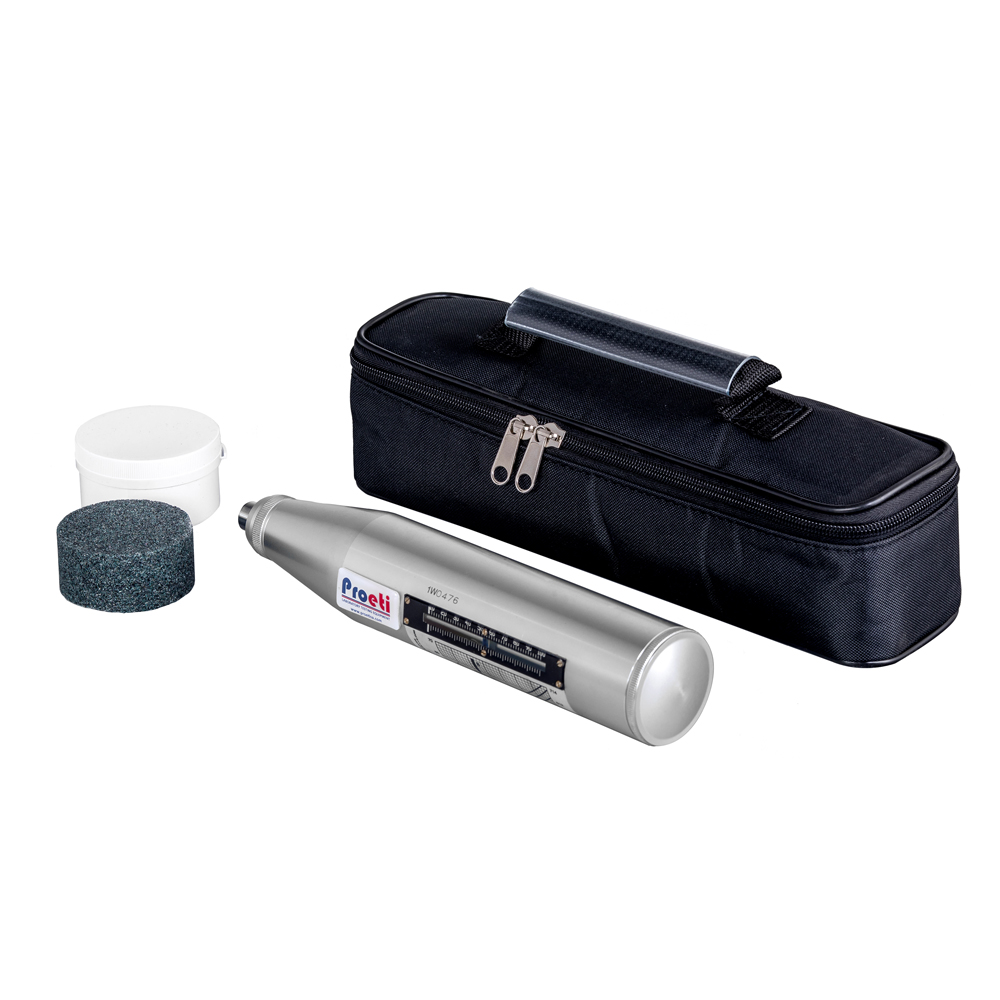
| Rebound number | Rebound hammer (10 to 70 N/mm²) or digital, which records the data | EN 12504-2, ASTM C805 |
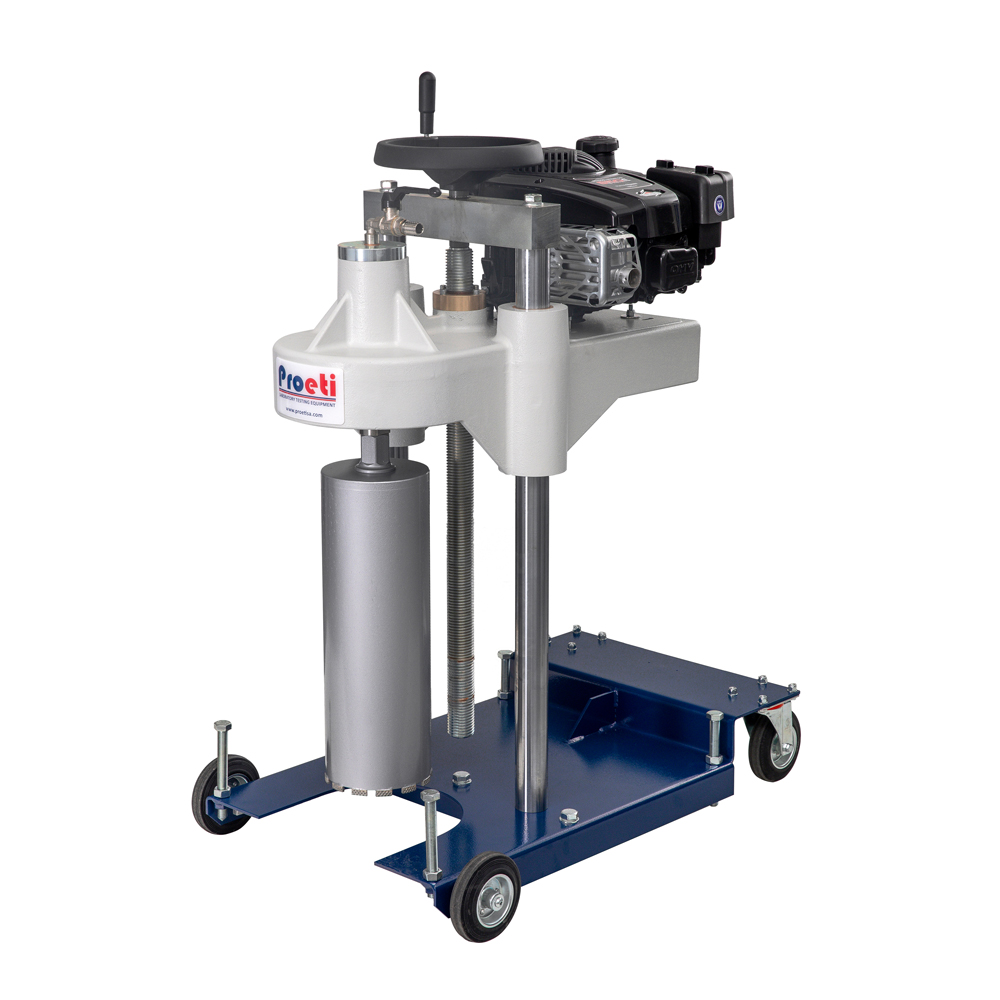
| Core drilling | 5 HP petrol core drill, with wheels and levelling feet | EN 12504-1 |
| Pull-out force | 100 kN hydraulic pull-out tester | EN 12504-3, ASTM C900 |
| Penetration resistance | Spring penetrometer | ASTM C803 |
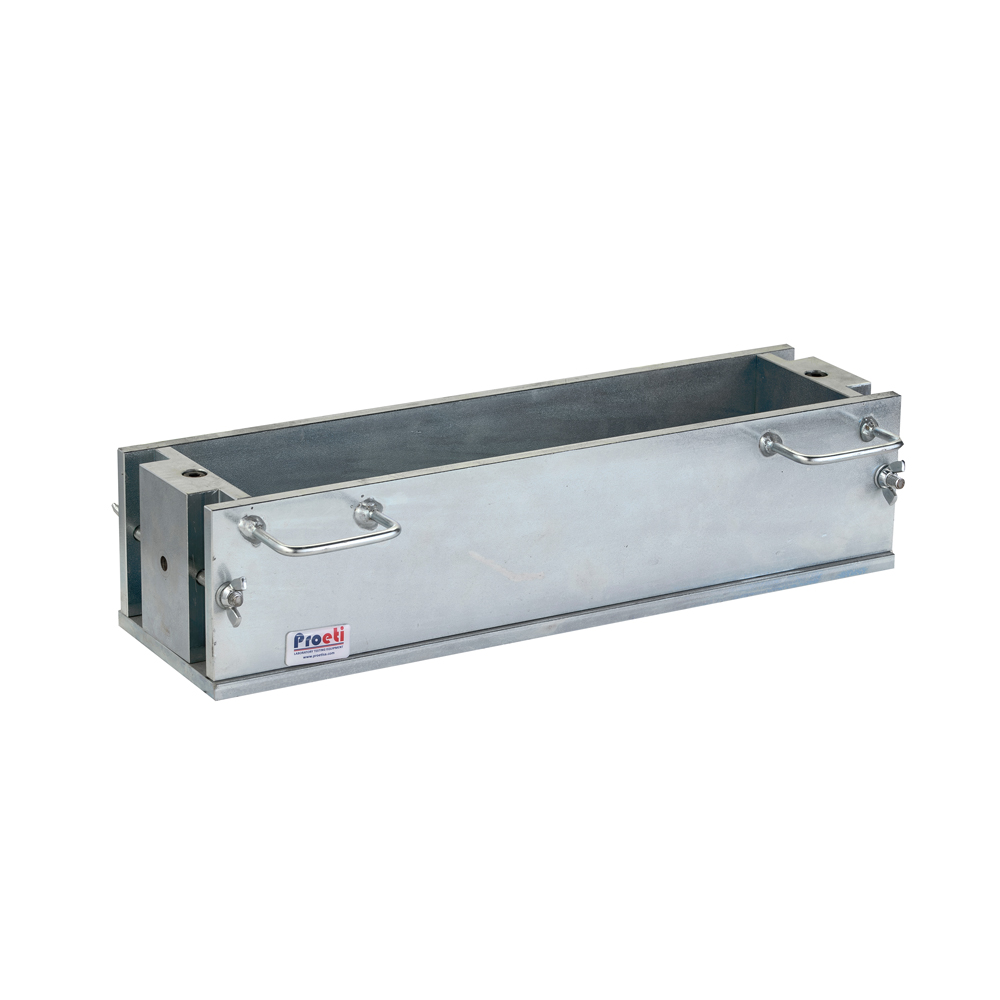
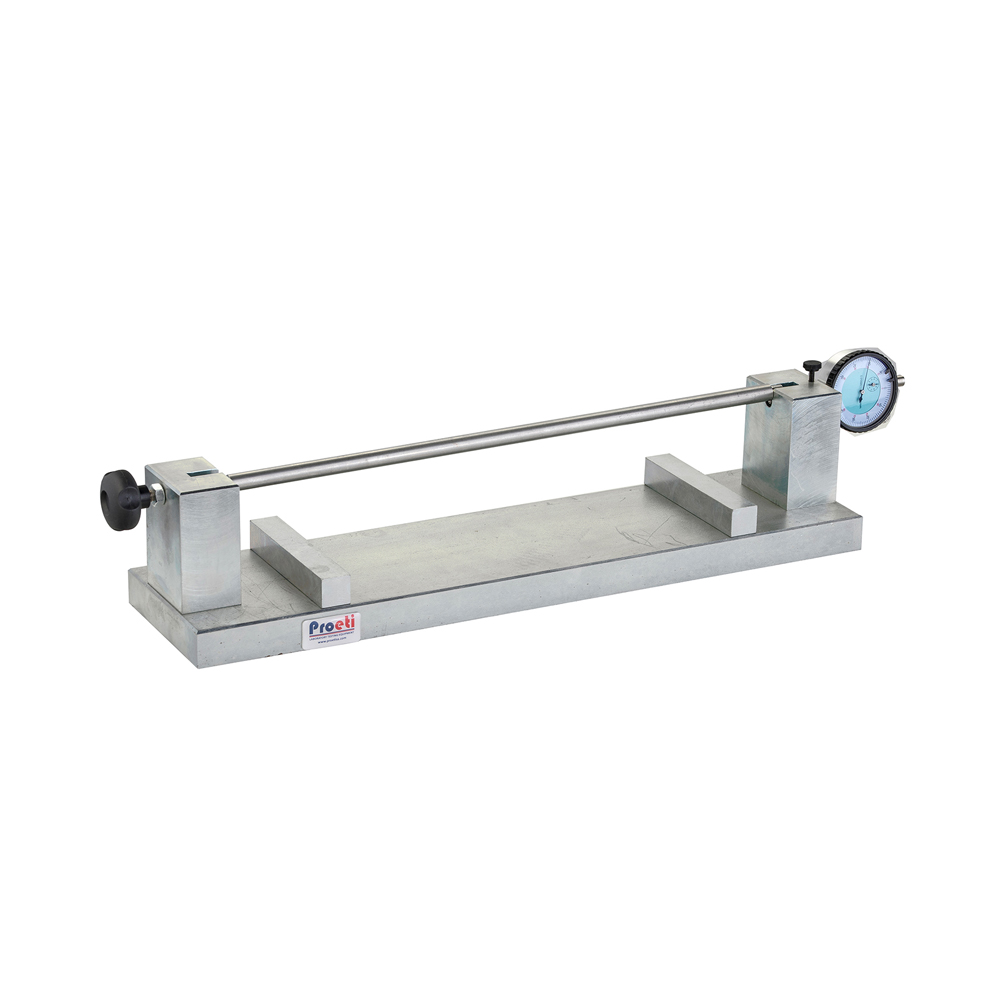
Shrinkage is measured on 100×100×500 mm beams made in the shrinkage mould: they are measured with the horizontal length comparator and its reference bar at different ages, and the change in length shows how much the concrete shortens as it dries.
| Rebound hammer | Pull-out | Core | |
|---|---|---|---|
| Damage | None | Small, superficial | A hole that has to be filled |
| What it gives | Surface hardness | Pull-out force | Actual compressive strength |
| Use | Comparing areas and choosing where to drill cores | Estimating strength with a correlation | Reference value |
To get a price, click Budget on each product page and send one request with everything you need. If you would rather talk to us, write to us or call +34 916 28 29 40.
By combining tests: the rebound hammer or ultrasonic testing is used across the structure to find the weaker areas, and cores are drilled at a few of them and crushed in compression. The cores calibrate the non-destructive tests and give the in-situ strength (EN 13791).
For comparing areas, yes; for giving the strength on its own, no. The rebound depends on the surface, moisture, carbonation and aggregate, so the readings are correlated with cores from the same concrete before drawing conclusions.
A cylinder cut from the structure with a diamond core bit. It is capped and crushed like a specimen. Its diameter must be several times the maximum aggregate size, and cutting through reinforcement is avoided.
The reduction in volume of concrete as it loses water while hardening and drying. If it is restrained, cracks appear; that is why it is measured on prisms and controlled through curing, joints and mix design.
For the durability of the same structure (carbonation, corrosion, ultrasonic testing), see concrete durability.