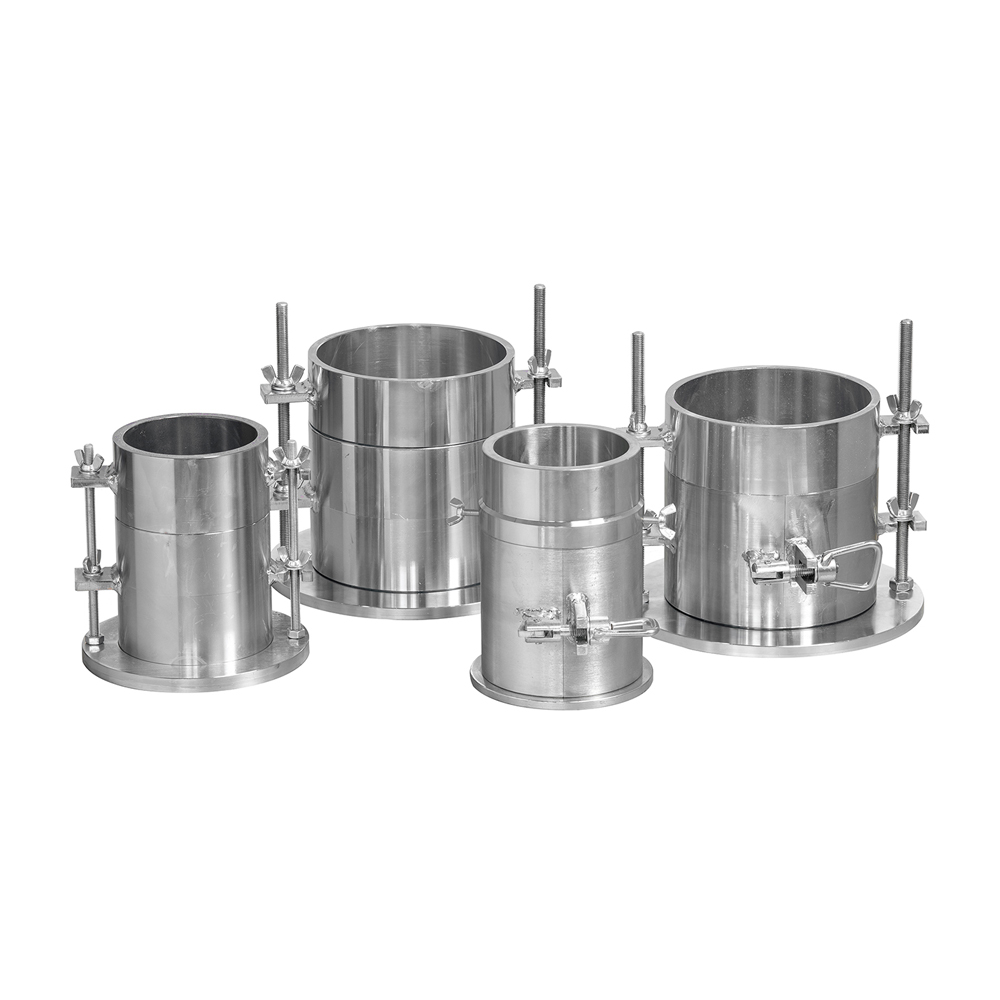
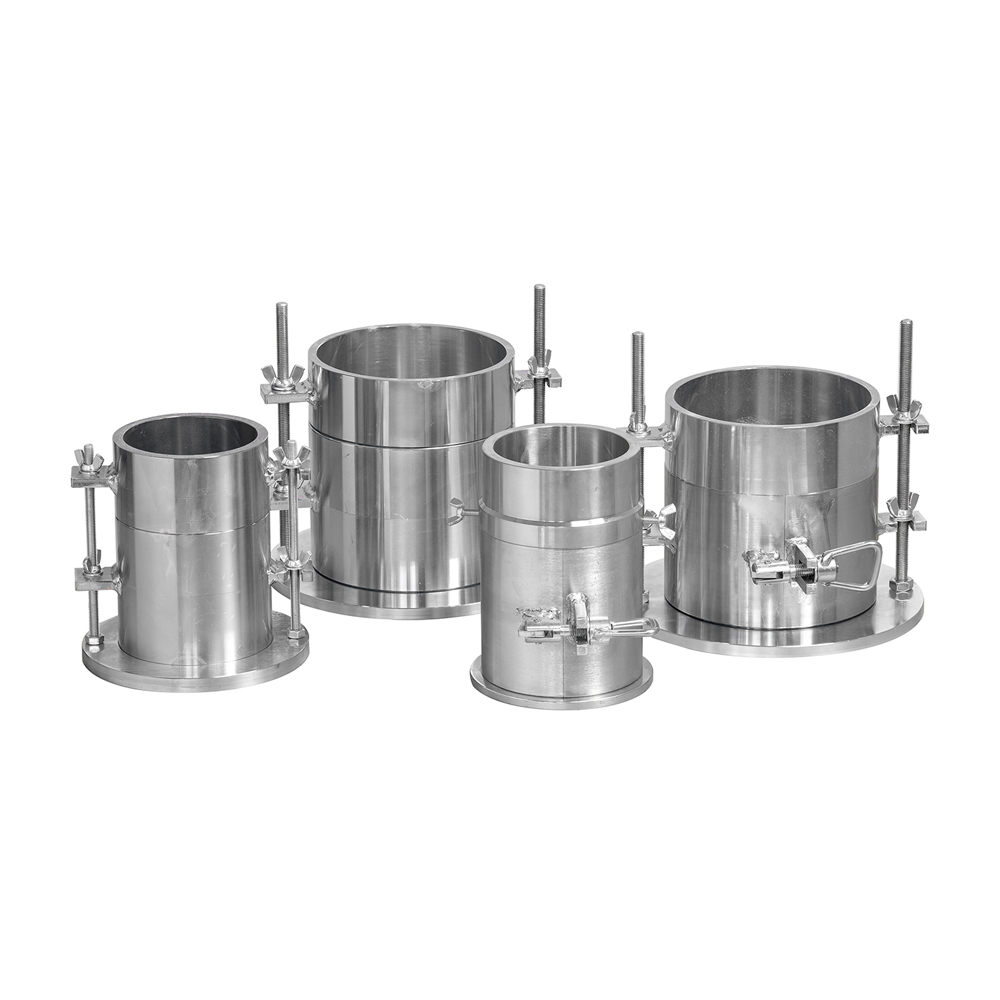
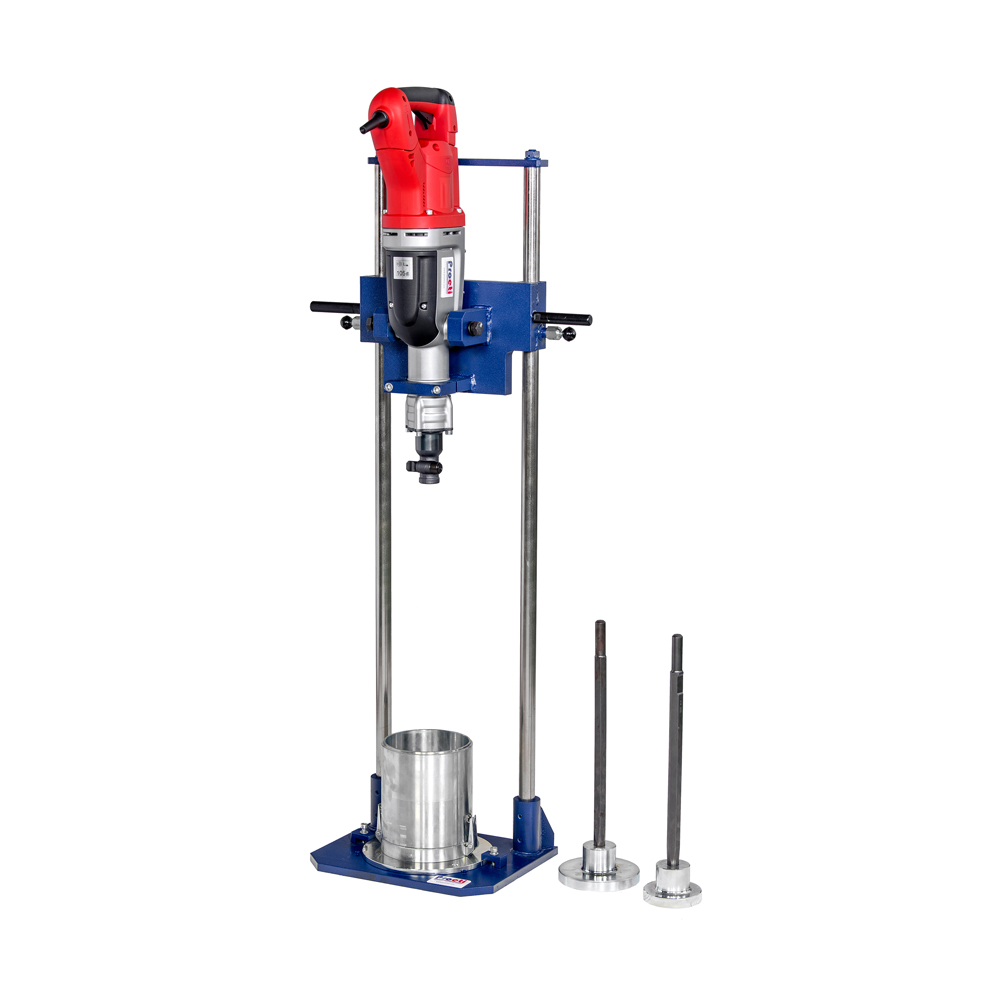
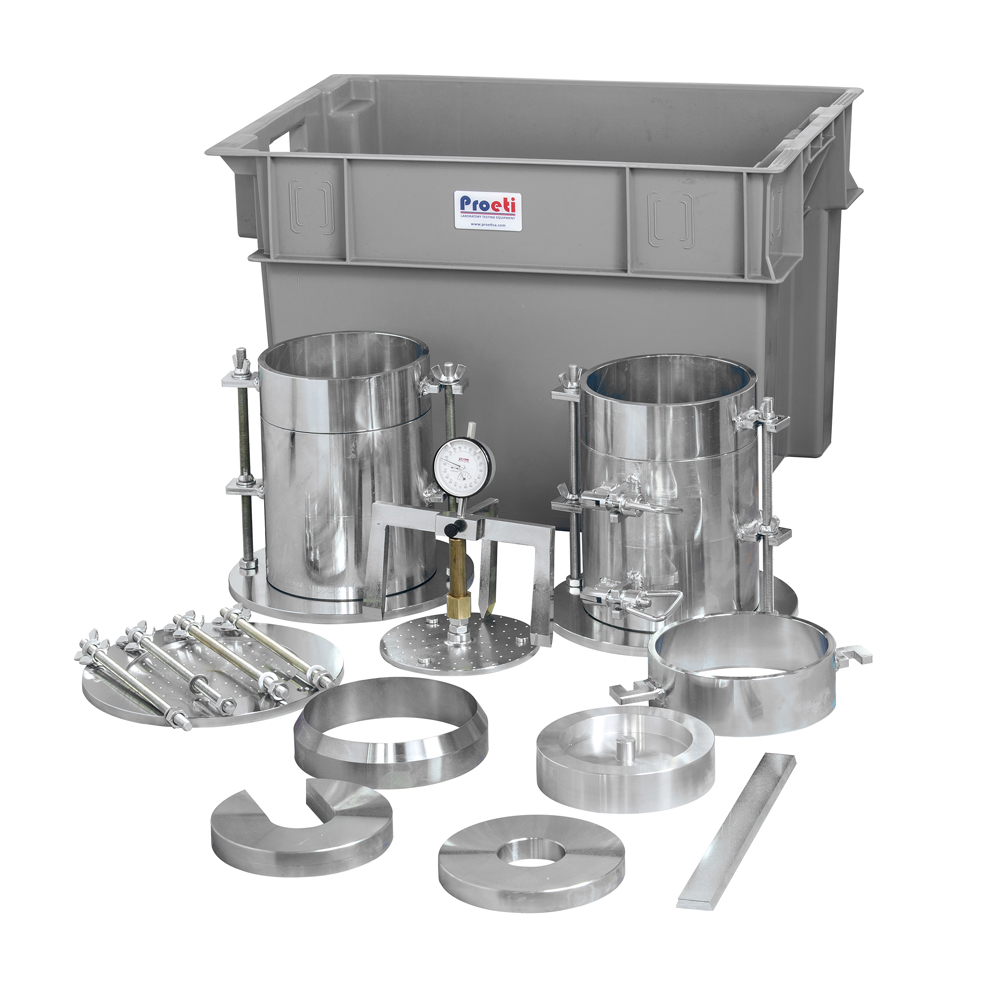
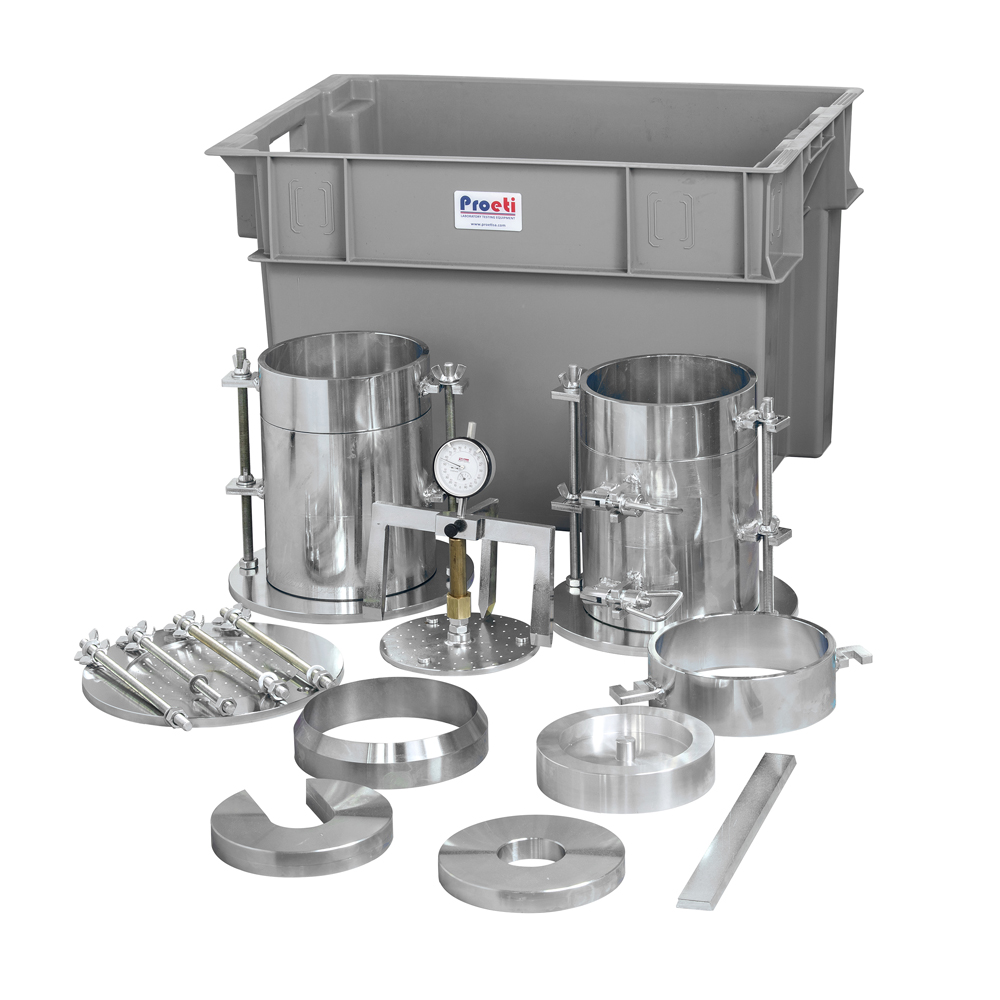
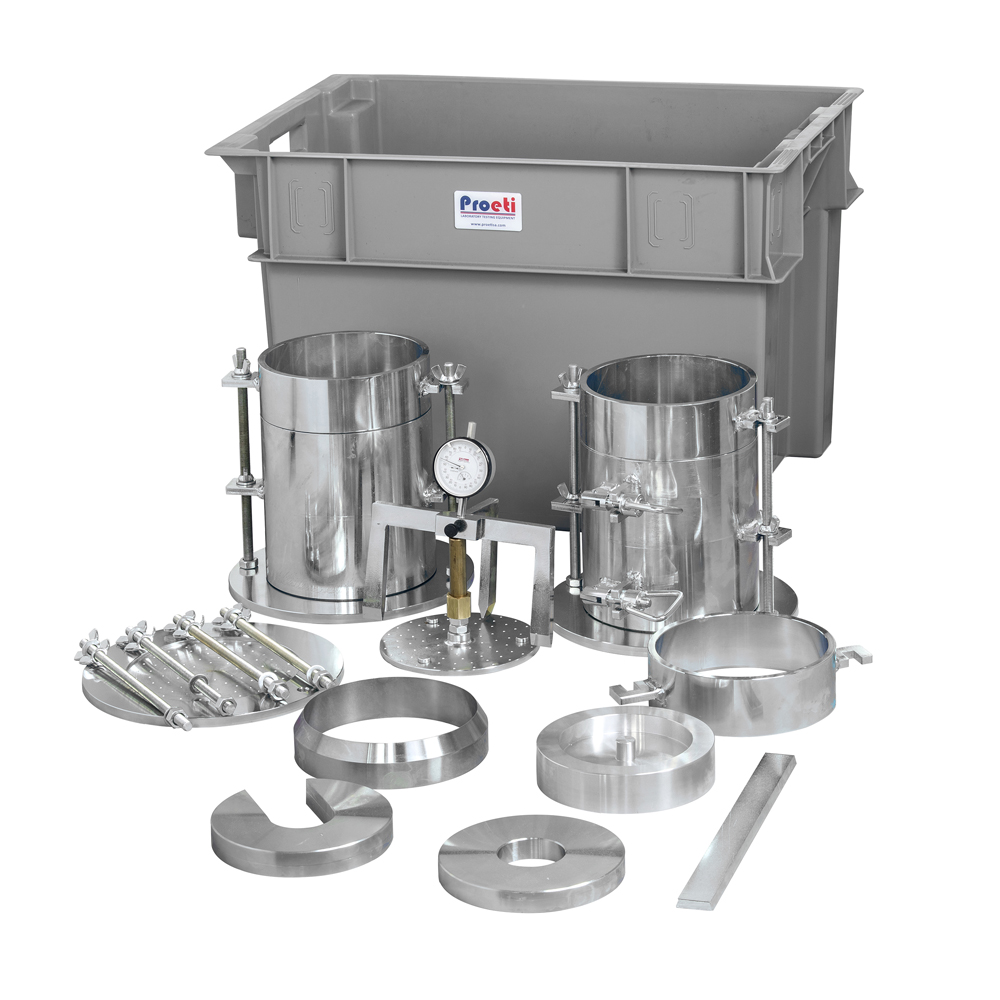
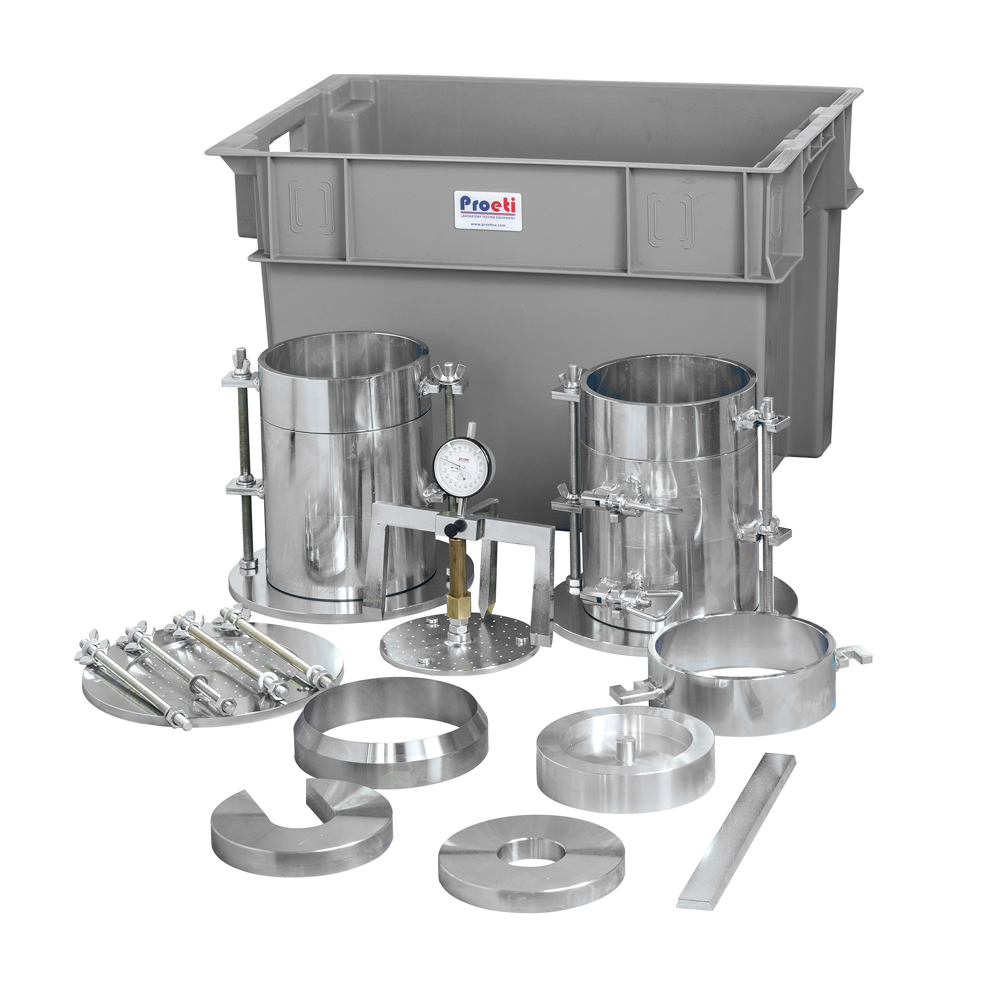
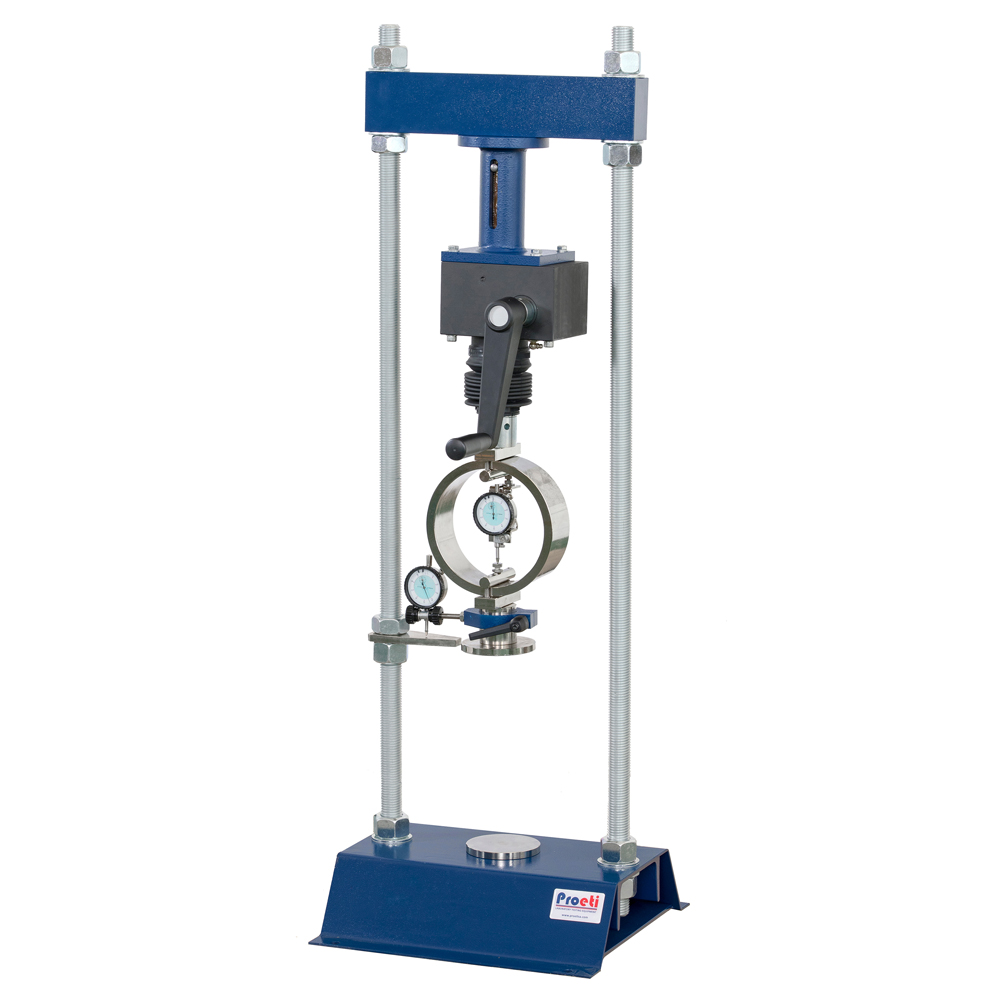
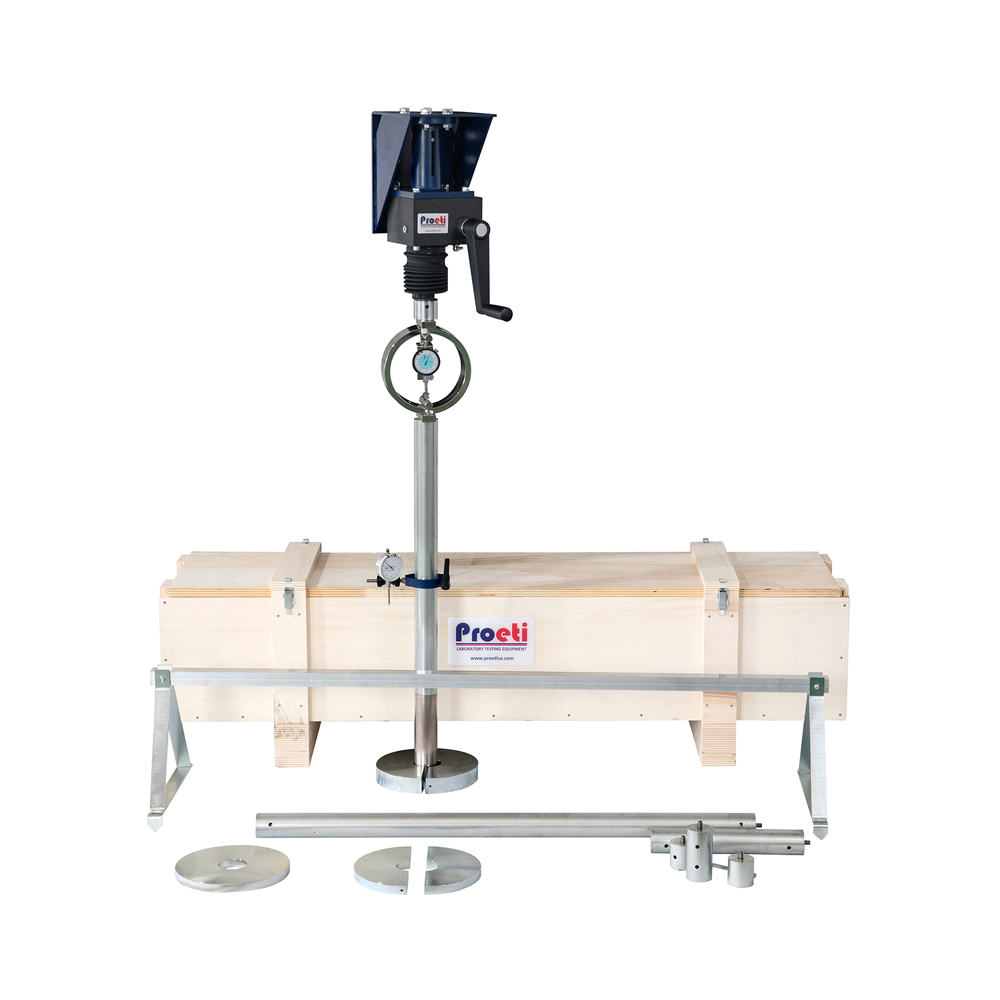
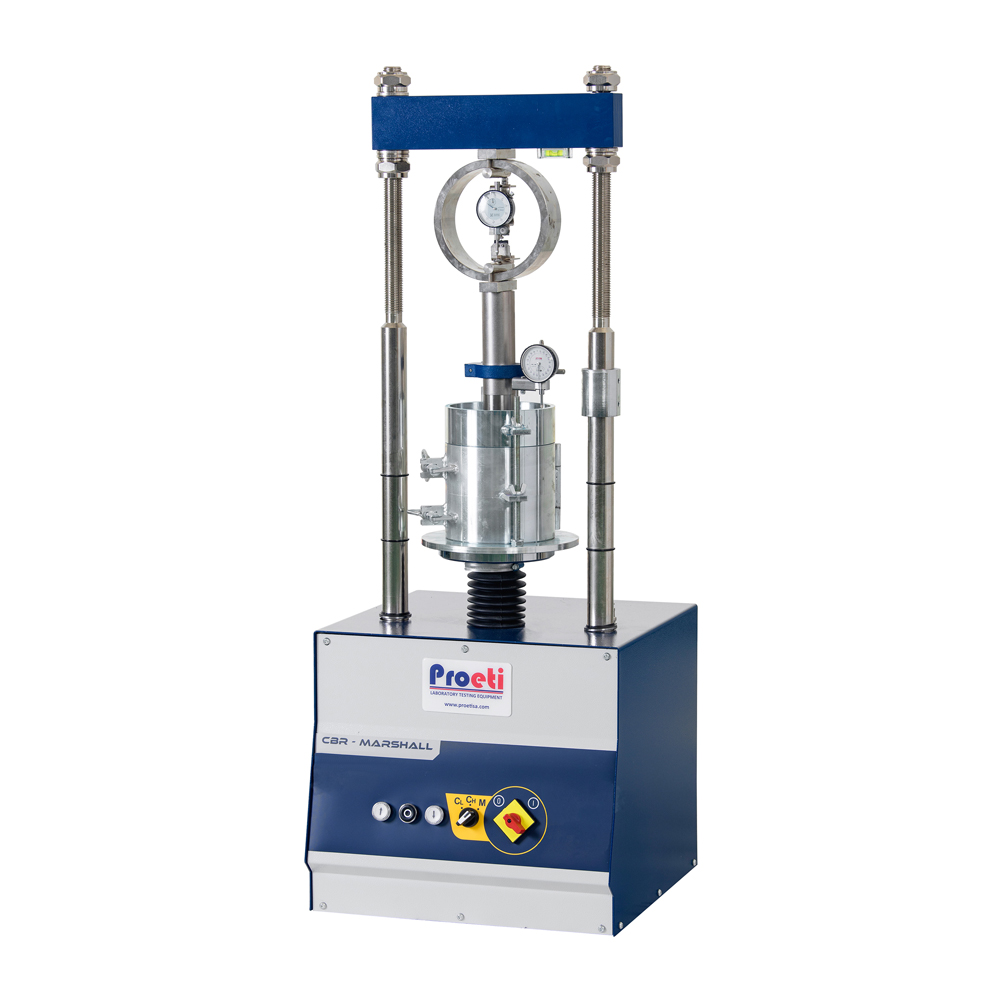
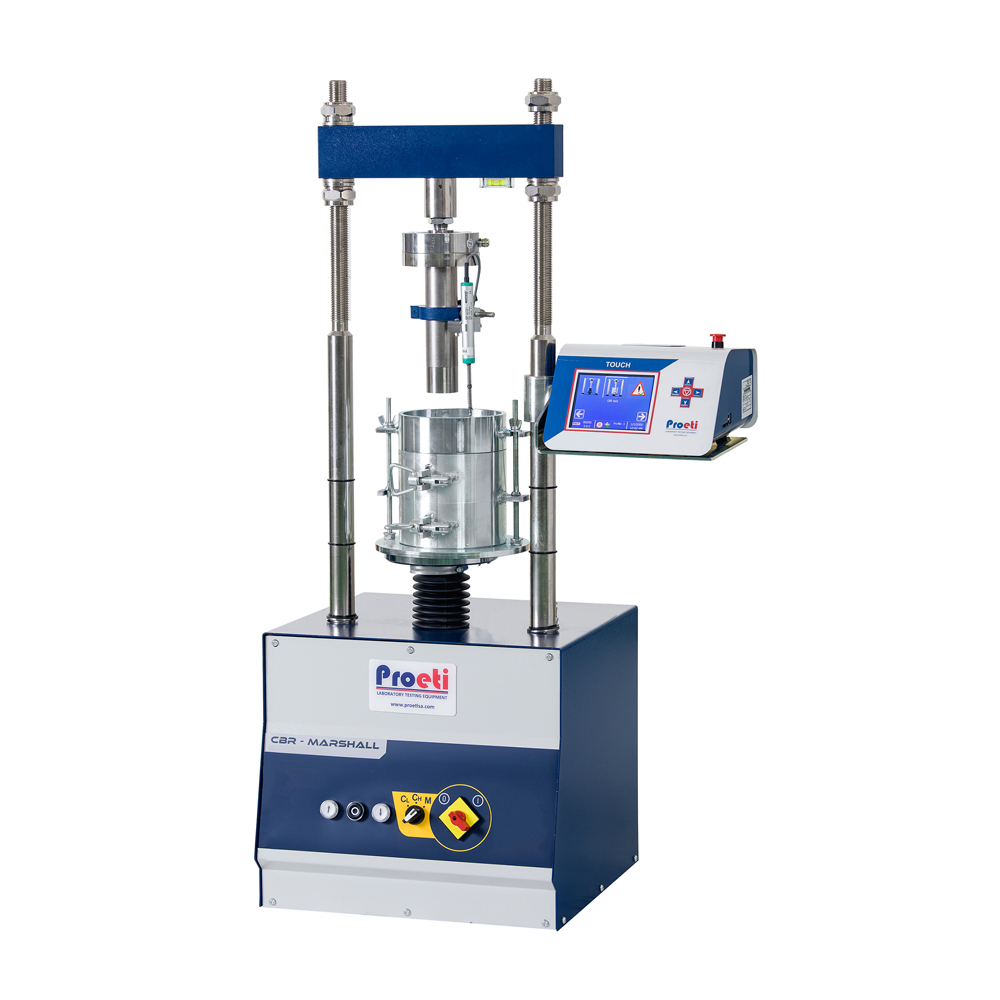
First the soil is compacted in the Proctor mould to find its maximum dry density and optimum moisture content; then the CBR test shows how much load it can carry. Here is the Proctor and CBR equipment for both steps: standard and modified moulds, vibrating hammer, CBR sets to EN, ASTM, NF and BS, field CBR and CBR-Marshall presses. Tell us your standard when you request a quote.
| Test | Equipment | Standard |
|---|---|---|
| Standard Proctor | Standard Proctor moulds and 2.5 kg rammer | ASTM D698 |
| Modified Proctor | Modified Proctor moulds and 4.5 kg rammer | ASTM D1557 |
| Vibrating compaction | Vibrating hammer, 720 W | BS 1377-4, EN 13286-4 |
| Laboratory CBR | CBR sets to ASTM, AASHTO and UNE or EN (also NF and BS) | EN 13286-47, ASTM D1883 |
| CBR and Marshall testing | Analogue CBR-Marshall press or digital: 1.27, 1.00 and 50.8 mm/min | ASTM D1883 |
| Field CBR | Field CBR apparatus: 50 kN jack and 1,400 mm beam | ASTM D4429, BS 1377-9 |
| Unconfined compression of soils | Unconfined compression press | ASTM D2166, BS 1377-7 |
To extrude the specimens, the universal extruder works with 4 and 6 inch Proctor, CBR and Marshall moulds.
| Standard Proctor | Modified Proctor | |
|---|---|---|
| Rammer and drop | 2.5 kg from 305 mm | 4.5 kg from 457 mm |
| Layers | 3 | 5 |
| Compaction energy | Lower | About 4.5 times higher |
| Type of work | Fills and work with light compaction | Roads and work with heavy plant |
To get a price, click Budget on each product page and send one request with everything you need. If you would rather talk to us, write to us or call +34 916 28 29 40.
A compaction test: the soil is compacted in a mould with a fixed energy at several moisture contents and the dry density of each is measured. The curve has a peak, the maximum dry density, reached at the optimum moisture content. It is the reference for controlling compaction on site.
The California Bearing Ratio compares the pressure needed to push a 50 mm plunger into the compacted soil with the pressure needed for a standard crushed stone. It is usually carried out on a specimen soaked for four days, and it is used to design pavements and classify subgrades.
The Proctor test tells you how to compact a soil (at what moisture content and to what density); the CBR, how much load it can carry once compacted. They are done in that order: the CBR specimens are prepared at the optimum moisture content and density from the Proctor.
The increase in height of the specimen while it is soaked, measured with a dial gauge on a tripod. High swell reveals an expansive soil, which can heave the pavement when it gets wet.
The density of compacted layers is checked with the equipment in density and moisture.