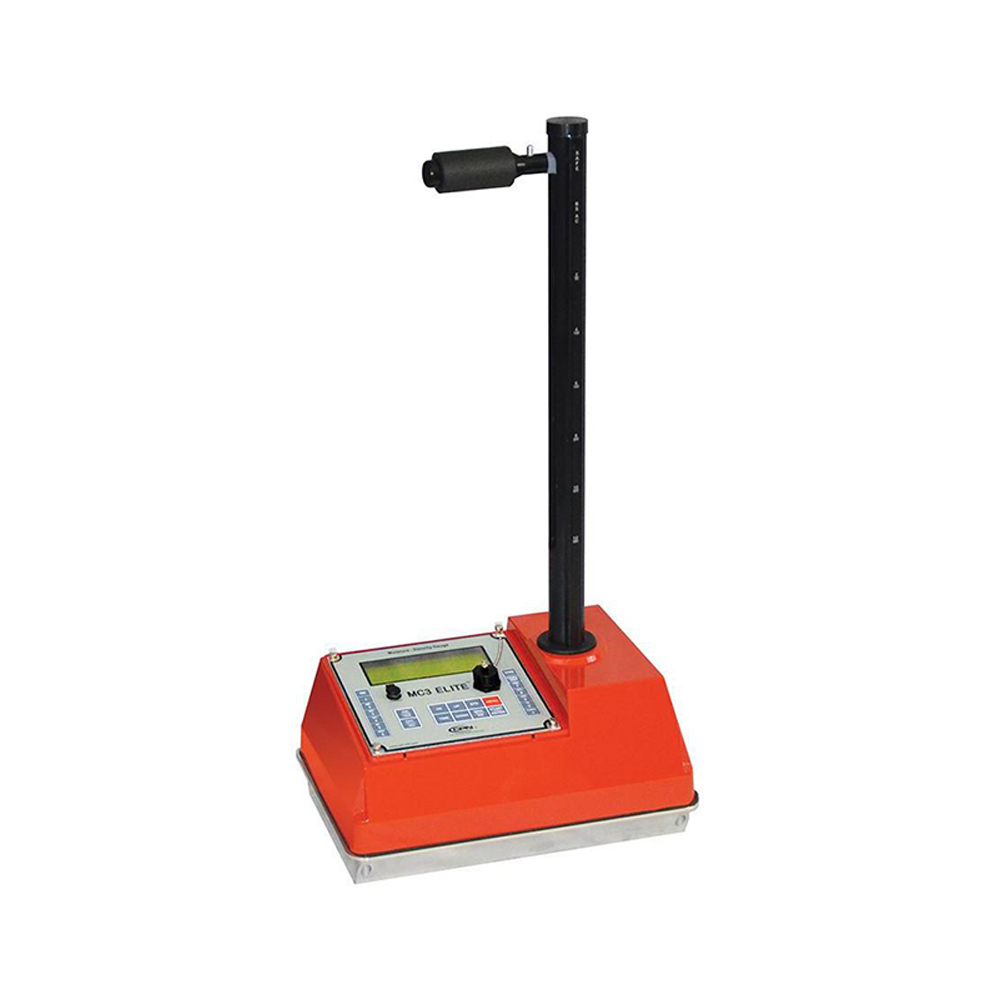
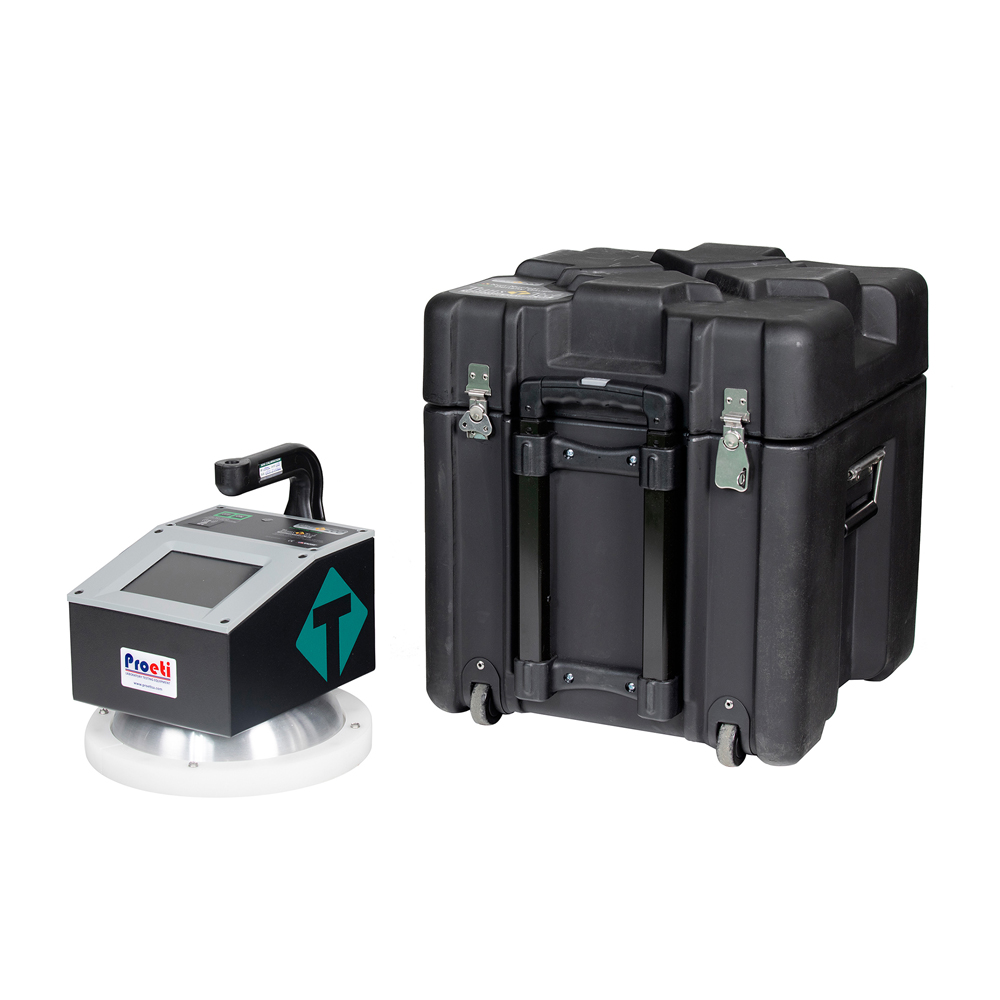
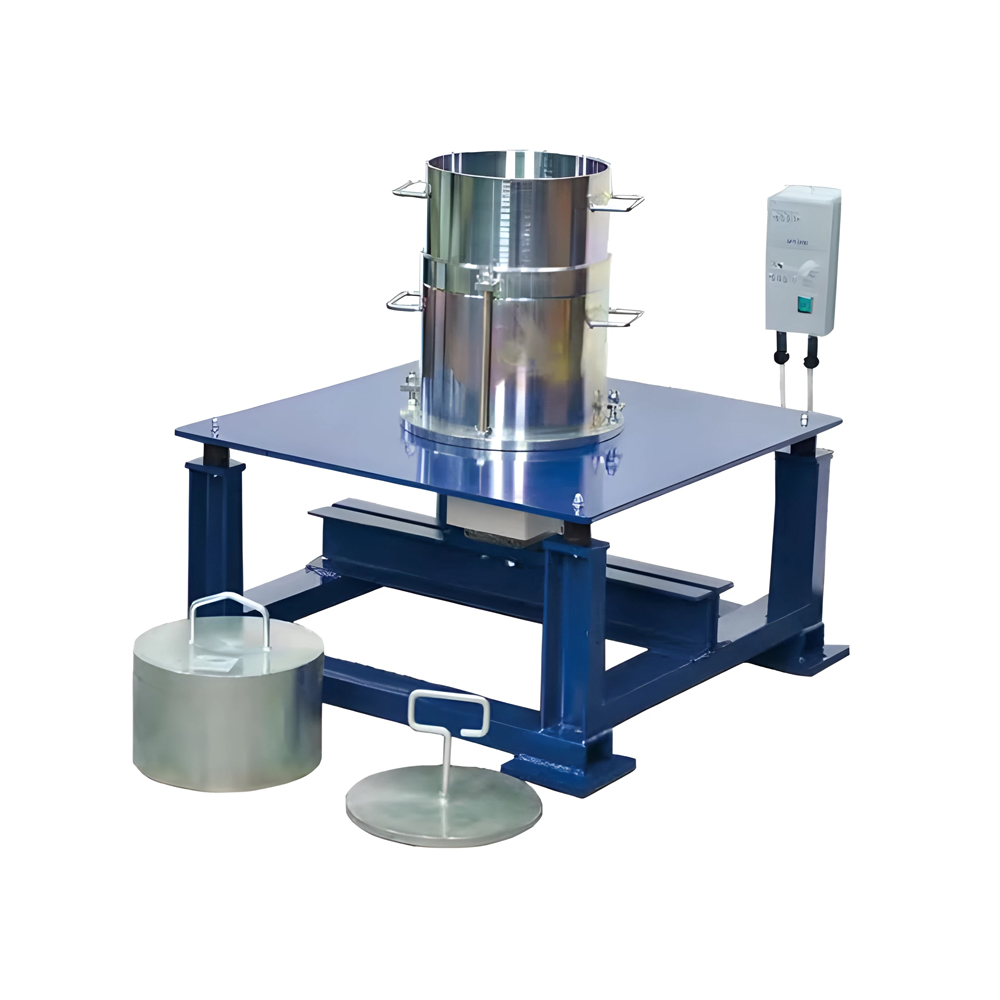
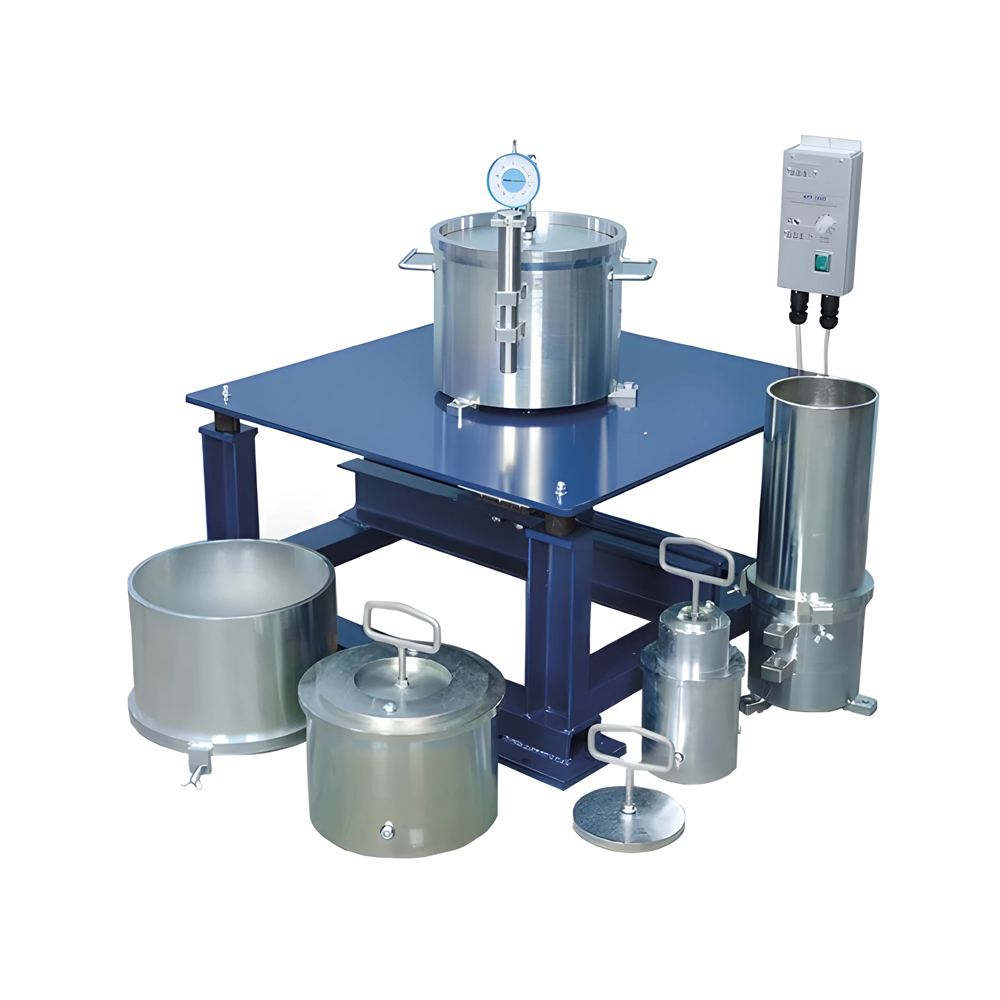
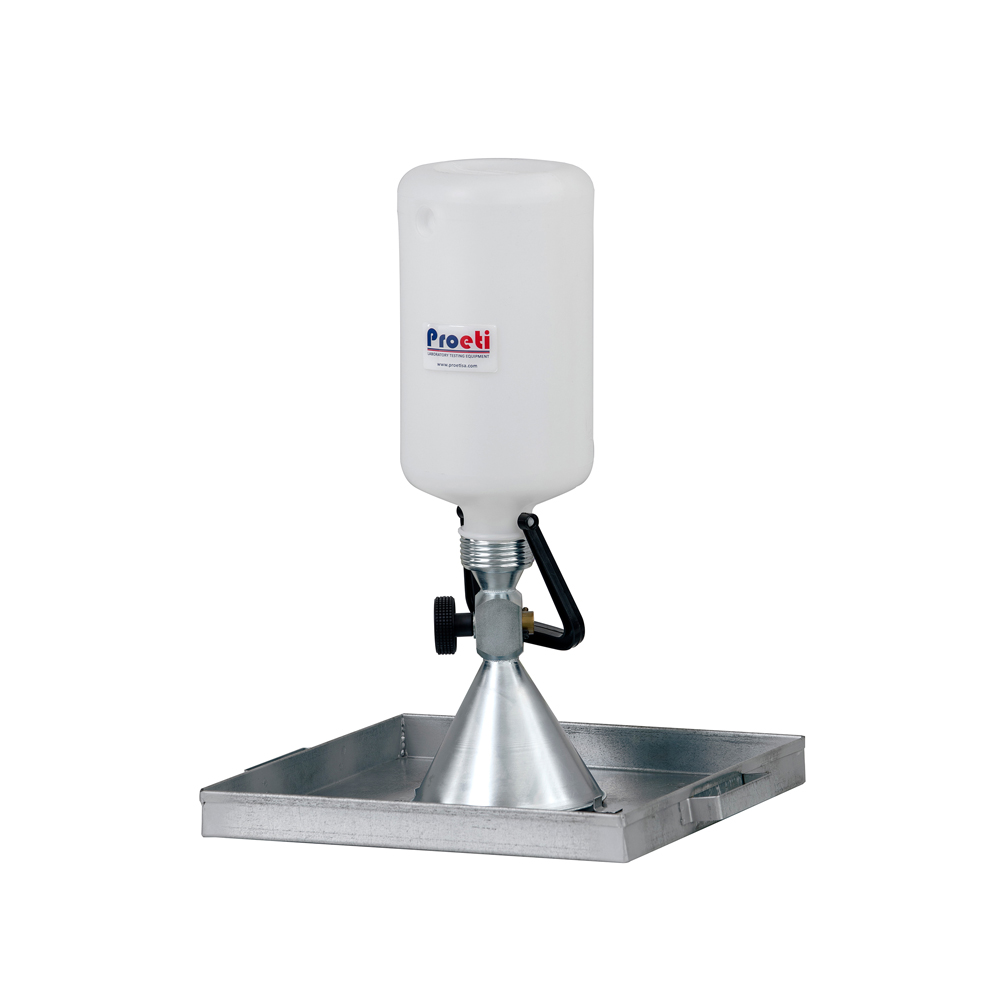
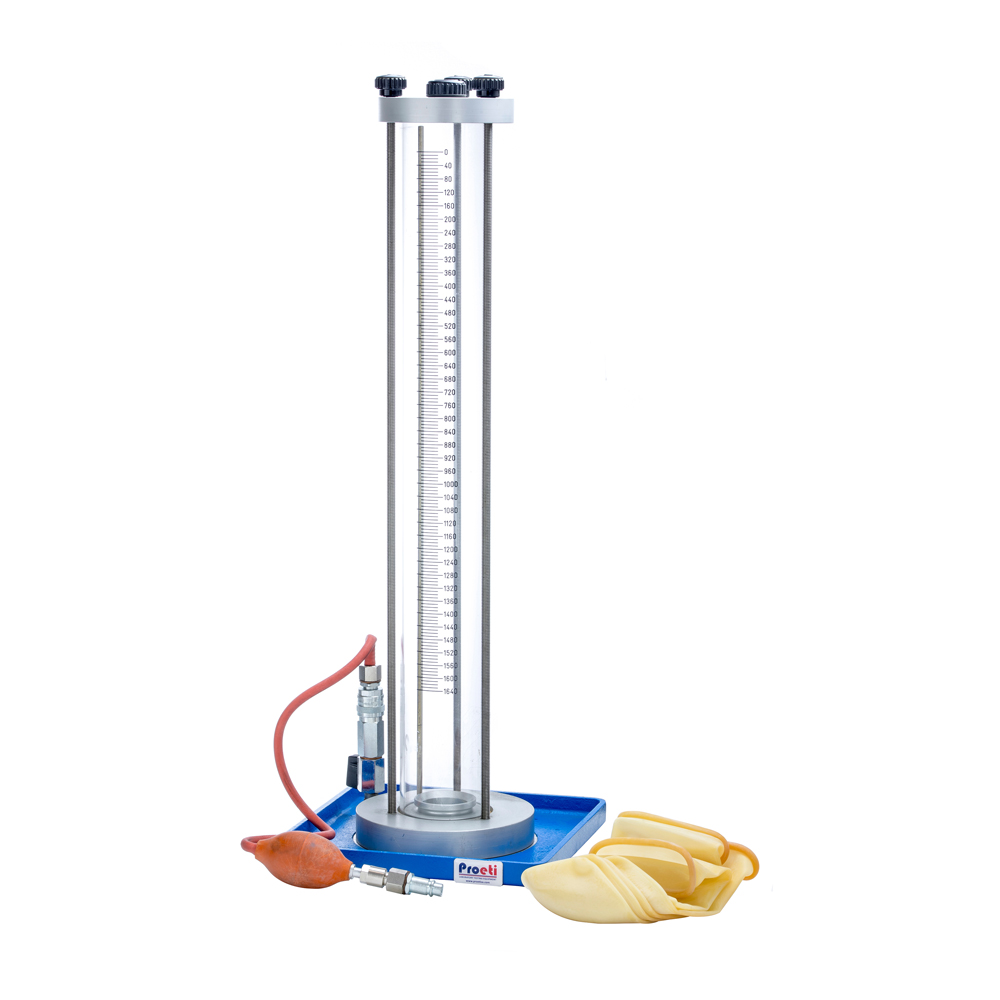
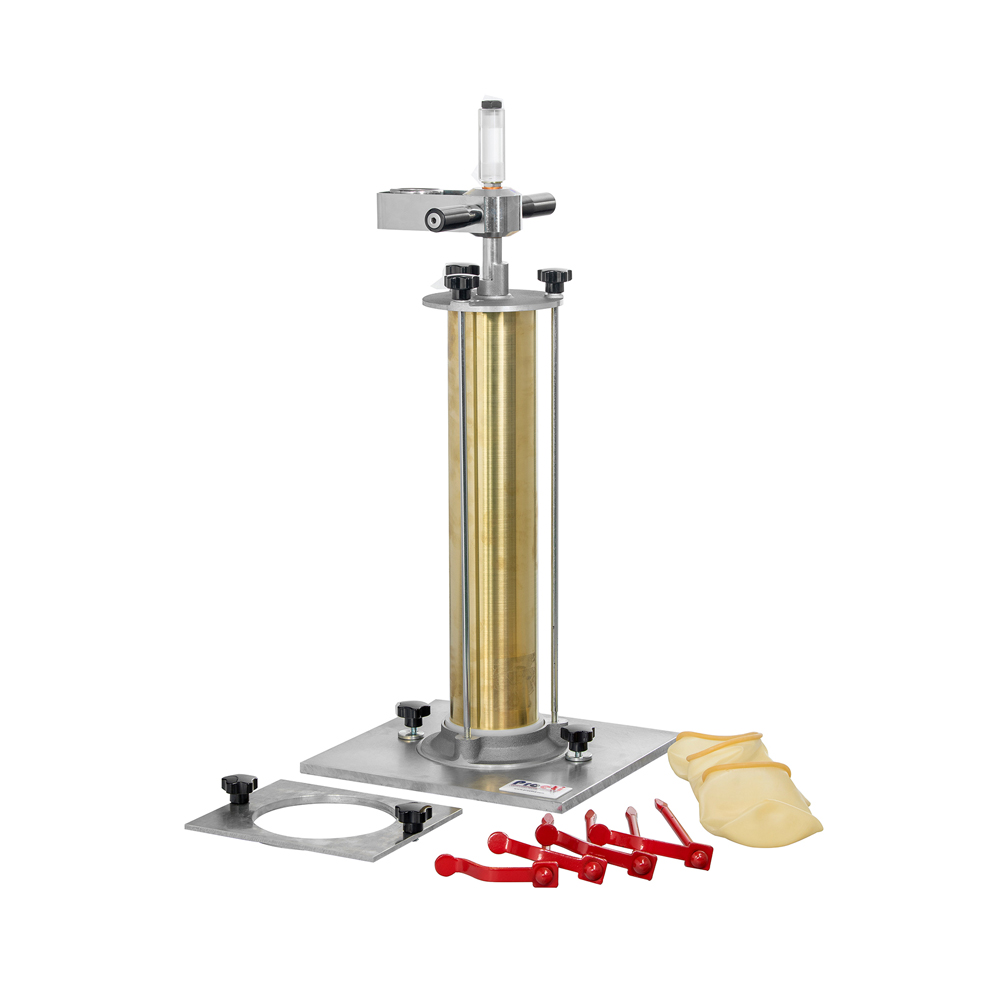
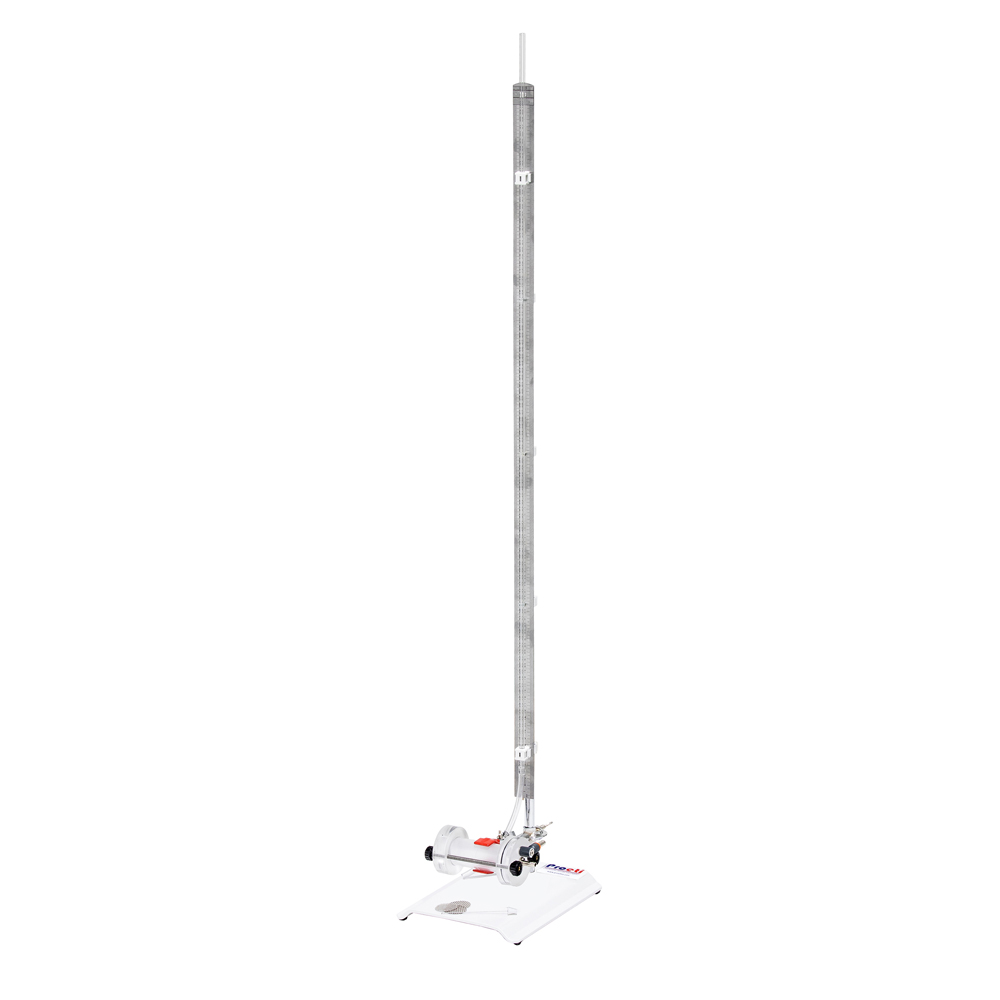
An embankment layer is accepted when its dry density reaches the percentage of the Proctor value the specification requires, and that is checked on site. There are classic methods, such as sand replacement and the rubber balloon densometer, and fast ones, such as the nuclear and non-nuclear gauges: this is the field density test equipment in this section, together with relative density and the pinhole test. Ask us which suits your quality control.
| Method | Equipment | Standard |
|---|---|---|
| Sand replacement | Sand cone with base plate and calibrated sand | ASTM D1556 |
| Rubber balloon densometer | 1,600 ml densometer, or NF version | ASTM D2167, NF P94-061-2 |
| Nuclear | Nuclear density and moisture gauge | ASTM D6938 |
| Non-nuclear | SDG 200D gauge, with no radioactive source | ASTM D7830 |
| Relative density of sands | Maximum and minimum density apparatus, EN or ASTM version | EN 13286-5, ASTM D4253, D4254 |
| Dispersivity of clays | Pinhole apparatus | ASTM D4647, BS 1377-5 |
| Sand or balloon | Nuclear | Non-nuclear | |
|---|---|---|---|
| Time per test point | About 20-30 minutes | A couple of minutes | A couple of minutes |
| Moisture content | The sample has to be dried | Measured at the same time | Calculated from soil data |
| Requirements | None | Radioactive material licence and an authorised operator | None; needs the Atterberg limits, particle size and Proctor of the soil |
To get a price, click Budget on each product page and send one request with everything you need. If you would rather talk to us, write to us or call +34 916 28 29 40.
To check that each layer of an embankment, formation or fill has been compacted enough. The dry density measured on site is compared with the maximum dry density from the Proctor test on the same material.
The dry density of the layer as a percentage of the maximum dry density from the reference Proctor test. Specifications usually require 95 % or 98 % of the modified Proctor, depending on the layer and the type of work.
A hole is dug in the layer, the soil removed is weighed and the hole is filled with sand of known density. The mass of sand that goes in gives the volume of the hole, and from that and the dry soil, the density.
A clay with a high sodium content that, in contact with low-salinity water, breaks down particle by particle and is washed away. It causes piping in dams and embankments. The pinhole test passes water through a 1 mm hole in the sample and checks whether it comes out cloudy.
The reference maximum density comes from the Proctor test: the equipment is in Proctor and CBR.