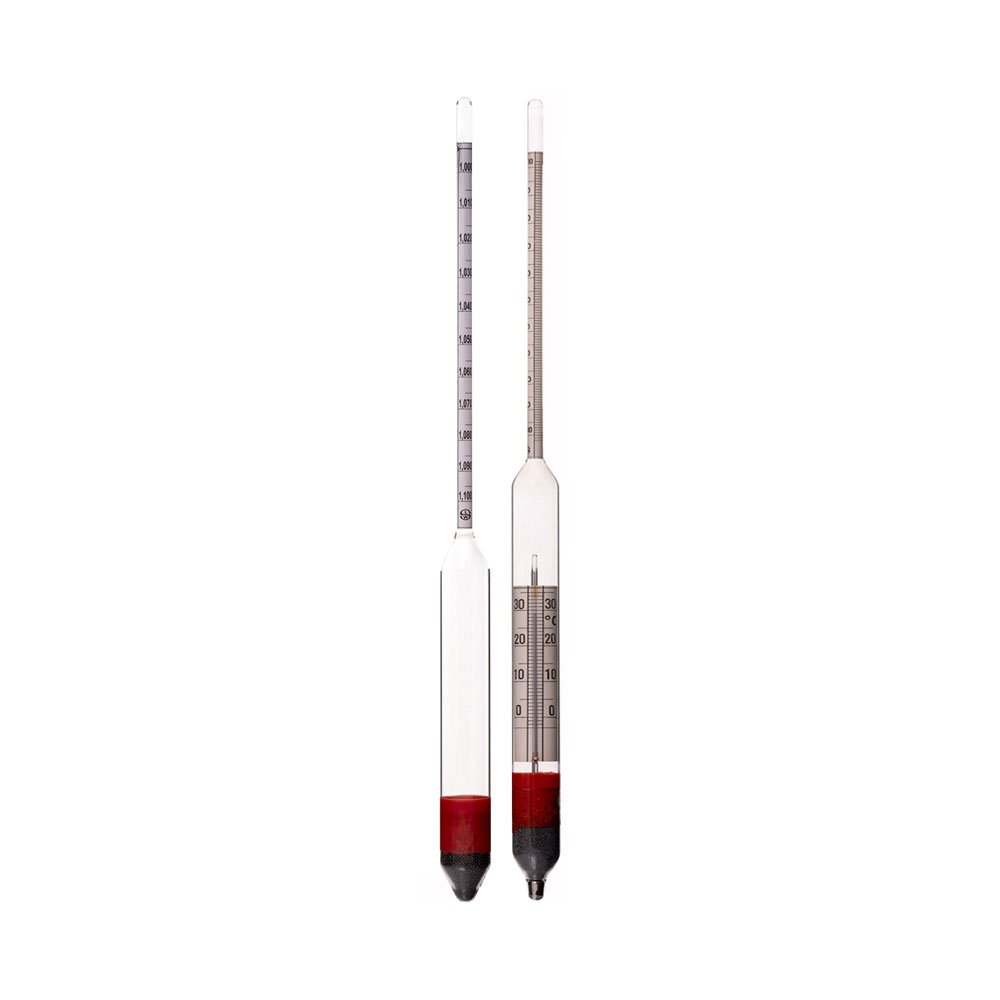
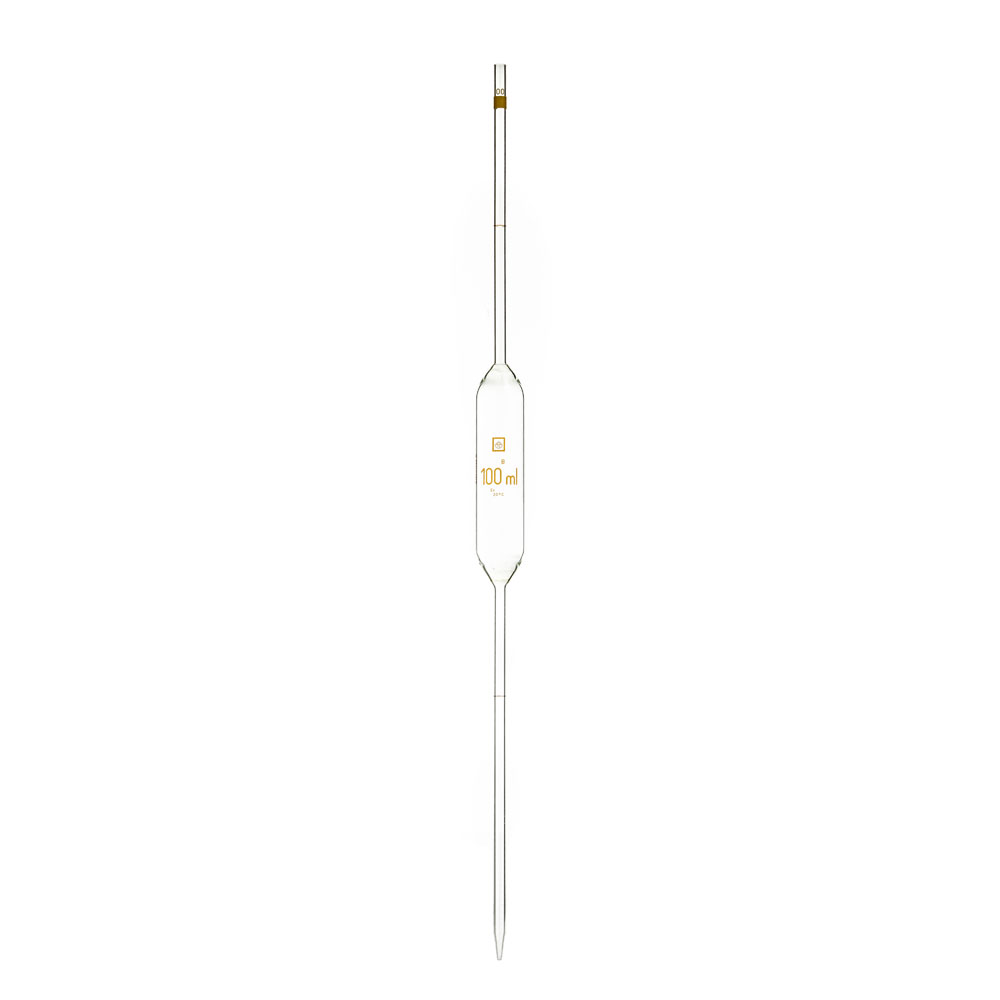
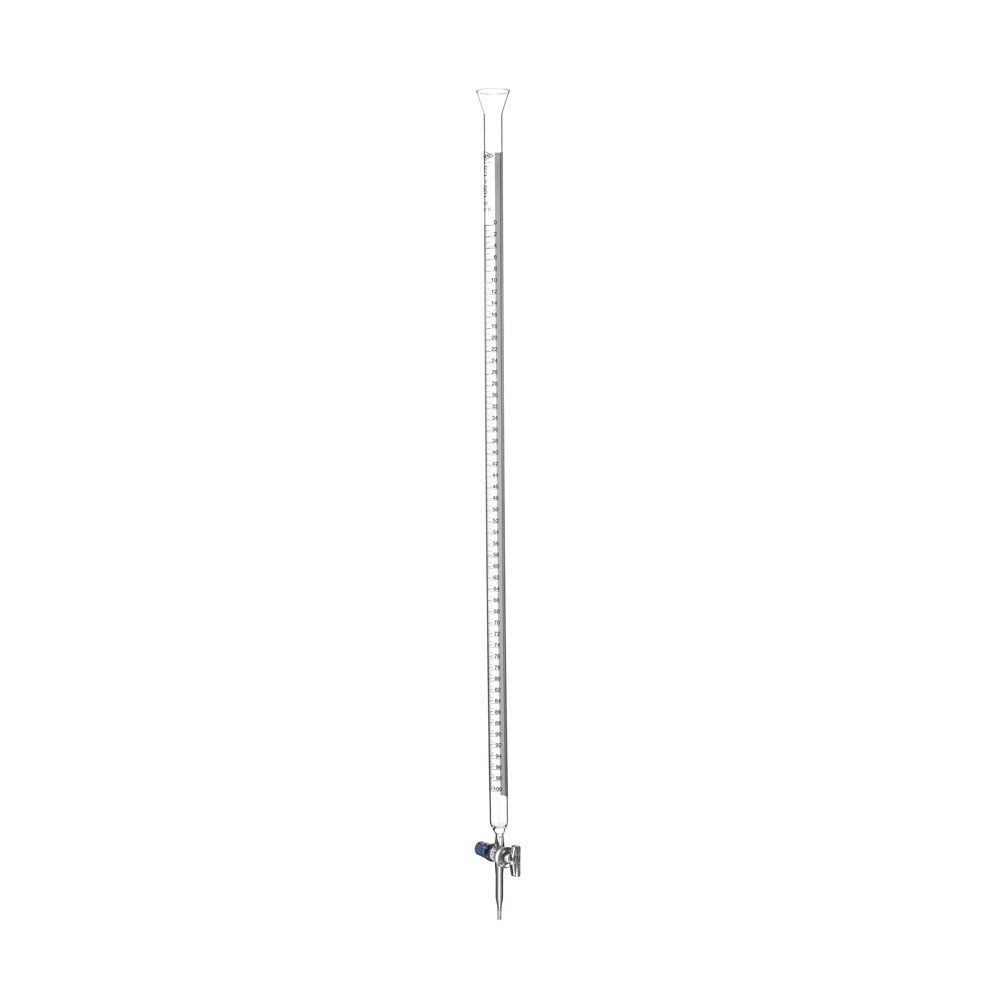
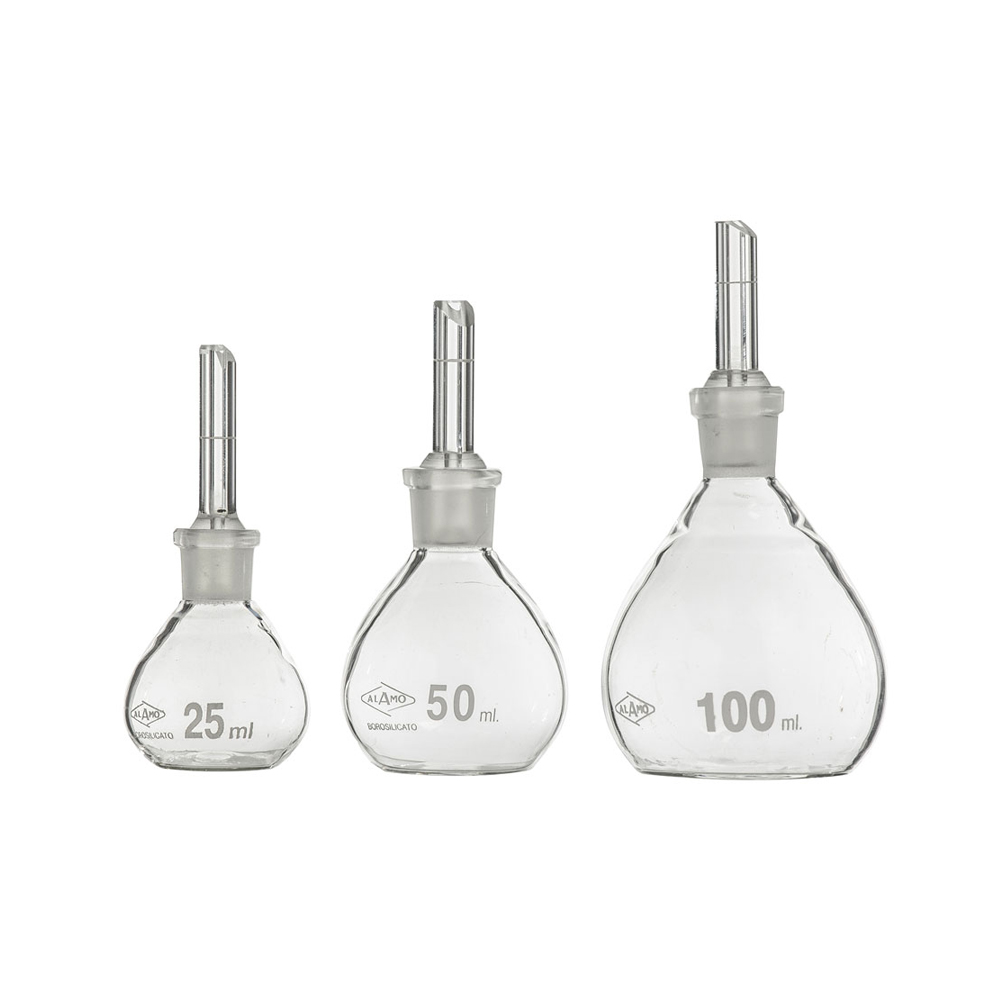
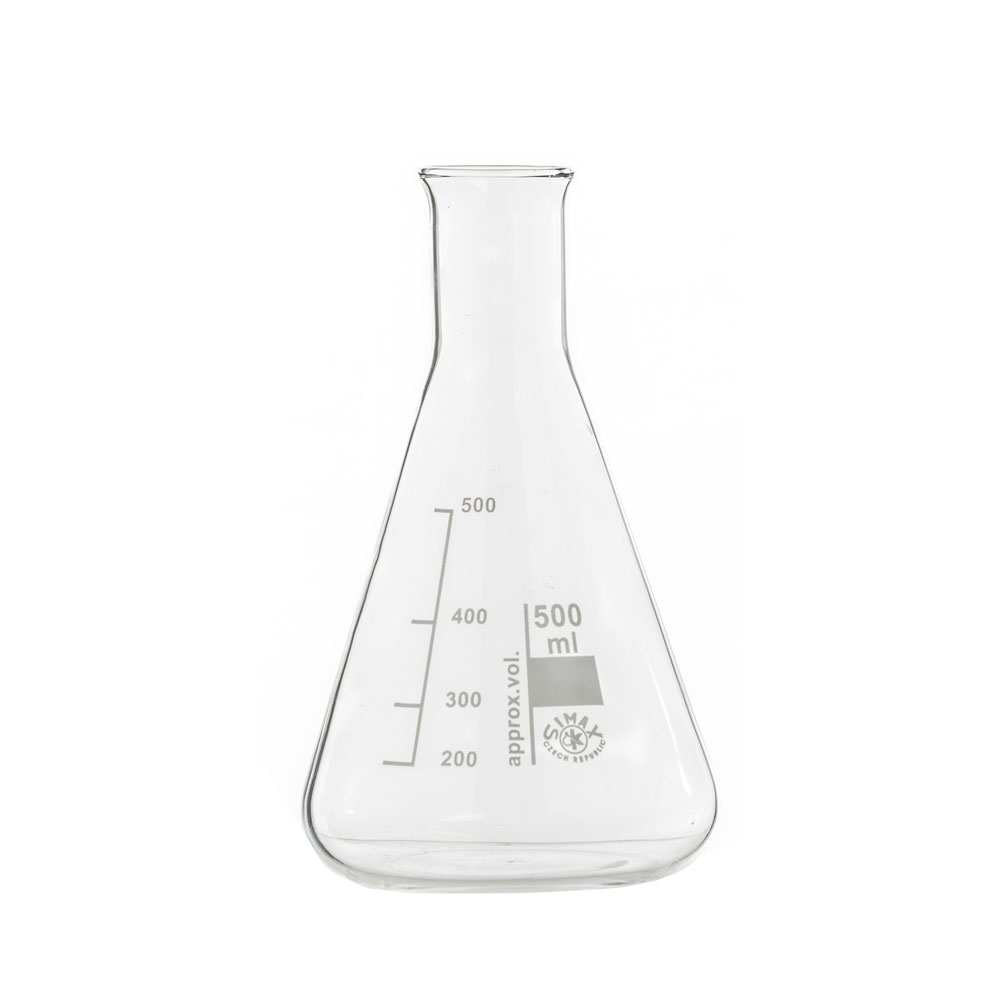
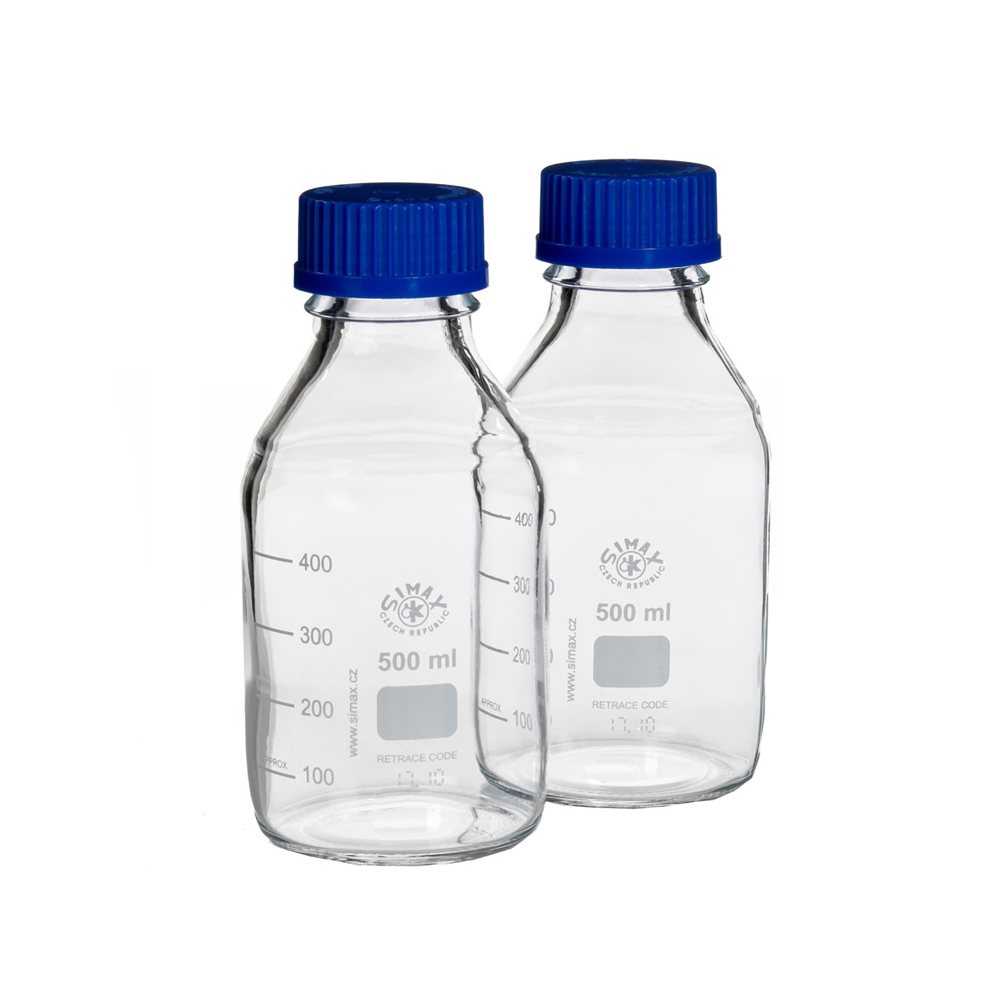
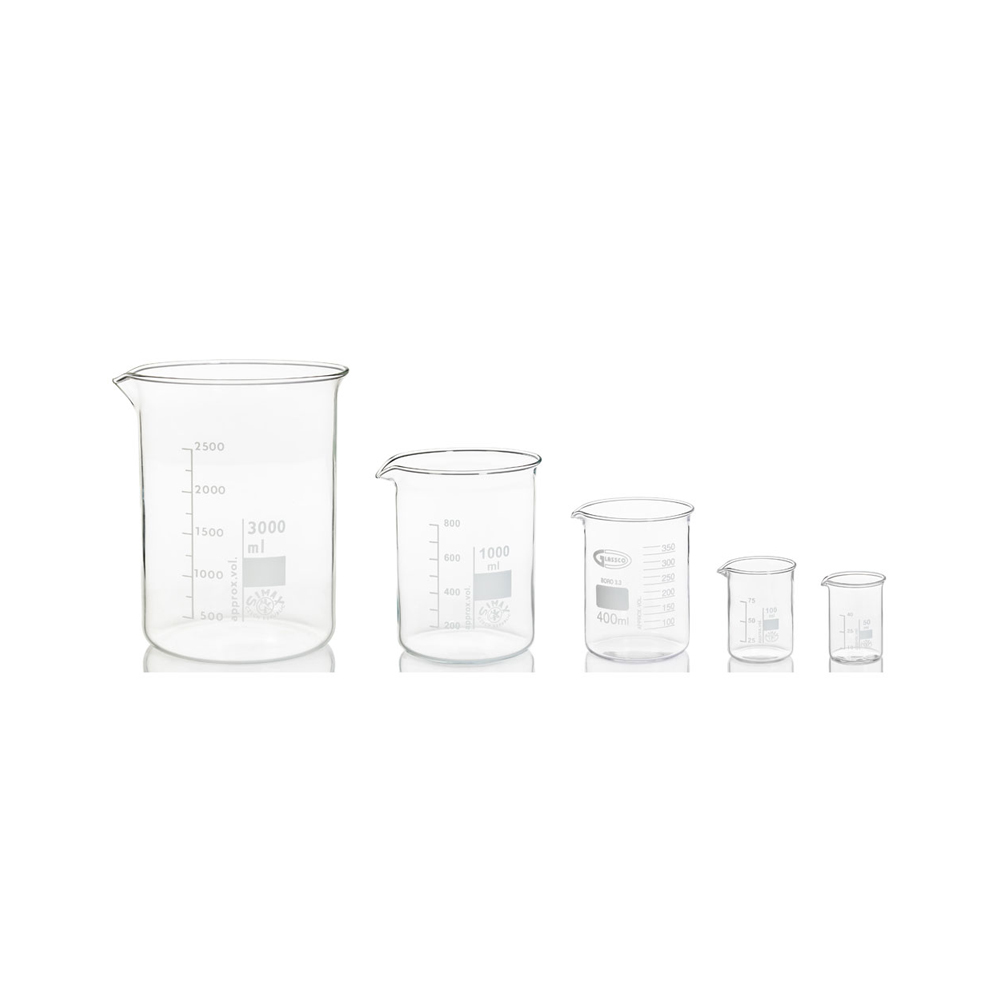
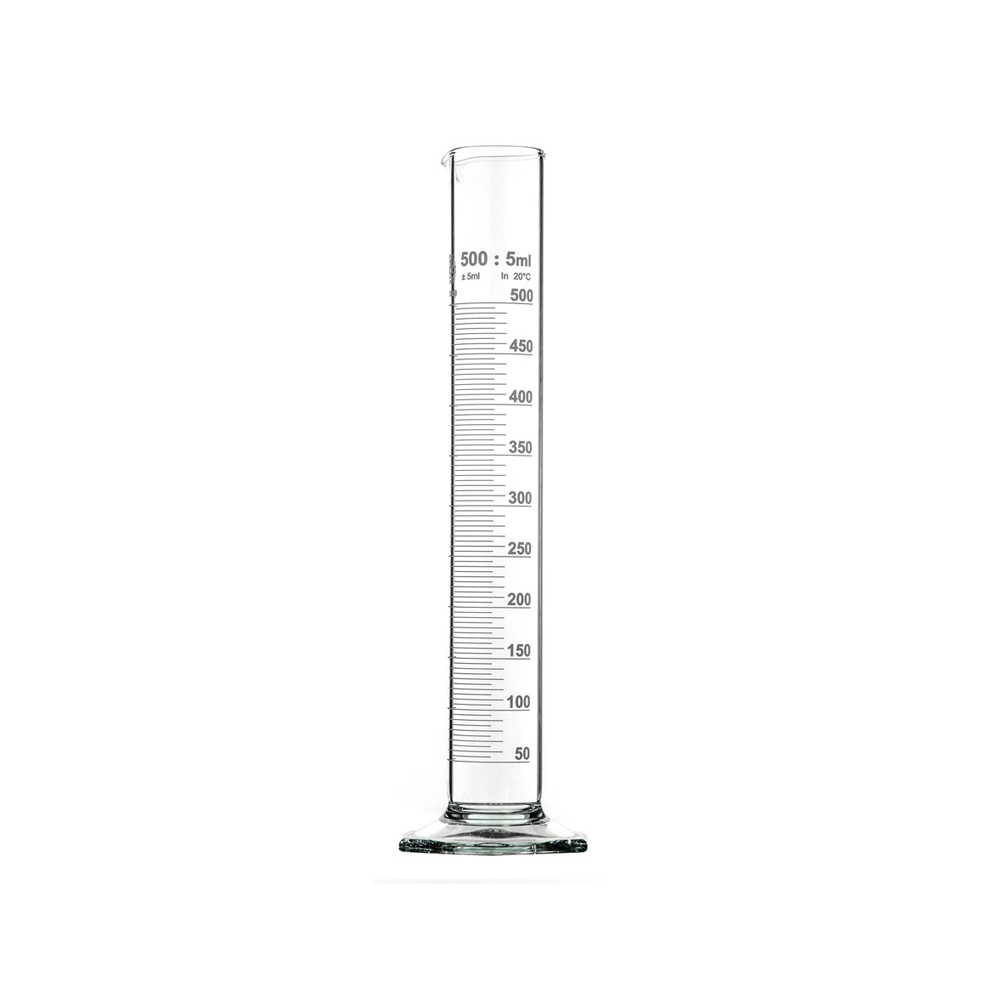
Pipettes, burettes, flasks and graduated cylinders to measure volumes accurately; hydrometers and a pycnometer for density; a desiccator, mortar and dishes to prepare samples. This is our laboratory glassware and porcelain, in borosilicate glass and class A for volumetric ware (ISO 648, 385, 1042 and 4788). Order it together with your testing equipment.
| Use | Item | Standard |
|---|---|---|
| Measuring an exact volume | Class A one-mark pipettes and volumetric flasks | ISO 648, ISO 1042 |
| Titration | Burette with straight PTFE stopcock, class A | ISO 385 |
| Measuring approximate volumes | Hexagonal-base graduated cylinders, graduated bottles and beakers | ISO 4788, ISO 4796 |
| Mixing and heating | Narrow-neck Erlenmeyer flask | ISO 1773 |
| Density of liquids and solids | Hydrometers and Gay-Lussac pycnometer | — |
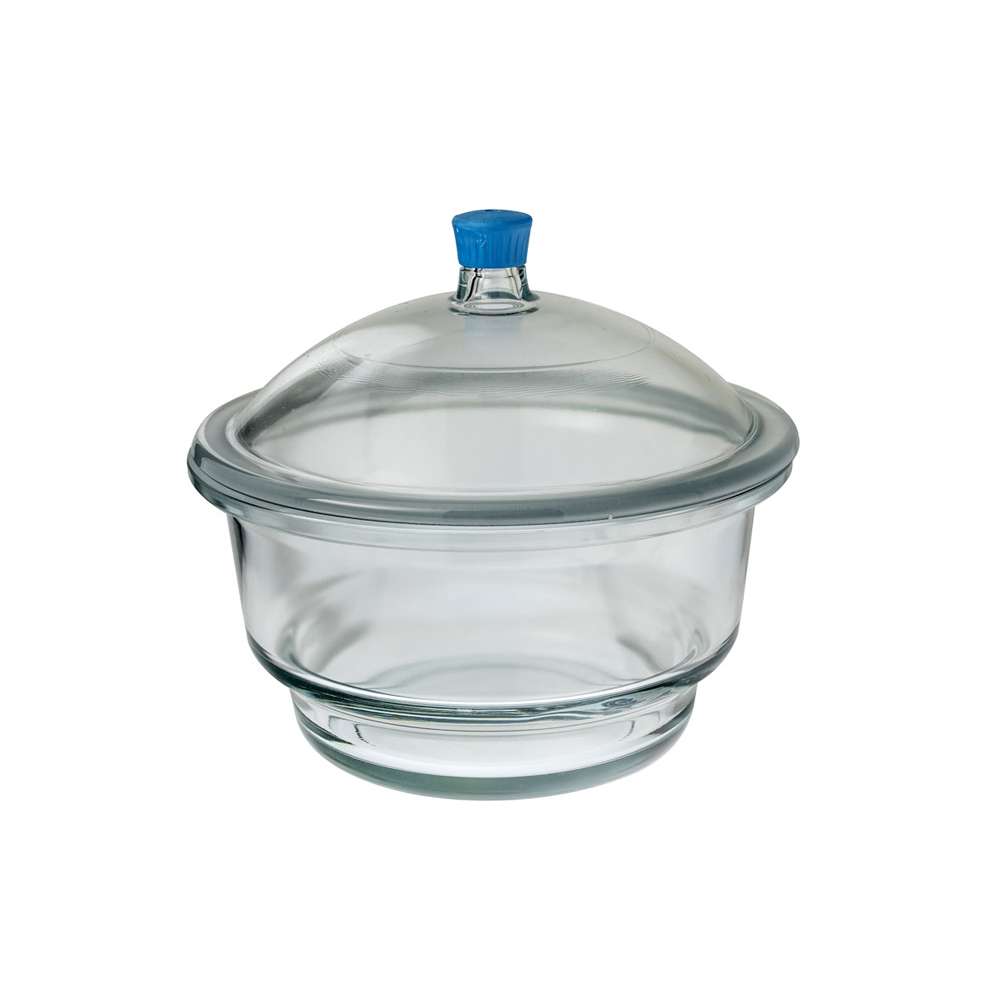
| Drying without moisture | Glass desiccator with lid | — |
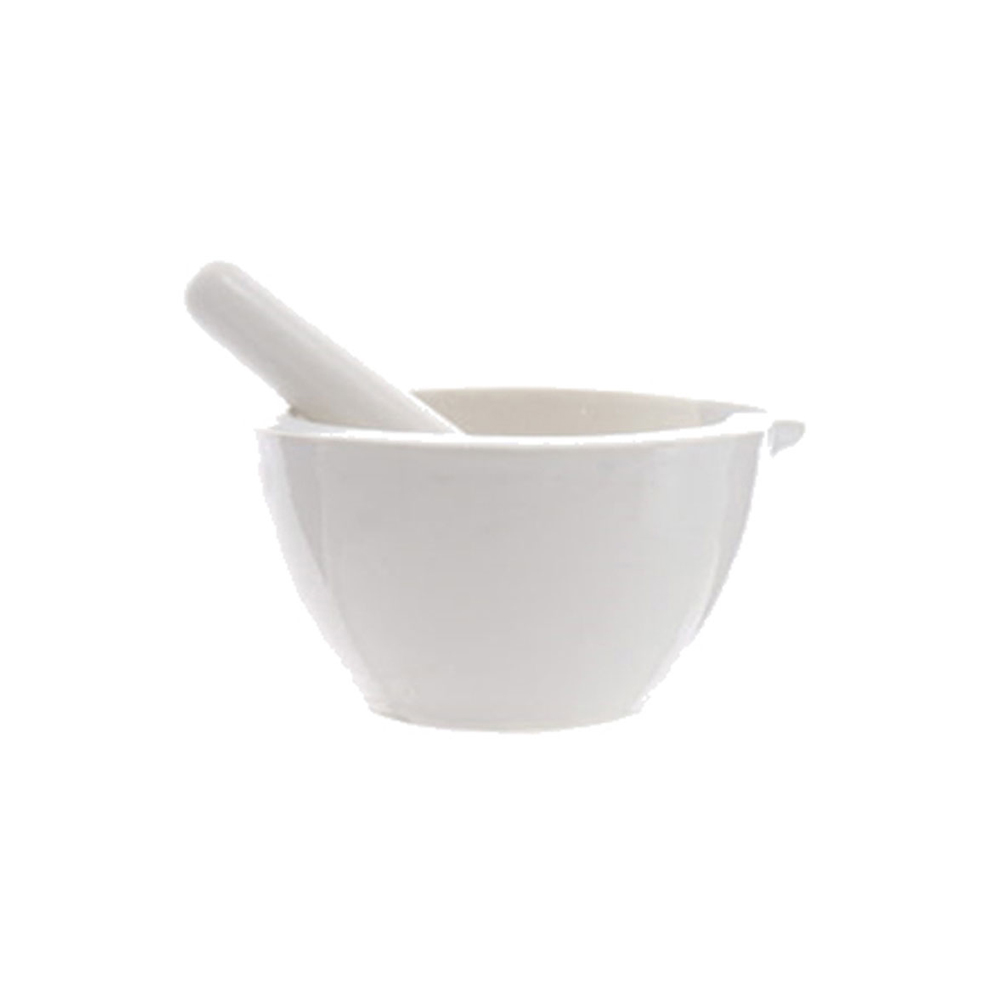
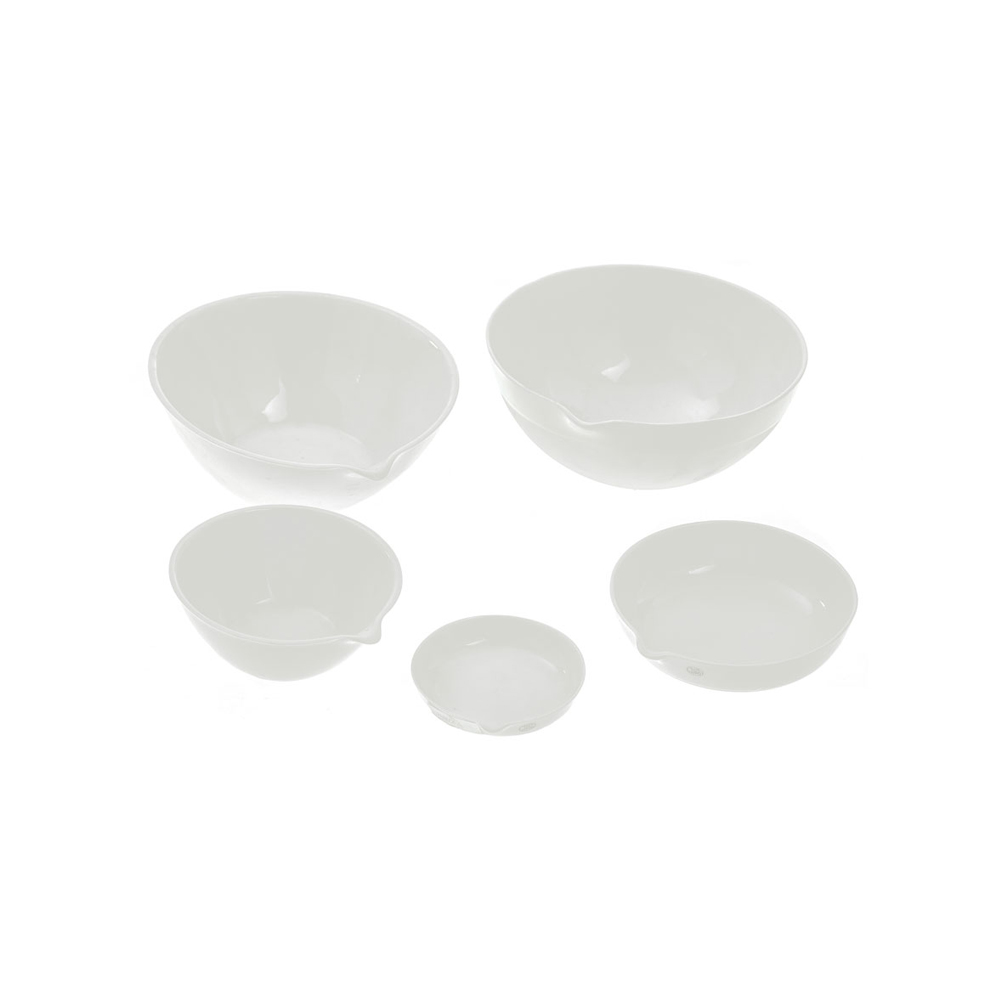
| Grinding and ignition | Porcelain mortar and pestle and dishes (up to 1,150 °C) | — |
To get a price, click Budget on each product page and send one request with everything you need. If you would rather talk to us, write to us or call +34 916 28 29 40.
That it meets the tightest tolerances in its ISO standard: the actual volume deviates less from the marked volume than in class B. It is used when the result depends on measuring a volume accurately, as in a titration.
Because it expands very little with heat, withstands sudden temperature changes without breaking and resists most acids and bases. That is why it can be heated, washed hot and used with reagents without being affected.
Rinse it straight after use, wash it with water and laboratory detergent, rinse it with tap water and finally with distilled water. Volumetric glassware is not dried in an oven at high temperature, because it can lose its calibration.
To let dry samples cool or to store them without them picking up moisture from the air. It has a desiccant, such as silica gel, at the bottom and a ground-glass lid that seals airtight.
Balances, thermometers and the rest of the laboratory supplies are in general equipment.