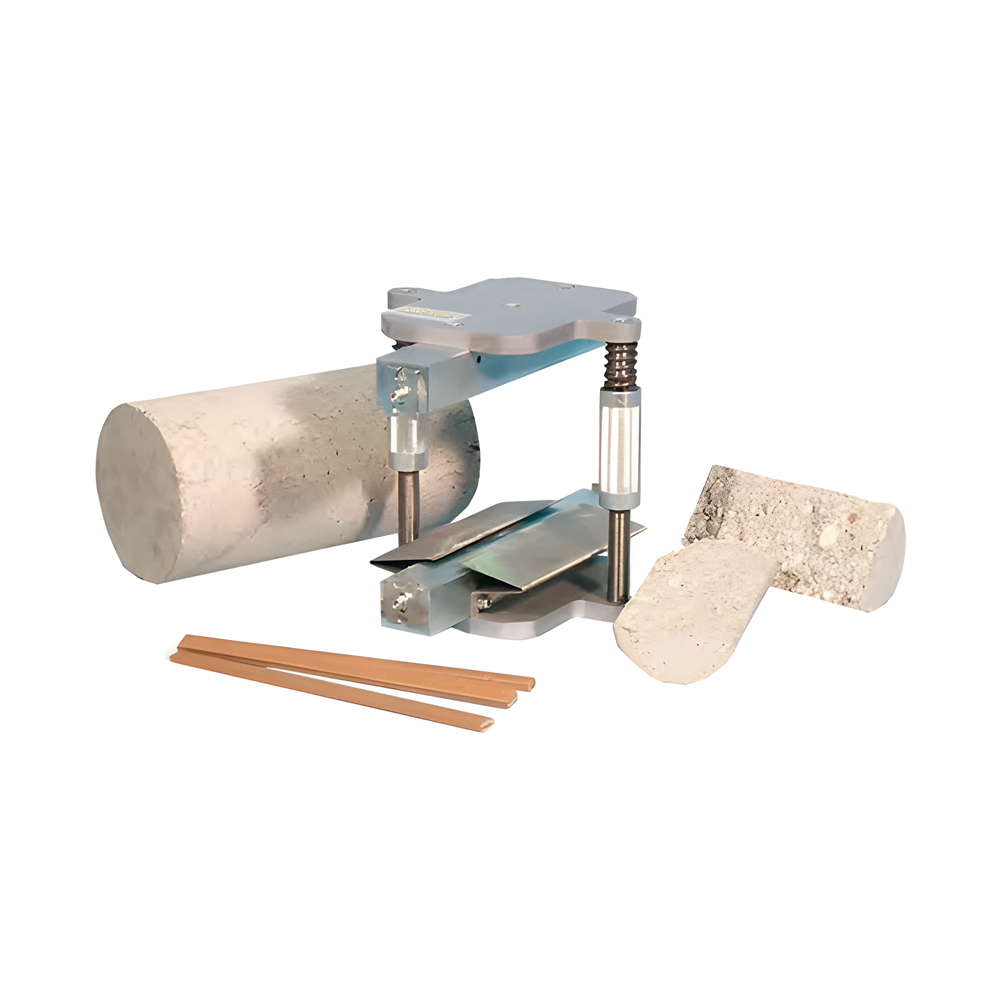
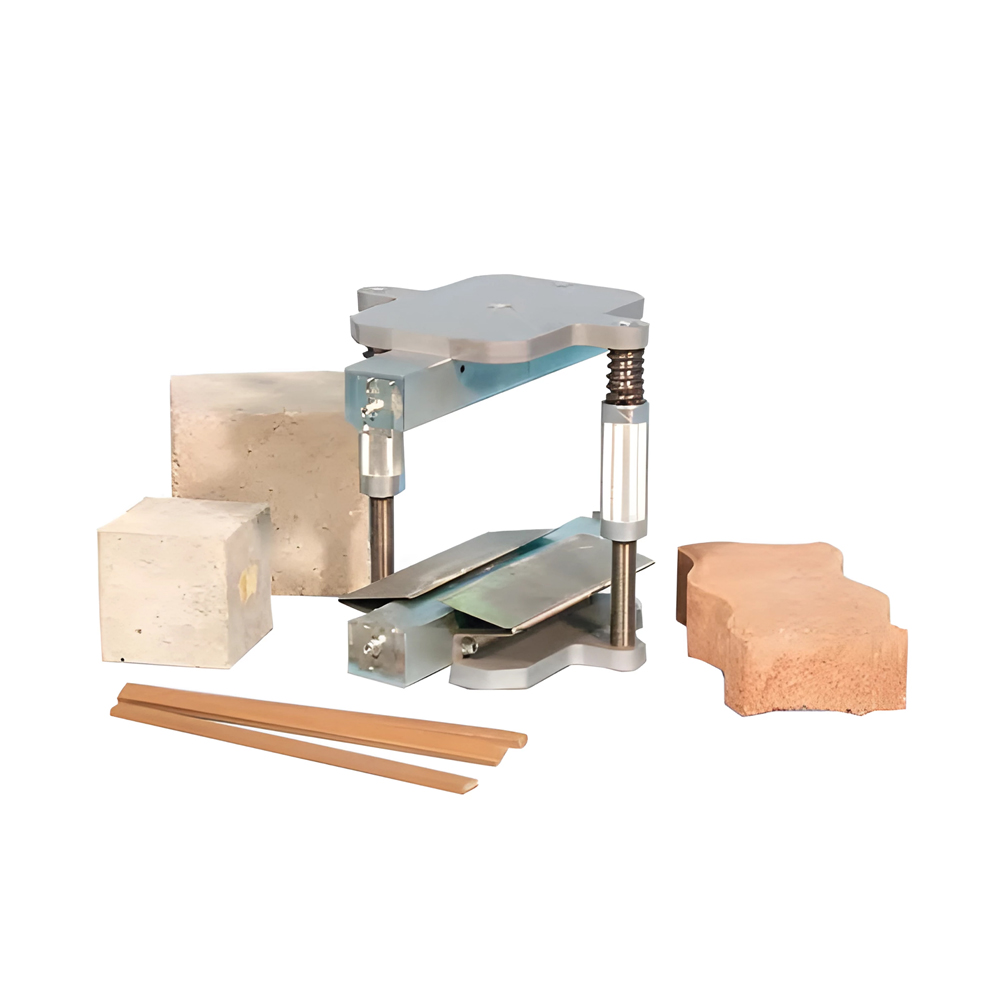
Concrete beams in flexure, cylinders and cubes in splitting tension: that is what this section tests. You will find 150 and 200 kN flexural testing machines, devices for two-point or centre-point loading and for measuring the deflection of fibre-reinforced beams, to EN 12390-5 and -6, ASTM C78 and C1609. Send us the dimensions of your beams.
| Test | Equipment | Standard |
|---|---|---|
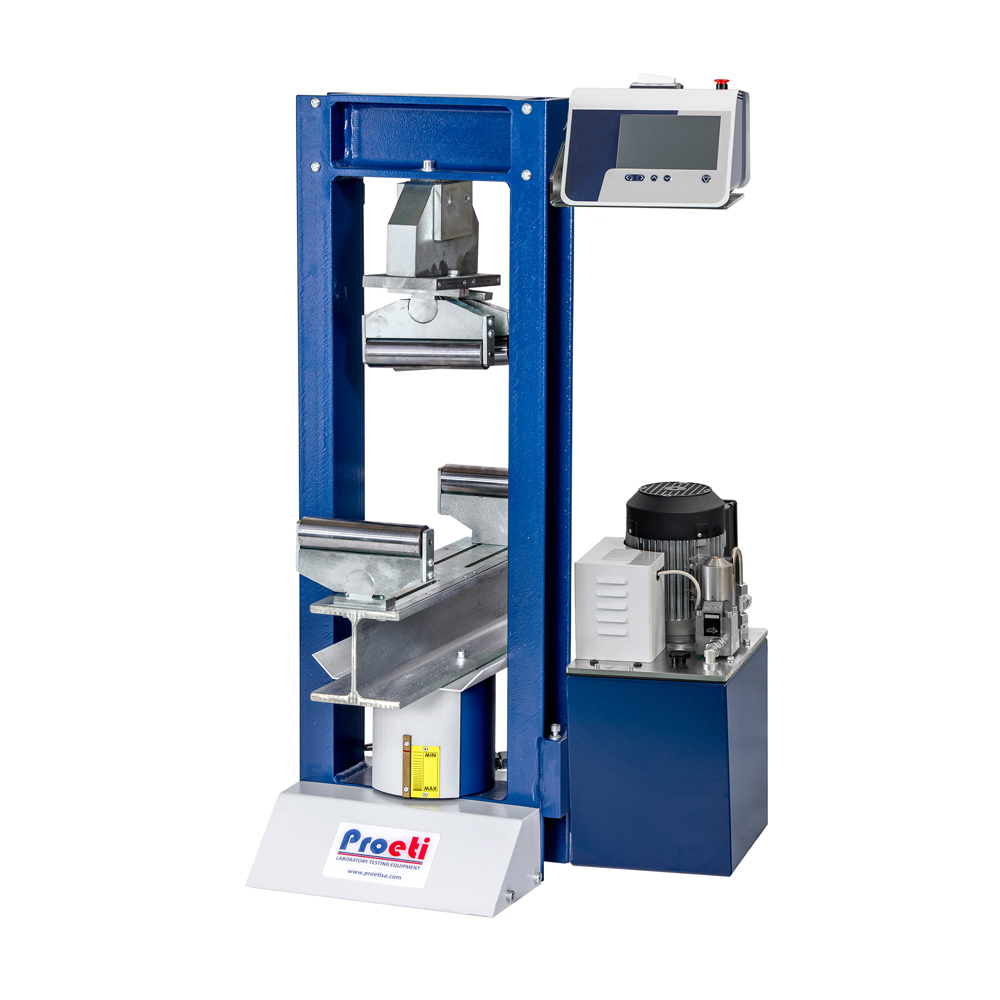
| Flexural strength of beams | 150 kN frame, with adjustable rollers and four ground rollers | EN 12390-5, ASTM C78, C293 |
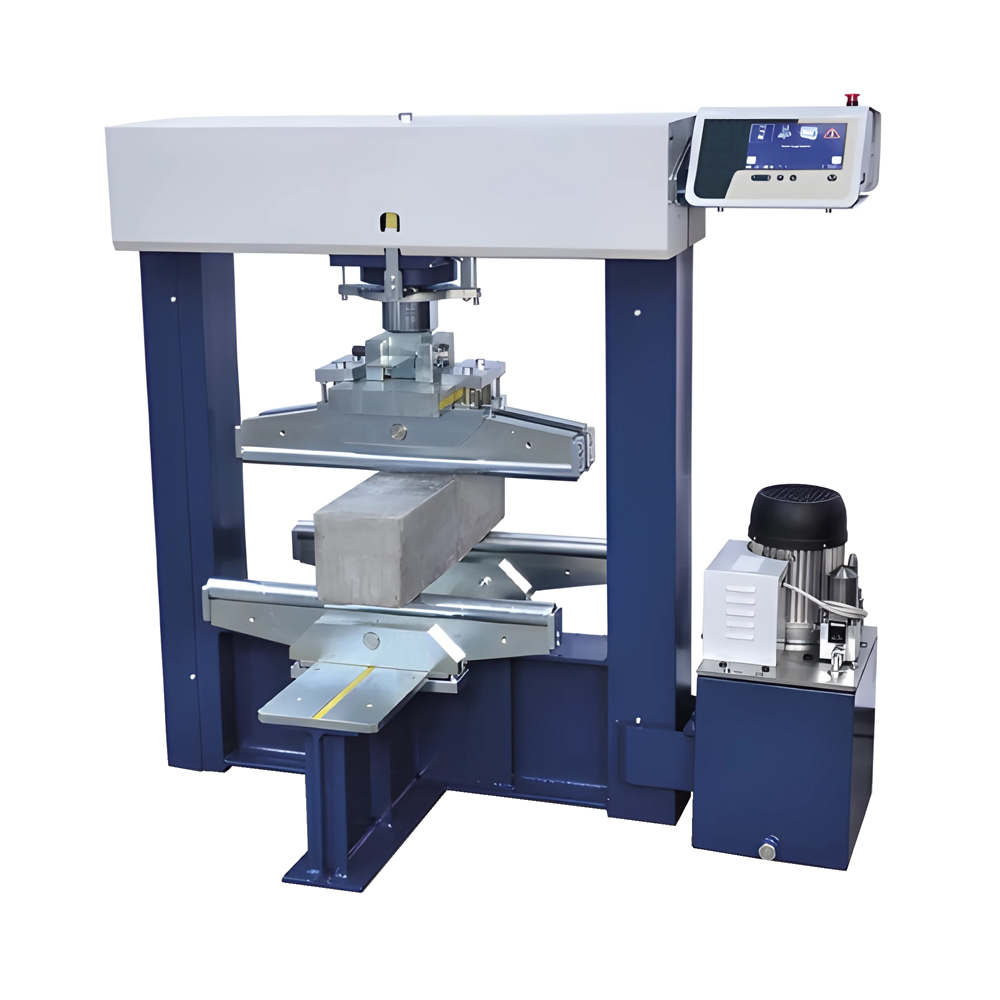
| Flexure and fibre-reinforced concrete | High-stiffness 200 kN frame, for displacement-controlled tests | EN 12390-5, ASTM C1609 |
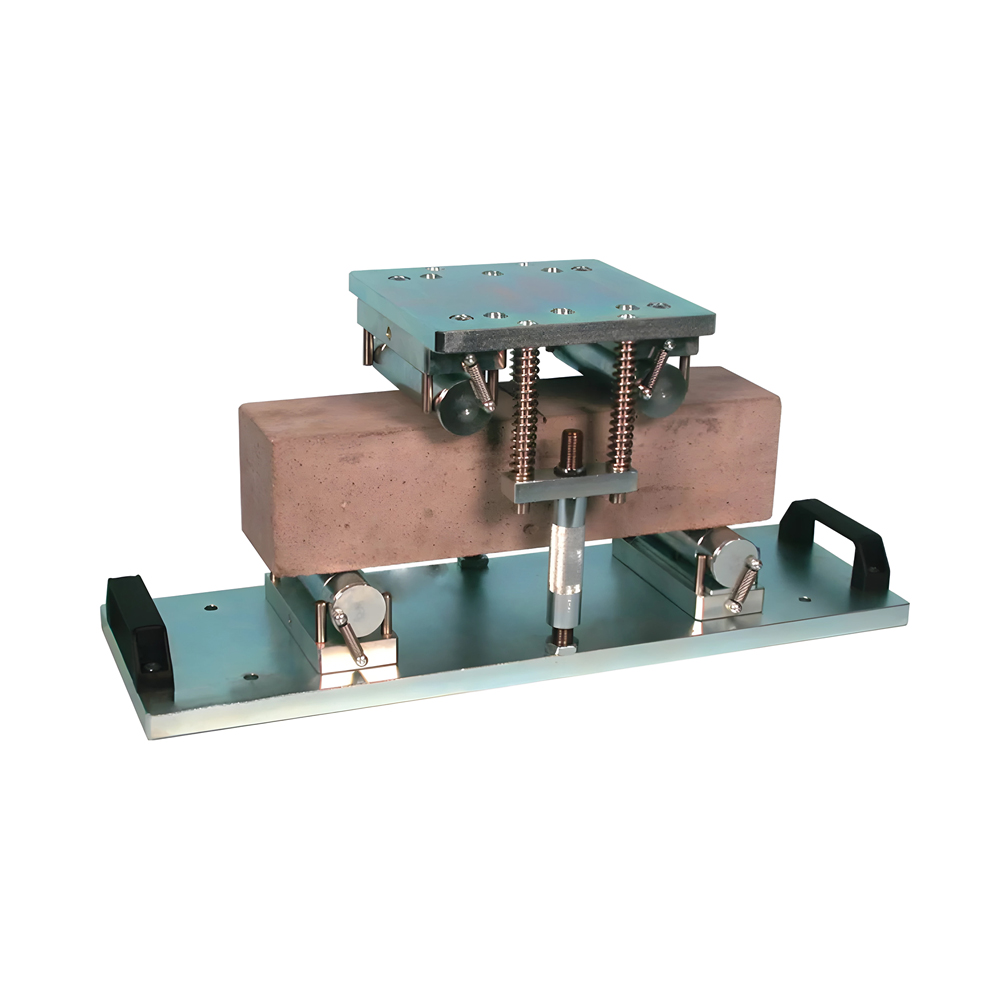
| Two-point or centre-point loading | Flexural device for beams 100 and 150 mm deep | EN 12390-5, ASTM C78, C293 |
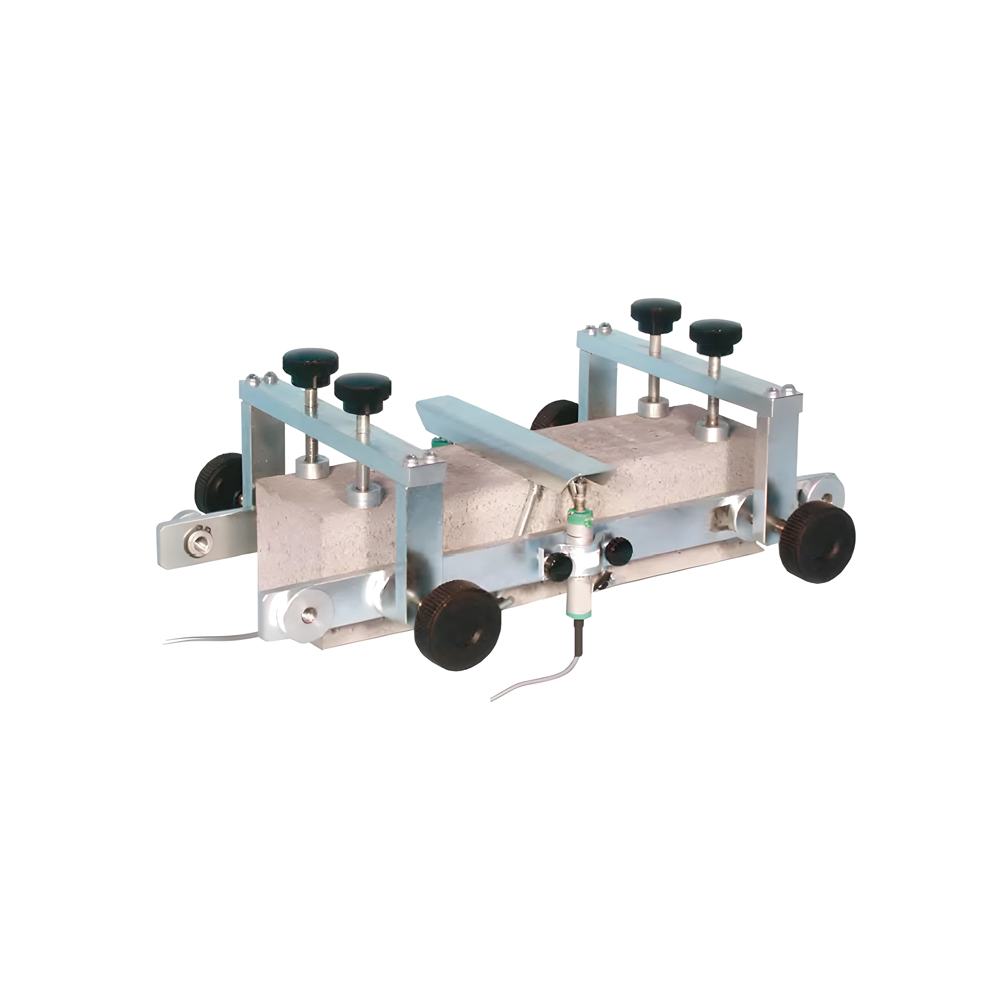
| Deflection of reinforced beams | Deflection measuring device | EN 14488-3, ASTM C1609 |
| Splitting tensile, cylinders | Device for Ø100×200 to Ø160×320 mm | EN 12390-6 |
| Splitting tensile, cubes and paving blocks | Device for 100 and 150 mm | EN 12390-6, EN 1338 |
With two loading points, the middle third of the beam carries the same bending moment and fails at its weakest section: this is the reference method in EN 12390-5 and ASTM C78. With centre-point loading (ASTM C293), failure is forced at mid-span and the result comes out slightly higher. The flexural device accepts both set-ups by changing the upper roller.
To get a price, click Budget on each product page and send one request with everything you need. If you would rather talk to us, write to us or call +34 916 28 29 40.
Because in pavements, ground slabs and precast units concrete works in bending, and what governs is its tensile strength, about ten times lower than its compressive strength. Flexural strength is obtained by breaking beams supported on two rollers.
A cylinder lying on its side is compressed between two strips along its length, and the specimen splits in two by tension. It is simpler than pulling a specimen directly and gives the tensile strength of the concrete (EN 12390-6).
Besides the cracking load, how much it still carries after cracking: its residual strength or toughness. The beam is tested under displacement control while the deflection is measured, because the fibres bridge the crack and the beam does not fail suddenly.
The usual beam is 150×150 mm in section and 600 to 750 mm long; for concrete with small aggregate, 100×100×400 or 500 mm beams are used. The section must be at least three or four times the maximum aggregate size.
Beams are moulded and cured with the specimen preparation equipment; compression specimens are crushed in the compression machines.