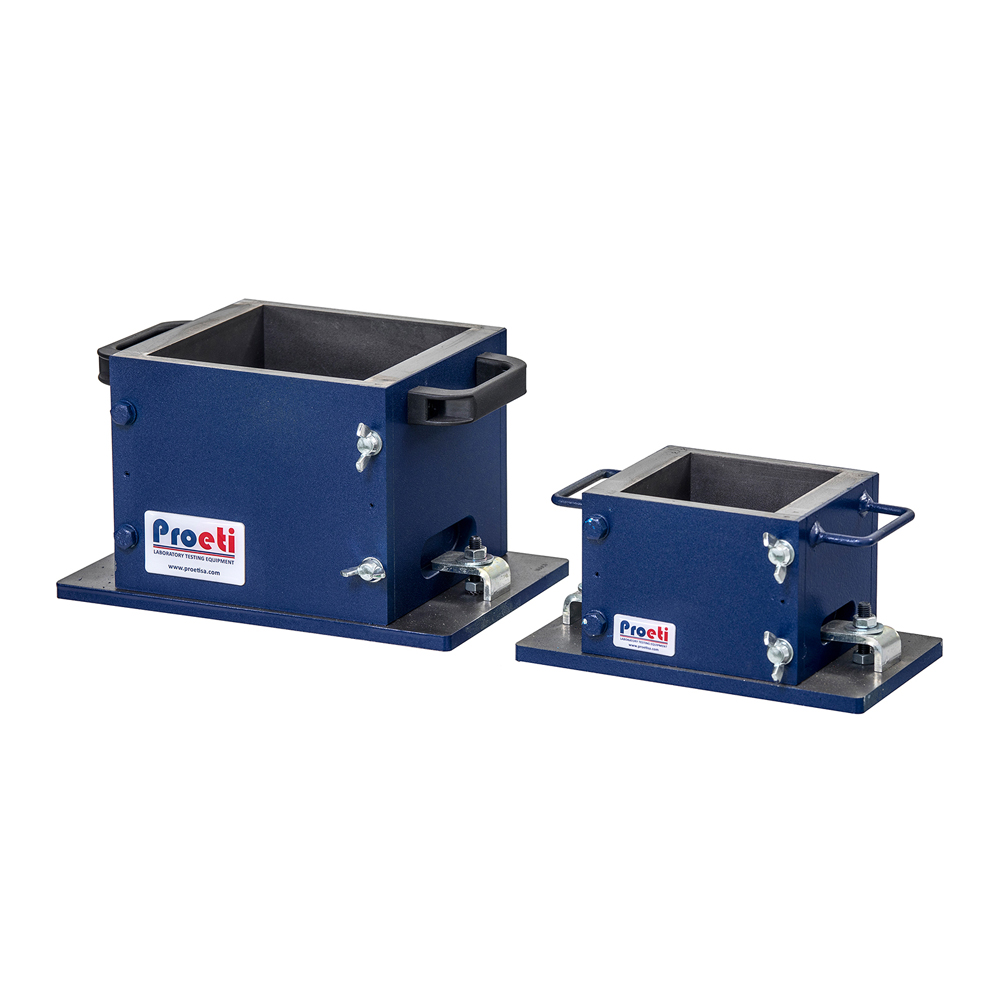
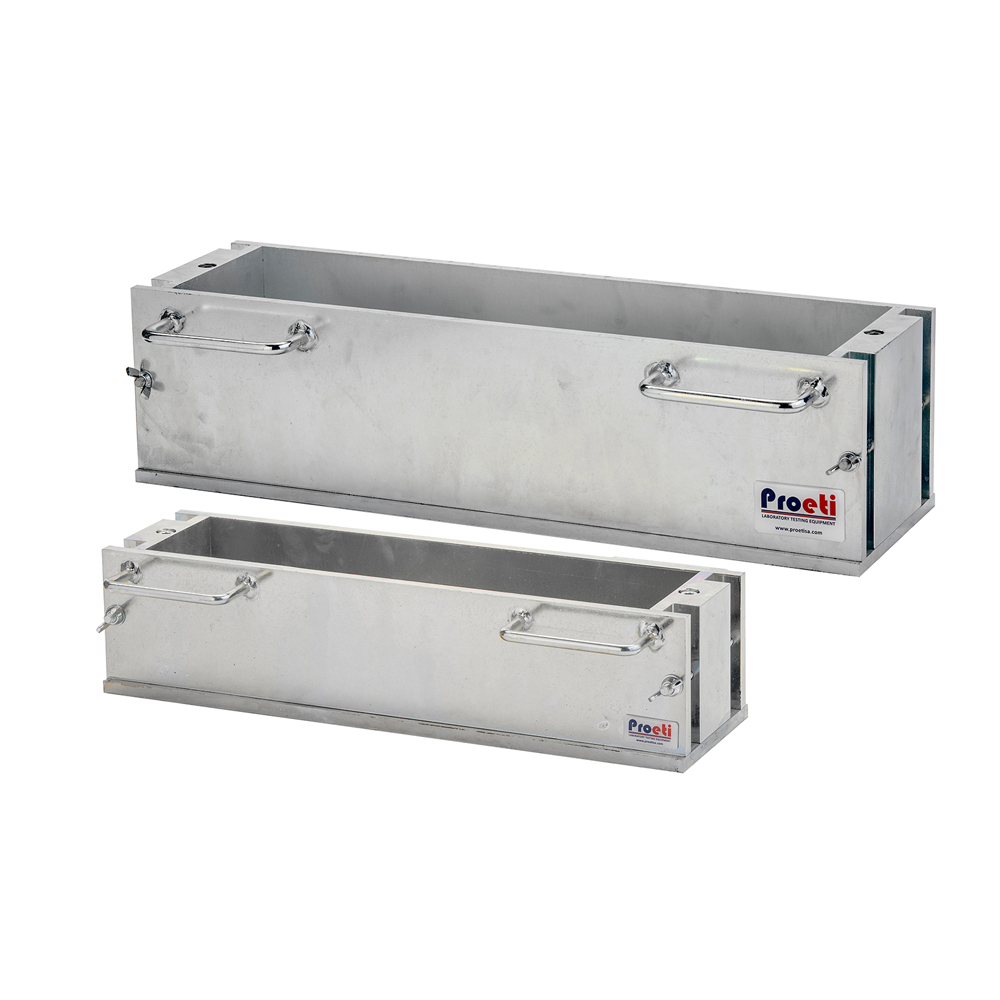
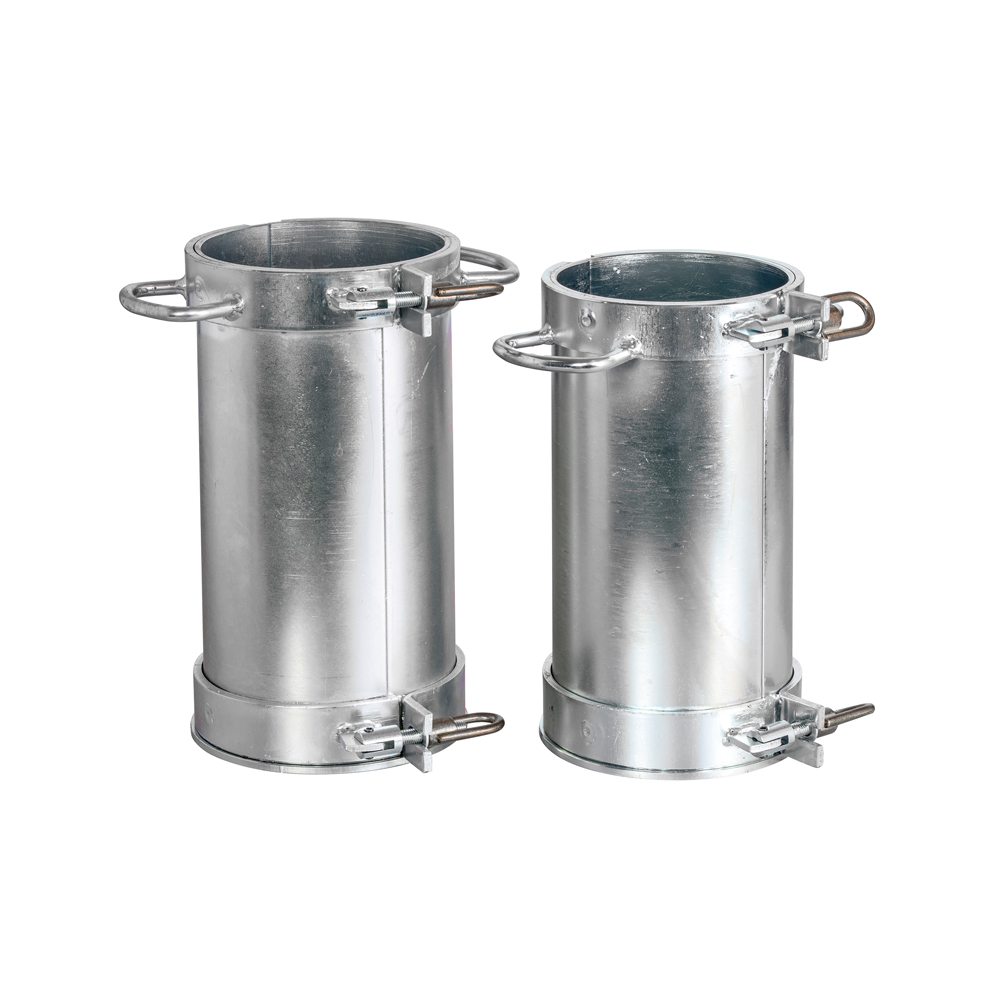
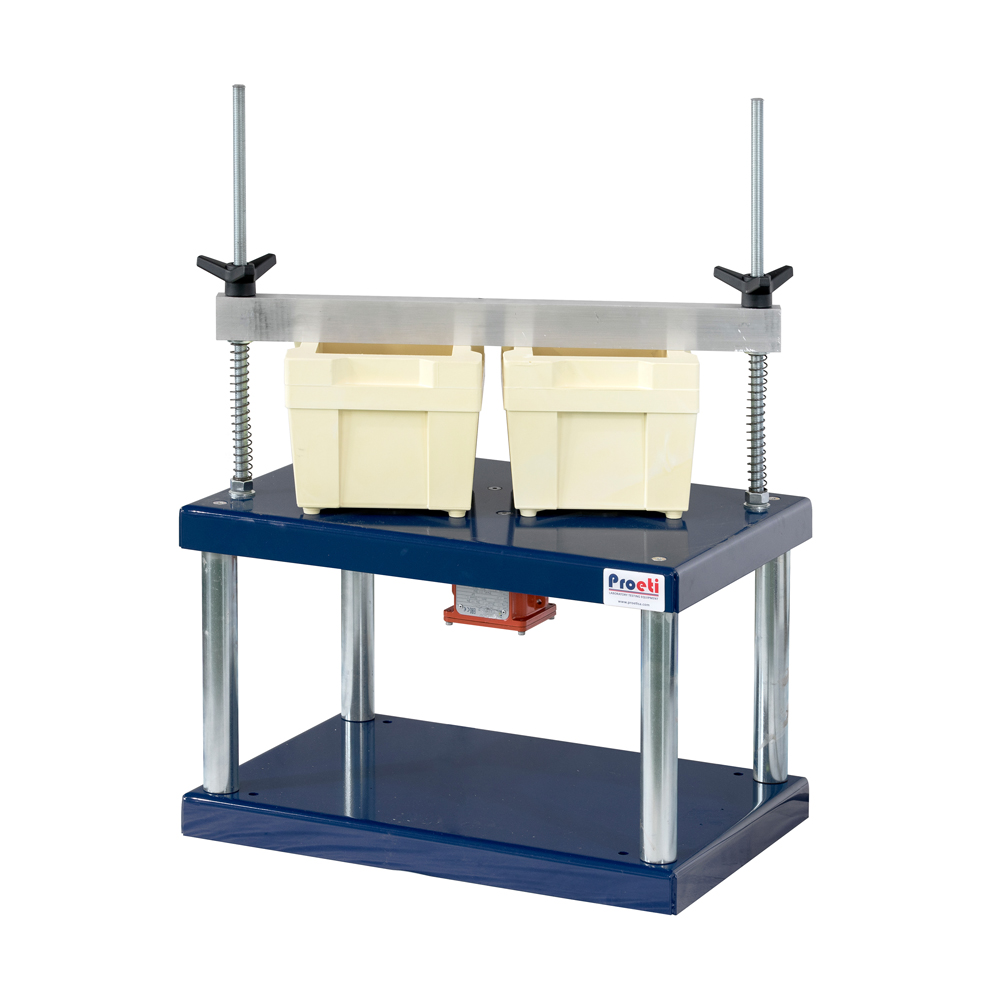
A badly made specimen gives a false strength, however good the concrete. This section has everything you need to make and cure concrete test specimens as EN 12390-2 requires: steel cylinder, cube and prism moulds, vibrating tables, curing tanks and sulphur capping equipment. Ask for a quote and tell us how many specimens you make a day.
| Step | Equipment | Standard |
|---|---|---|
| Moulding | Steel cylinder, cube and prism moulds | EN 12390-1 |
| Compacting | Vibrating table at 3,000 vibrations per minute, or tamping rod | EN 12390-2 |
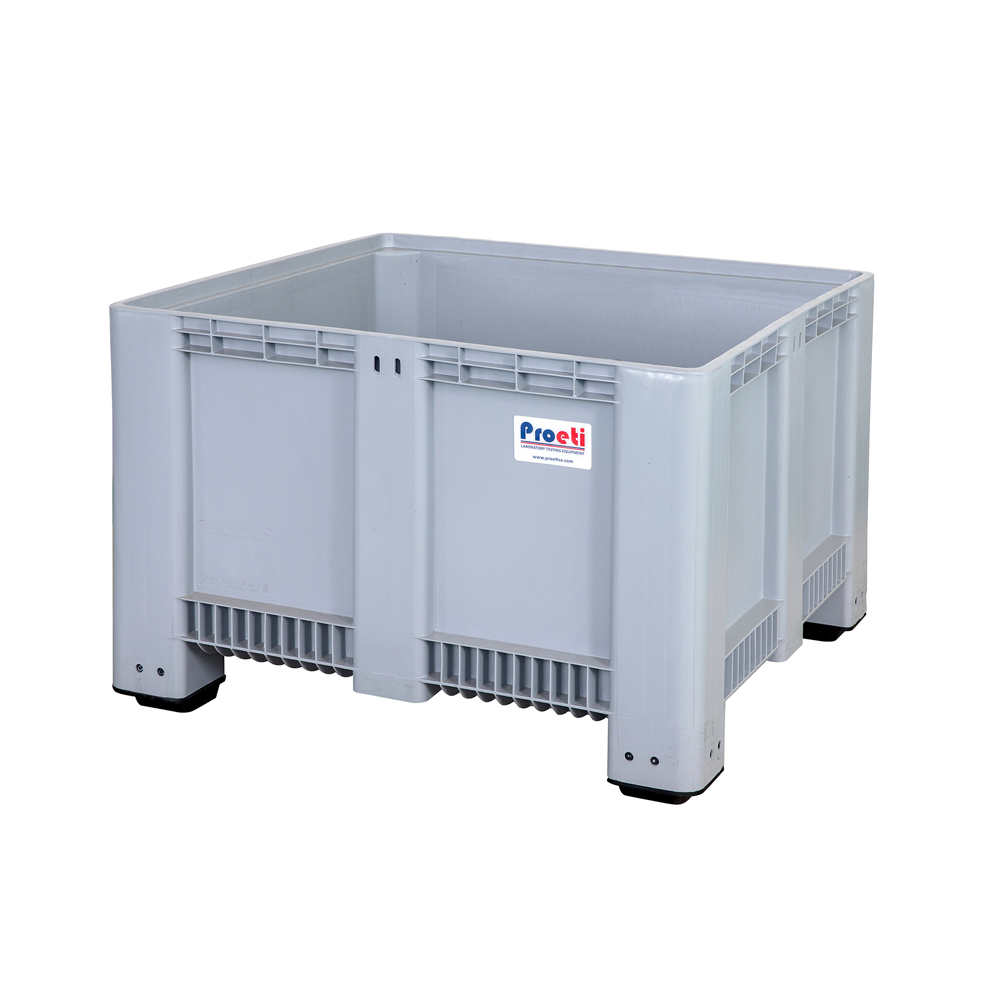
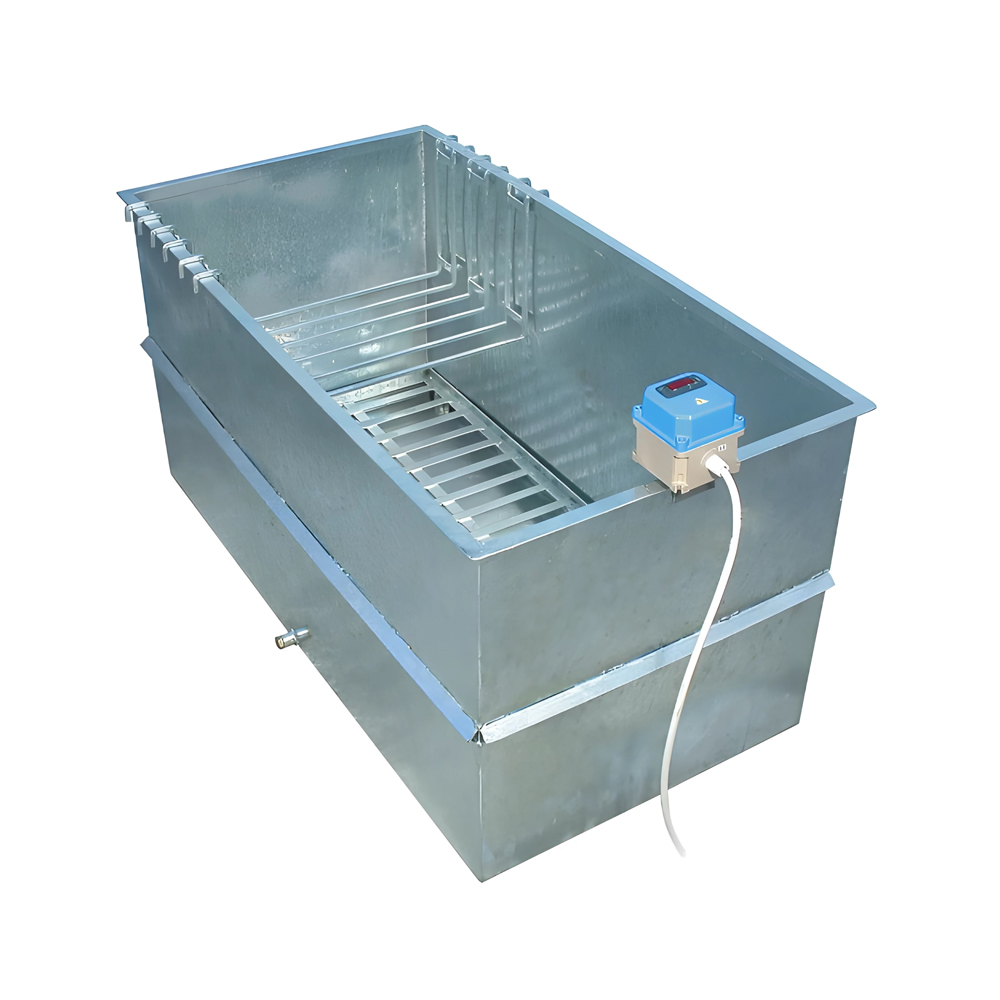
| Curing | 650 l curing tank in polyethylene or 1,000 l in steel (64 × 150 mm cubes) | EN 12390-2, ASTM C31, C192 |
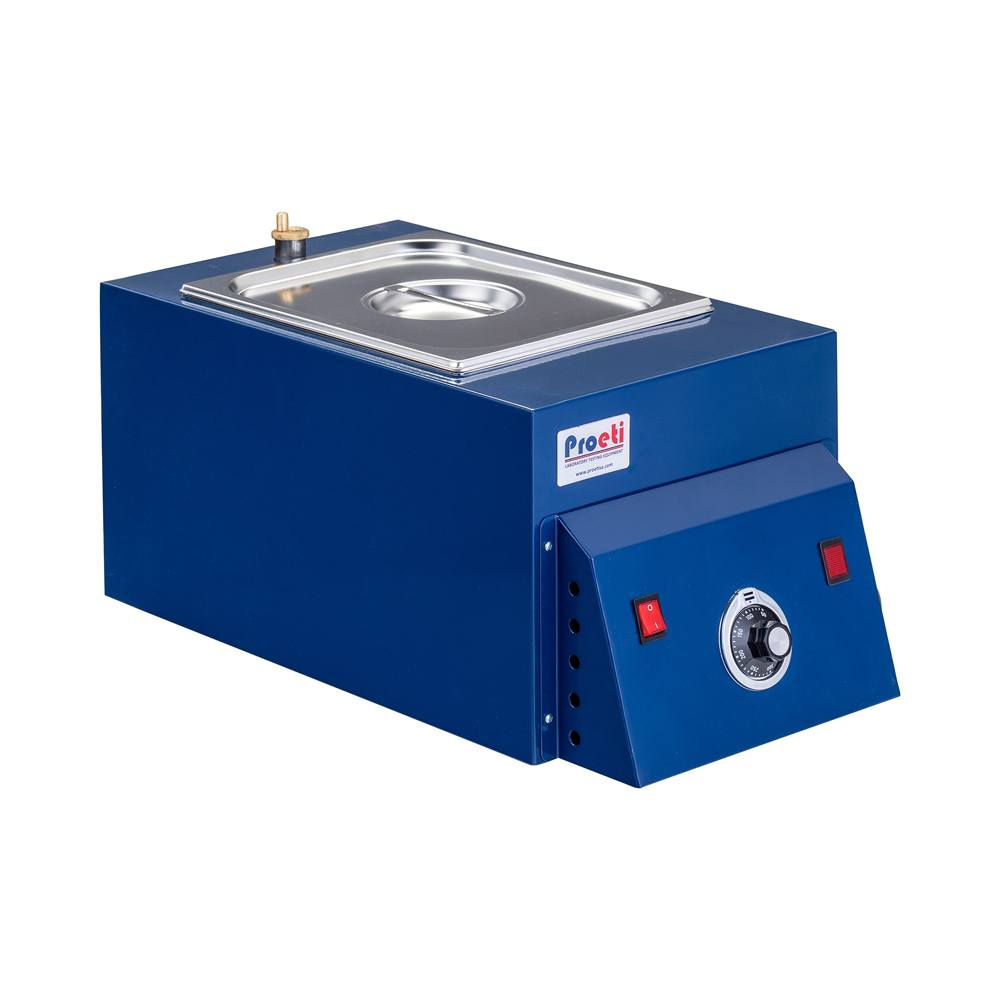
| Capping | Sulphur melting pot with thermostat, and cappers | EN 12390-3 |
To get a price, click Budget on each product page and send one request with everything you need. If you would rather talk to us, write to us or call +34 916 28 29 40.
The sample is taken at discharge, the mould is filled in layers and each layer is compacted with a vibrator or a rod, depending on the consistence. The top is struck off, protected and left undisturbed on site for 16 hours to 3 days before demoulding and taking the specimen to the laboratory (EN 12390-2).
Once demoulded, they are kept in water or in a moist room (95 % humidity or more) at 20 ± 2 °C until the test day, usually 28 days. A specimen that dries out or gets cold gives a lower strength than the concrete in the structure.
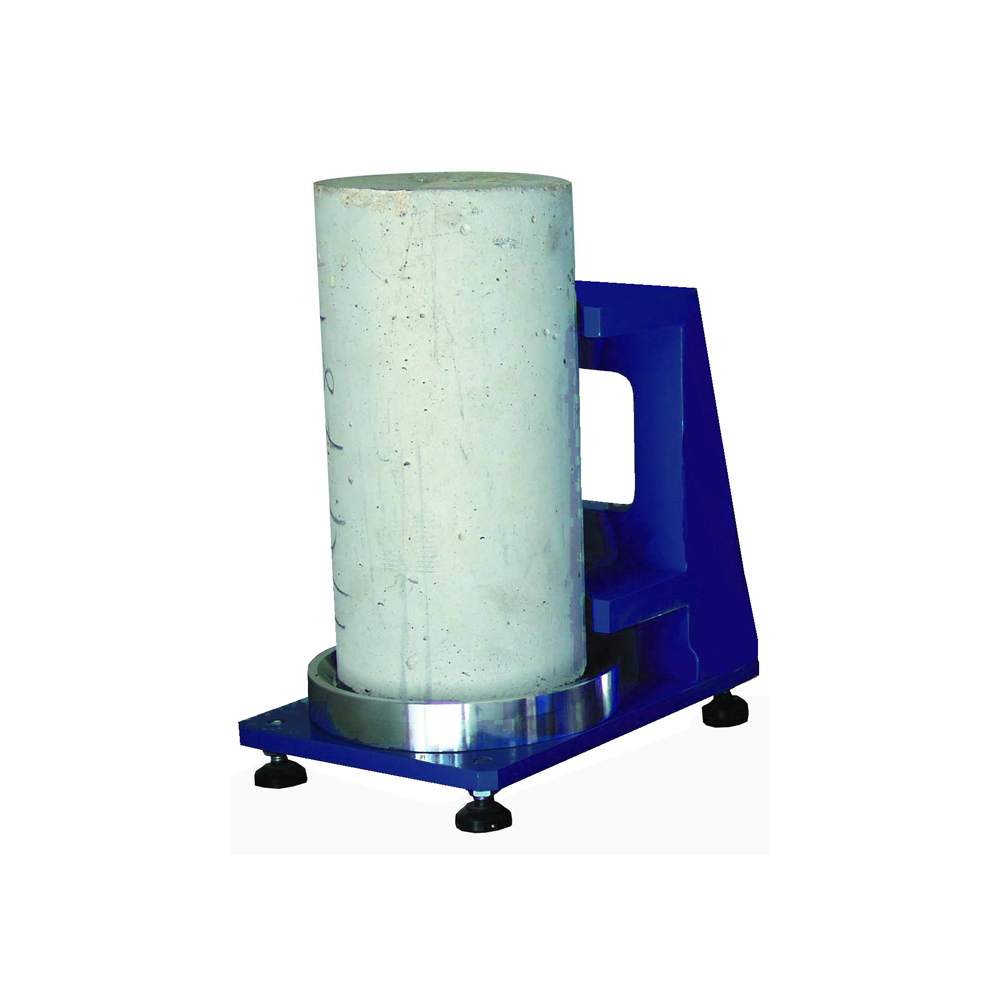
Because the end faces must be flat and parallel: otherwise the load concentrates at one point and the specimen fails early. They are capped with molten sulphur mortar or the ends are ground with a mechanical grinder.
The control plan sets it. Typically several batches are sampled from each lot, and two or more specimens are made from each to be crushed at 28 days, plus some for early ages if the strength development is of interest.
Cured specimens are crushed in the compression machines and flexural frames.