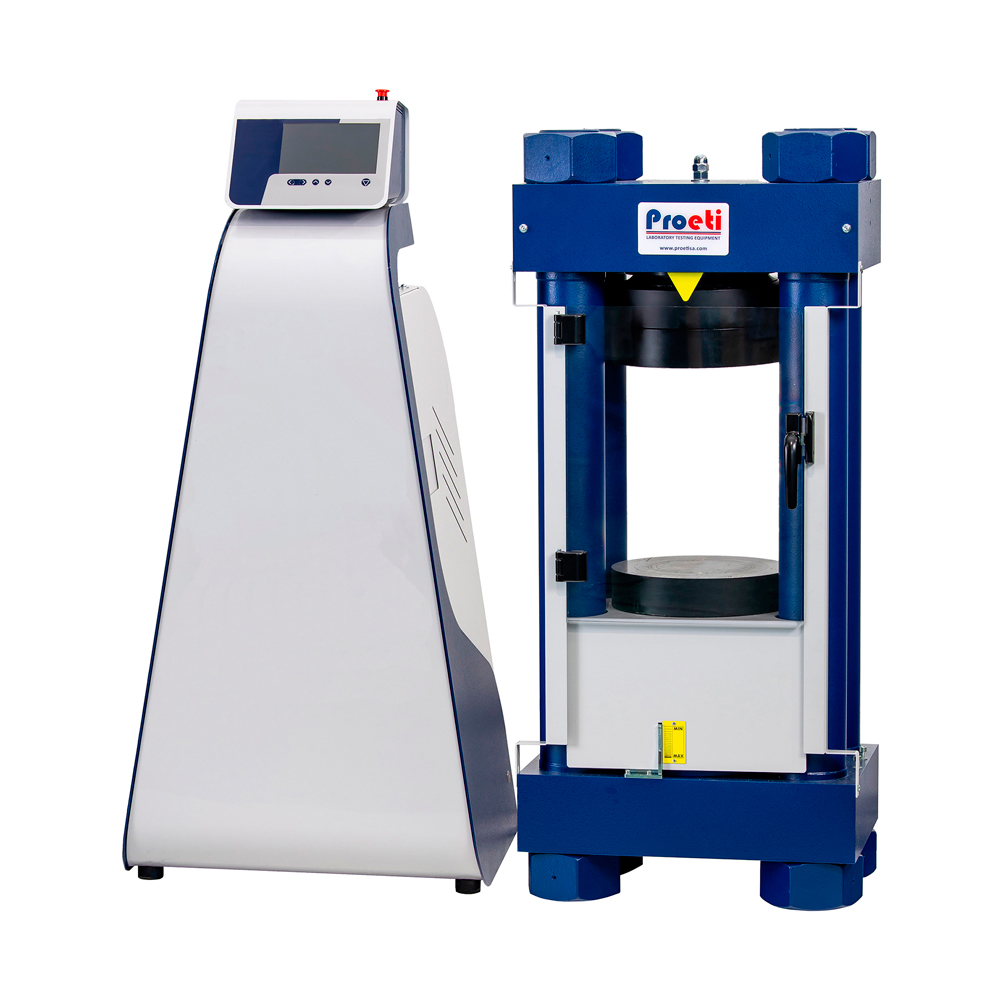
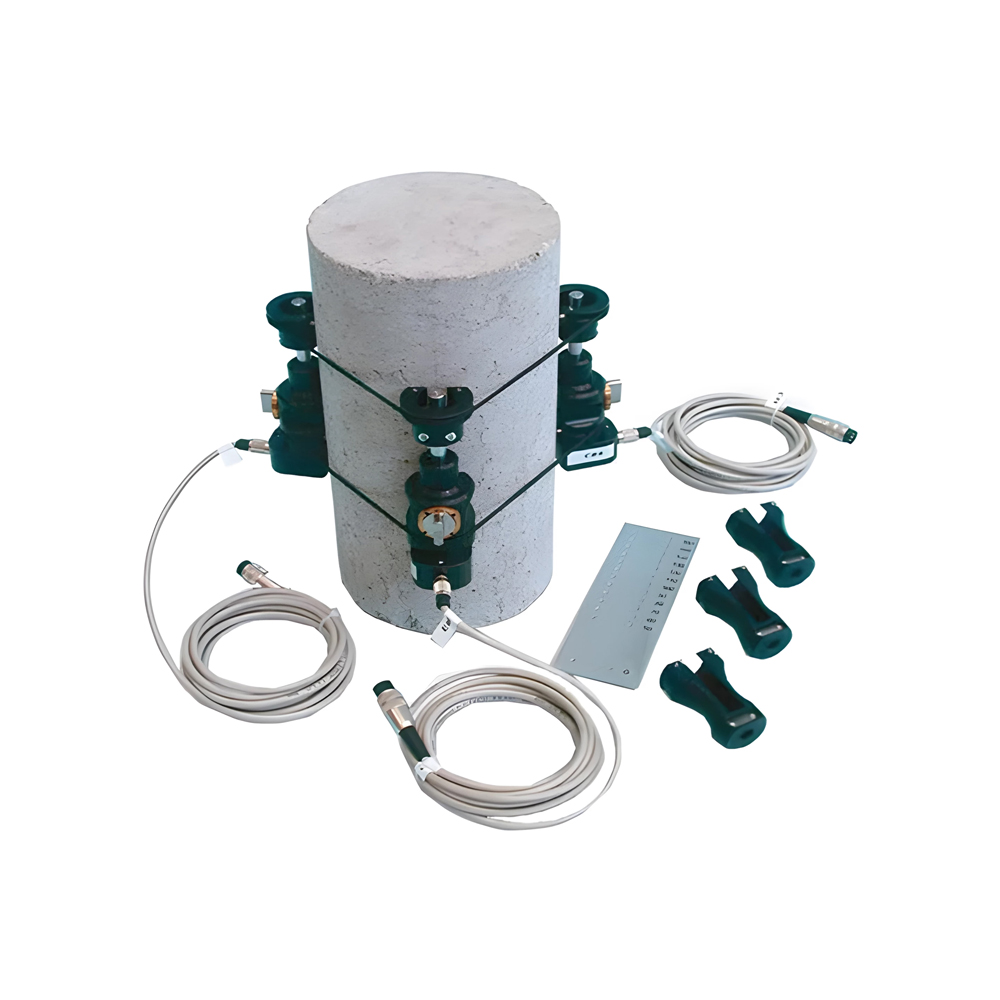
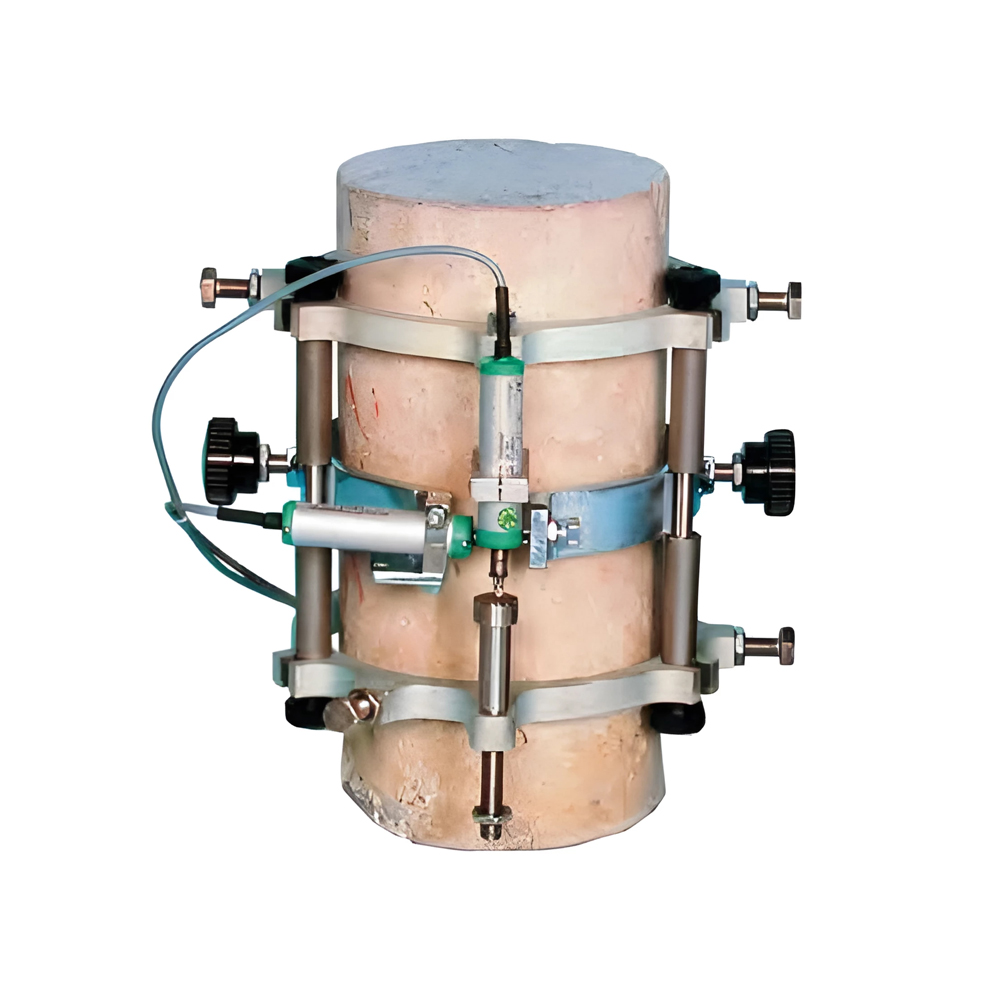
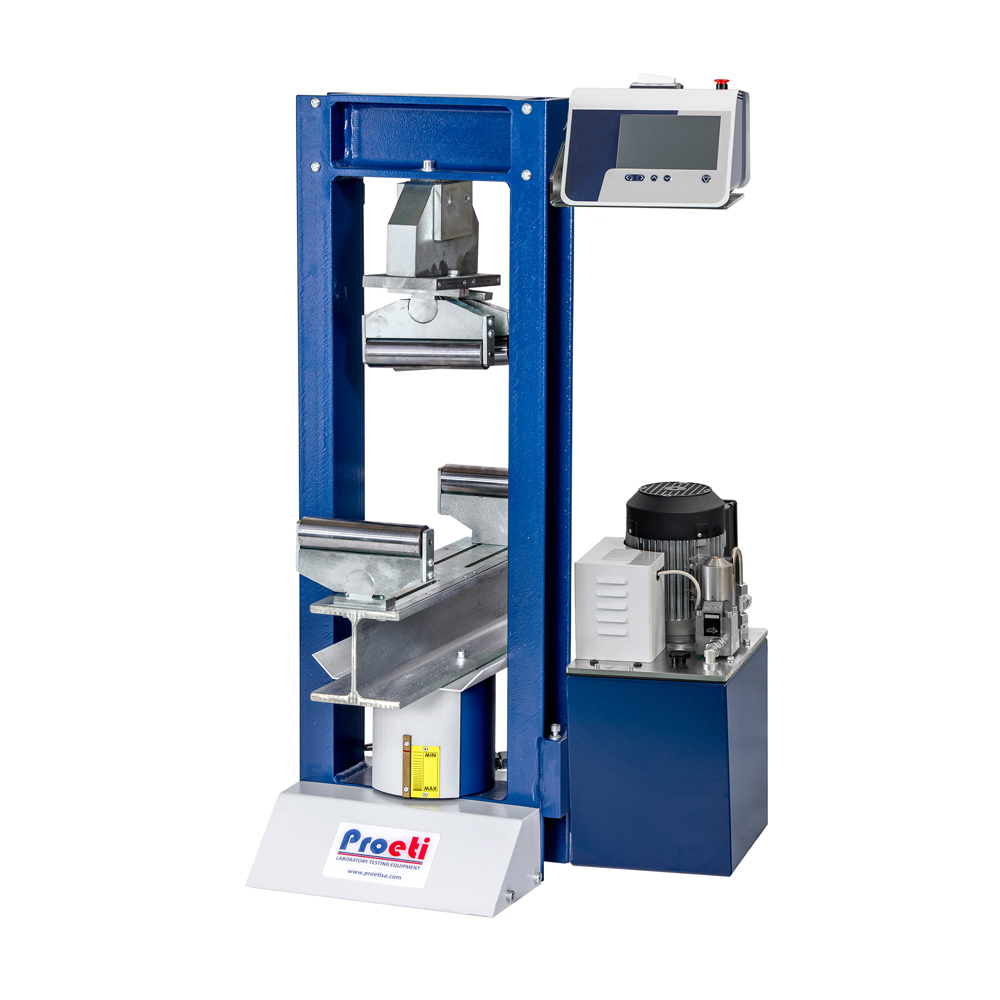
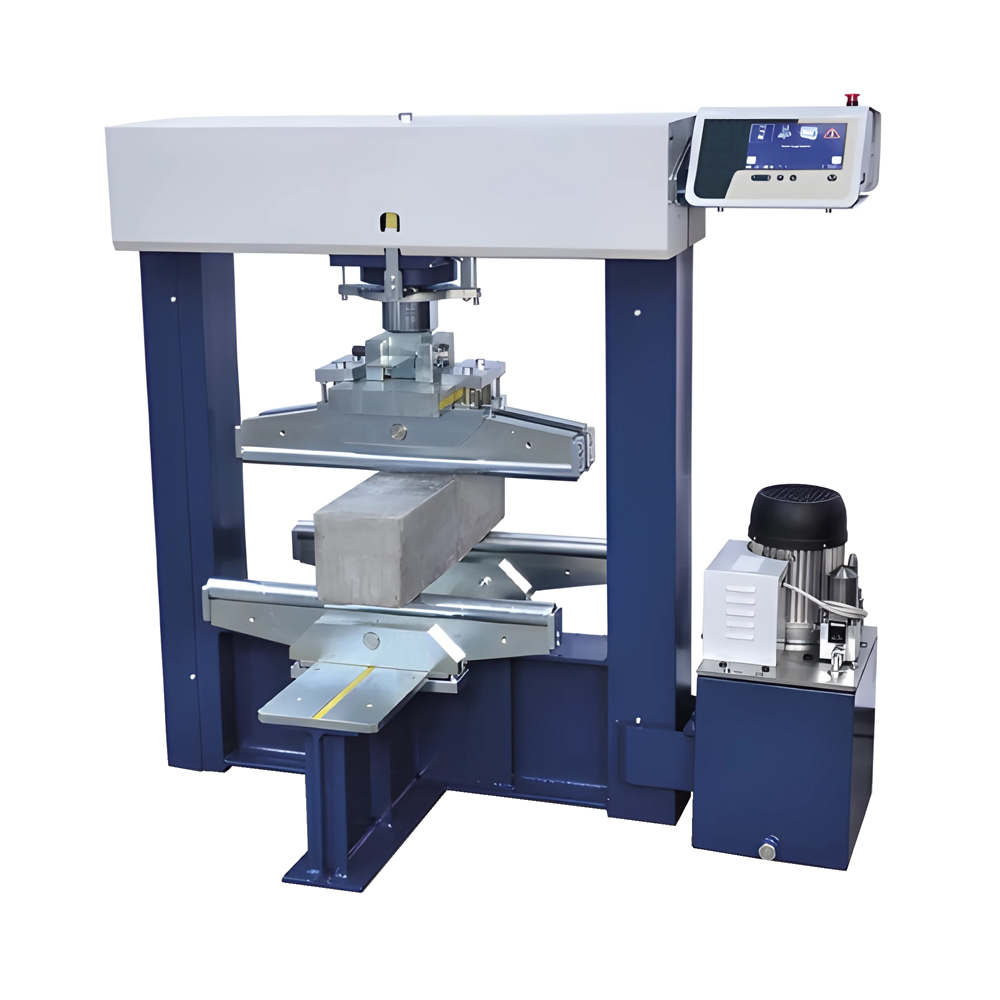
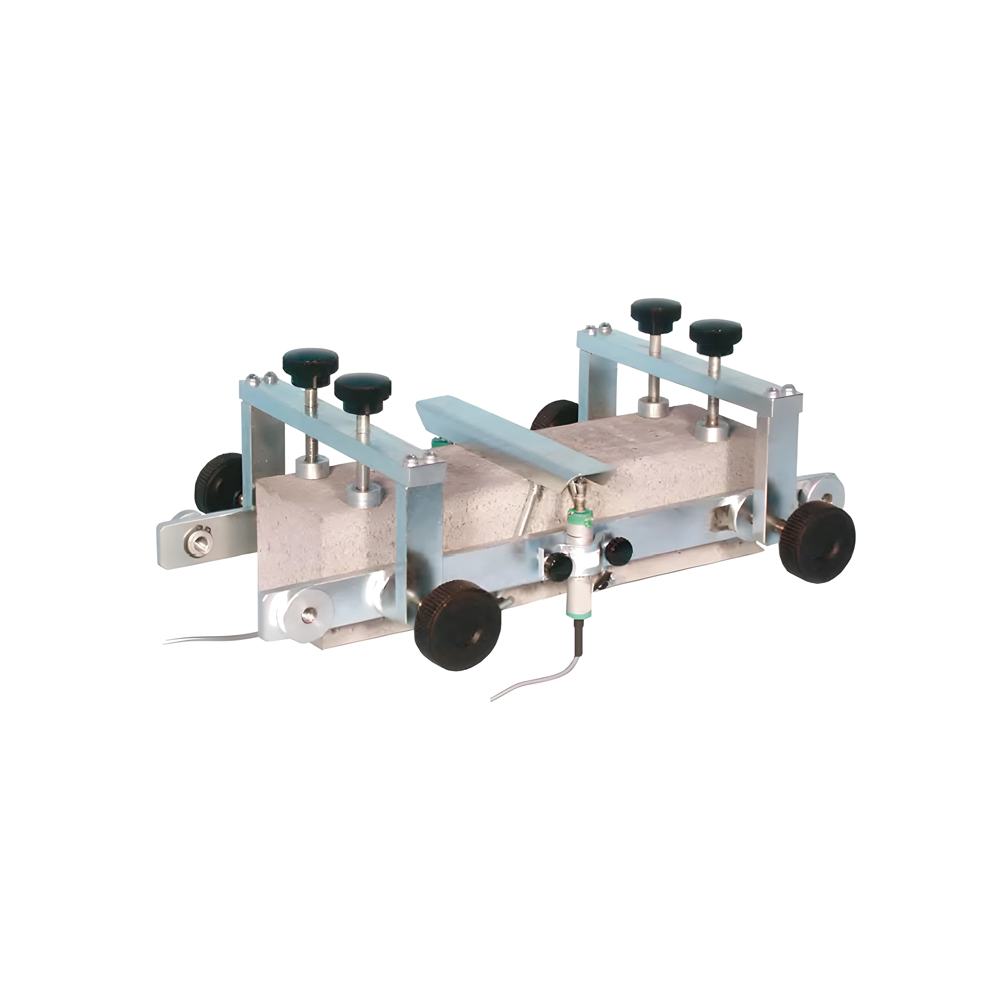
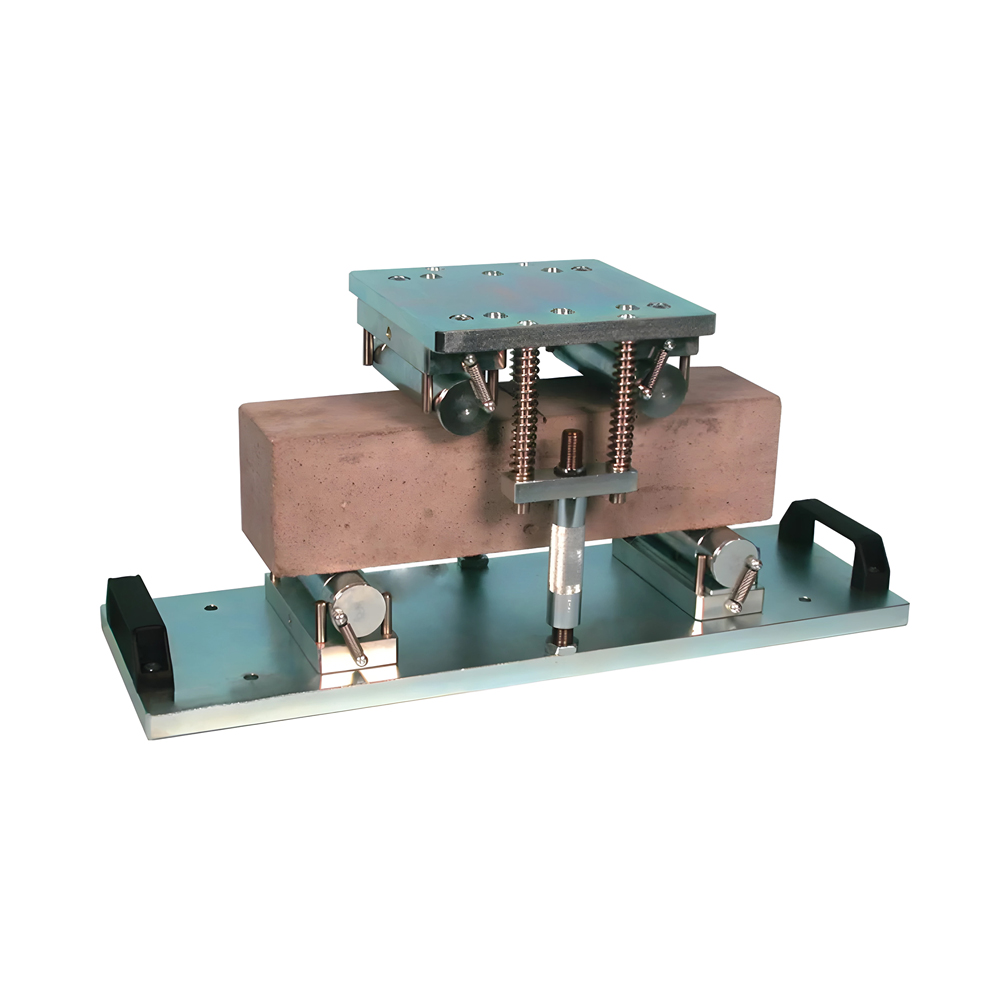
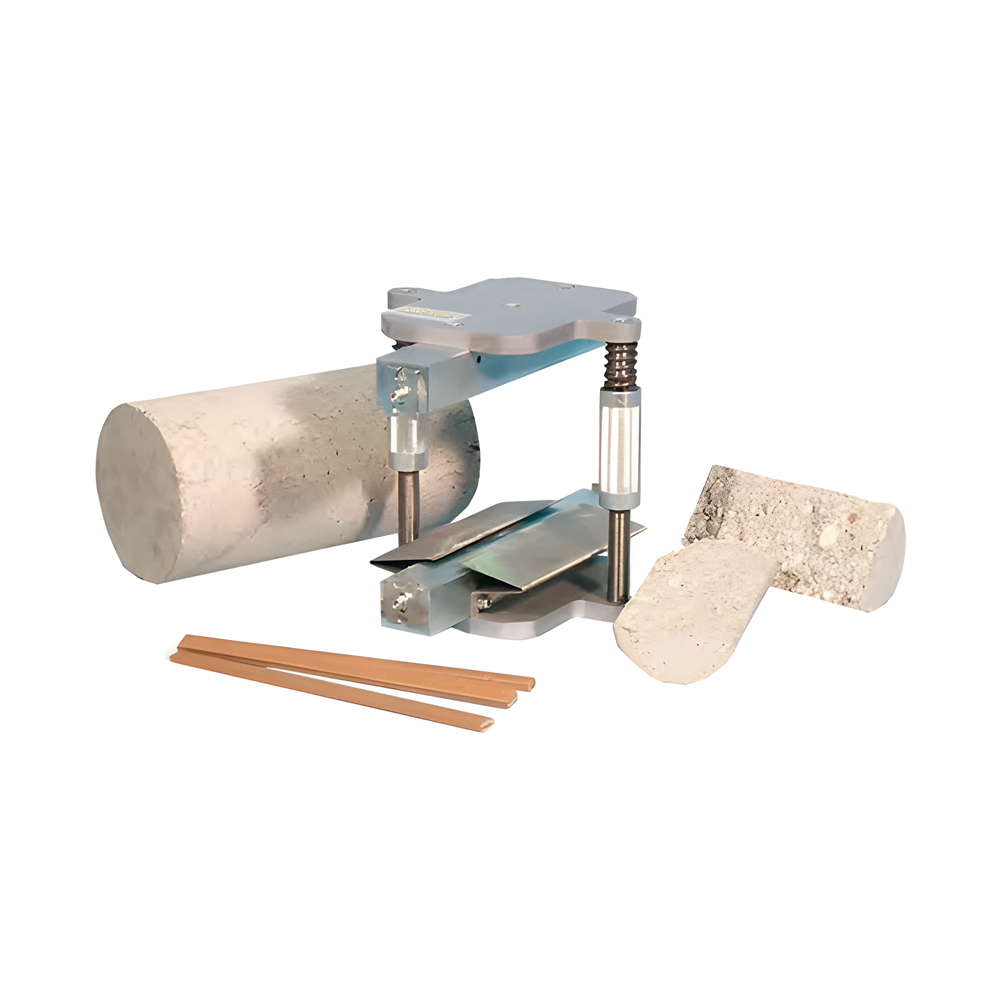
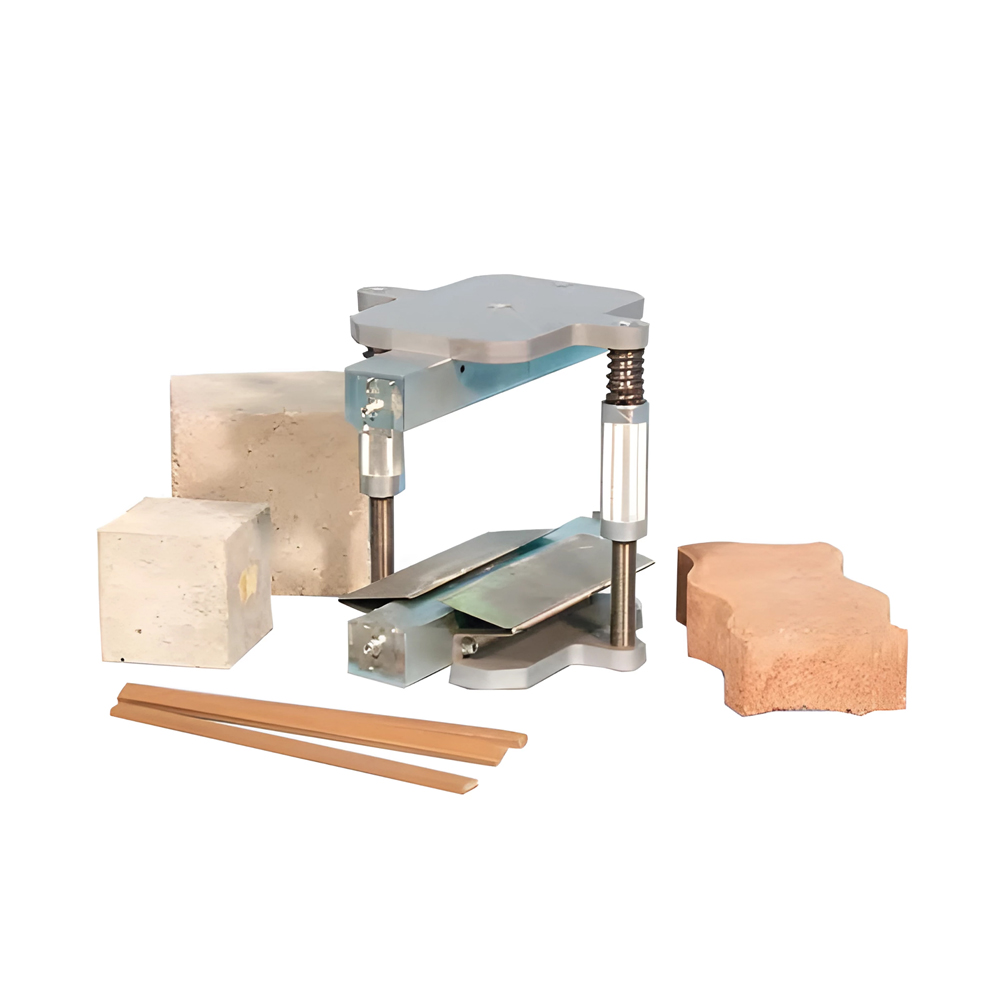
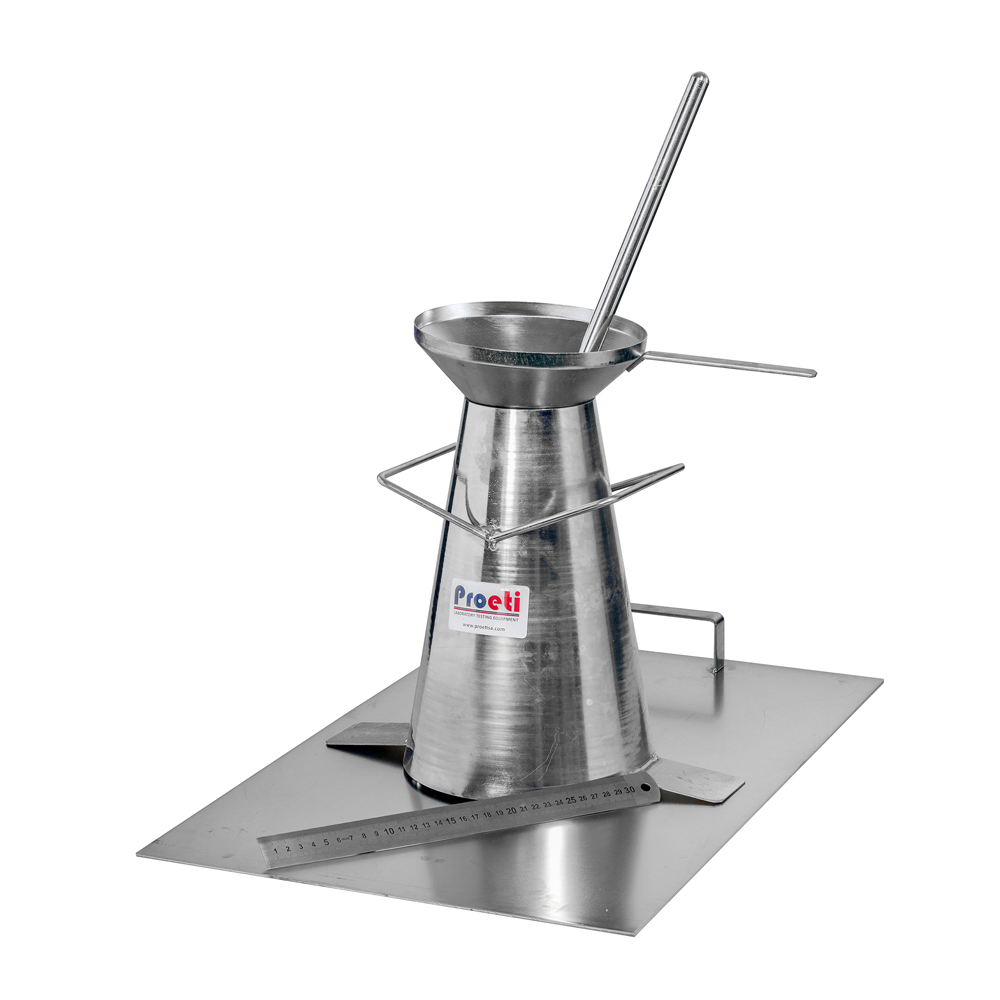
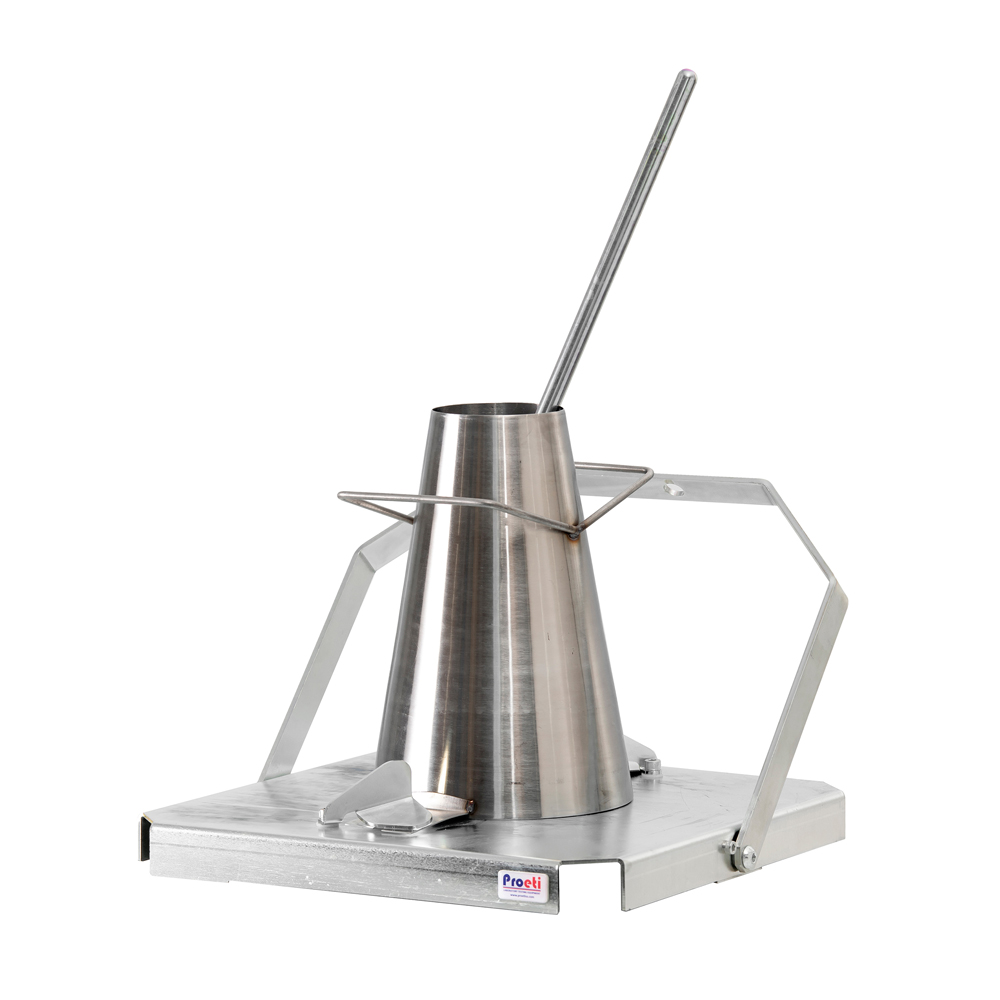
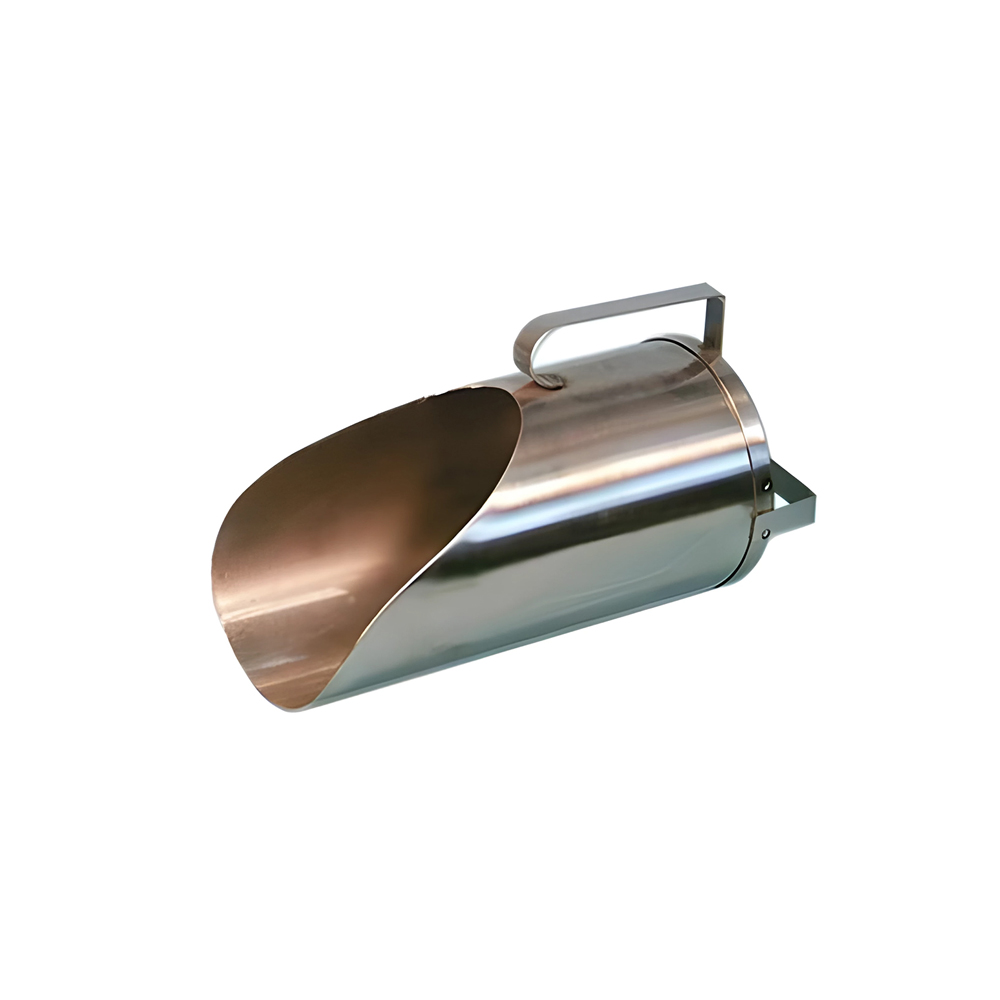
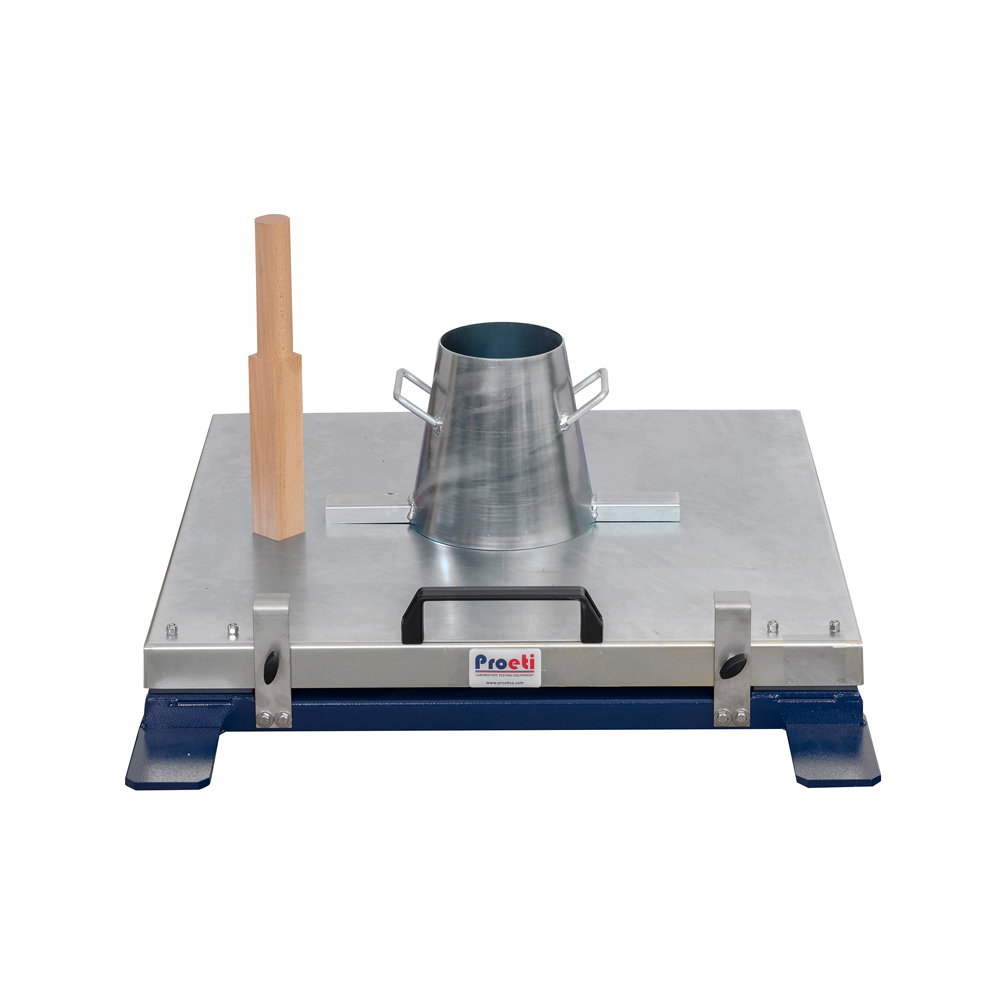
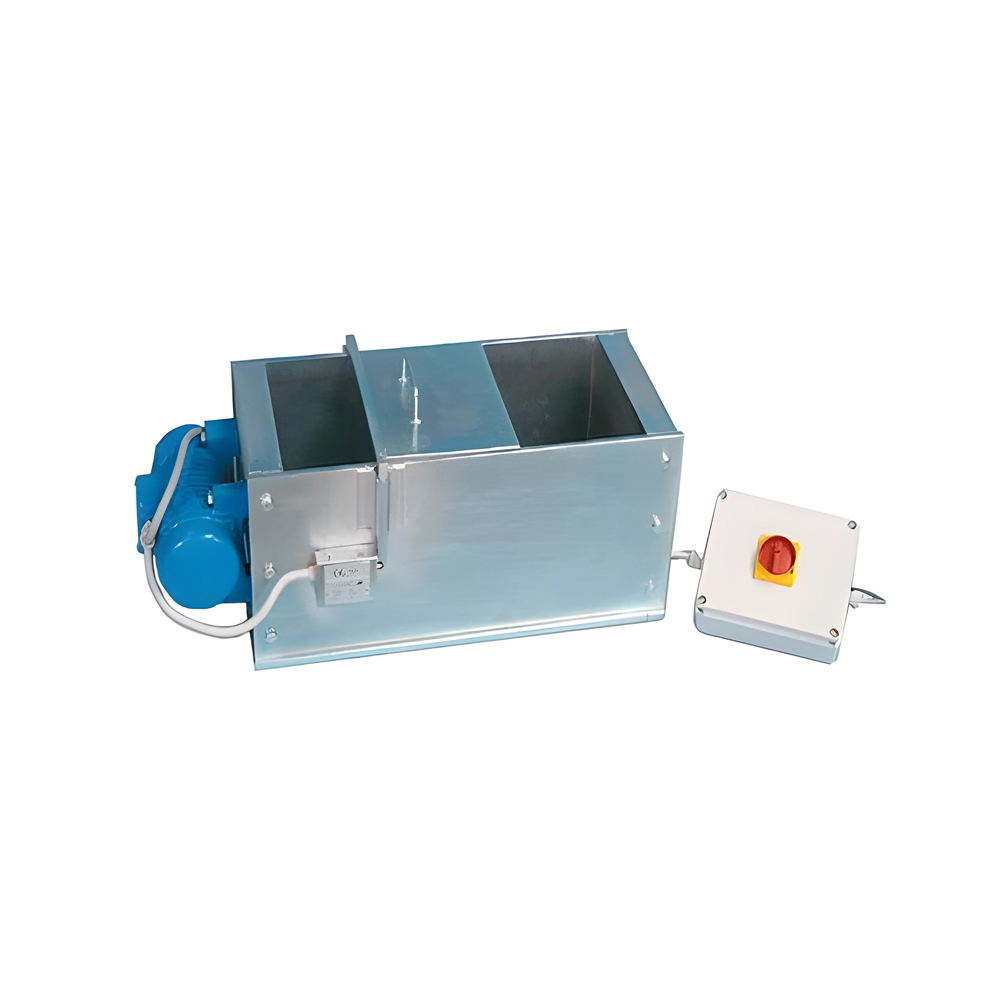
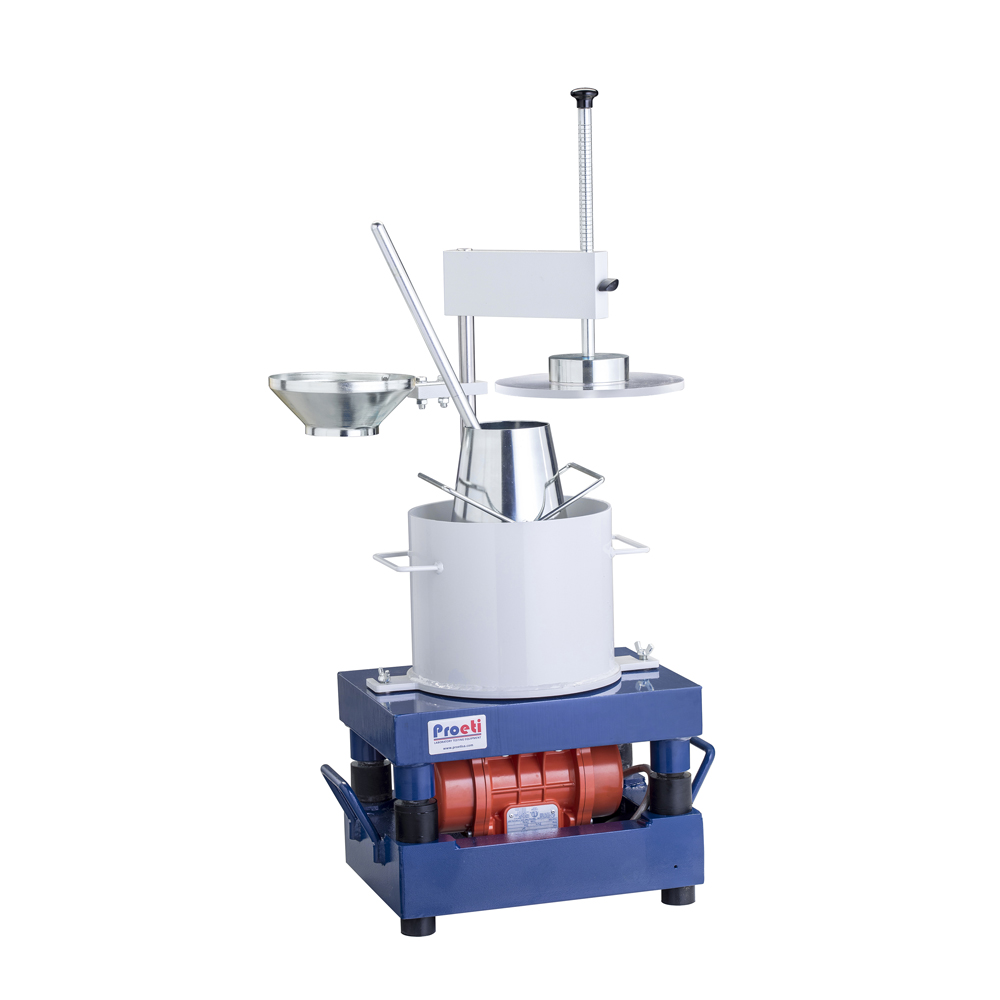
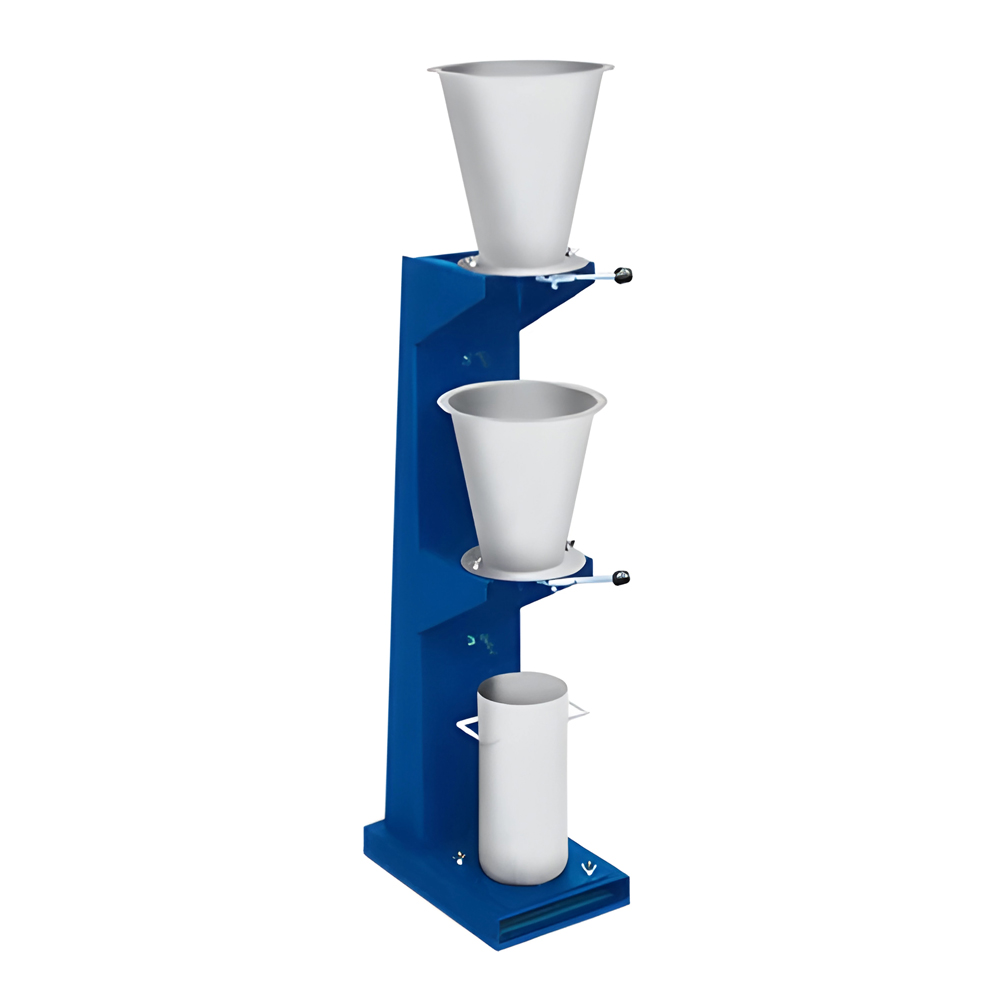
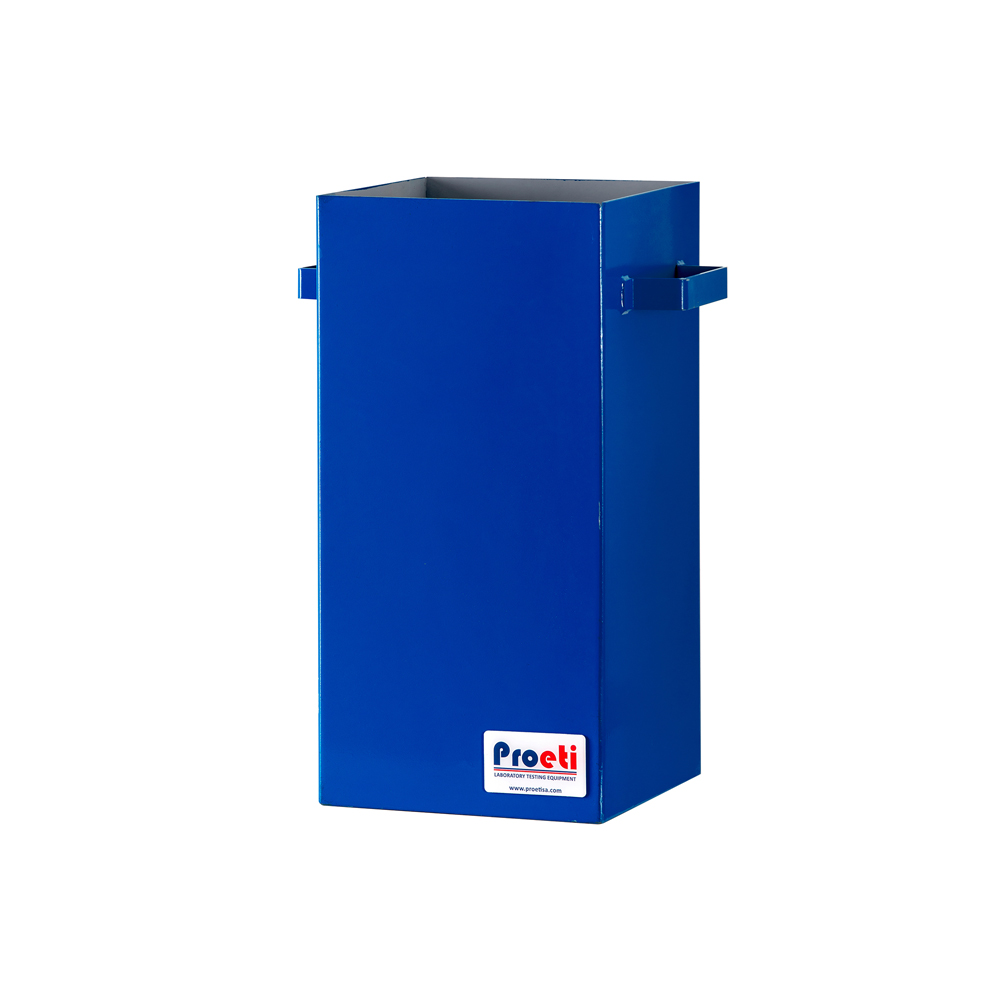
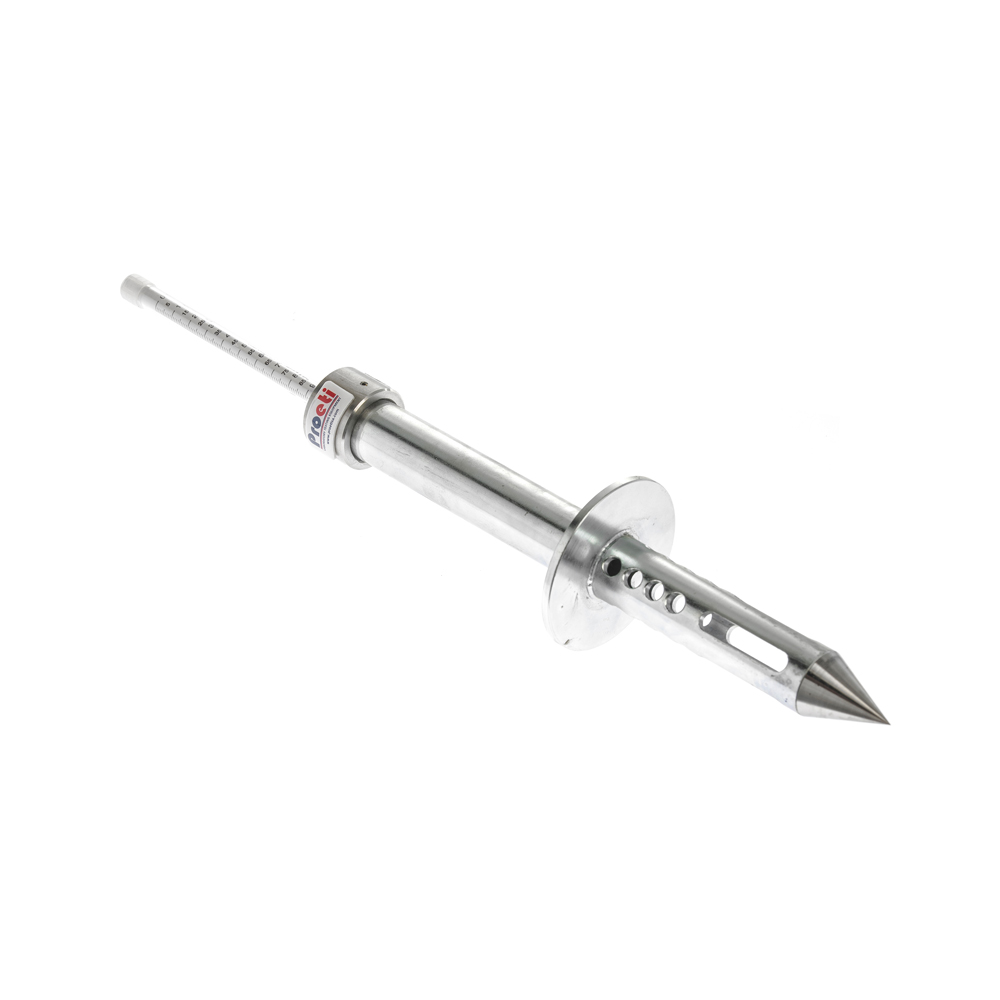
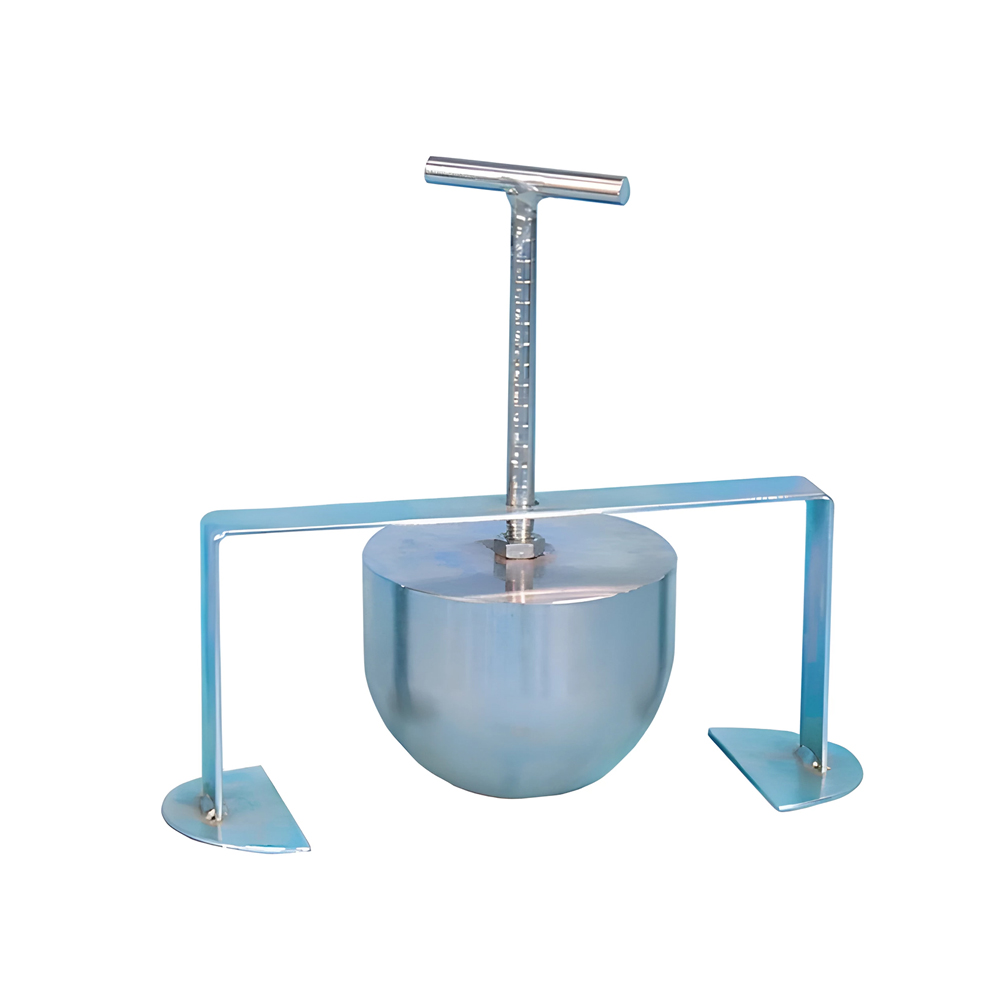
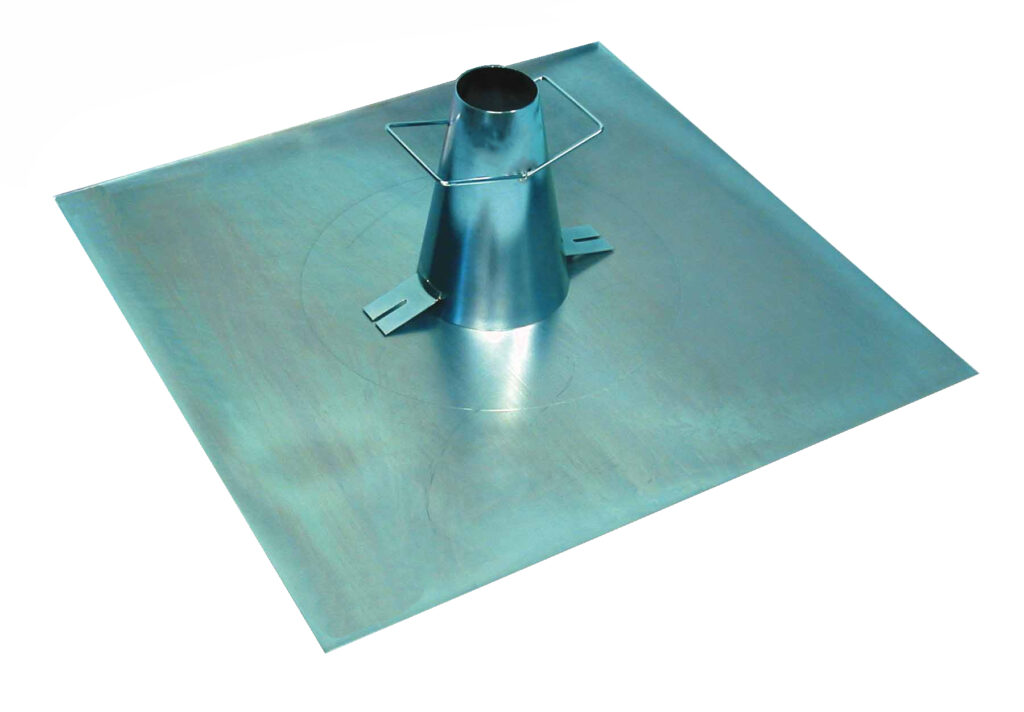
From the truck mixer to the finished structure, concrete goes through three checks: its consistence on arrival, the strength of its test specimens and the condition of the built element. This family brings together the concrete testing equipment for all three, fresh and hardened, to the EN 12350, EN 12390 and EN 12504 series and ASTM. Tell us which checks you carry out and we will advise you.
Concrete is specified to EN 206 and, in Spain, the Structural Code (Código Estructural) sets its acceptance control. The tests follow three series of standards:
| What is measured | Equipment and standard |
|---|---|
| Consistence | Slump cone (EN 12350-2), Vebe (EN 12350-3) and flow table (EN 12350-5) |
| Air content and density | Air content meters (EN 12350-7) and volumetric containers (EN 12350-6) |
| Self-compacting concrete | Slump-flow, V-funnel, L-box and J-ring (EN 12350-8 to -12) |
| Making and curing specimens | Moulds, vibrating table and curing tanks (EN 12390-2) |
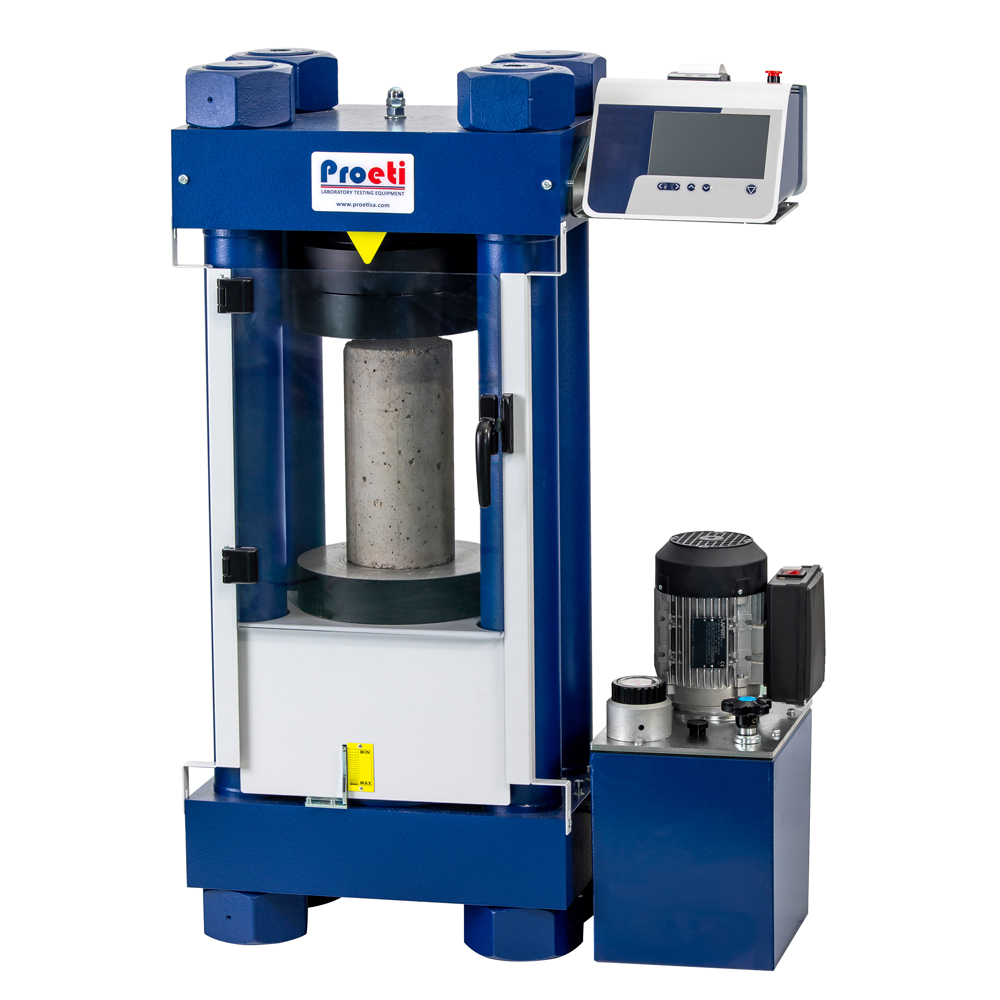
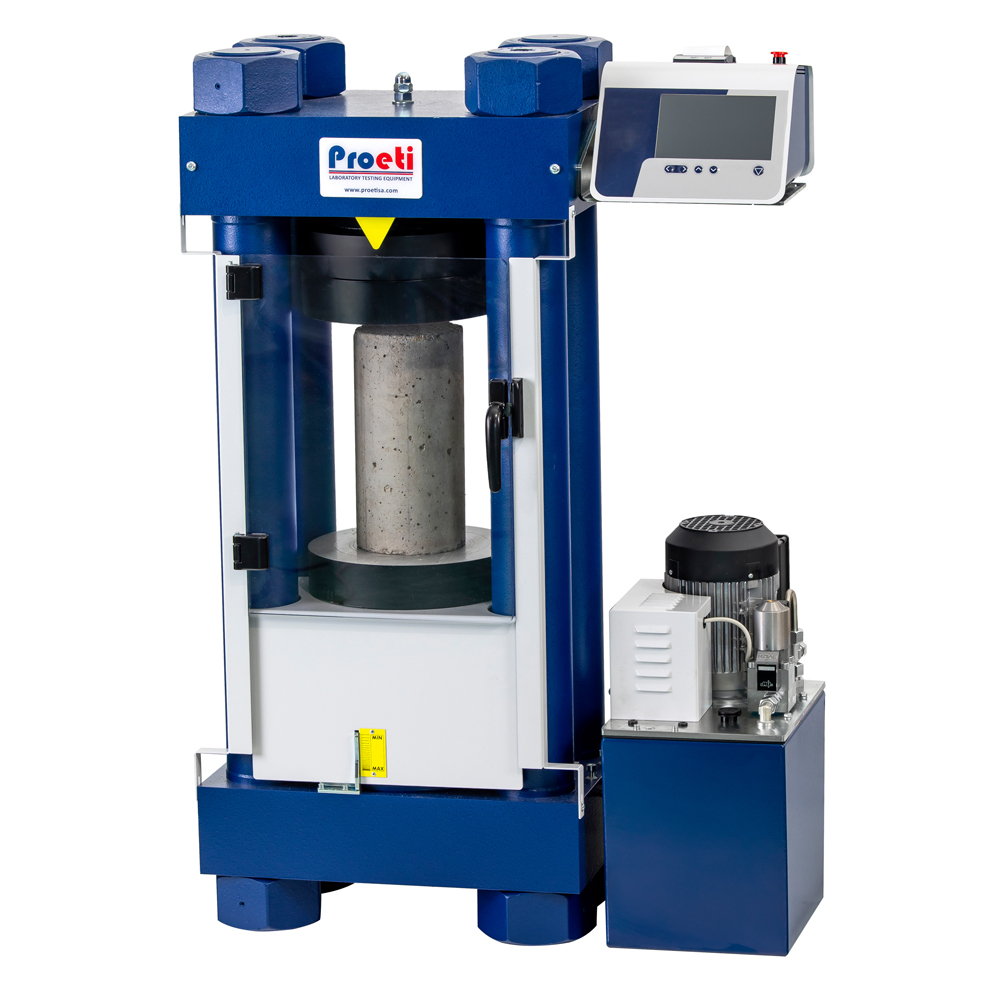
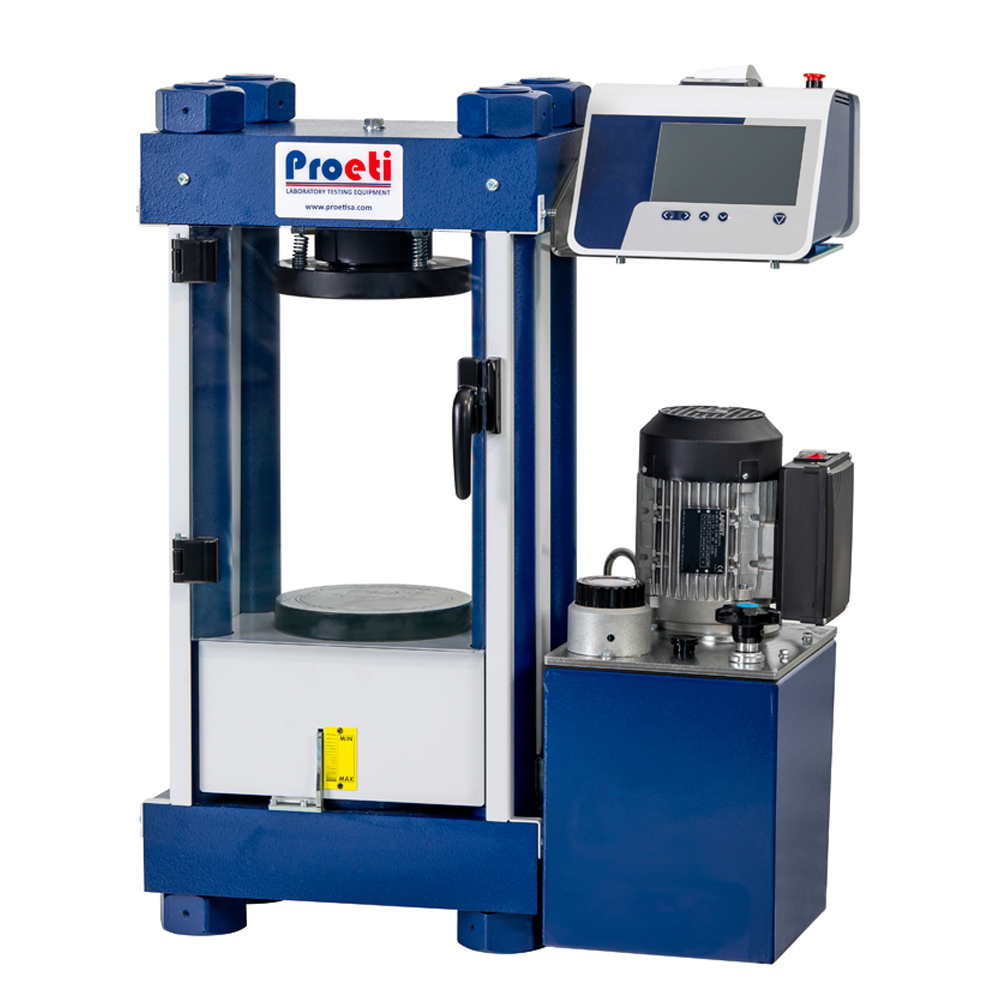
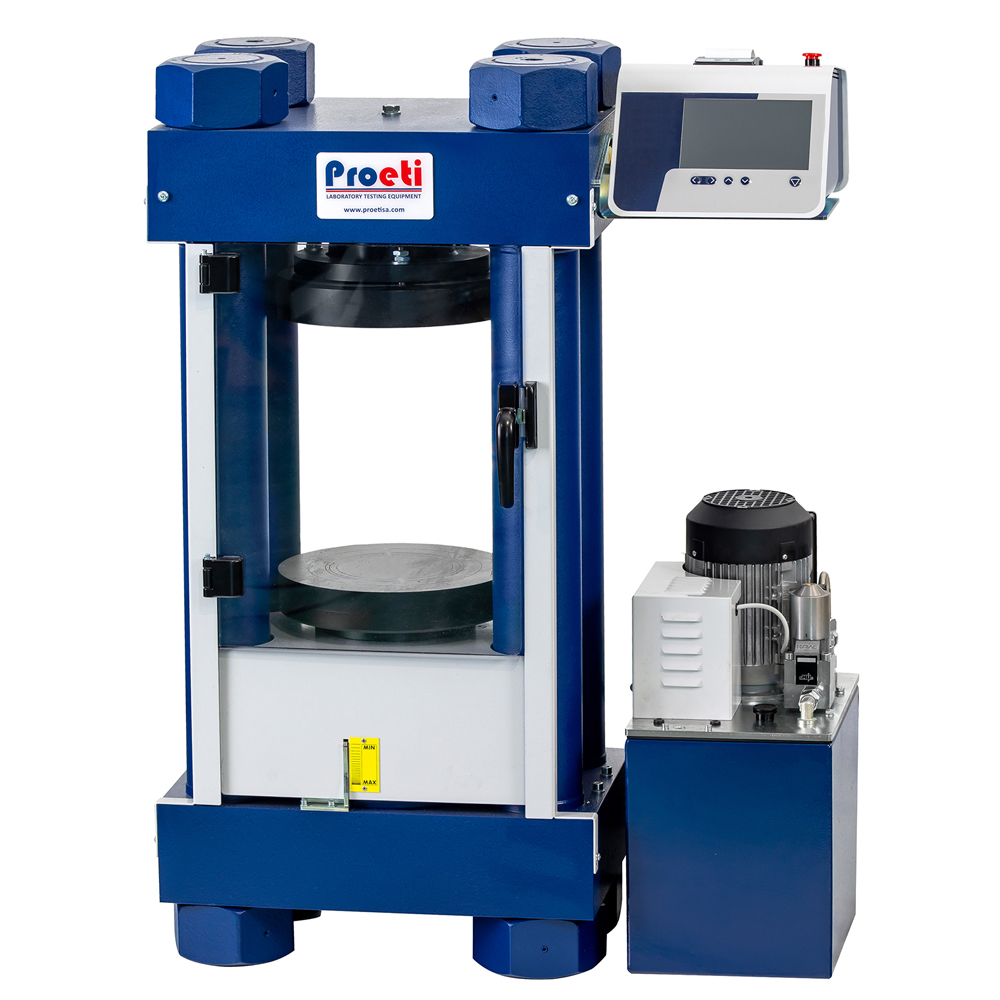
| Compressive strength | Compression testing machines (EN 12390-3 and -4, ASTM C39) |
| Flexural and splitting tensile strength | Flexural frames (EN 12390-5) and splitting tensile devices (EN 12390-6) |
| In-situ strength | Rebound hammer (EN 12504-2), core drills (EN 12504-1) and pull-out (EN 12504-3) |
| Durability and integrity | Carbonation, resistivity, ultrasonic pulse velocity (EN 12504-4) and cover meter |
| Cracks and piles | Crack width gauge, crack microscope and cross-hole |
Each group has its own section: fresh concrete, specimen preparation, compression machines, flexural frames, hardened concrete and concrete durability.
To get a price, click Budget on each product page and send one request with everything you need. If you would rather talk to us, write to us or call +34 916 28 29 40.
On fresh concrete, consistence and, depending on the case, air content, density and temperature. It is also used to make specimens that are crushed in compression at 28 days, the test that decides whether the concrete is accepted. On the structure, non-destructive tests and cores are used when there are doubts or an existing building is being assessed.
EN 206 defines how concrete is specified and produced. The tests are in EN 12350 (fresh concrete), EN 12390 (hardened concrete) and EN 12504 (concrete in structures). In Spain, the Structural Code sets the acceptance checks, the testing frequency and the durability requirements.
Fresh concrete is newly mixed, while it can still be placed and compacted: its consistence, air content and density are measured. Hardened concrete has already set and is gaining strength: its specimens or the structure itself are tested.
Tests that give information without damaging the element, or hardly at all: the rebound hammer measures surface hardness, ultrasonic testing detects voids and cracks, and the cover meter locates the bars and measures the cover. They are used to compare areas and decide where to drill cores, which are what give the actual strength.
The cement and aggregates in the concrete are tested with the equipment in cements and aggregates and rocks.