A ribbed reinforcing bar is accepted on site if its yield strength, tensile strength and elongation meet the standard, and if it withstands bending without cracking. To check this you need steel testing equipment: a universal tensile-compression testing machine, specimen marking machine, bar bending machine, Charpy pendulum, Rockwell and Brinell hardness testers and dye penetrants, to EN ISO 6892-1, 15630-1 and 148-1. We will advise you on the equipment for your laboratory.
| Test | Equipment | Standard |
|---|---|---|
| Tensile | Automatic universal tensile-compression testing machine, four-column | EN ISO 6892-1, 15630-1 |
| Marking for elongation | Automatic marking machine: rounds and flats from 4 to 50 mm, 5-10 mm spacing | EN ISO 6892-1 |
| Bend and rebend | Bar bending machine with bidirectional plate | EN ISO 15630-1 |
| Impact toughness | Charpy pendulum | EN ISO 148-1, ASTM E23 |
| Hardness | Rockwell and Brinell hardness tester, magnifiers and indenters | EN ISO 6506, 6508 |
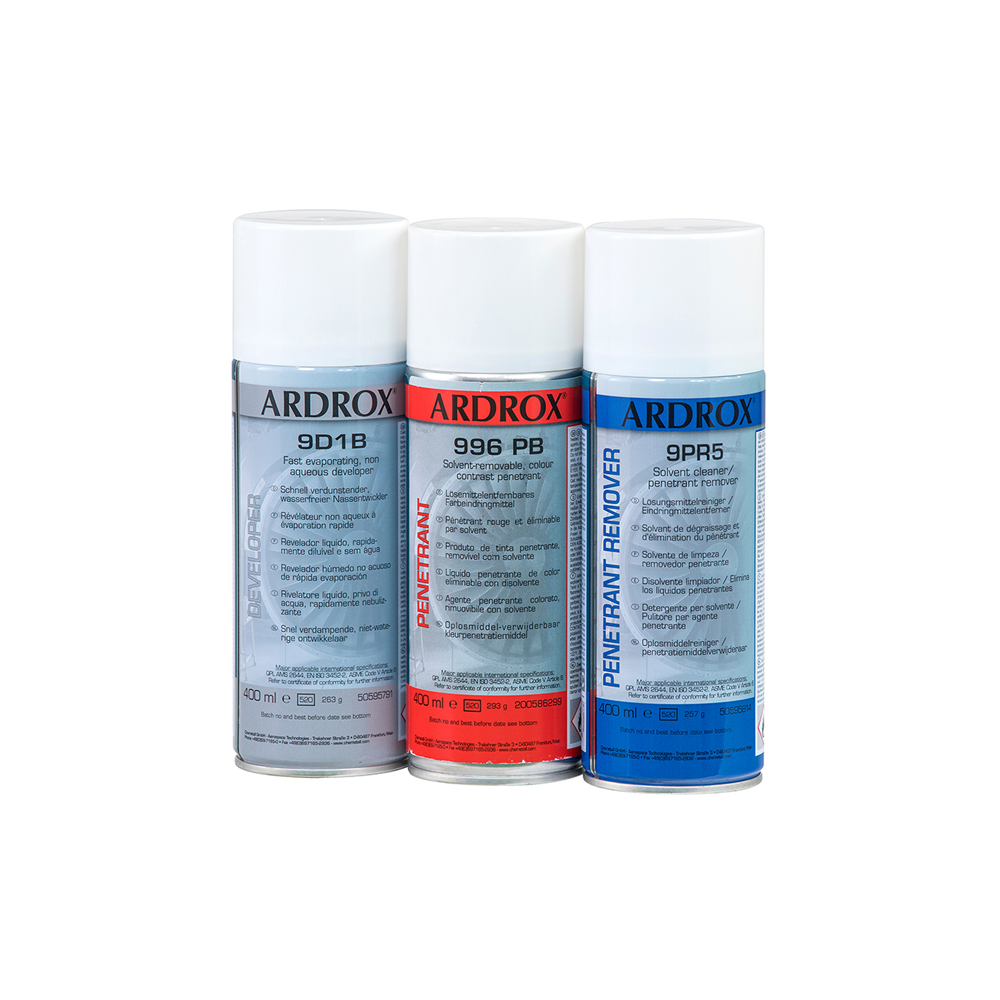
| Surface defects | Dye penetrant aerosols | EN 1289 |
| Teaching | 20 kN universal press: tension, shear, compression, flexure and Brinell | — |
Hardness testers and their accessories have their own section: hardness testers.
The tensile test gives the yield strength, the tensile strength, their ratio and the elongation at maximum force; the bend-rebend test shows that the bar does not crack. In a B 500 SD steel (a Spanish reinforcing grade), for example, the yield strength must be at least 500 MPa. In Spain, the Structural Code (Código Estructural) sets how many specimens are tested in each lot.
To get a price, click Budget on each product page and send one request with everything you need. If you would rather talk to us, write to us or call +34 916 28 29 40.
The specimen is marked at fixed intervals, gripped at both ends and pulled at a controlled rate until it breaks, while force and elongation are recorded. The curve gives the yield strength and the tensile strength; fitting the broken pieces together and measuring between the marks gives the elongation after fracture.
Tensile (yield strength, tensile strength, their ratio and elongation), bend-rebend, and checks of the rib geometry and the mass per metre. The methods are in EN ISO 15630-1 and the requirements in the product standards and, in Spain, the Structural Code.
The energy, in joules, that a notched specimen absorbs when it is broken in a single blow by a pendulum. It measures toughness: a steel that absorbs little energy is brittle. It is carried out at several temperatures to find where the steel changes from ductile to brittle.
Both break a notched specimen with a pendulum. In the Charpy test the specimen is supported at both ends and struck in the middle, on the side opposite the notch; in the Izod test it is clamped at one end, as a cantilever. Charpy is used for steels; Izod is more common for plastics.
For the concrete that goes with this reinforcement, see concrete.