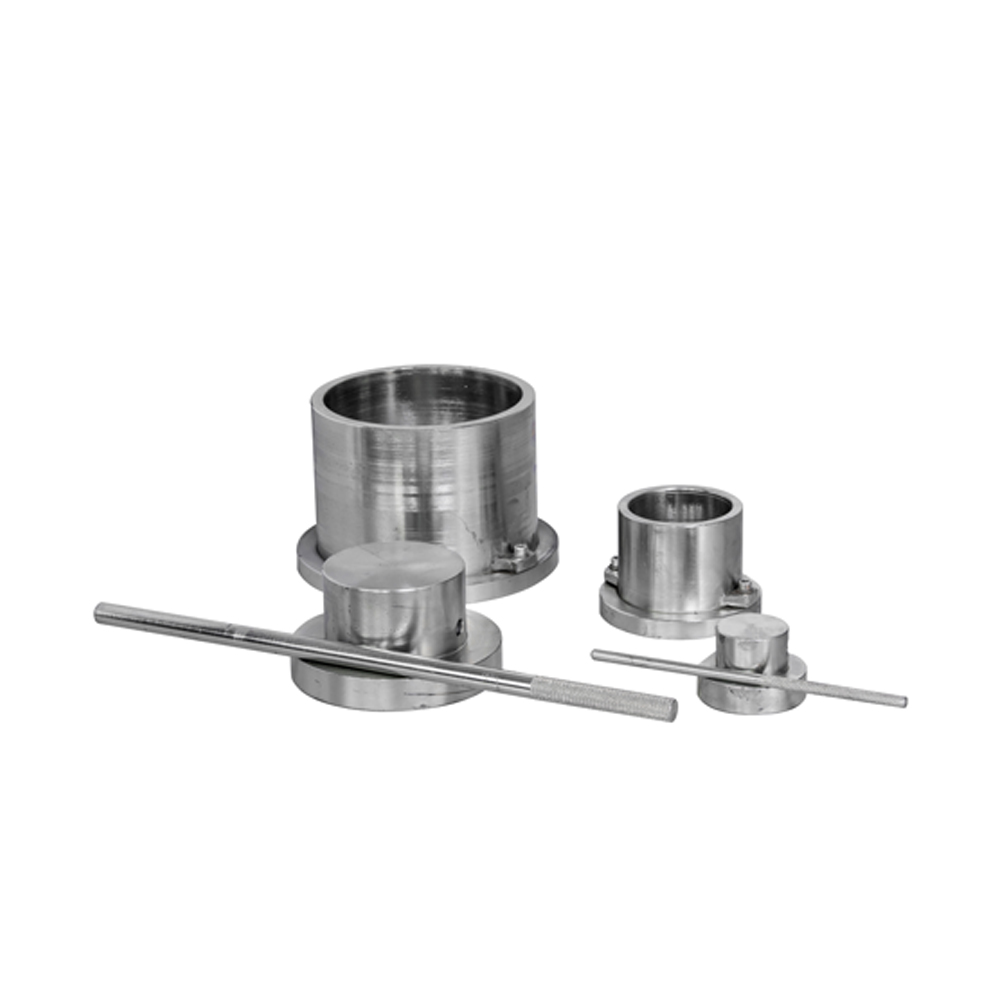
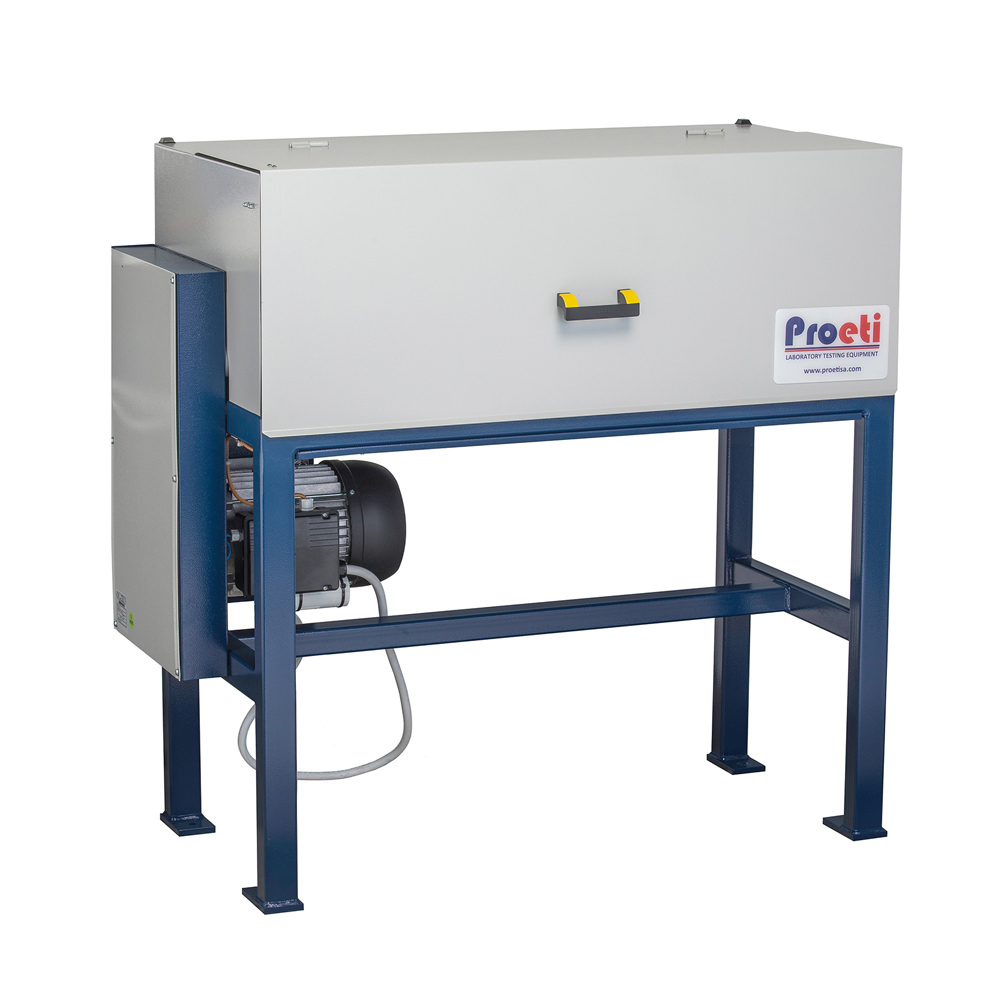
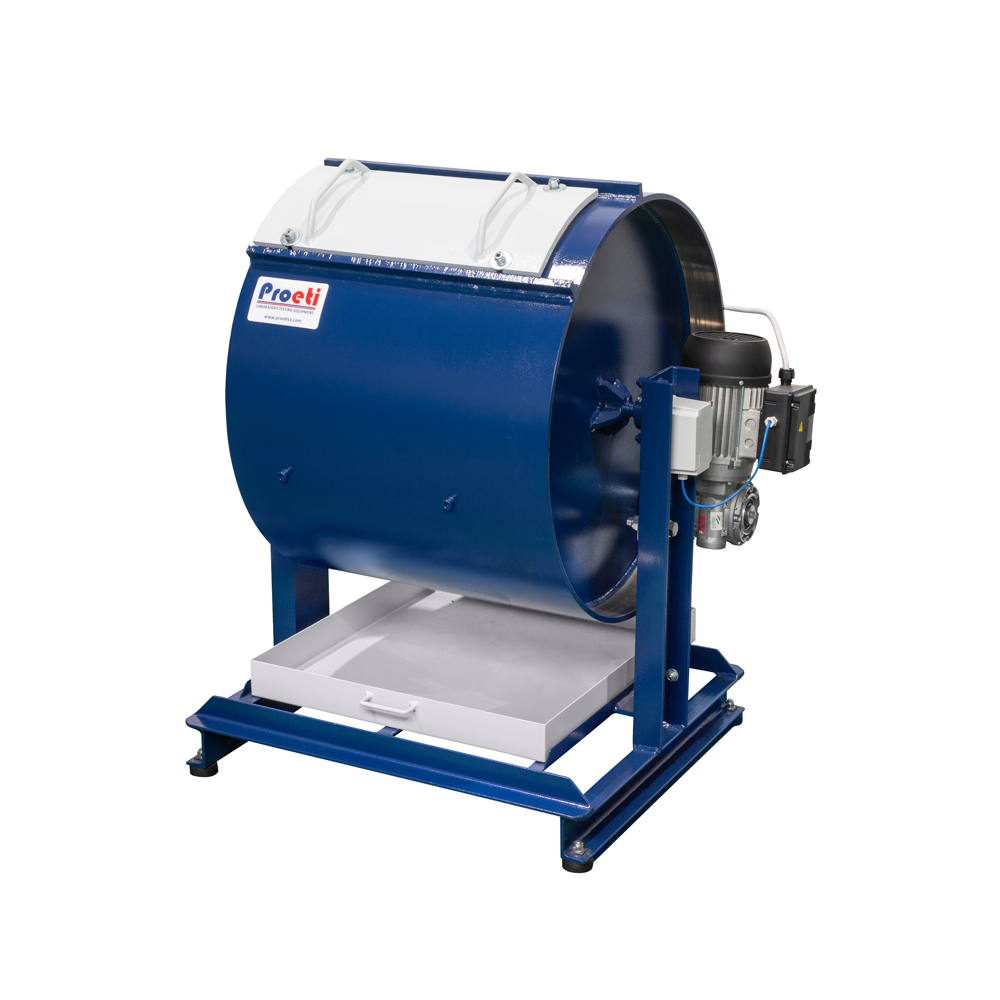
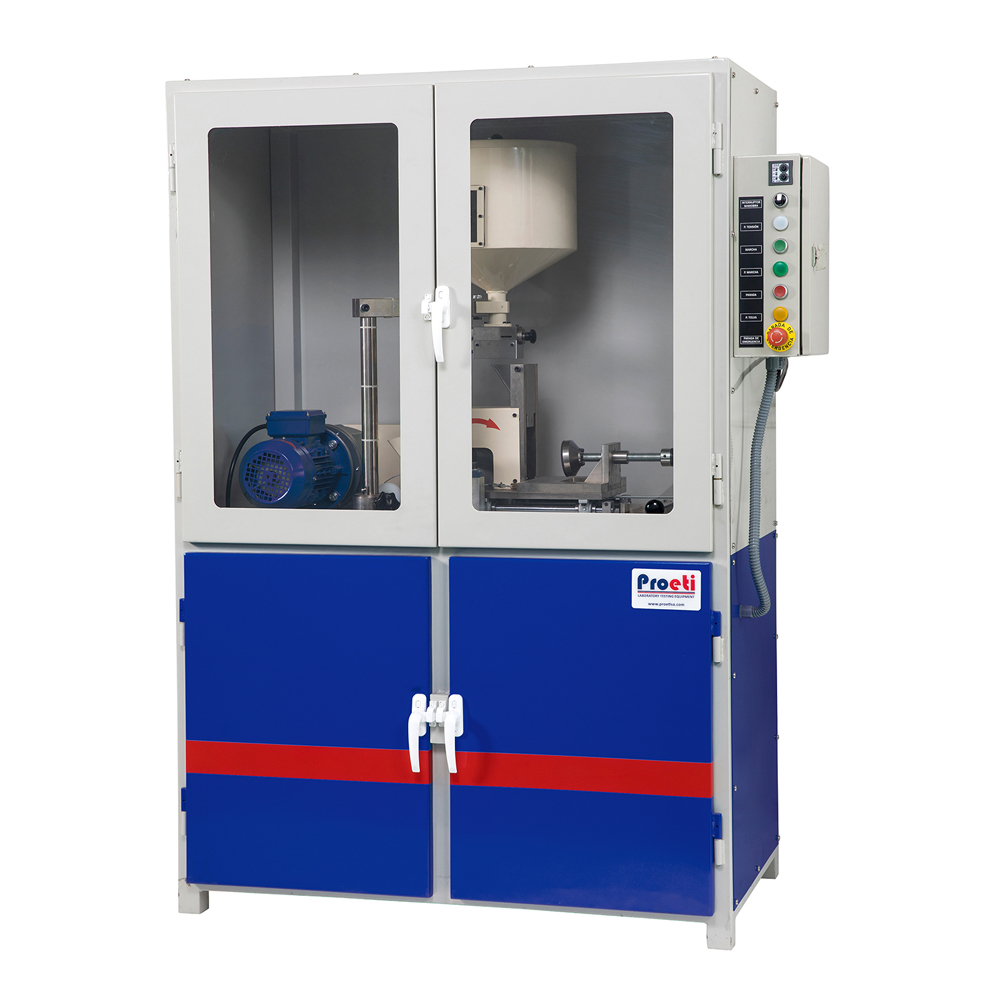
Aggregate testing equipment measures the grading, shape, cleanliness and wear resistance of aggregates, while rock testing equipment measures the strength and durability of rocks, to EN, ASTM and ISRM standards. Proeti has manufactured both in Spain since 1985. Tell us which tests you run and we will advise you and send you a quote.
Aggregates for concrete (EN 12620), bituminous mixtures (EN 13043) and unbound road layers (EN 13242) are tested with the methods of the EN 932, 933, 1097, 1367 and 1744 series. In Spain, the Structural Code (for concrete) and PG-3 (for roads) set which tests are required and their limits. These are the usual ones:
| What is measured | Equipment and standard |
|---|---|
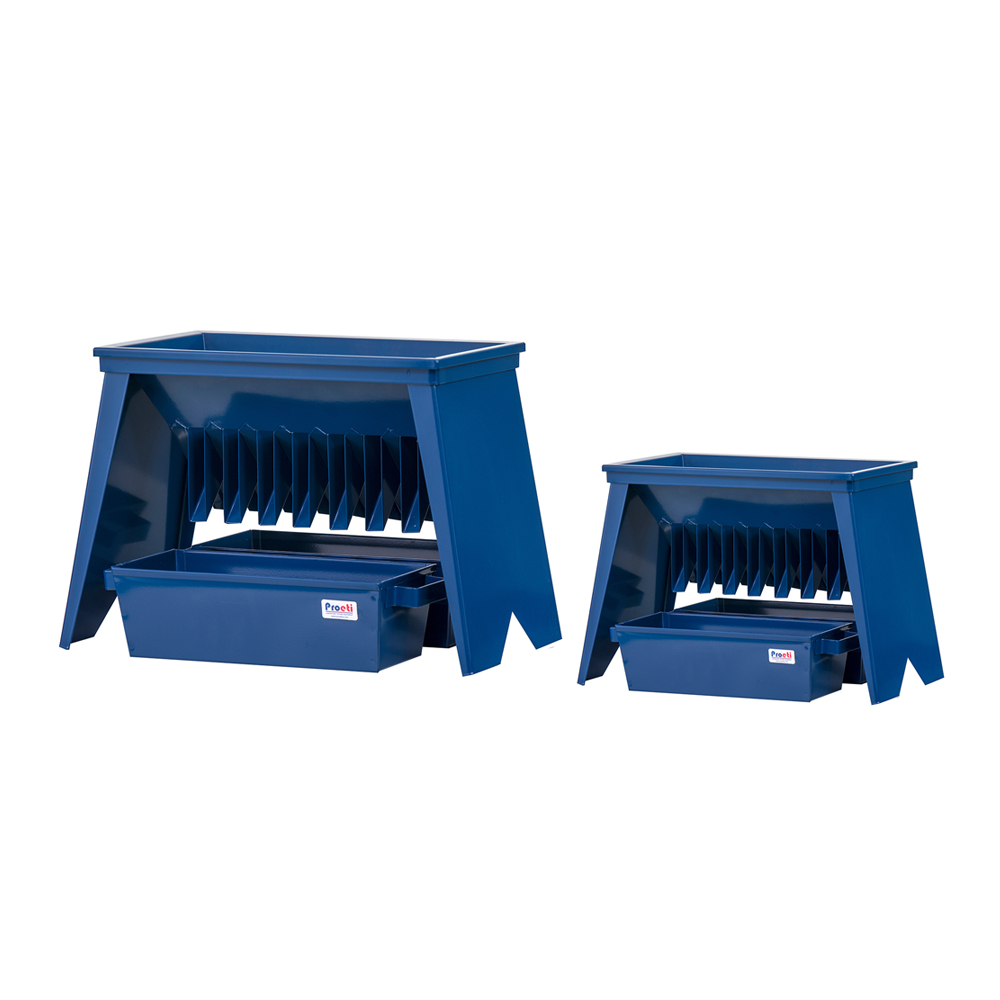
| Sampling and sample reduction | Sample splitters (EN 932-2) |
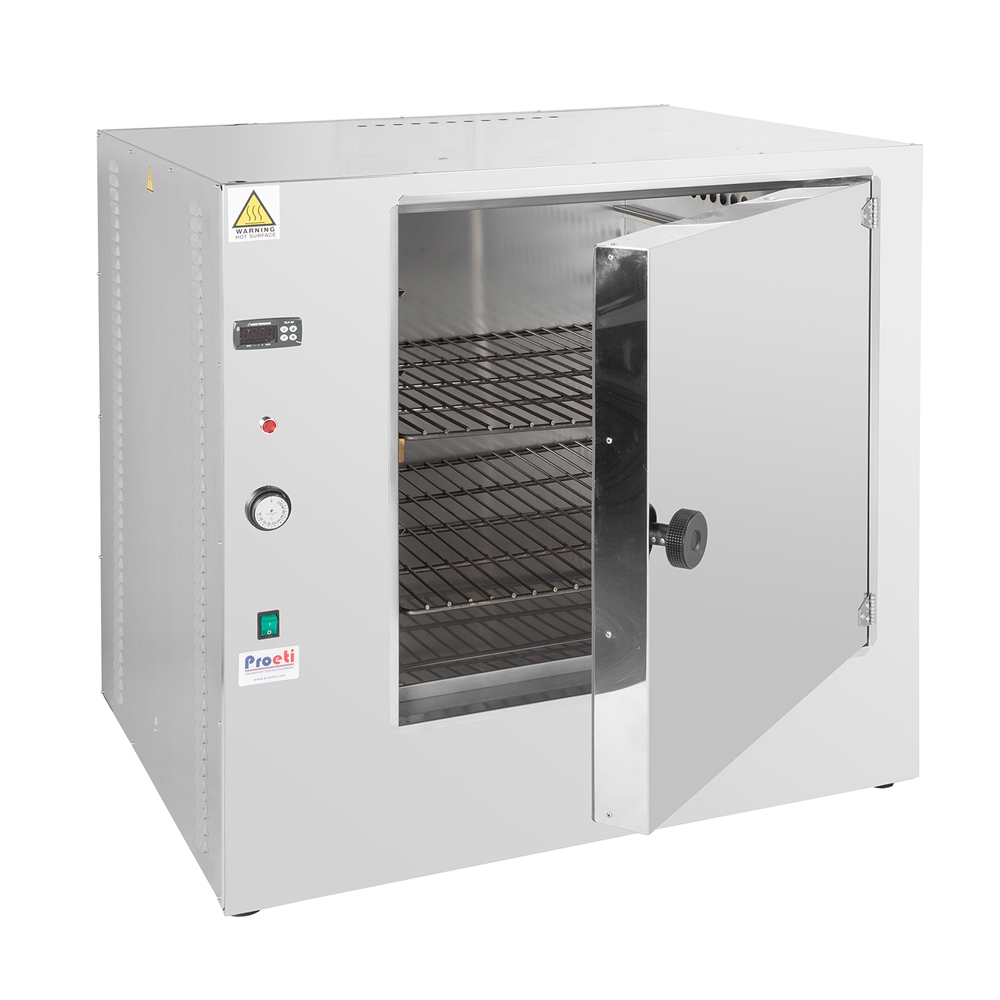
| Water content | Forced-ventilation oven (EN 1097-5) |
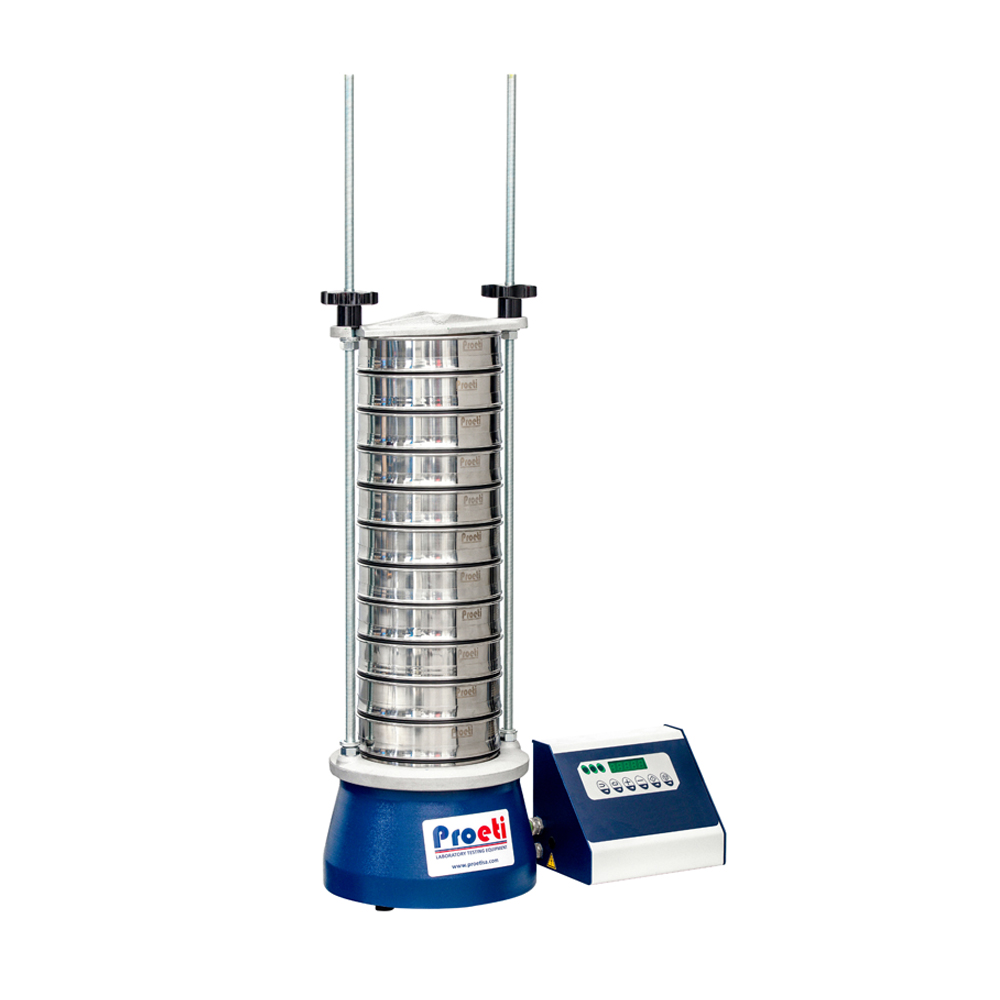
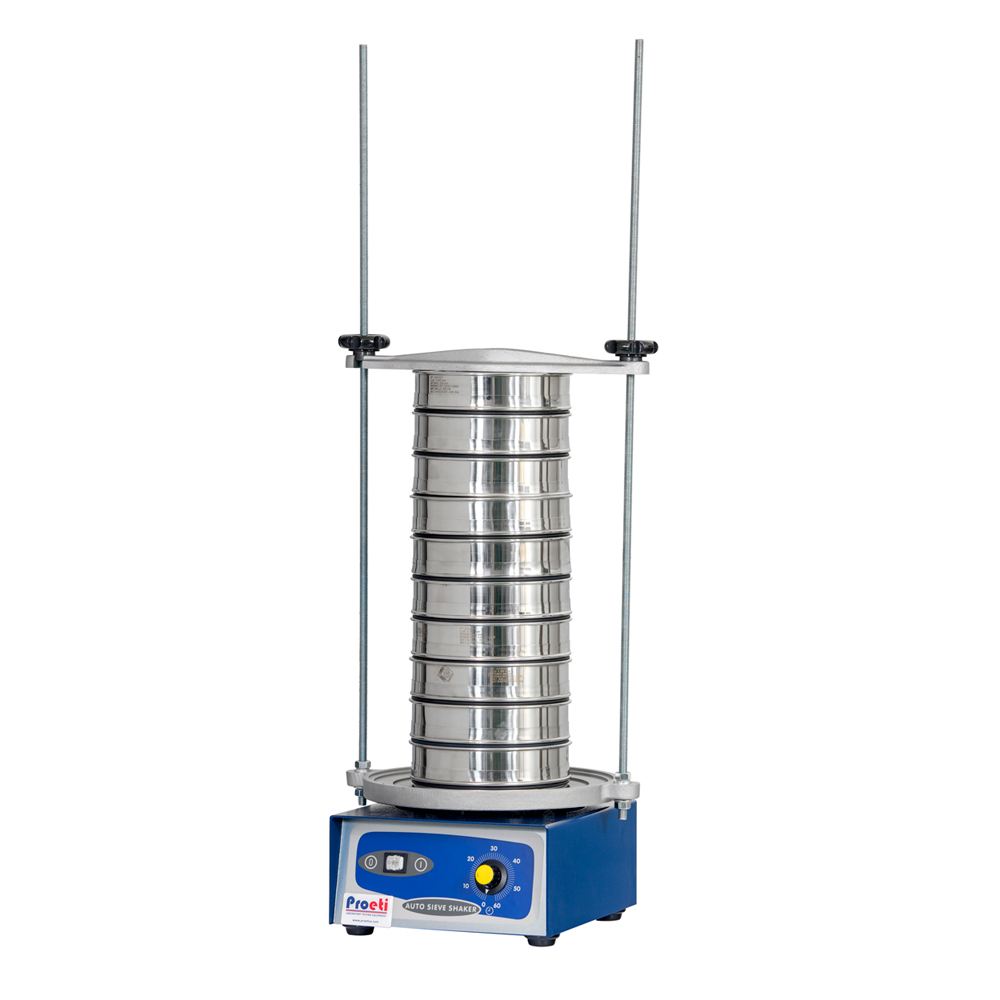
| Particle size distribution | Wire mesh and perforated plate sieves, with an electromagnetic sieve shaker or a motor-operated sieve shaker (EN 933-1) |
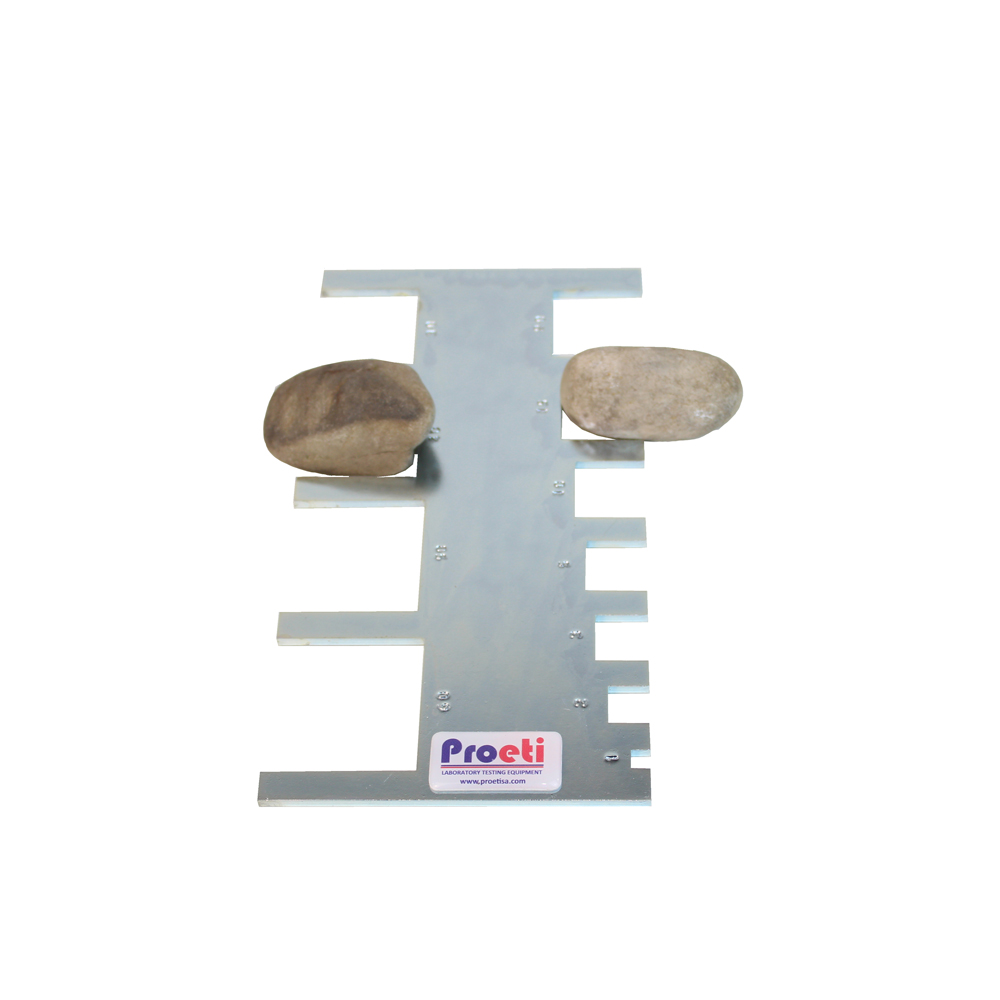
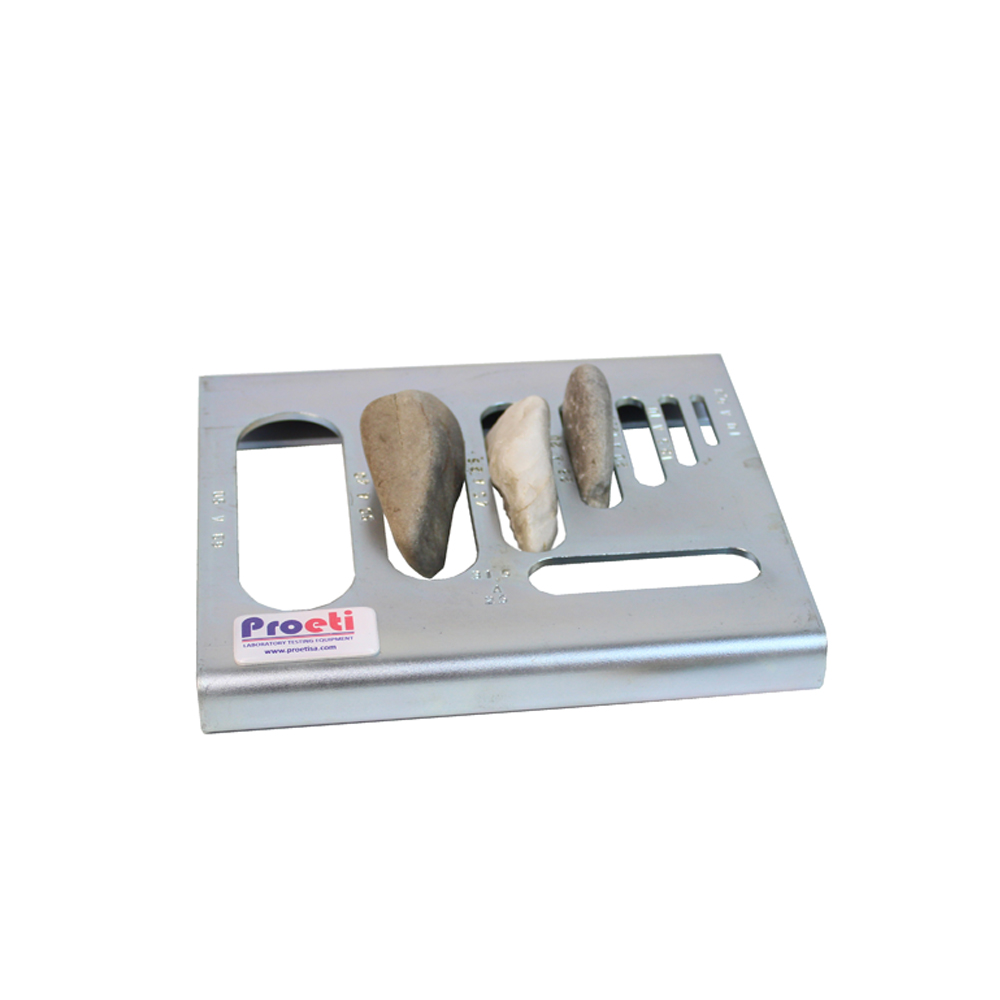
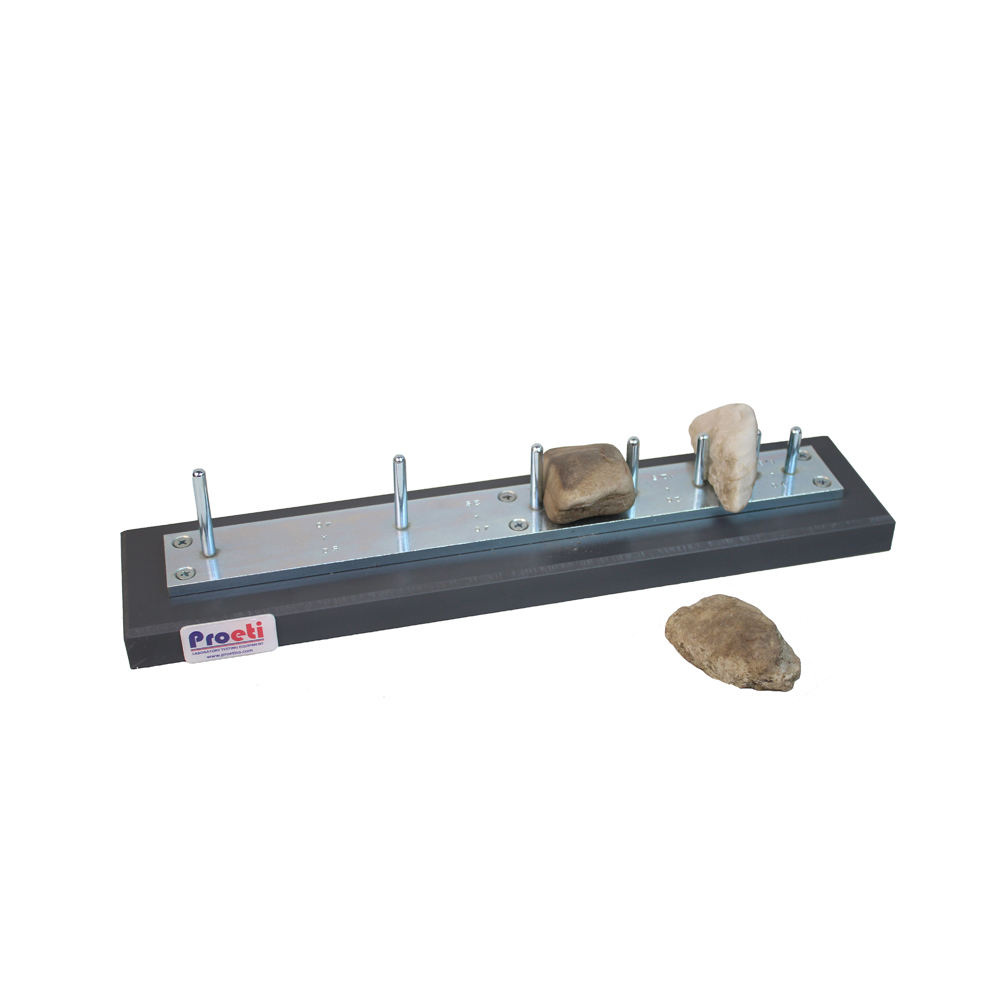
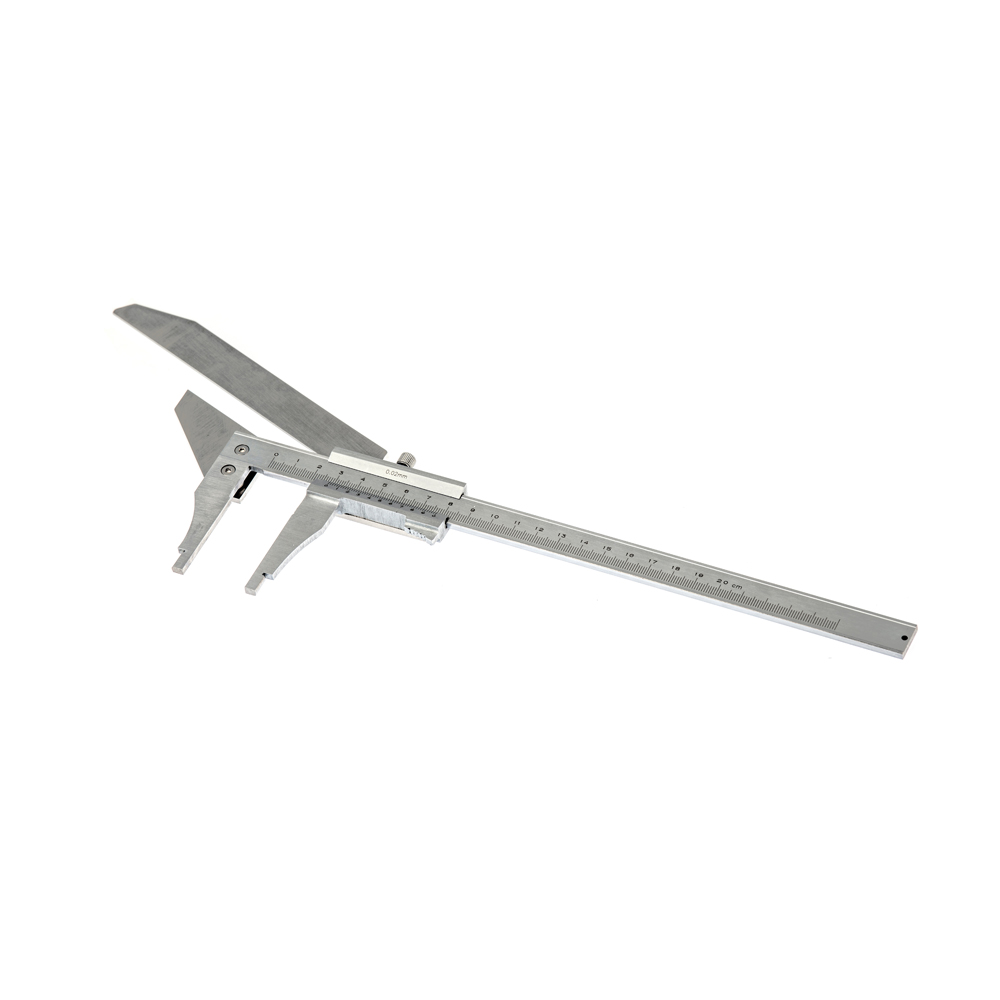
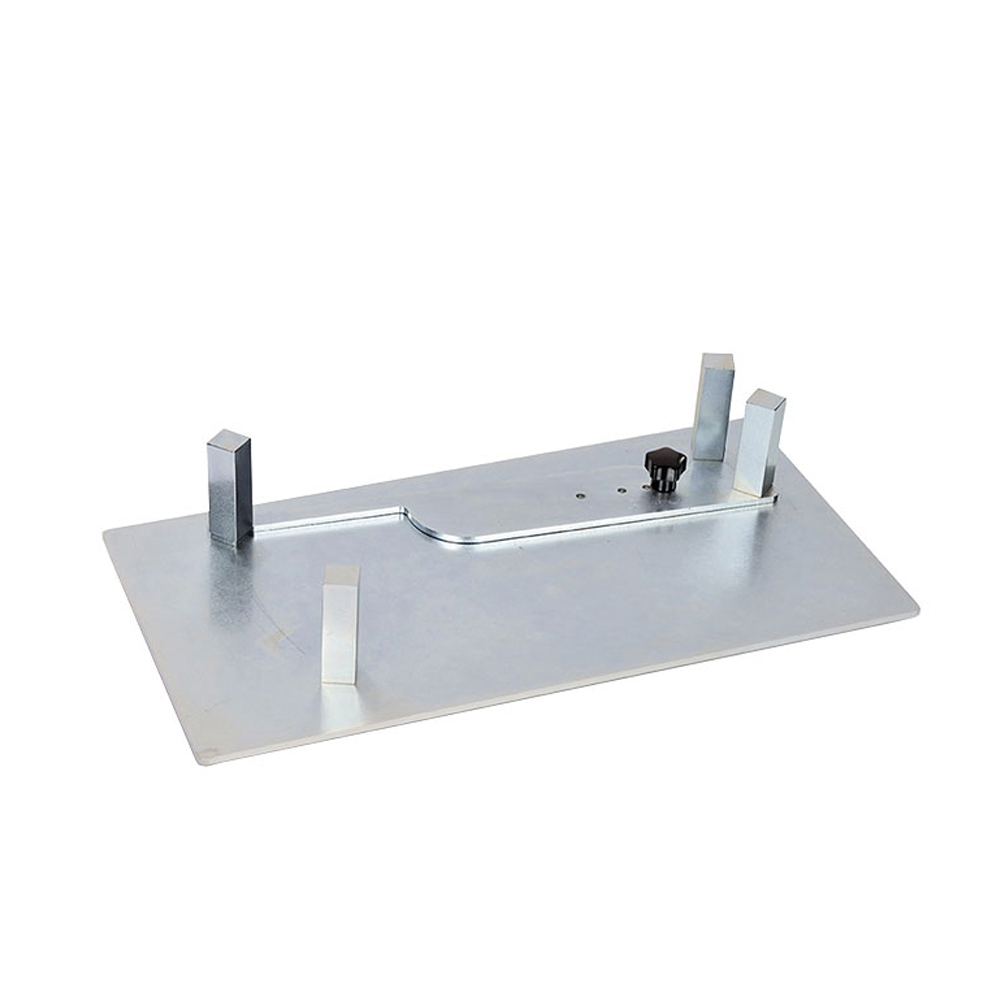
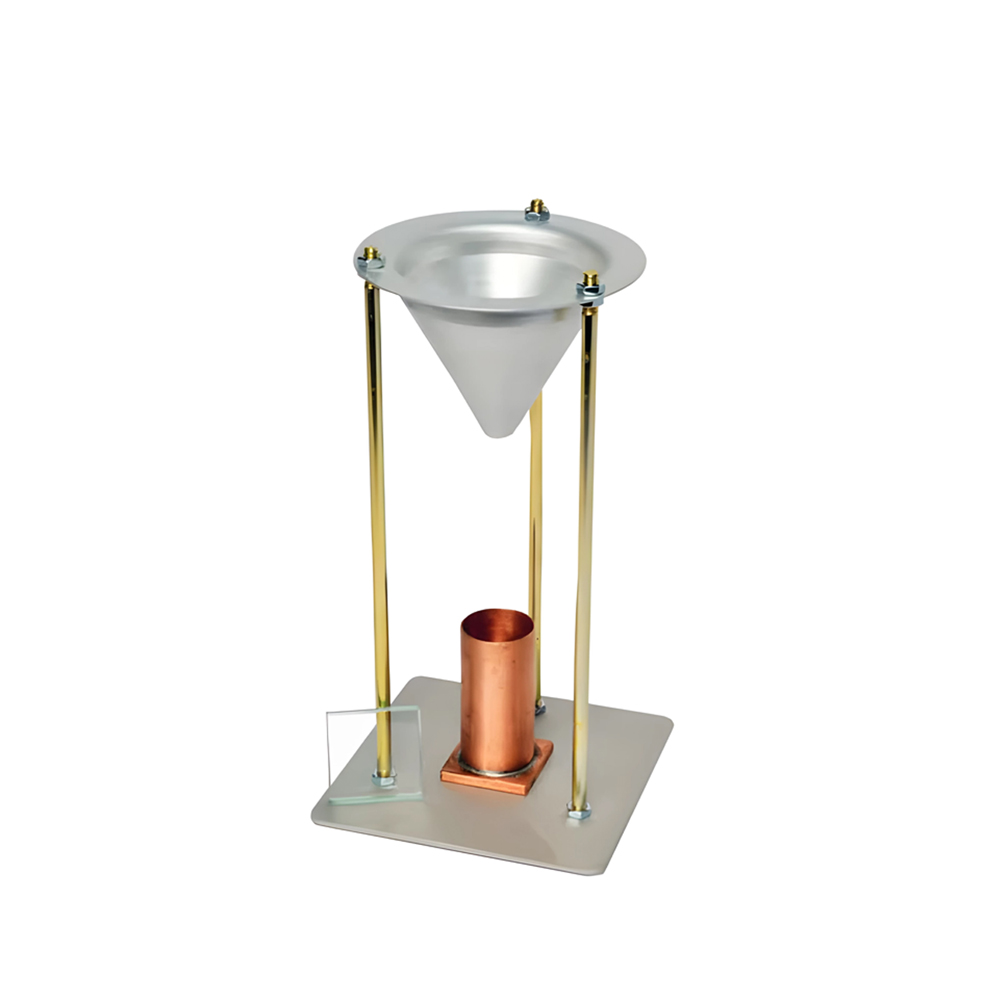
| Particle shape | Shape index gauge (EN 933-4) and flakiness and elongation gauges (BS 812-105.1) |
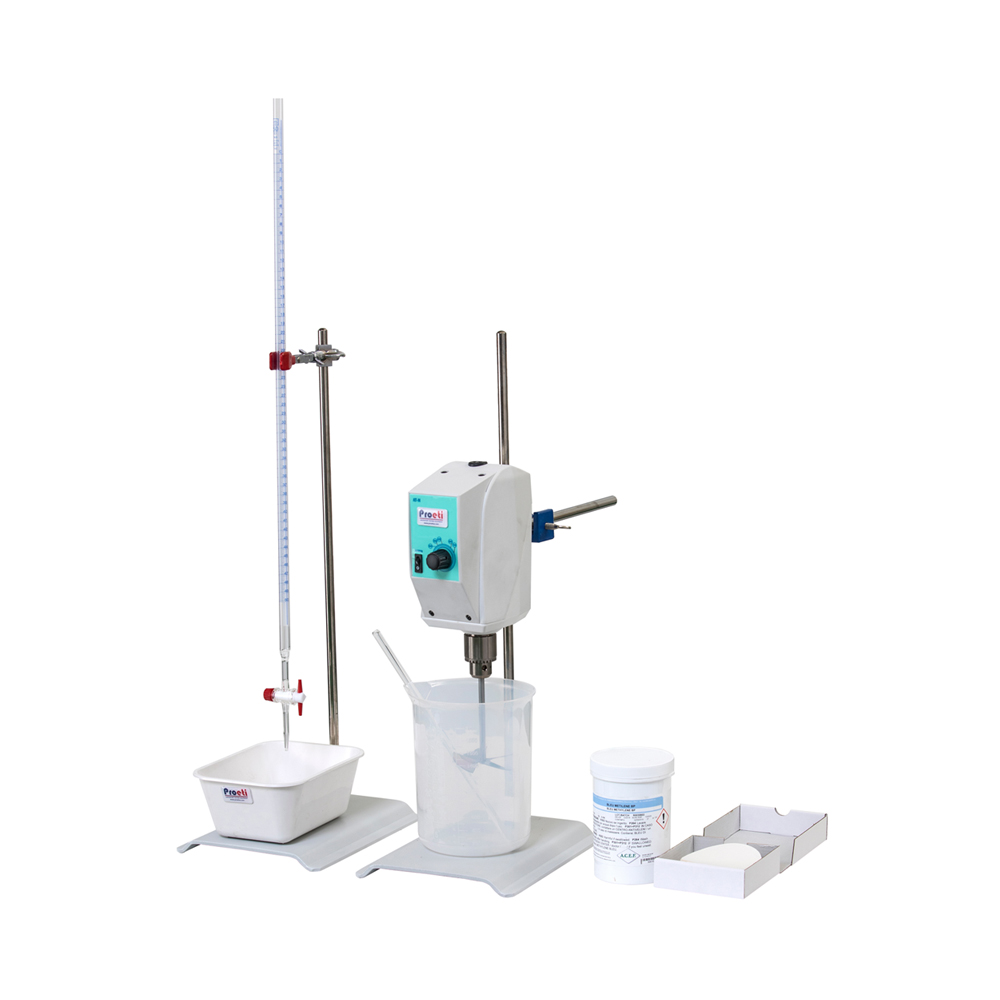
| Fines and clay | Methylene blue (EN 933-9) and sand equivalent (EN 933-8) |
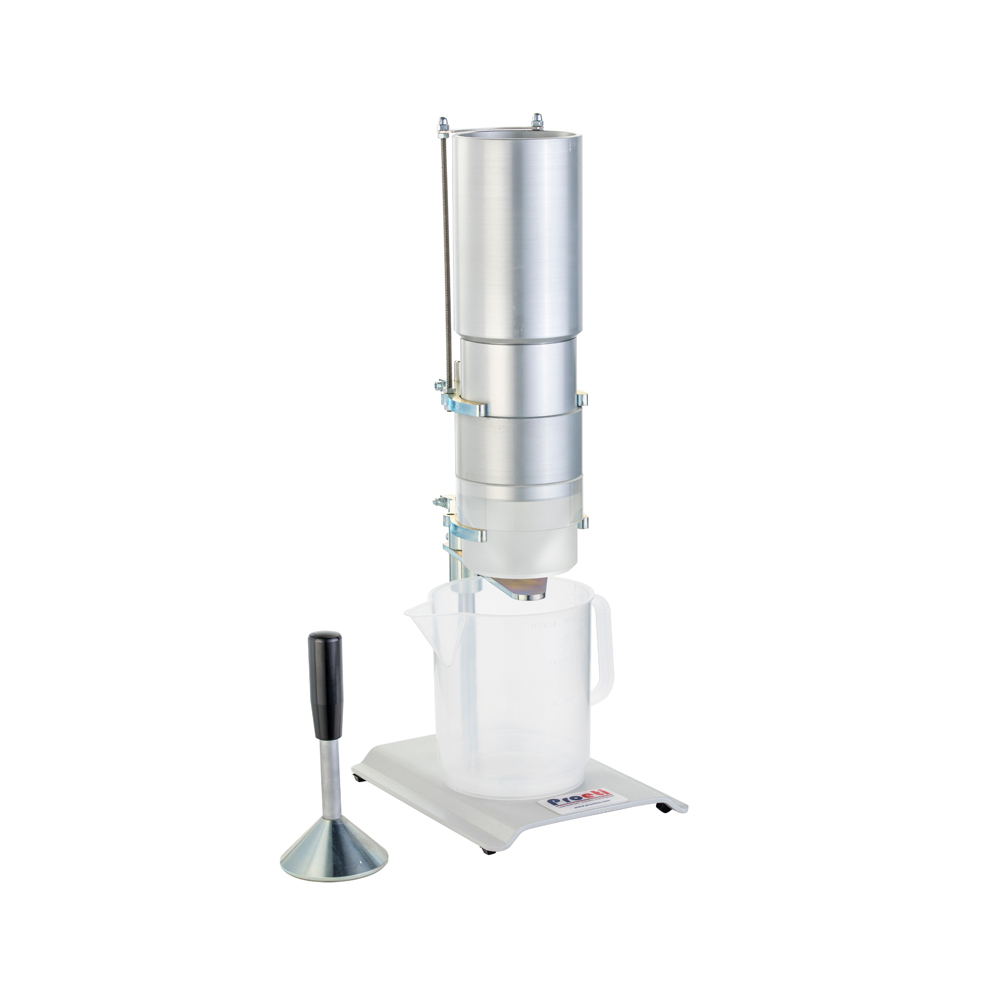
| Particle density and water absorption | Pycnometer and hydrostatic weighing (EN 1097-6) |
| Fragmentation and wear | Los Angeles machine (EN 1097-2) and Micro-Deval (EN 1097-1) |
| Polishing and slip resistance | Accelerated polishing machine (EN 1097-8) and TRRL pendulum (EN 13036-4) |
| Durability and chemistry | Magnesium sulphate (EN 1367-2), alkali-aggregate reactivity (ASTM C289) and Bernard calcimeter (Spanish standard UNE 103200) |
Each group has its own section: preparation and drying, sample sieving, geometric properties, mechanical properties and chemical properties.
Rock testing mainly measures strength, deformability and the behaviour of joints, almost always with ISRM and ASTM methods:
For sample preparation, the jaw crusher crushes the rock. All the equipment is in rock mechanics.
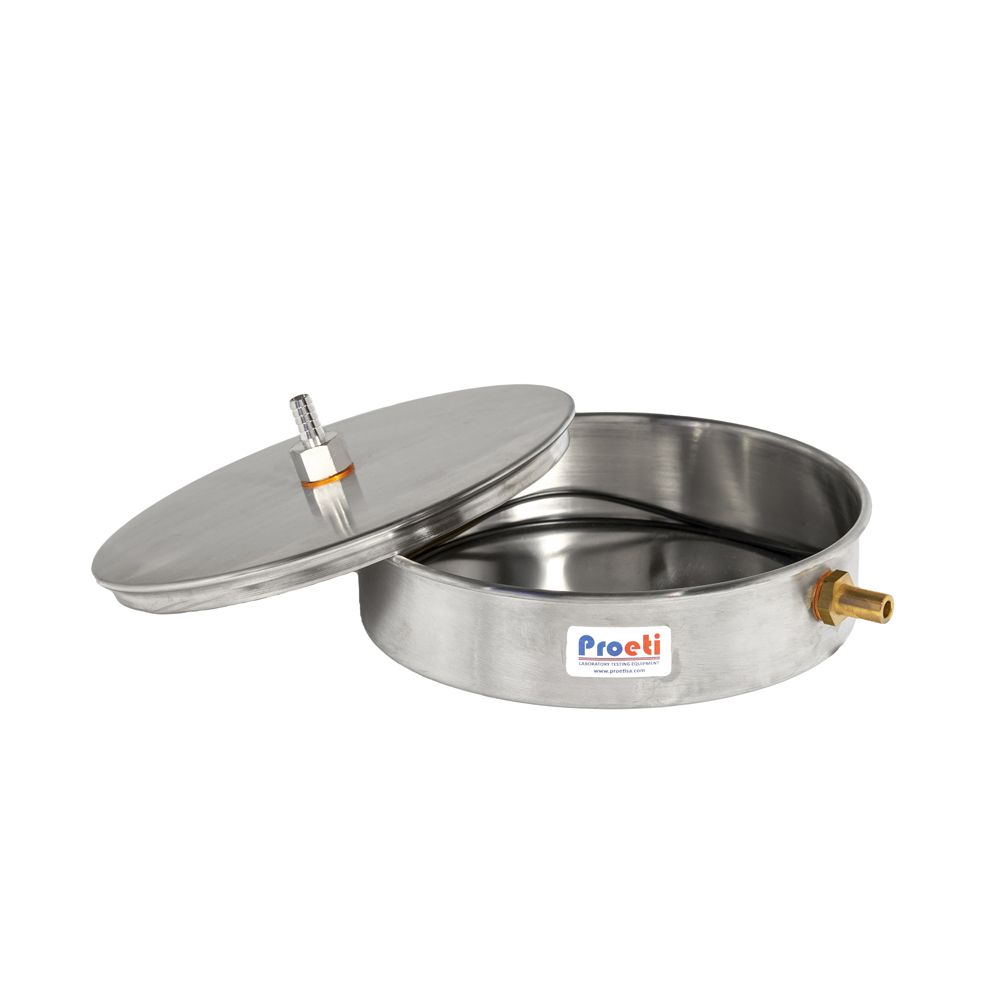
It depends on the standard you work to. For European standards there are sieves of 200, 250, 300, 315 and 400 mm in diameter, and for ASTM, 8-inch (203 mm) and 12-inch (305 mm) sieves. Large apertures, for coarse aggregates, are perforated plate (ISO 3310-2), and small ones are stainless steel wire mesh (ISO 3310-1). Wet-washing sieves are available for washing out the fines before sieving.
To get a price, click Budget on each product page and send one request with everything you need. If you would rather talk to us, write to us or call +34 916 28 29 40.
They fall into four families of standards: geometrical properties (grading, shape and fines, EN 933), mechanical and physical properties (wear, fragmentation, density and water absorption, EN 1097), thermal and weathering properties (freeze-thaw and magnesium sulphate, EN 1367) and chemical properties (EN 1744). Which tests apply, and with what limits, depends on what the aggregate will be used for.
Construction aggregates carry CE marking, and each use has its own product standard: EN 12620 for concrete, EN 13043 for bituminous mixtures, EN 13139 for mortar, EN 13242 for unbound layers and EN 13450 for railway ballast. In Spain, the Structural Code also applies to concrete and PG-3 to roads.
By origin: natural (from quarries or gravel pits), artificial (slags and other industrial by-products) and recycled (from construction waste). By size: fine aggregate or sand, with a maximum size of 4 mm; coarse aggregate, from 4 mm upwards; all-in aggregate, which combines the two; and filler, the dust that mostly passes the 0.063 mm sieve.
The tests are the same, plus the classification of its constituents (EN 933-11): concrete, natural stone, ceramics, asphalt, gypsum and other materials. It usually absorbs more water and may contain sulphates from gypsum, so water absorption and chemical tests carry more weight than for a natural aggregate.
The strength of the rock (uniaxial compression, triaxial compression, point load), its deformability (modulus of elasticity), the shear strength of its joints and its durability in water. These values are used to classify the rock mass and to design tunnels, slopes and foundations.