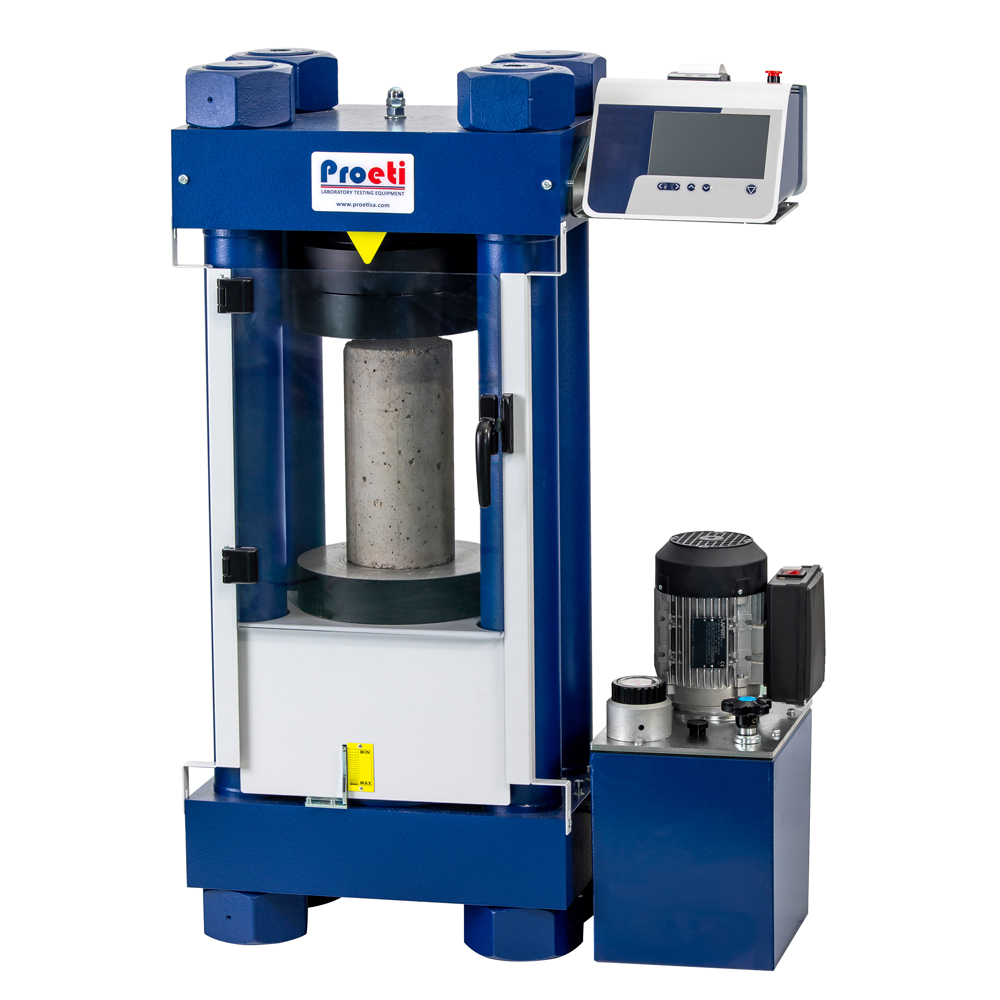
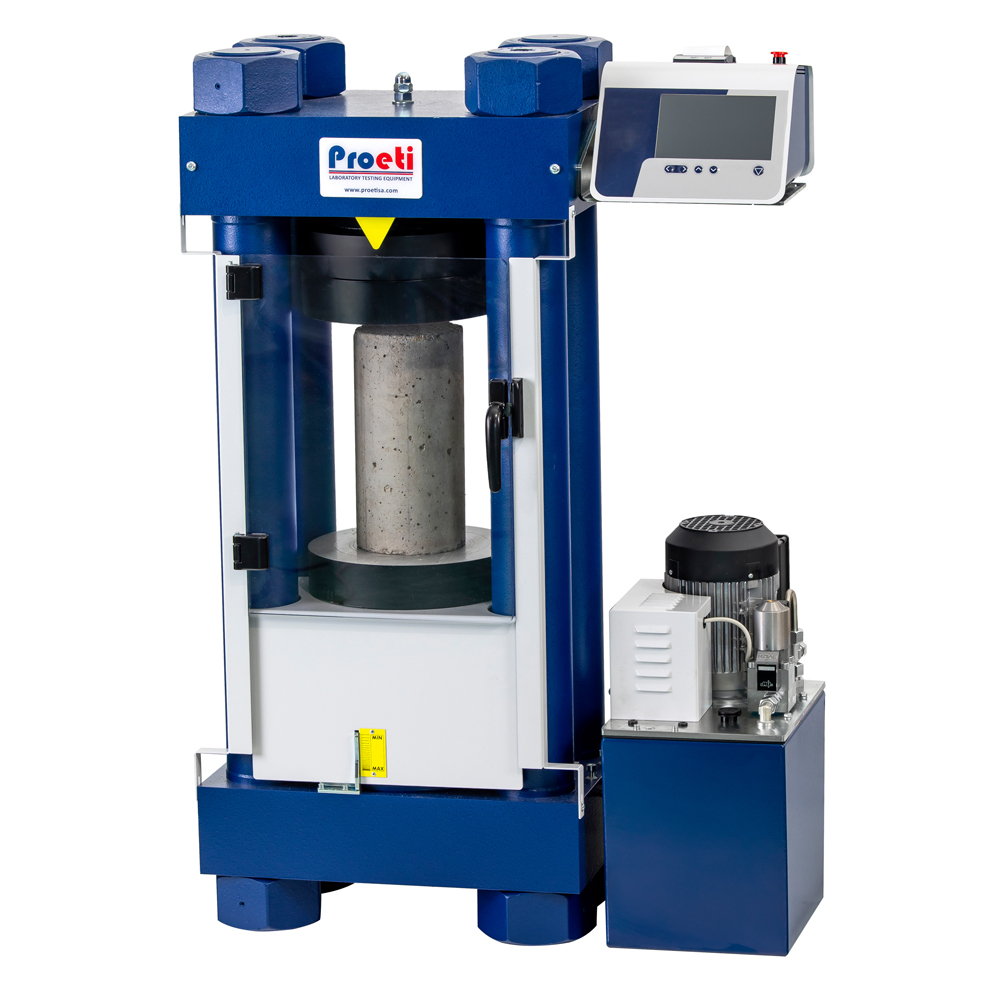
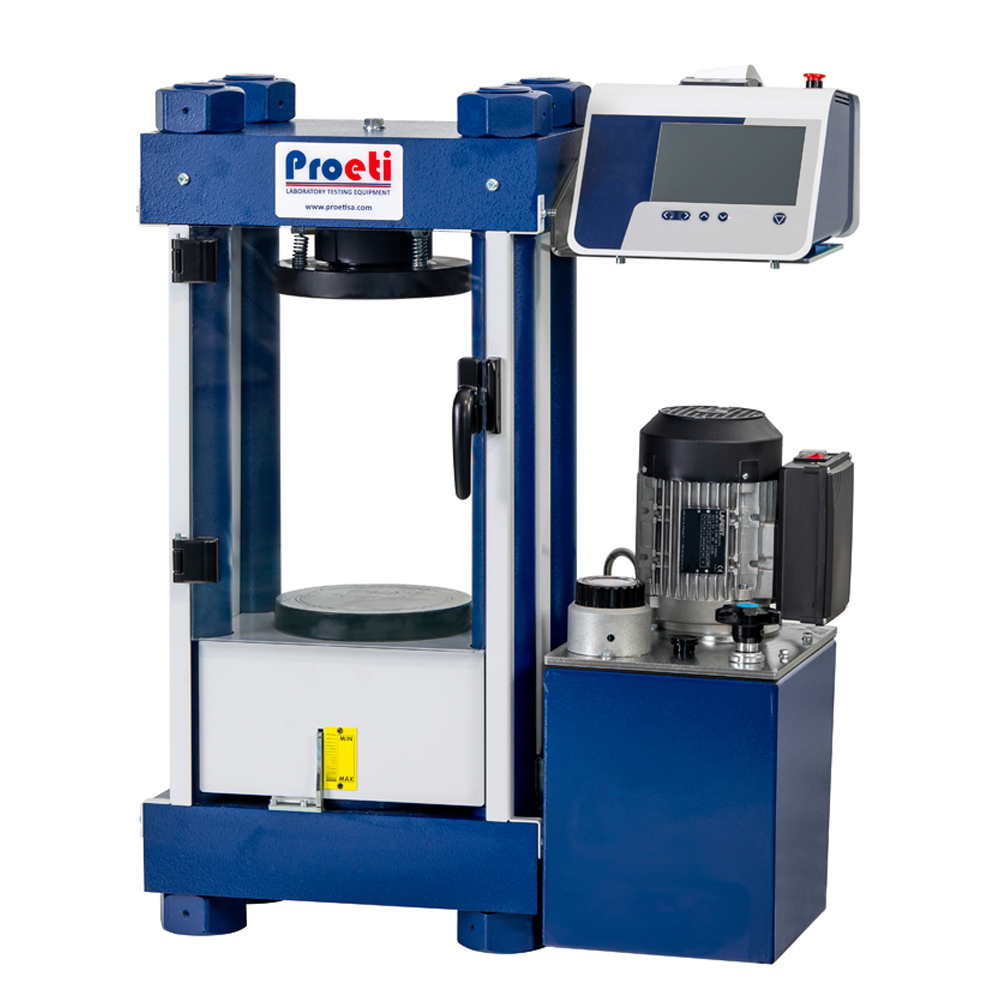
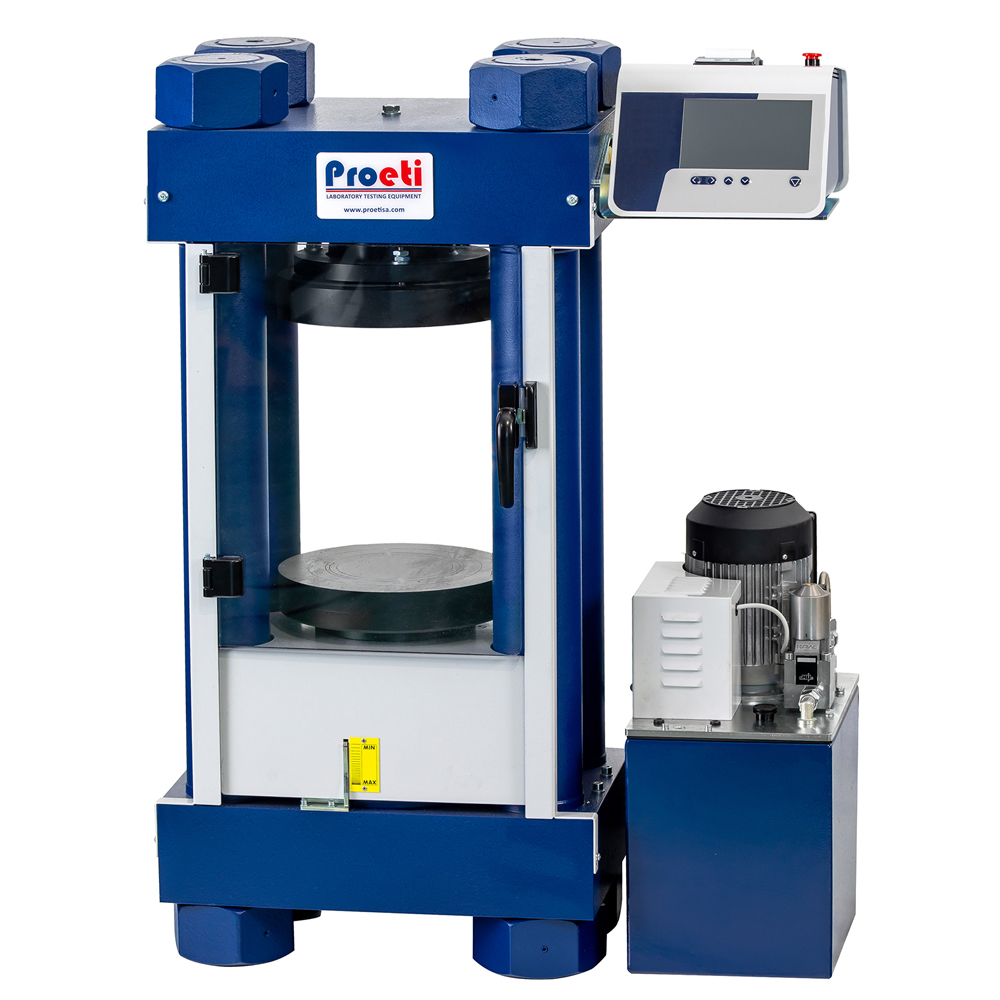
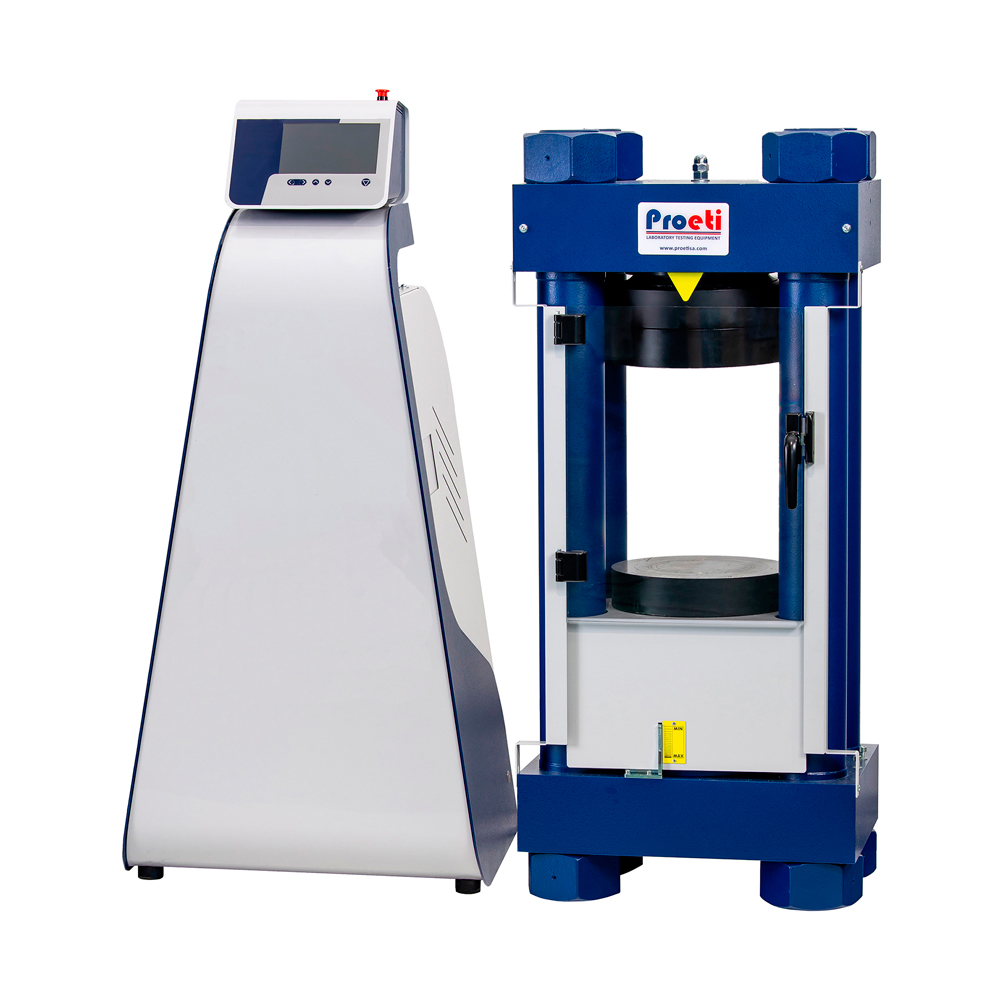
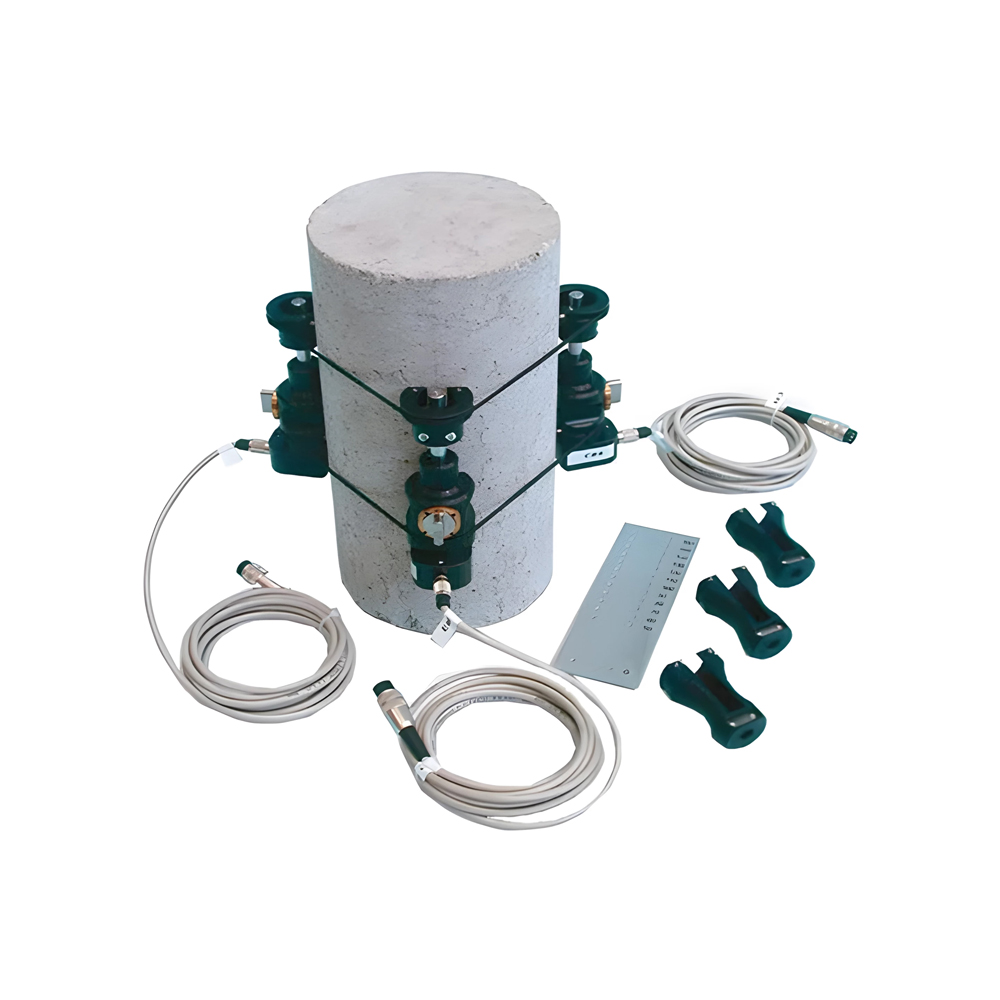
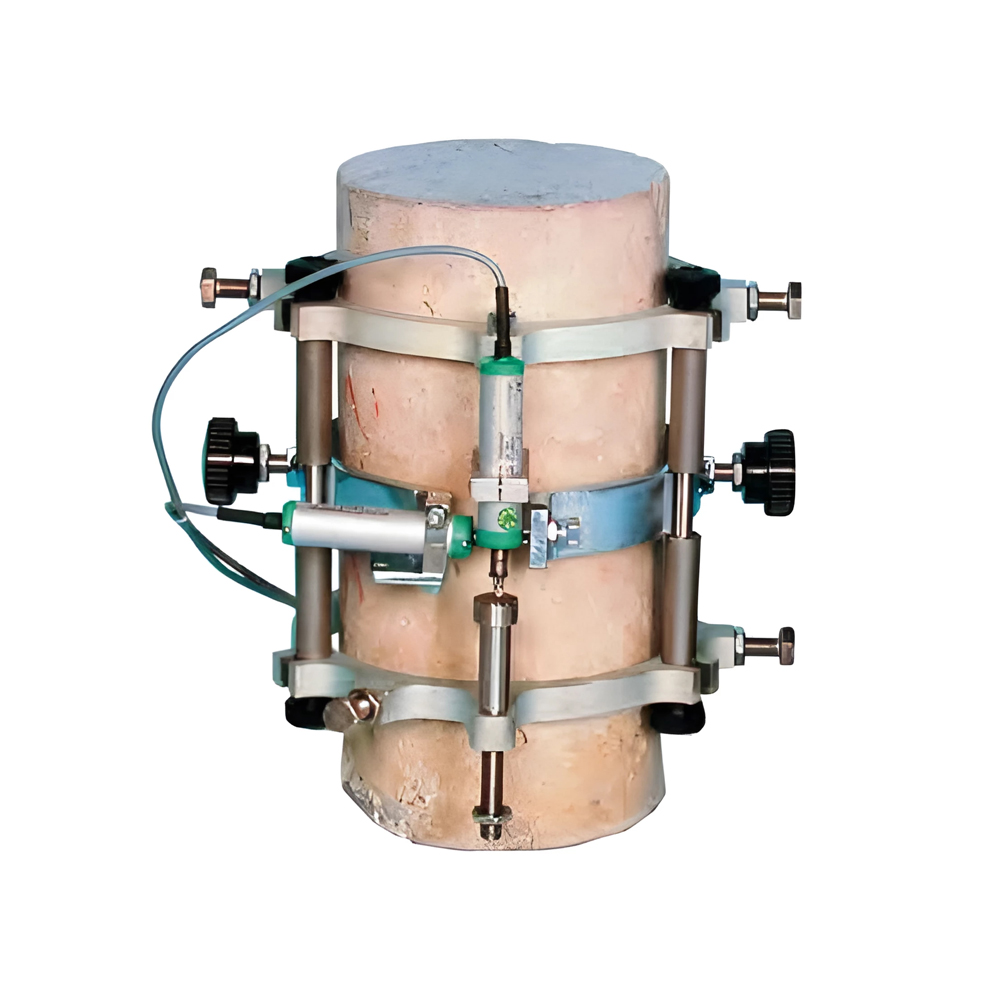
A concrete compression testing machine has to crush cylinders and cubes with the load well centred and at the rate the standard sets. The machines in this section have a four-column prestressed frame, 55 HRC ground platens and class 1 calibration, with manual or servo control, in EN 12390-4 or ASTM C39 versions. With the modulus system and compressometers you can also measure strain. Ask us for a price with your specimen size.
| Manual control | Servo-controlled | |
|---|---|---|
| Loading rate | Set by the operator with the valve | Held by the machine at the rate the standard requires |
| Results | Maximum load and strength | Load, strength, graph and record of every test |
| Suitable for | A few tests a day or site control | Control and accredited laboratories |
| Product pages (EN) | Manual EN | Servo-controlled EN |
| Product pages (ASTM) | Manual ASTM | Servo-controlled ASTM |
Both versions share the same frame: 336 mm vertical clearance and 287 mm platens, for 150×300 mm cylinders and 150 mm cubes. The EN version meets EN 12390-4 and the Spanish standard UNE 83304; the ASTM version, ASTM C39 and AASHTO T22.
| Equipment | Purpose | Standard |
|---|---|---|
| Modulus of elasticity system | Automatic control of compression, flexural and splitting tensile tests, plus modulus and Poisson's ratio with 2,000 or 3,000 kN frames | EN 12390-13, ASTM C469 |
| Electronic compressometer | Longitudinal strain of cylinders and prisms | EN 12390-13, ISO 6784 |
| Axial-circumferential compressometer | Axial and diametral strain of cylinders | ASTM C469 |
To get a price, click Budget on each product page and send one request with everything you need. If you would rather talk to us, write to us or call +34 916 28 29 40.
By crushing specimens in a compression testing machine: the load is applied at a constant rate until failure and the maximum load is divided by the cross-section of the specimen. The result, in MPa or N/mm², is compared with the strength the project specifies (25 MPa for a C25/30 concrete).
The strength value exceeded by 95 % of the concrete produced: only the lowest 5 % of results fall below it. It is the value given in the project (fck) and the one checked by the 28-day control tests.
It depends on the reference standard. In Spain the usual specimen is the 150×300 mm cylinder; other countries use the 150 mm cube. A cube gives a higher strength than a cylinder of the same concrete, which is why the strength class is written with both values, as in C25/30.
The ratio between stress and the strain it produces while the concrete behaves elastically. It indicates its stiffness and is used to calculate the deflections and deformations of the structure. It is measured by loading and unloading a specimen fitted with compressometers (EN 12390-13).
Before they are crushed, the specimens are made and cured with the specimen preparation equipment.