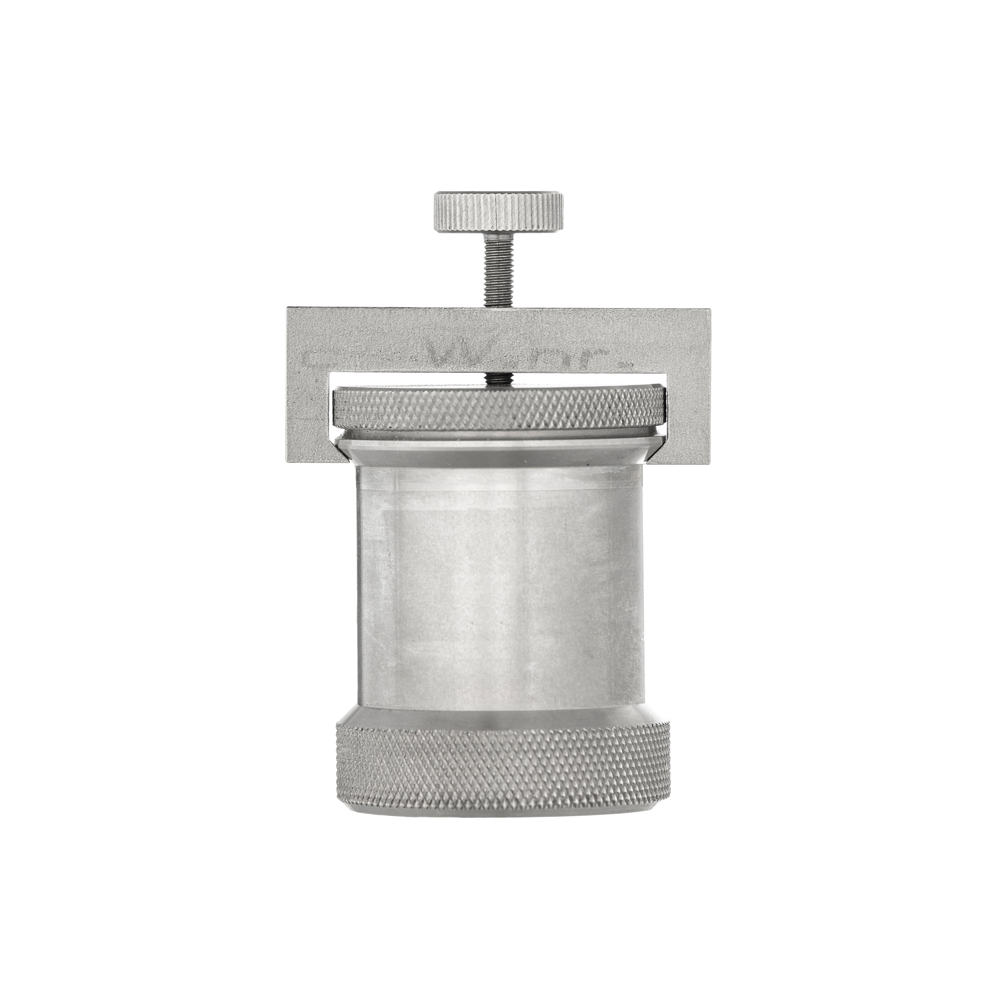
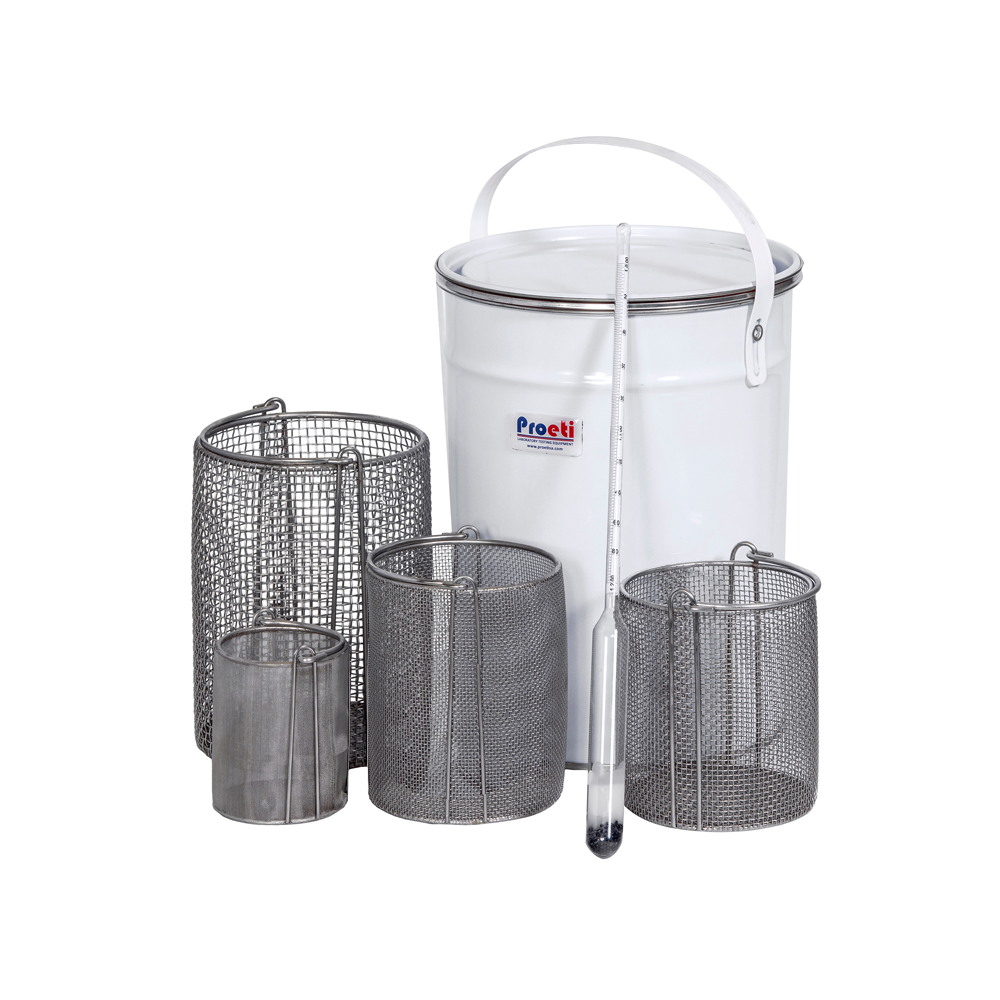
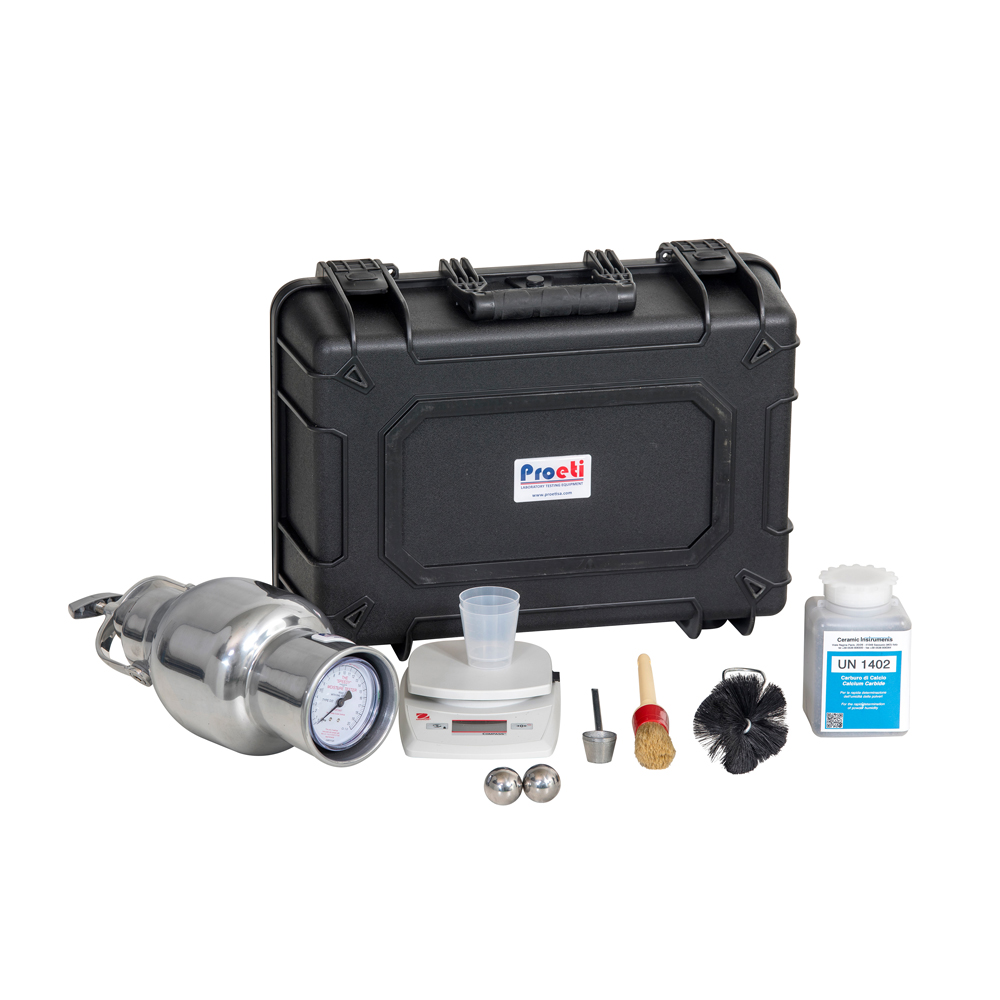
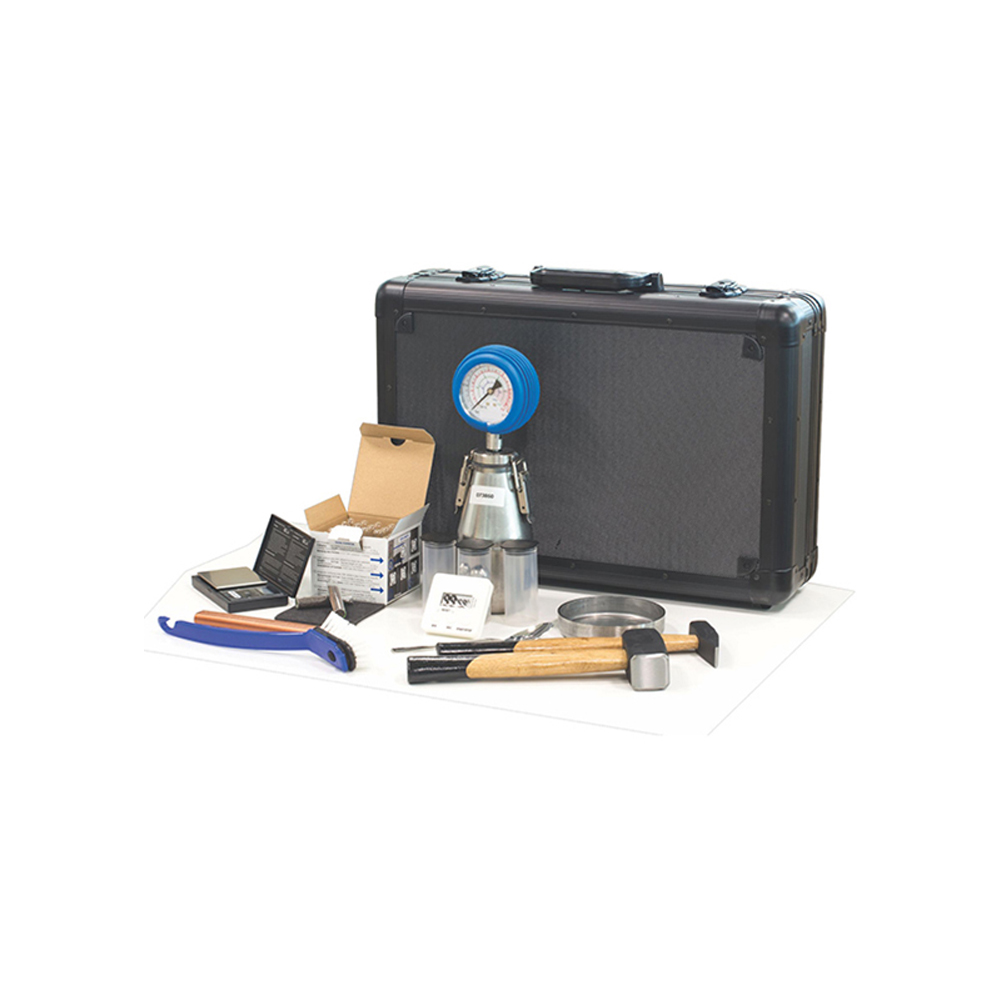
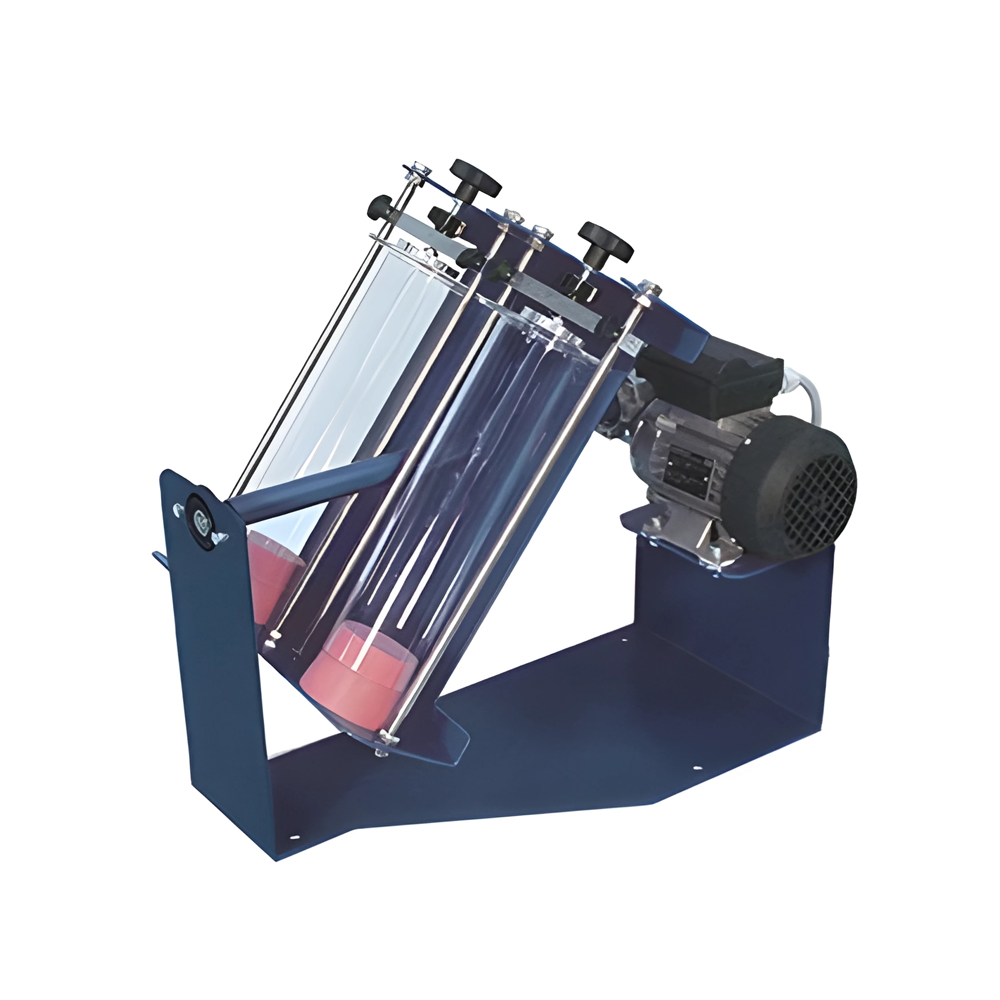
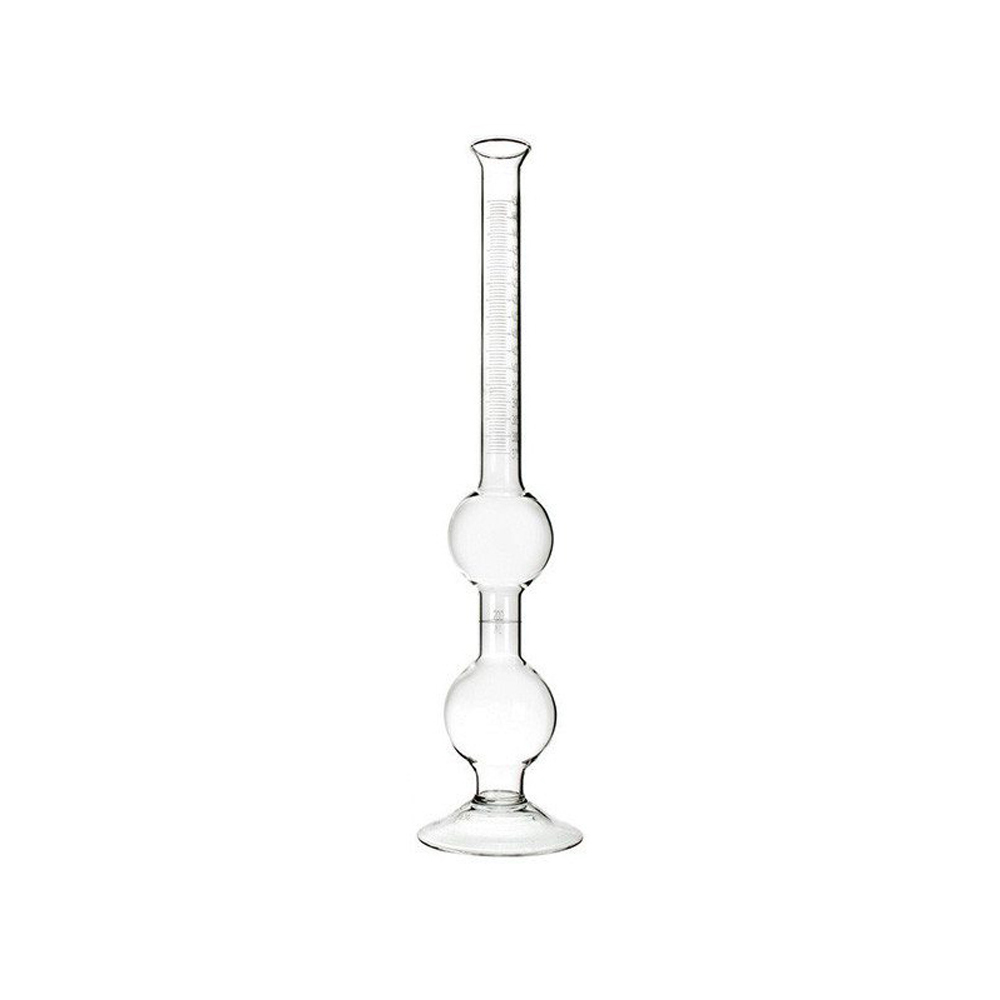
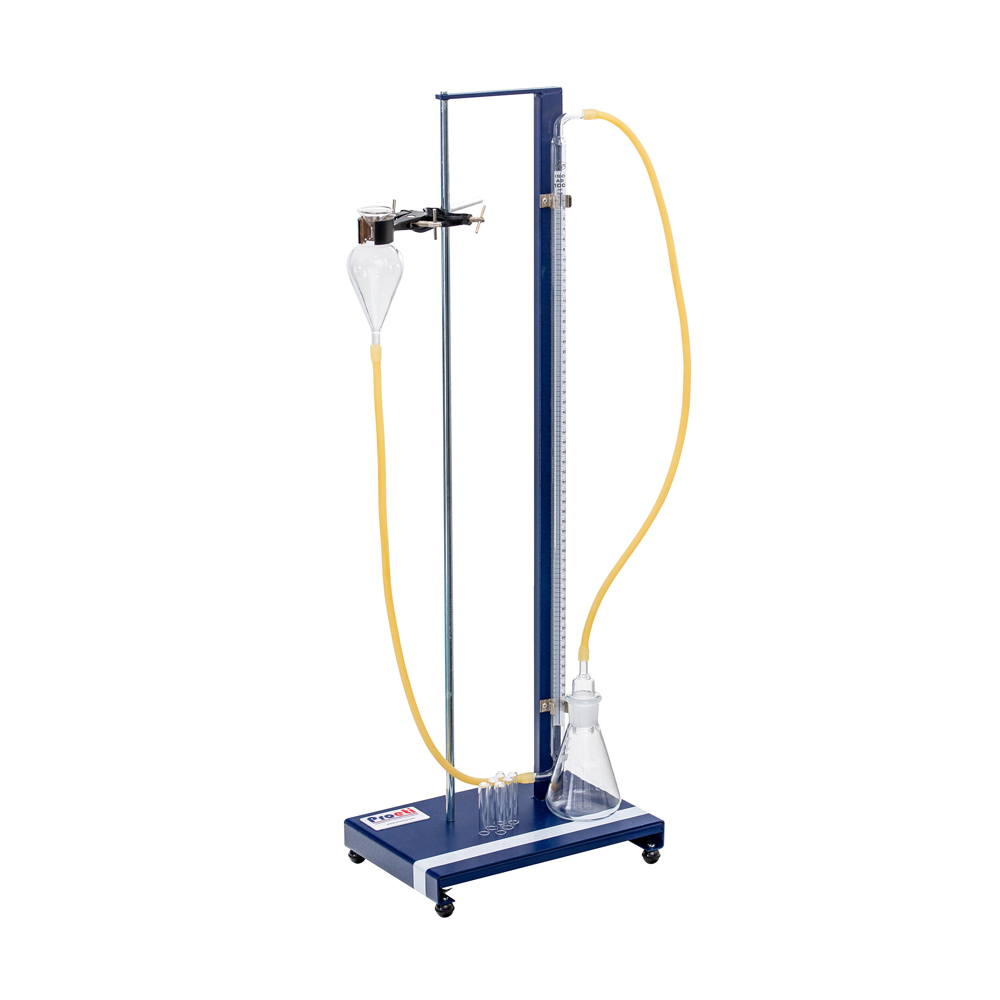
Need the carbonate content of a soil, the moisture of the sand arriving on site, or to know whether an aggregate will react with cement? This section brings together chemical and moisture testing equipment for aggregates and soils: Bernard and Dietrich-Frühling calcimeters, Speedy and carbide moisture testers, the Chapman flask, a magnesium sulphate set and a reactivity container. Write to us and we will tell you which one suits your test.
| What you measure | Equipment | Standard |
|---|---|---|
| Carbonate content | Bernard calcimeter or Dietrich-Frühling calcimeter | UNE 103200 (Spanish standard) |
| Rapid moisture on site | Speedy moisture tester or analogue carbide meter | Calcium carbide method |
| Surface moisture of sand | Chapman flask | ASTM C70 |
| Resistance to weathering | Magnesium sulphate test set | EN 1367-2, ASTM C88 |
| Alkali-aggregate reactivity | Reactivity container | ASTM C289 (chemical method) |
| Shaking soil samples | Bottle shaker | BS 1377-2 |
The reference method is to dry the sample in an oven at 110 °C and weigh it before and after (EN 1097-5 for aggregates, the Spanish standard UNE 103300 for soils), but it takes hours. The Speedy tester gives the result in a few minutes and on site, so it is used for quick checks. Many laboratories have both.
To get a price, click Budget on each product page and send one request with everything you need. If you would rather talk to us, write to us or call +34 916 28 29 40.
Those that can damage concrete or the pavement: chlorides, sulphates, total sulphur, organic matter and reactivity with the alkalis in cement. Most are covered by EN 1744-1. For soils and marls, carbonate content is also measured.
Sulphates react with cement to form compounds that expand and crack the concrete. Chlorides attack the steel reinforcement and make it corrode. That is why product standards set a maximum for both in aggregates for concrete.
Some aggregates containing reactive silica react with the alkalis in cement and form a gel that absorbs water and swells. Map cracking appears years after construction. It is prevented by assessing the aggregate before use, with a petrographic examination and reactivity tests.
Because wet sand adds water to the mix: if it is not deducted, the water/cement ratio changes and the concrete loses strength. The reference is oven drying (EN 1097-5), but on site rapid methods give the figure in minutes.
For soil testing there is also the soils category. The rest of the equipment is in aggregates and rocks.