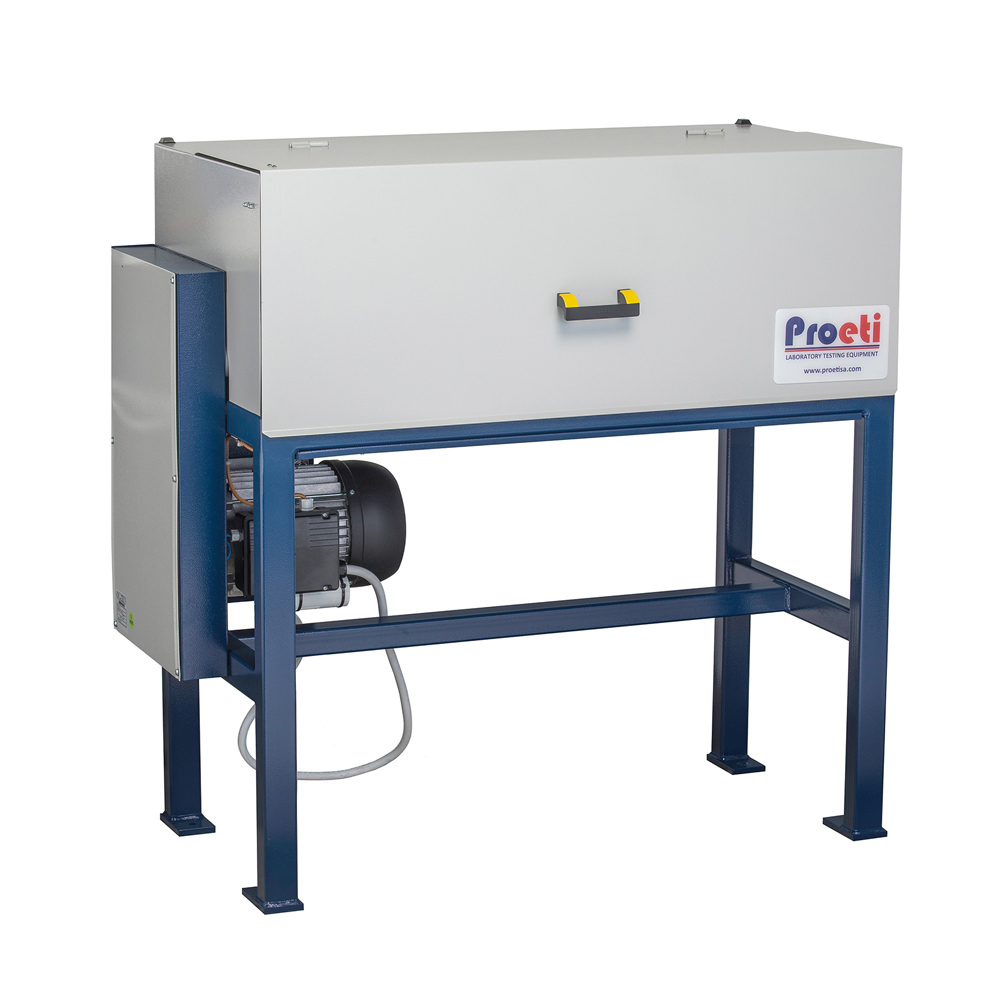
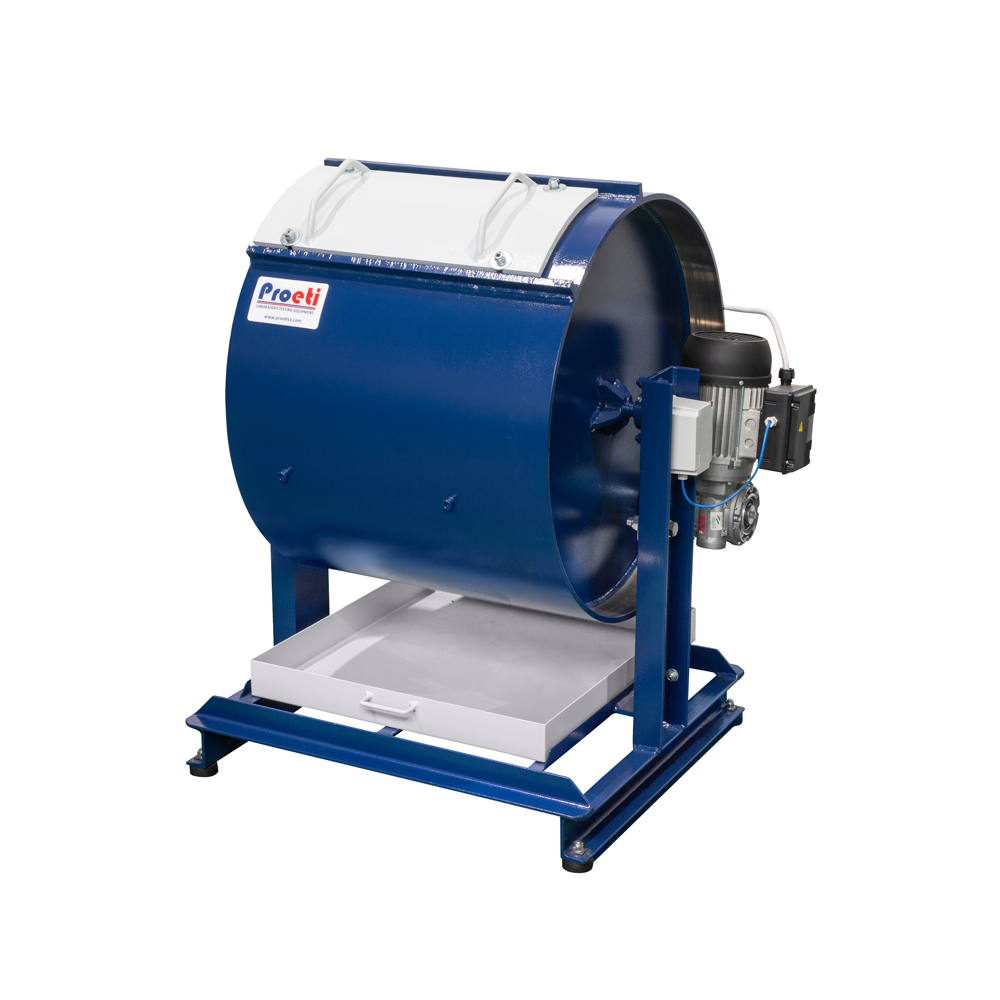
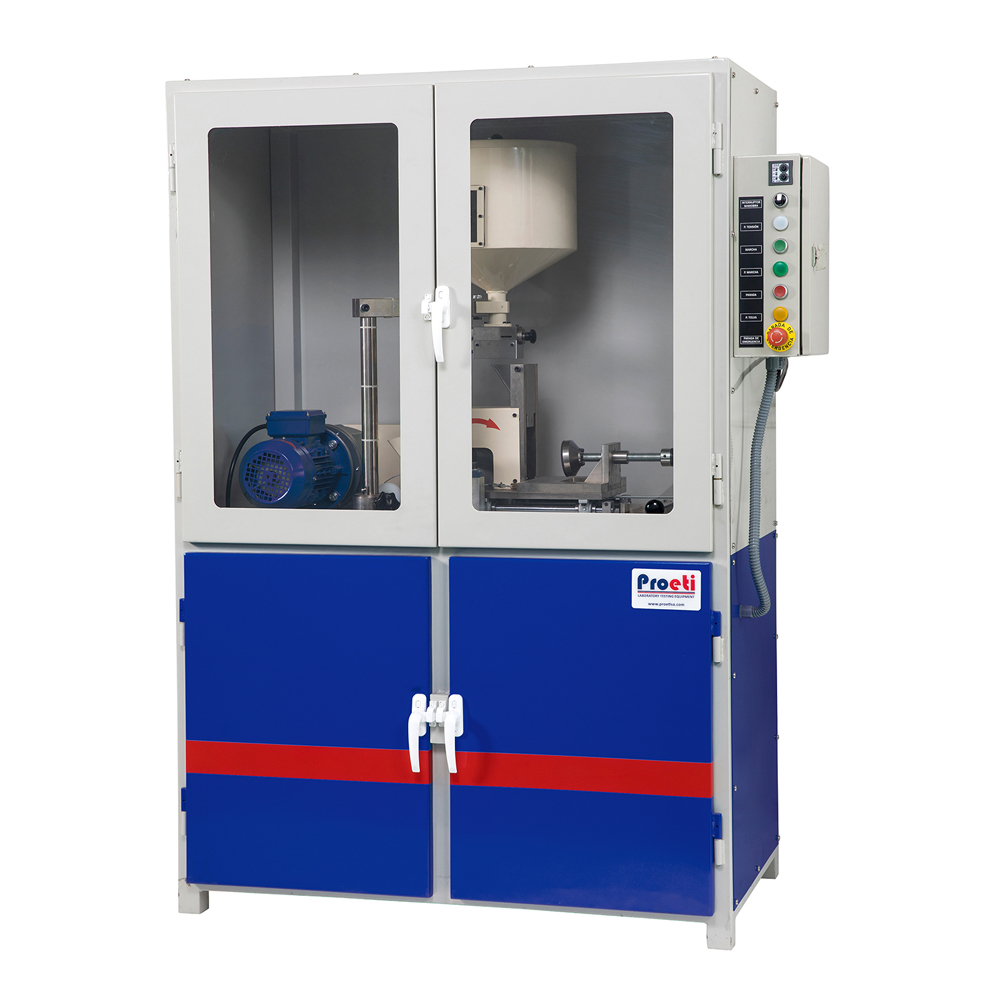
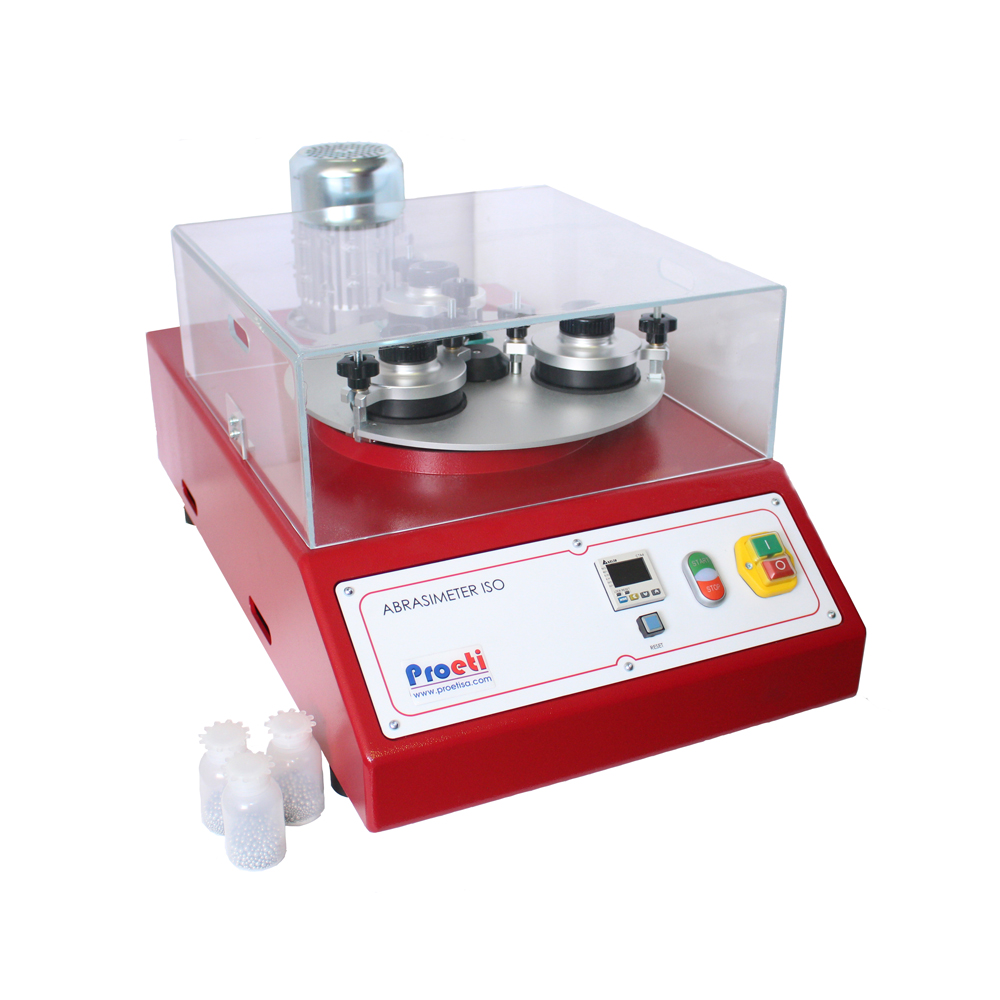
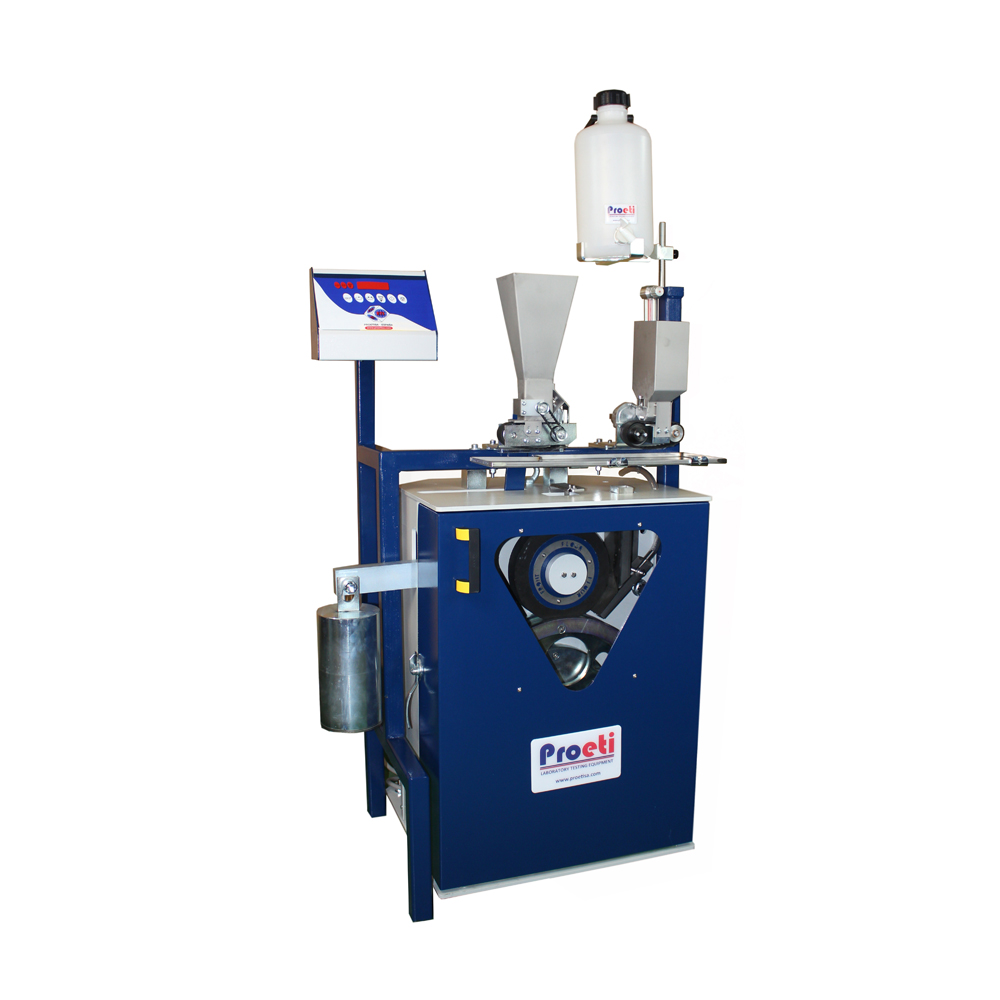
How well does an aggregate resist breaking and wearing, and how much grip does it keep under tyres? The Los Angeles machine and the Micro-Deval answer the first question; the accelerated polishing machine and the TRRL pendulum, the second. We build this aggregate abrasion test equipment to EN and ASTM, along with abrasion testers for terrazzo and ceramic tiles. Ask for a price with no obligation.
| Equipment | What it measures | Standard |
|---|---|---|
| Los Angeles machine | Resistance to fragmentation by impact: Los Angeles coefficient (LA) | EN 1097-2, ASTM C131 |
| Micro-Deval | Resistance to wear by attrition, wet: Micro-Deval coefficient (MDE) | EN 1097-1 |
| Accelerated polishing machine | How much the aggregate is polished by passing tyres: polished stone value (PSV) | EN 1097-8 |
| TRRL pendulum | Slip resistance of pavements, floors and polished aggregate | EN 16165, EN 13036-4, ASTM E303 |
| Abrasion machine | Abrasion wear of terrazzo tiles | EN 13748 |
| Abrasimeter | Abrasion resistance of glazed ceramic tiles | EN ISO 10545-7 |
In Spain, the Technical Building Code (CTE, DB SUA 1) classifies floors by their slip resistance, Rd, measured with the friction pendulum. Architects, flooring manufacturers and laboratories use it to check the class each area requires:
| Class | Slip resistance (Rd) |
|---|---|
| Class 0 | Rd ≤ 15 |
| Class 1 | 15 < Rd ≤ 35 |
| Class 2 | 35 < Rd ≤ 45 |
| Class 3 | Rd > 45 |
To get a price, click Budget on each product page and send one request with everything you need. If you would rather talk to us, write to us or call +34 916 28 29 40.
Resistance to fragmentation (Los Angeles coefficient, EN 1097-2), to wear (Micro-Deval, EN 1097-1), to polishing (EN 1097-8) and to abrasion by studded tyres (EN 1097-9). For pavements and floors, slip resistance is also measured.
Fragmentation is particles breaking under impact, as happens during compaction or under heavy traffic; wear is the loss of material through attrition, especially in the presence of water. An aggregate may perform well in one and poorly in the other, which is why road specifications usually require both tests.
Tyres gradually polish the stone in the surface course, and polished stone grips less on a wet road. The polished stone value shows how much roughness the aggregate keeps, and specifications demand a higher minimum the heavier the traffic on the road.
Under the Spanish Technical Building Code (CTE): class 1 in dry indoor areas with a slope of less than 6%, and class 2 if the slope is steeper or there are stairs. In wet indoor areas, such as entrances, bathrooms or kitchens, class 2, or class 3 with a slope or stairs. In outdoor areas, garages and swimming pools, class 3.
For the grading, shape and chemistry of the same aggregates, see aggregates and rocks.