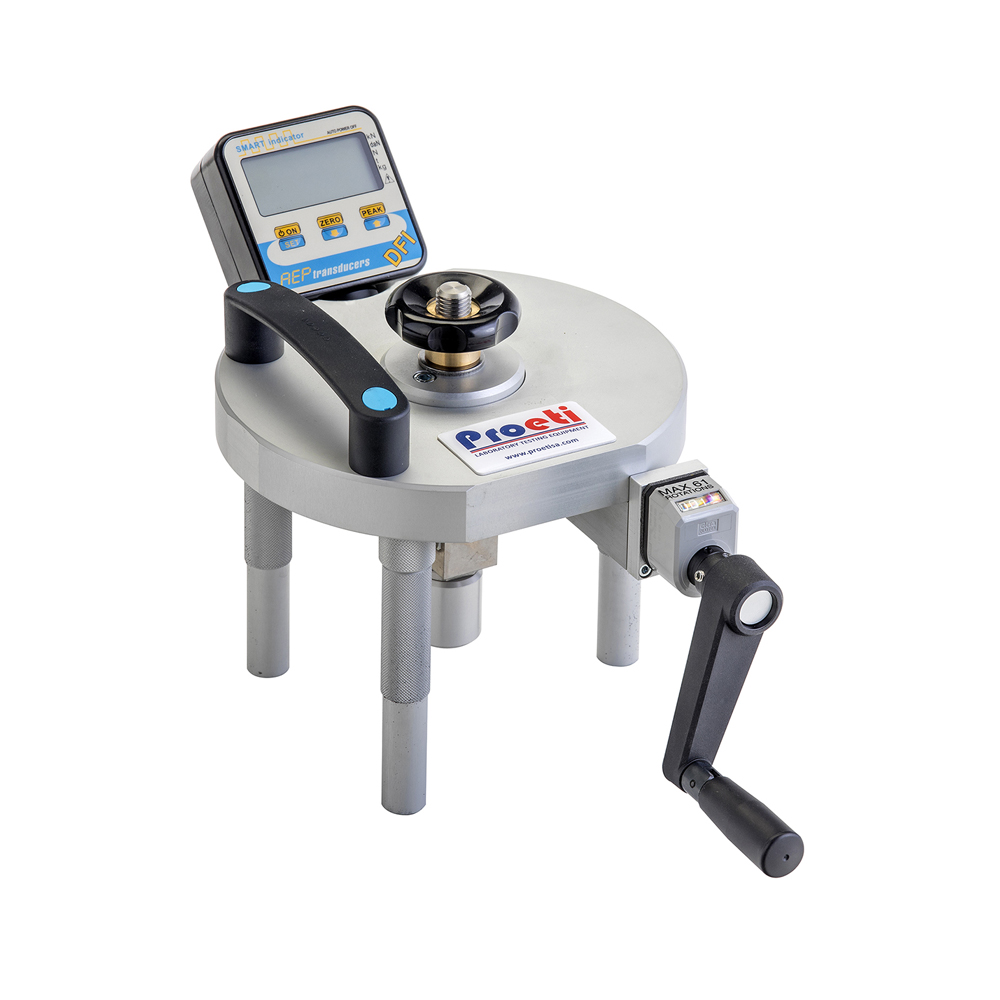
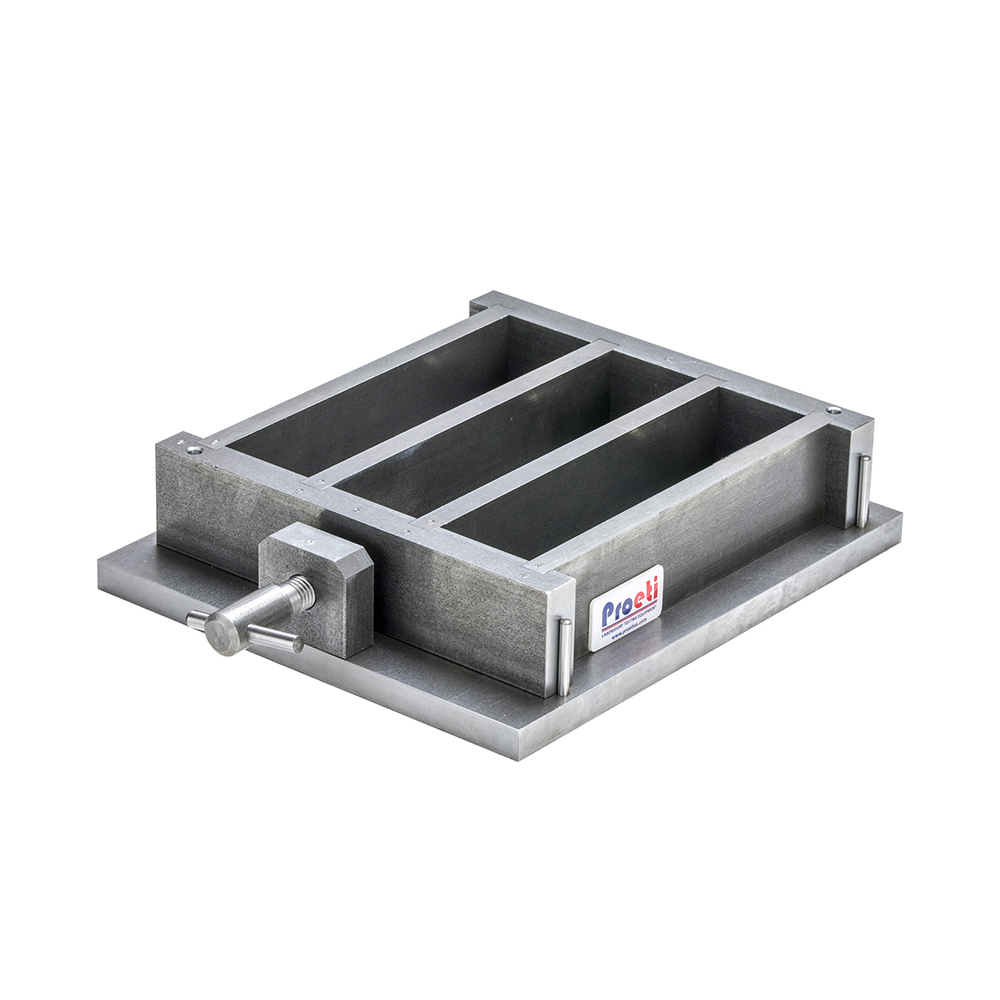
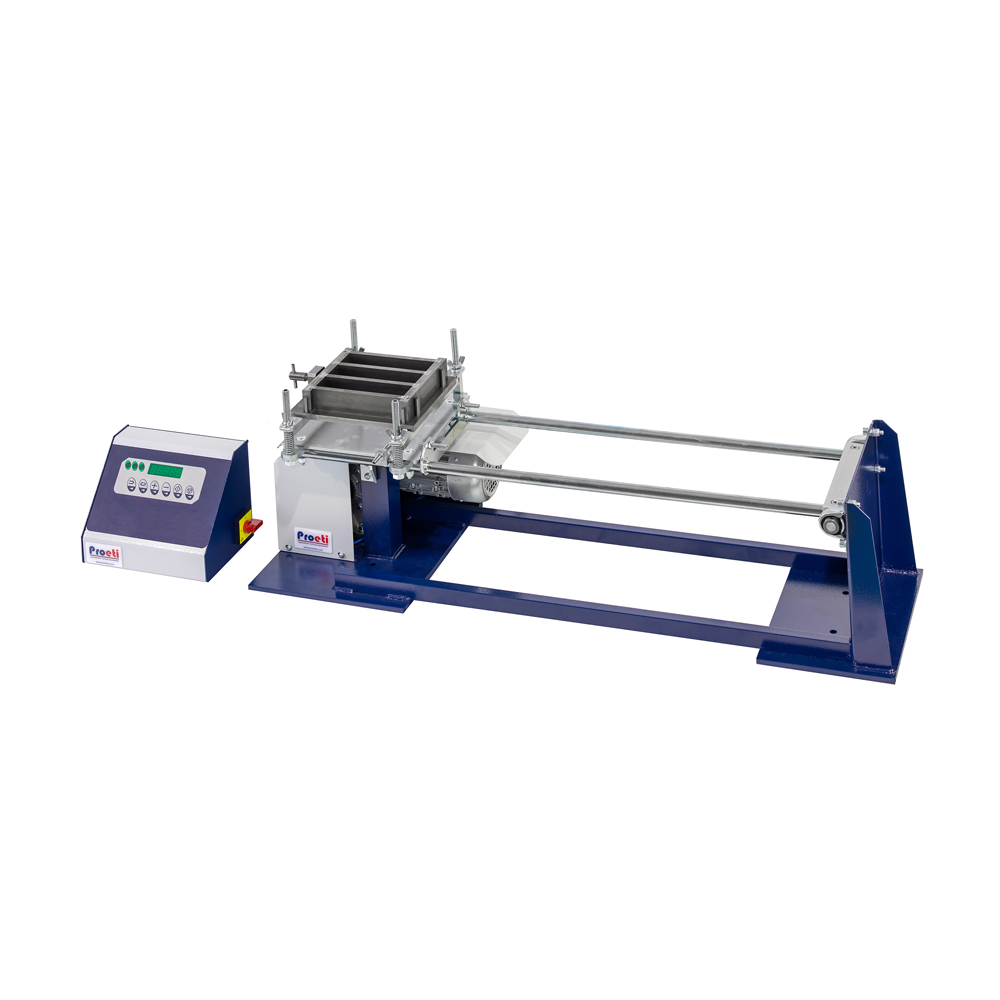
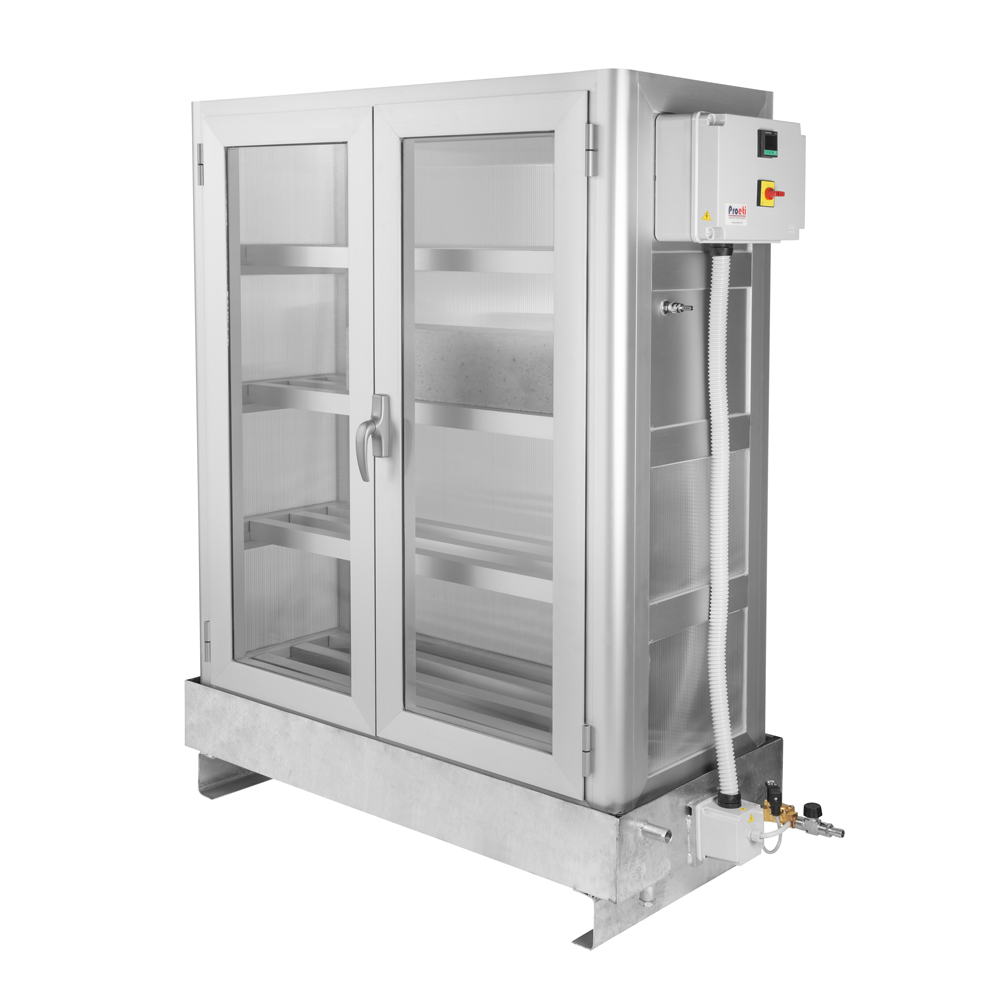
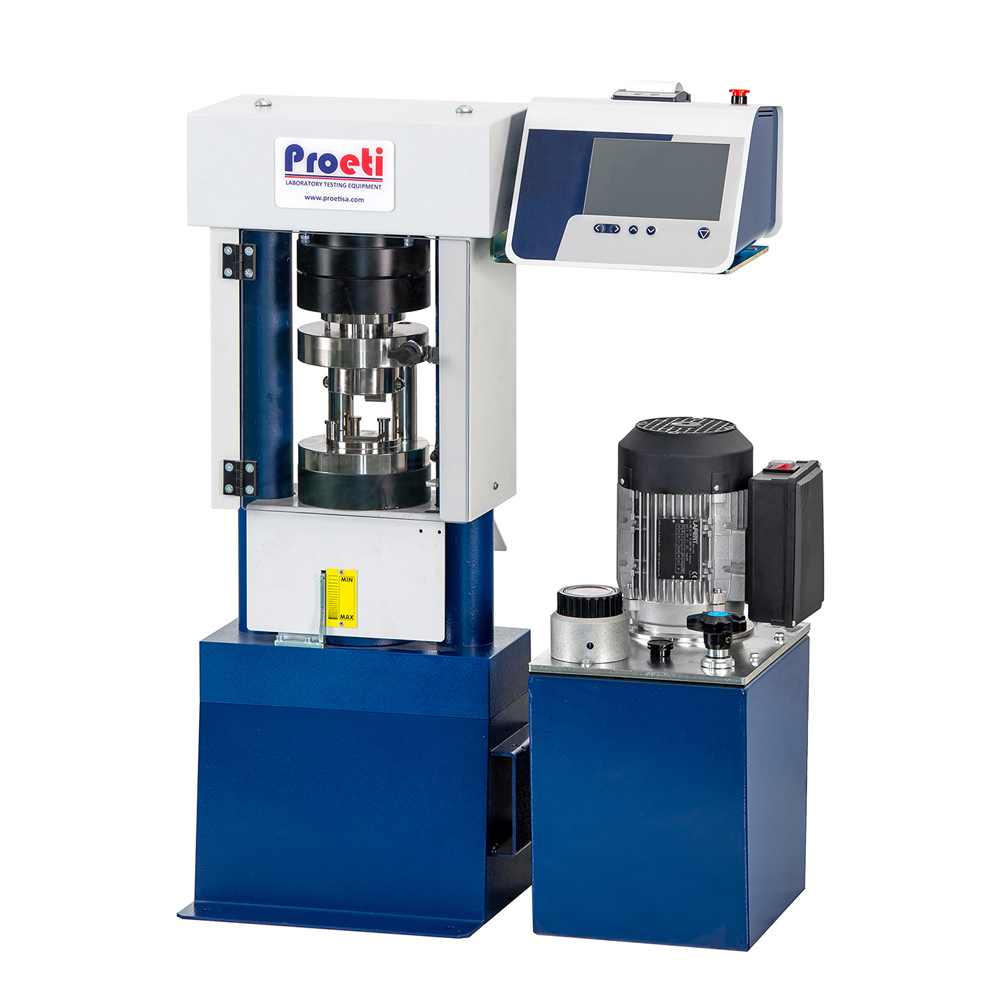
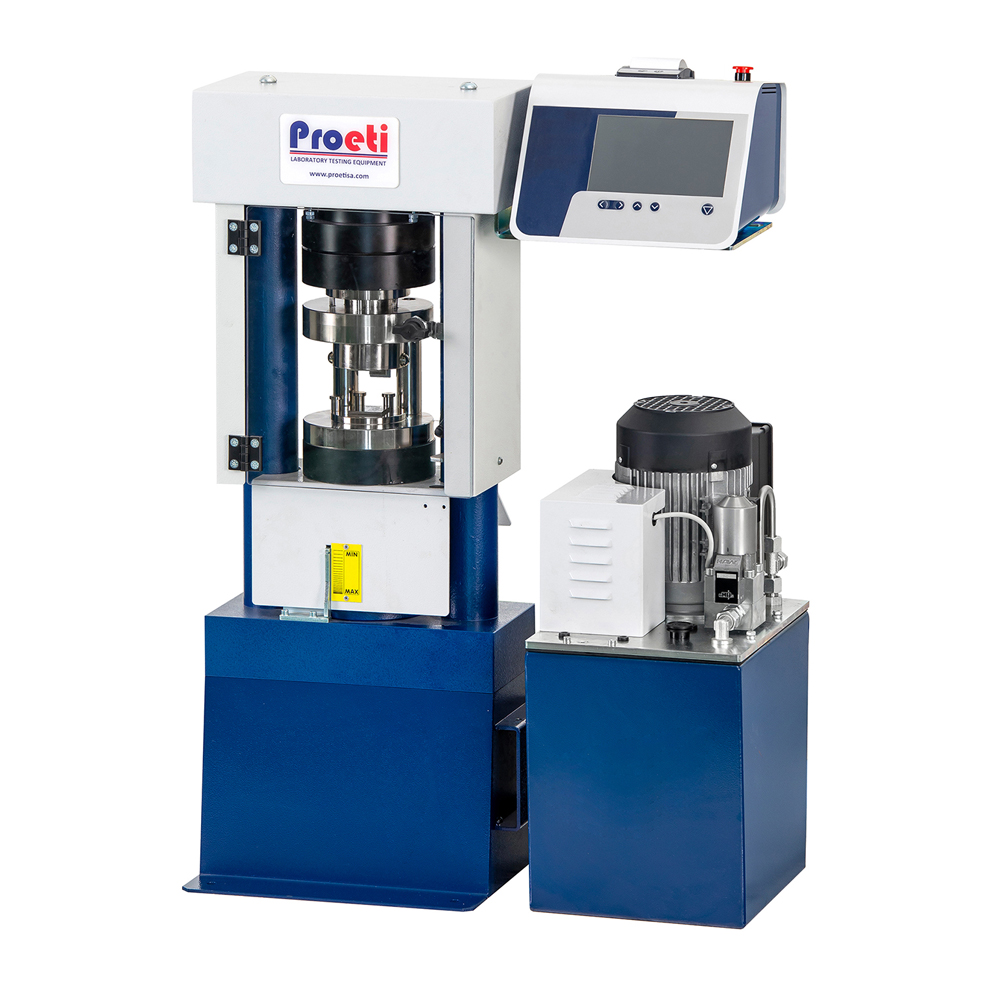
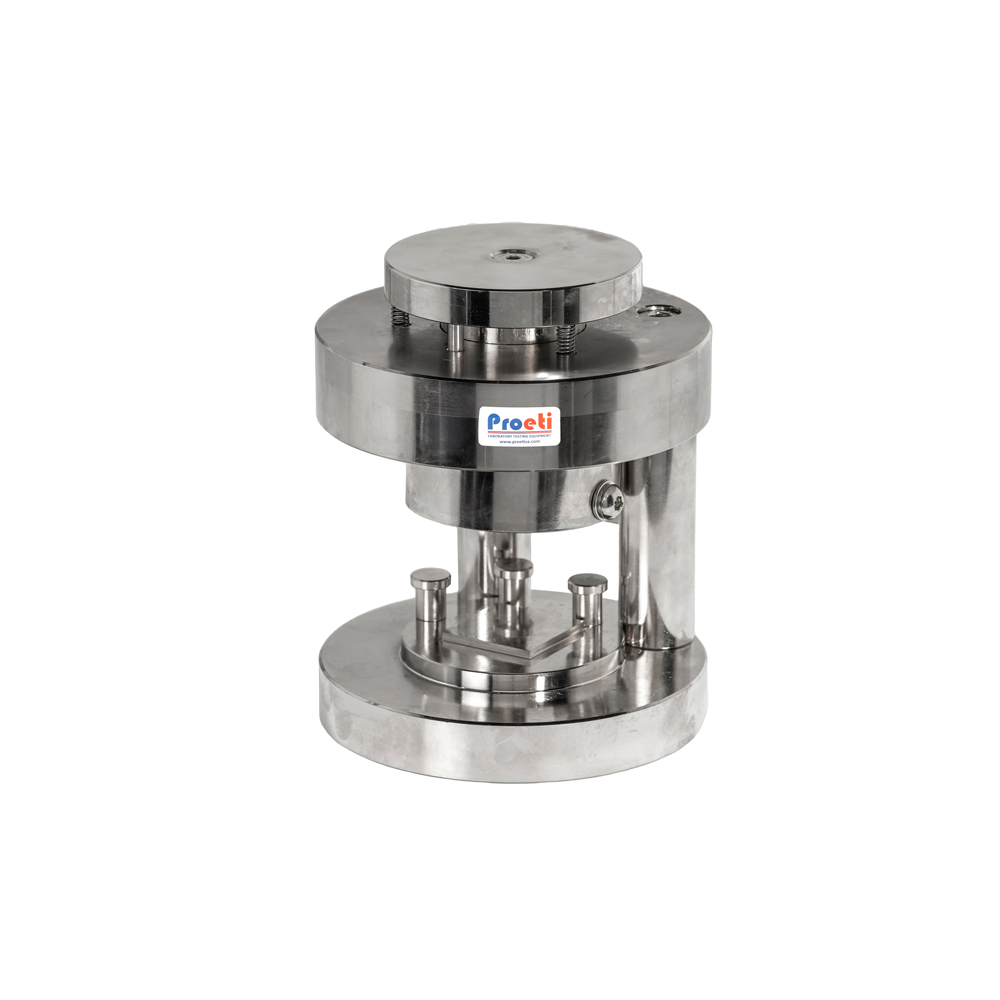
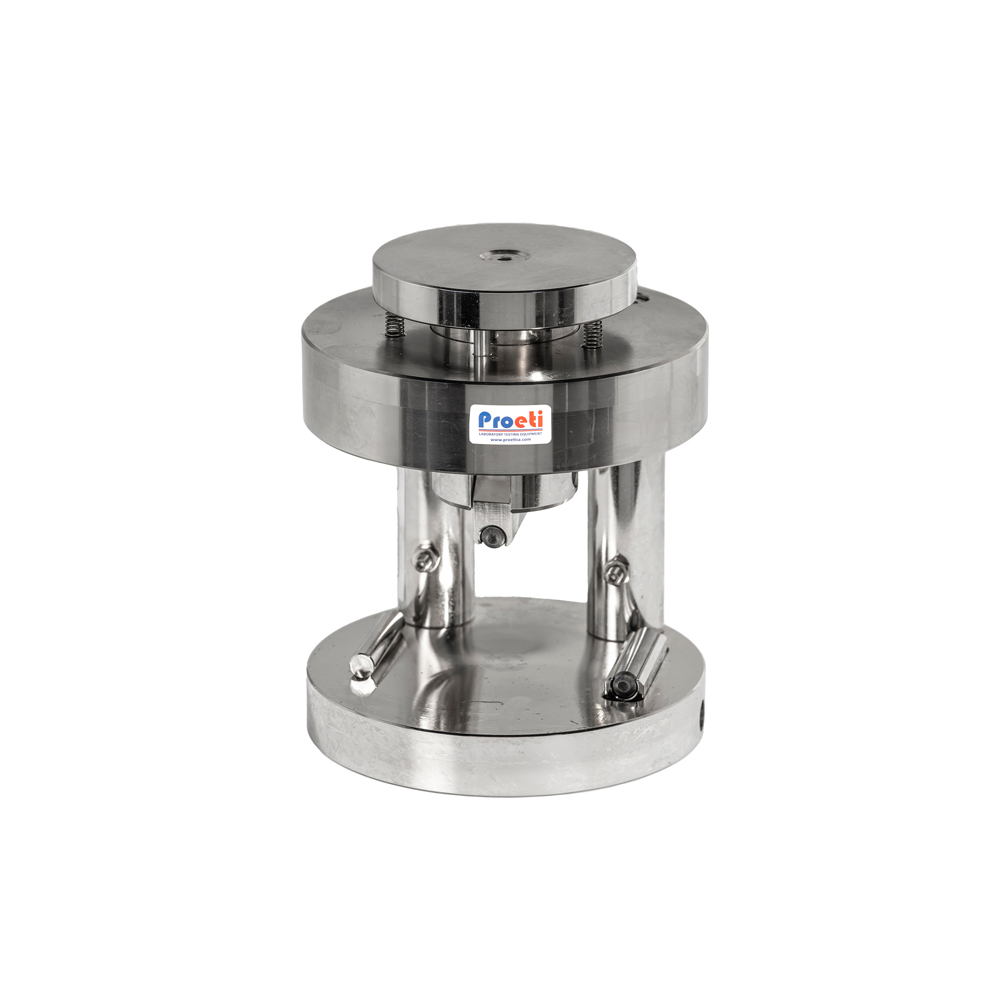
Cement strength testing means breaking 40×40×160 mm mortar prisms, first in flexure and then in compression. Here is the equipment for the whole process to EN 196-1 and ISO 679: three-gang mould, jolting apparatus, curing cabinet and compression and flexural testing machines with dual range, 250 and 15 kN, plus the pull-off tester for bond strength. Request a quote for the complete set.
| Step | Equipment | Standard |
|---|---|---|
| 1. Mould | 40×40×160 mm three-gang mould | EN 196-1, ISO 679 |
| 2. Compact | Automatic jolting apparatus: 60 jolts per layer, 15 mm drop | EN 196-1, ISO 679 |
| 3. Cure | Curing cabinet, from 90 % humidity to saturation, four shelves | EN 196-1, ASTM C511 |
| 4. Flexural test | Flexure device in the machine (15 kN range) | EN 196-1 |
| 5. Compression test | Compression device for both halves (250 kN range) | EN 196-1, ASTM C349 |
The pull-off tester, portable and battery-powered, measures the direct tensile bond strength of mortars, coatings and repairs, up to 16 kN (EN 1542, EN 1015-12).
| Manual control | Servo-controlled | |
|---|---|---|
| Load control | The operator regulates the oil flow | Automatic, at the rate set by the standard |
| Ranges | 250 kN in compression and 15 kN in flexure, in the same test chamber | The same |
| Repeatability | Depends on the operator's hand | The same for every specimen |
| Best for | A few tests a day | Control and accredited laboratories |
Product pages: manually controlled machine and servo-controlled machine. Both also accept mortar, brick, rock and refractory specimens with the appropriate accessory.
To get a price, click Budget on each product page and send one request with everything you need. If you would rather talk to us, write to us or call +34 916 28 29 40.
With a standard mortar: one part cement, three parts standard sand and half a part water. Three 40×40×160 mm prisms are made, cured and broken in flexure; each half is then broken in compression. The result is the mean of the six compression results, in MPa.
Because cement gains strength over weeks. The 28-day strength defines its strength class (32.5, 42.5 or 52.5), and the 2 or 7-day strength, the early strength, which distinguishes rapid-hardening cements (R) from normal ones (N).
Because cement needs water to keep reacting. If the specimen dries out, it stops gaining strength and the test gives less than the real value. EN 196-1 requires 24 hours in a moist atmosphere at 20 °C and then water at the same temperature until testing.
A siliceous sand with a fixed grading, between 0.08 and 2 mm, sold in 1,350 g bags, just enough for one batch of three prisms. Because all laboratories use the same sand, differences in strength are due only to the cement.
For concrete strength, with cylinder and cube specimens, see concrete.