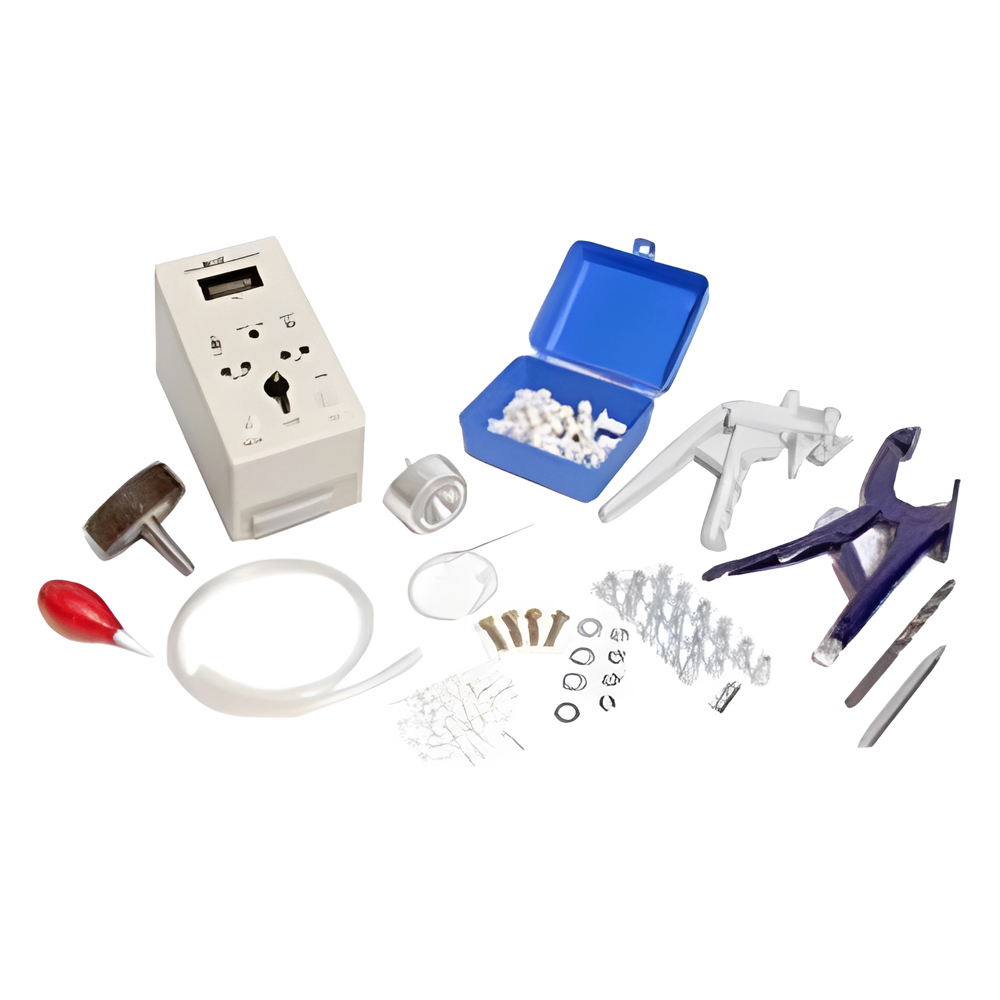
For the determination of the susceptibility to chloride penetration and carbonation in concrete.
The apparatus can be used in the following tests:
-Internal test (deep permeability):
A hole Ø10 mm and 40 mm deep is drilled and connected, leaving a cylindrical test chamber Ø10 mm and 20 mm high, located 20 mm below the concrete surface. The time required for air and water to pass through the test material to the chamber is used as an index to determine the quality of the concrete.
-Air permeability tests
are performed before humidity has a significant effect on permeability, based on vacuum technique, the instrument’s timer, and the pressure gauge.
They automatically display the time in seconds it takes for the vacuum to rise from -55 kPa to 5 kPa.
-Water permeability tests:
After filling and forcing water into the test cavity, the air is displaced outwards through the overflow tube. The instrument’s flow sensor and timer, after the test procedure, measure the time required in seconds for the water meniscus to travel 50 mm.
-Surface permeability test:
The test is performed by anchoring a stainless steel chamber to a smooth area of the concrete surface. The time required for the corresponding amounts of air and water to pass through the concrete is measured as an index of the surface conditions.
The device consists of the following elements:
– Digital pressure gauge
– Hand vacuum pump
– Water syringe
– Pack of 25 test plugs
– Cup grinding wheel
– Stainless steel surface chamber –
Clamping pliers, drill bits and anchors
– Carrying case
Suitcase dimensions: 430x300x150 mm
Weight: 5.4 Kg