
Every day, millions of people cross bridges, drive on highways, travel through tunnels, or enter buildings without asking themselves a single question: How do we know all of this is truly safe?
Most people would answer that it is thanks to the expertise of engineers, the quality of construction materials, or the experience of the companies that built these structures. And they would be right—but only in part.
There is another element, one that rarely receives attention, yet makes it possible for this entire system to operate with the level of confidence we often take for granted. It rarely makes headlines, is seldom mentioned when a major infrastructure project is inaugurated, and quietly underpins virtually every engineering structure we rely on in our daily lives.
That element is technical standards.
For professionals working in civil engineering, geotechnical, and quality control laboratories, technical standards are part of everyday practice. They define testing procedures, technical reports, project specifications, and even the documentation supplied with laboratory equipment. For most people, however, references such as ASTM, EN, or UNE are nothing more than a series of letters and numbers with little apparent meaning.
Yet behind every one of these standards lies far more than a testing procedure. They embody decades of research, thousands of hours of technical collaboration, and the consensus of experts from around the world, all aimed at answering a deceptively simple question: What is the best known method for verifying that a material, product, or structure truly meets the required performance criteria?
Because trust does not happen by chance.
It is built.
By the end of the nineteenth century, the railway had become the driving force behind the Industrial Revolution. Thousands of kilometers of rail tracks connected cities, fueled economic growth, and transported passengers and goods at speeds that had once seemed unimaginable.
Yet behind this remarkable expansion lay a problem that received little attention: there was no common way to ensure the quality of the steel used to manufacture railway rails.
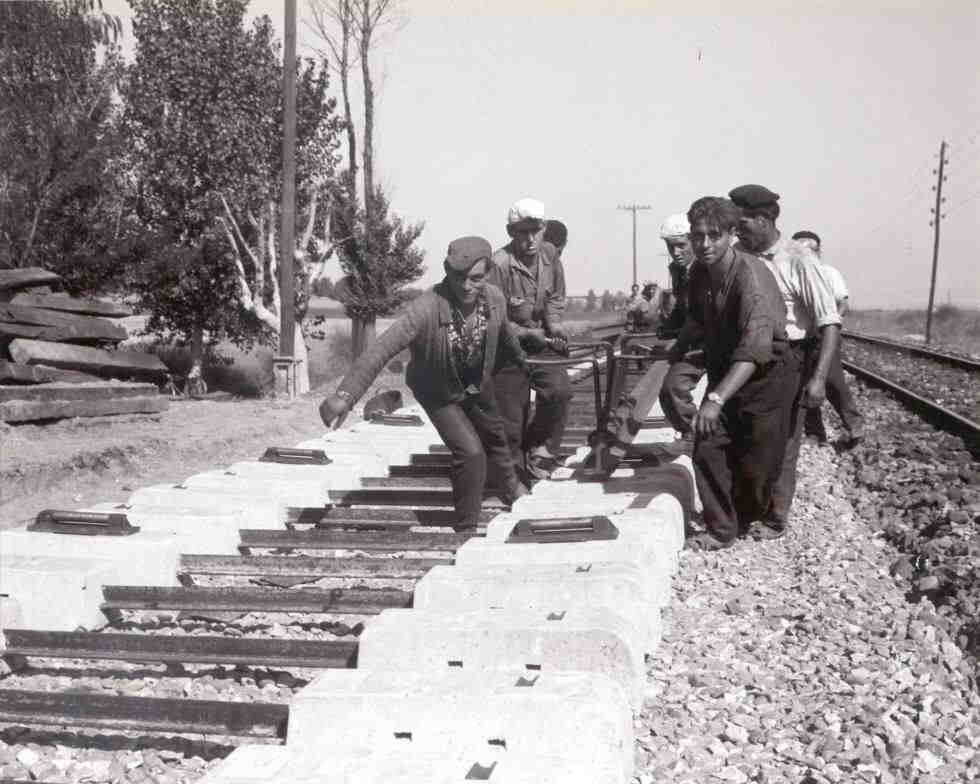
Each manufacturer relied on its own criteria for selecting raw materials, producing steel, and assessing its quality. As a result, some railway tracks remained in service for decades with minimal deterioration, while others experienced premature wear or even fractured, leading to failures and, in some cases, serious accidents.
Producing steel was no longer enough. Manufacturers had to demonstrate that their products met objective performance requirements and that those requirements could be verified by any manufacturer using exactly the same testing procedure.
This need led to the establishment of ASTM (American Society for Testing and Materials) in 1898, widely recognized as the world’s first major organization dedicated to the development of technical standards.
What began as an initiative to improve the quality of railway steel ultimately transformed the way virtually every industrial sector operates. Over the years, ASTM expanded far beyond railway materials, developing standardized test methods for concrete, asphalt, soils, metals, plastics, fuels, medical devices, and thousands of other materials and applications.
Its greatest contribution, however, was not the publication of thousands of standards. It was the introduction of an idea that seems self evident today, yet at the time represented a genuine revolution:
“If we all want to trust a result, we must all measure it the same way.”
Originally conceived to solve a problem in the railway industry, this principle has become the foundation upon which testing laboratories, equipment manufacturers, engineering firms, public authorities, and certification bodies around the world operate today.
After understanding why ASTM was established, one question naturally follows: What exactly is a technical standard?
Many people imagine a document filled with complex requirements and technical jargon. In reality, a technical standard is something far easier to understand—and far more important than it may seem.
A technical standard is a document that captures the best available knowledge at a given point in time for carrying out a specific activity in a safe, accurate, and reproducible manner. It is not based on the opinion of a single company or individual expert, but on the consensus reached by manufacturers, testing laboratories, researchers, engineers, public authorities, and other industry professionals.
Its purpose is not to determine which company manufactures the best product or to impose a particular technology. Instead, it establishes a common methodology that enables professionals to obtain comparable results, regardless of the laboratory, organization, or country where the test is performed.
In other words, it allows two laboratories located hundreds—or even thousands—of kilometers apart to evaluate the same material using exactly the same procedure and achieve comparable results.
For this reason, a technical standard does far more than specify which test should be performed. It also answers questions such as:
Take ASTM C39, for example, the standard used to determine the compressive strength of concrete. It provides detailed instructions covering specimen dimensions, pre-test conditioning, the requirements for the compression testing machine, the rate at which the load must be applied, and the methods used to calculate and interpret the test results.
The same applies to UNE-EN 12390-3 and virtually every other testing standard. Although each addresses a different material or testing procedure, they all follow a similar structure because they pursue the same objective: ensuring that results are reliable and directly comparable, regardless of the laboratory performing the test.
For this reason, technical standards are often described simply as procedures.
In reality, they are much more than that.
“A technical standard is not just a set of instructions. It is the collective knowledge of thousands of engineers, researchers, manufacturers, laboratories, and public authorities distilled into just a few pages.”
The success of ASTM demonstrated that adopting common testing procedures improved product quality, simplified laboratory operations, and increased confidence in test results. It was not long before other countries established their own national standards organizations.
The United Kingdom introduced BS (British Standards), Germany developed DIN (Deutsches Institut für Normung), France established NF (Normes Françaises), and Spain created the well-known UNE standards, developed by the Spanish Association for Standardization.
For decades, each country developed its own standards to meet the needs of its industries and infrastructure. Although many shared common principles, differences remained in testing procedures, acceptance criteria, and the execution of specific test methods.
The creation of the European Single Market introduced a new challenge: ensuring that materials, products, and test results obtained in any Member State could be recognized and compared using the same technical criteria.
This led to the development of European Standards (EN) by organizations such as the European Committee for Standardization (CEN). Once adopted by member countries, EN standards are incorporated into national standards systems, becoming designations such as UNE-EN in Spain or DIN EN in Germany.
This does not mean that ASTM standards have fallen out of use. Quite the opposite. In sectors such as civil engineering, geotechnical engineering, construction materials, and the petrochemical industry, ASTM standards remain an internationally recognized reference and continue to coexist with European Standards, depending on project requirements, client specifications, or applicable regulations.
Today, multiple standardization systems coexist around the world, yet they all pursue the same objective: to provide a common technical language that enables results to be compared, regardless of where they are obtained.
When reading a technical standard, it is easy to imagine a small group of specialists drafting the document around a conference table.
The reality is quite different.
Technical standards are the result of a collaborative process that can take months—or even years—to complete. Engineers, researchers, universities, equipment manufacturers, testing laboratories, public agencies, construction companies, and industry associations all contribute their expertise to produce a document that reflects the most robust technical knowledge available at that time.
This work is carried out through specialized technical committees. Every proposal is discussed, reviewed, validated against practical experience, and refined through consensus before becoming a published standard. Nor does the process end once the document is published. Standards are periodically reviewed and updated to incorporate new technologies, improve testing procedures, and reflect scientific advances and the evolving needs of industry.
For this reason, a technical standard should never be viewed as a static document.
It is living knowledge, evolving alongside engineering, scientific research, and technological innovation.
This is, perhaps, one of its greatest strengths.
Technical standards do not belong to a single company, manufacturer, or public authority.
They belong to the collective knowledge of an entire industry.
At this point, it might seem that technical standards are simply a collection of documents used by laboratories to perform tests. In reality, their role extends far beyond that.
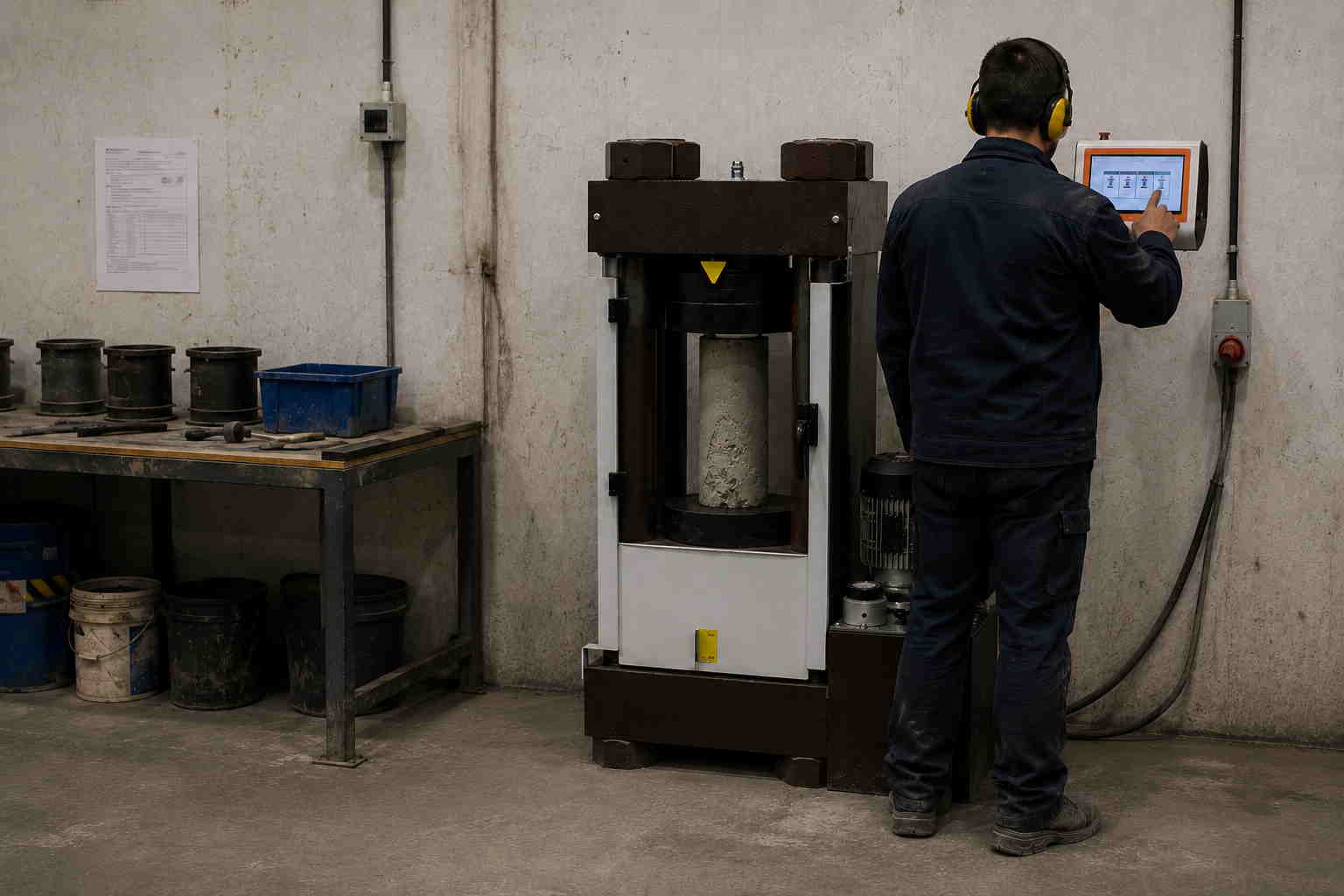
A technical standard does more than define how a test should be performed. It establishes a common technical language that connects every professional involved throughout the life cycle of an infrastructure project.
Testing laboratories rely on standards to conduct tests using objective criteria and produce reproducible results. Equipment manufacturers design their machines to comply with these specifications. Engineering firms use them as the basis for project design. Contractors apply them during construction. Public authorities incorporate them into technical specifications, contracts, and regulations to verify compliance with quality requirements.
Thanks to this common technical language, a test result obtained in Madrid can be directly compared with one produced in Berlin, Paris, or New York. A technical report can be interpreted by professionals in different countries without redefining how the test was performed. Likewise, an equipment manufacturer can develop a testing machine knowing that it will meet the requirements of any laboratory operating under the same standard.
For this reason, the value of technical standards extends far beyond standardizing testing procedures. They provide technical confidence, reduce uncertainty, facilitate international trade, and enable engineering decisions to be based on objective, verifiable data.
When a laboratory certifies the compressive strength of concrete, the compaction of soil, or the quality of asphalt, it is doing far more than performing a test. It is generating information that designers, construction supervisors, public authorities, and clients will rely on to make decisions that directly affect the safety and service life of an infrastructure.
That is the true value of technical standards: transforming a test into technical evidence upon which others can make decisions with confidence.
Consider a bridge for a moment.
Thousands of vehicles cross it every day without questioning whether the concrete has actually achieved the design strength specified in the project or whether the structural steel meets the required specifications.
People simply trust that everything has been designed, built, and verified to perform as intended.
That trust does not arise spontaneously.
It exists because, long before the bridge was opened to traffic, an entire chain of work had already been set in motion- one in which every link depends on the one before it.
It all begins with a technical standard that defines how a material or process must be evaluated. Based on that standard, an equipment manufacturer develops testing machines capable of performing the required tests in accordance with those specifications. A laboratory then uses this equipment while following the prescribed testing procedure. The resulting data are incorporated into technical reports that verify whether the materials comply with the project requirements.
Finally, engineering firms, supervising engineers, and public authorities rely on this information to approve or reject materials, certify completed works, or authorize an infrastructure for service.
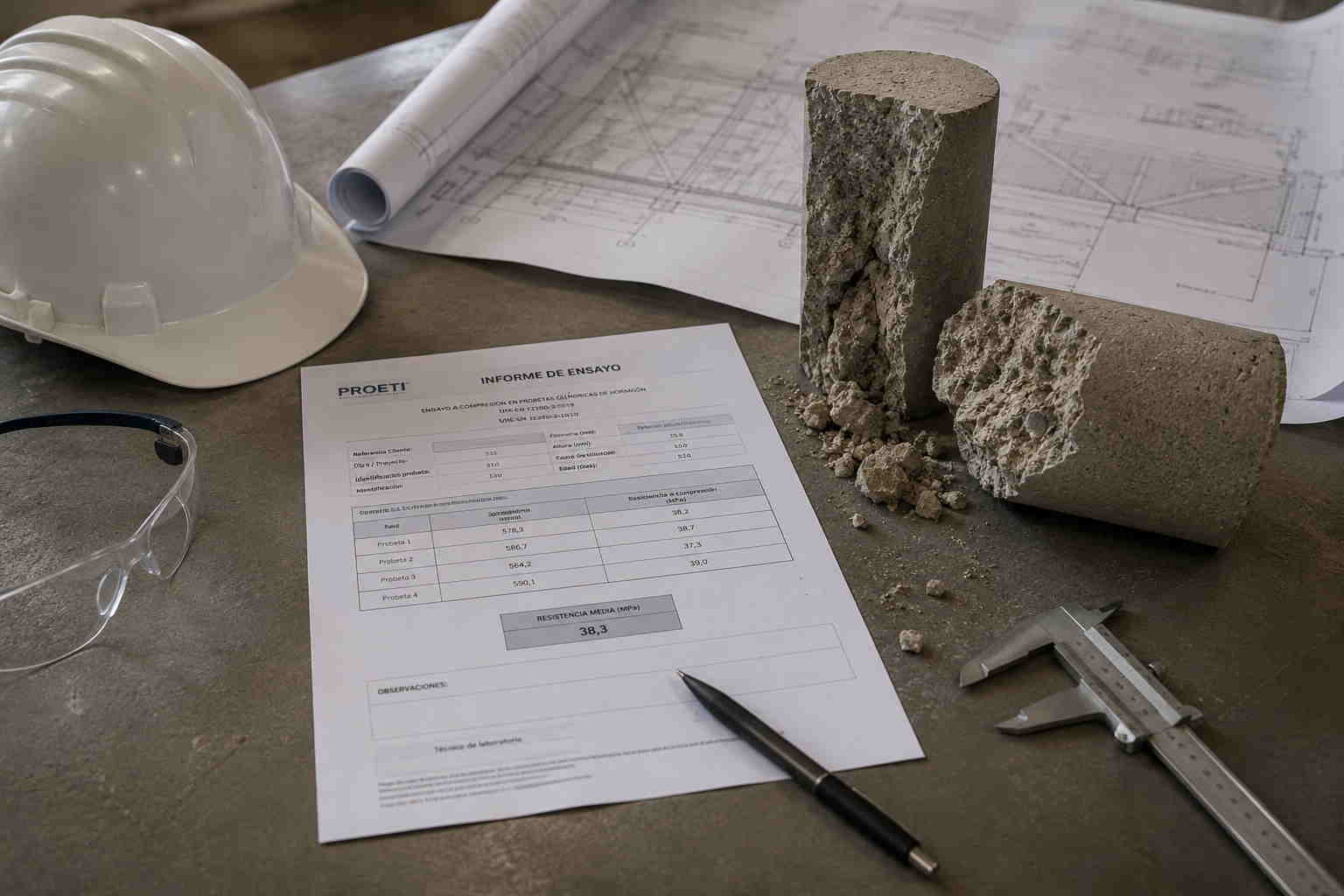
Each step in this process only has meaning because there is a common procedure accepted by everyone involved.
If any link in this chain were to fail, trust would disappear.
For this reason, the value of technical standards extends well beyond their technical function. They also play a fundamental role from a documentation, contractual, and even legal perspective.
When an issue arises in an infrastructure project, a dispute occurs between companies, or the causes of a construction failure are investigated, one of the first questions is not simply what happened, but how it was verified that everything had been carried out correctly.
The answers to these questions make it possible to reconstruct the entire technical process and demonstrate that the decisions made were based on recognized and widely accepted procedures.
At that point, a technical standard ceases to be just another technical document.
It becomes evidence.
And it is precisely this ability to create confidence that explains why technical standards remain one of the fundamental pillars of modern engineering.
Most people will never read a technical standard.
They are also unlikely to know what designations such as ASTM C39, UNE-EN 12390-3, or any of the thousands of standards used every day in laboratories and industries around the world actually mean.
Yet these standards underpin many of the decisions that make modern life possible.
They define the requirements behind the concrete that supports a bridge, the steel used in a structure, the materials used to build a highway, and the tests that verify the quality of an infrastructure before it is placed into service.
Their presence is so discreet that it often goes unnoticed.
Perhaps that is the clearest sign that they are doing exactly what they are meant to do.
Because when a system consistently generates trust, people stop noticing that it exists.
A technical standard alone cannot guarantee that an infrastructure is safe. That also requires skilled professionals, high-quality materials, reliable equipment, and proper execution. What a standard does provide is something indispensable: a common framework that allows everyone involved to demonstrate that their work has been carried out according to objective, transparent, and internationally recognized criteria.
In a world where infrastructure projects are becoming increasingly complex and engineering decisions carry significant economic and social consequences, having such a common technical language is more important than ever.
Technical standards are not an obstacle to innovation.
On the contrary, they provide the foundation upon which innovation can develop with confidence, enabling new materials, testing methods, and technologies to be evaluated, compared, and validated using criteria shared across the entire engineering community.
At the beginning of this article, we asked why we cross bridges, enter buildings, or travel on highways without constantly questioning whether they are safe.
The answer depends on more than engineering alone.
It also depends on the trust that engineering has built over more than a century through the collective efforts of researchers, manufacturers, testing laboratories, public authorities, and professionals around the world.
Because, ultimately:
“A technical standard is not just a set of instructions. It is the collective knowledge of thousands of engineers, researchers, manufacturers, laboratories, and public authorities distilled into just a few pages.”
Perhaps that is the best way to understand its true purpose.
“Technical standards do not exist because we distrust engineering. They exist so that society can trust it.”